New Zealand Captain Michelle Jenner Explains Why the Team Failed to Reach the Target of 210 Runs Against India
Read more
Aaj Tak
www.aajtak.in

New Zealand Captain Michelle Jenner Explains Why the Team Failed to Reach the Target of 210 Runs Against India

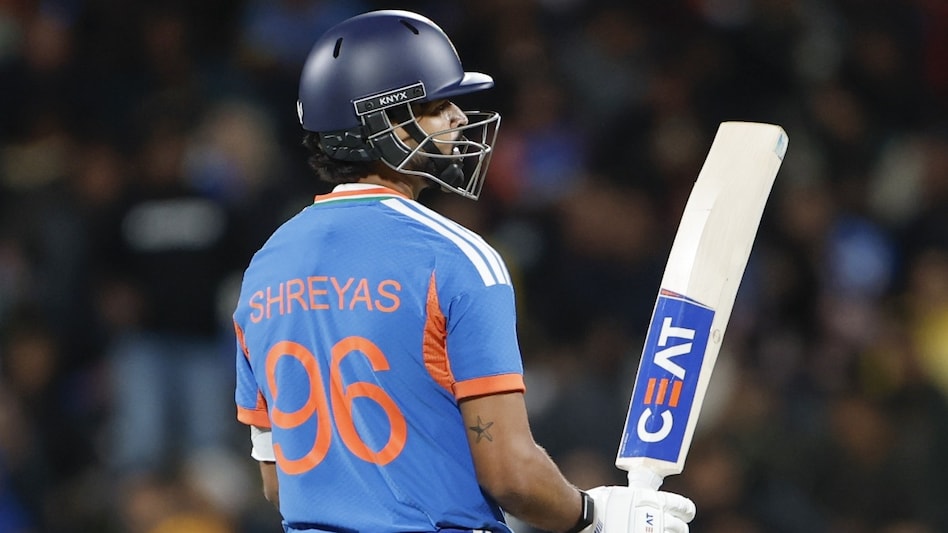
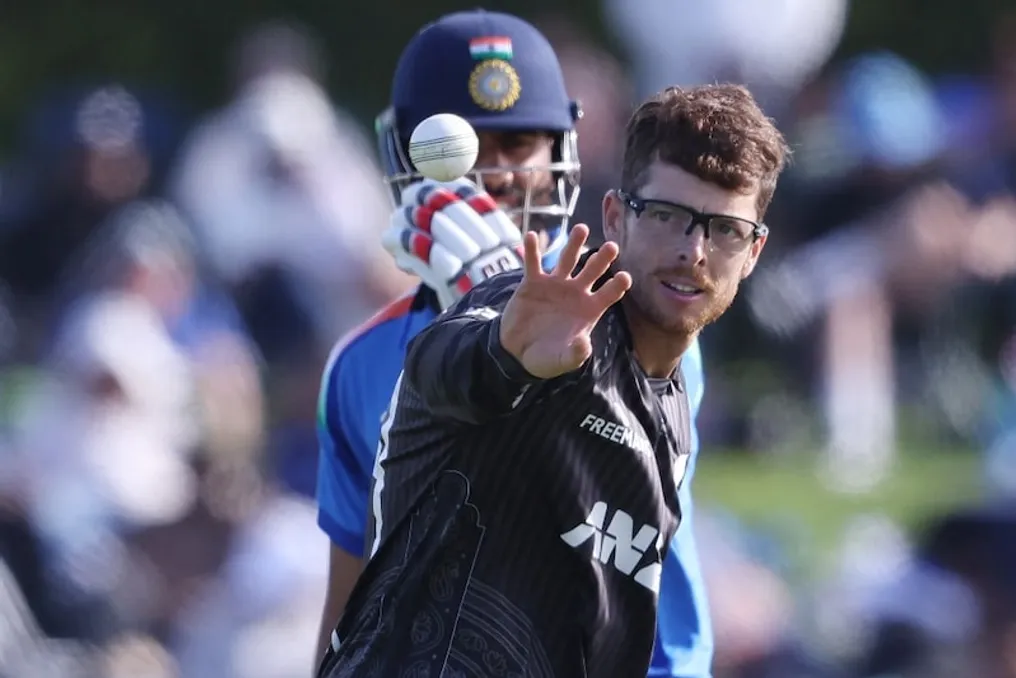
In the fifth match of the one-day tournament between India and New Zealand, the New Zealand team failed to reach the set target of 210 runs. In the game played at Mount Maunganui, the New Zealand squad scored only 187 runs, leading to a 22-run defeat. This loss allowed New Zealand to lose the one-day tournament series with a score of 1-3. Following this, the team captain, Michelle Jenner, analyzed the reasons for his team's failures.

According to Jenner, the playing conditions were difficult. He noted that the pace of the ball was uneven, and Indian bowlers were able to effectively utilize the circumstances. The captain suggested that the pitch had a dual dynamic, and the Indian players successfully put pressure on the team by actively using the effect of the ball's bounce.

Jenner admitted that the New Zealand batters should have built more prolonged partnerships. He emphasized that 50 overs in a match is enough time to develop innings. If the team could have extended some partnerships, the match might have ended in their favor. He added that at moments when the game was tough, India managed to capitalize on the opportunity by sending Arshdeep Singh for an extra over. Mohammed Siraj also made a significant contribution.

The captain highly praised the performance of the Indian bowlers, noting that all four fast bowlers demonstrated excellent play. He also mentioned that Shreyas Iyer rotated the bowlers wisely, and Axar Patel was kept in reserve due to the strong performance of the fast bowlers. Earlier, after the first half of the match, Jenner expressed satisfaction with the score of 209 runs, believing that the pitch assistance was less than expected. Nevertheless, the New Zealand bowlers started the game well and consistently took wickets, particularly Michelle Breswell who showed excellent play in the middle of the innings.

The New Zealand captain also commented on the series results, stating that the 3-1 score does not reflect the true picture of the matches. In his opinion, New Zealand demonstrated quality cricket in several moments during the series. Furthermore, rain interruptions interfered with the game, and the team also lost some coin tosses. He noted that different players got a chance in this series, and many gained valuable experience.

After the match, Jenner provided information about his injury, reporting severe pain in his hand which is not in good condition. An X-ray of his hand is scheduled for Monday morning to determine the seriousness of the injury.

It is worth noting that India initially scored 209 runs in 42.1 overs, with Axar Patel and Ishan Kishan scoring 46 runs each. In response, Michelle Jenner and Jacob Duffy took three wickets for New Zealand. Ultimately, the New Zealand team managed to score only 187 runs in 48.1 overs, with Arshdeep Singh taking three wickets for 30 runs.

Similar stories

Gurnoor Barar sets record by taking 4 wickets in India vs New Zealand ODI match
Read more
www.aajtak.in

Gurnoor Barar sets record by taking 4 wickets in India vs New Zealand ODI match

In the second ODI match held in Wellington between India and New Zealand, young fast bowler Gurnoor Barar made a strong impression on the fans with his performance. This young pacer from Punjab demonstrated outstanding play by taking four crucial wickets, conceding only 30 runs in his 10 overs of spin bowling.

Thanks to this impressive performance, Gurnoor has entered the list of top bowling achievements by Indian players in New Zealand, becoming the third best among all Indian bowlers. The historical record for the best ODI performance in New Zealand belongs to legendary leg-spinner Anil Kumble, who took 5 wickets for 33 runs in Wellington on March 30, 1994.

The second spot in this list is held by former fast bowler Javagal Srinath, who took 4 wickets for 23 runs in Auckland on December 26, 2002. Now, Gurnoor Barar (4/30) occupies the third place in this significant selection.

Furthermore, Gurnoor became the fourth Indian fast bowler to take four or more wickets in an ODI match in New Zealand. Before him were Srinath, Mohammed Shami, and Arshdeep Singh, who recently took 4/70 in Auckland on November 4.

During the game, Gurnoor dismantled the New Zealand attack with his dangerous bowling. He managed to get Tom Latham (7 runs) caught by Naman Dheer off the second ball of the 20th over. Then, on the last ball of the same over, he dismissed Glenn Phillips, who failed to score any runs, sending him to the pavilion caught by Anshul Kamboj.

After this, Gurnoor dismissed New Zealand captain Mitchell Santner (31 runs) via a catch taken by Kel Rahul, and then sealed his fourth success by taking the wicket of Kyle Jamieson on the fifth ball of his tenth over. Thanks to this wonderful performance by the young bowler, the Indian team was able to achieve an important success by restricting the hosts' score.

Overall, the entire New Zealand team was dismissed in just 41 overs, scoring only 134 runs, against the powerful bowling of the Indian bowlers. Young pacer Gurnoor Barar was the hero of this match, taking four wickets and breaking the defense of the Kiwi batsmen. Barar conceded only 30 runs in his 10 overs, including two maidens, securing four key results.

Questions about the team's bowling weakness arise after India's T20 series victory against New Zealand
Read more
www.aajtak.in

Questions about the team's bowling weakness arise after India's T20 series victory against New Zealand

Despite India's 3-2 victory in the T20 series against New Zealand, many questions remain that cannot be ignored. Although India dominated at the start of the series, winning the first three matches, two subsequent defeats exposed the team's weaknesses.

In the fifth T20 match, held in Hamilton on Sunday, New Zealand defeated India by seven wickets. The Indian batsmen scored 191 runs, but the bowlers failed to defend this total. The question arises whether India can remain world champions solely on the strength of its batsmen, especially when the team's tactical decisions, including the constant exclusion of Vaibhav Suryavanshi, are being questioned.

The attacking power of the Indian team was its main advantage in this series. Abhishek Sharma's aggressive play, in particular, put pressure on the opponents. However, in the last two matches, another side of the game emerged: when Abhishek couldn't score runs, the team struggled.

Nevertheless, in the fifth match, Ishan Kishan and captain Shreyas Iyer showed brilliant half-centuries. Ishan scored 61 runs off 32 balls, and Shreyas scored 50 runs off just 23 balls. Together they added 93 runs off 43 balls for the third wicket, taking India to a comfortable score of 112/2 in 10.1 overs.

It seemed from there that the Indian team was heading towards a large score, but the New Zealand bowlers managed to turn the game around. Edam Milne took four wickets for only 19 runs. Nathan Smith and Blair Tickner also succeeded at critical moments. In the end, the Indian team managed to reach 191/8.

India's main problem is its bowling. After scoring 191 runs in Hamilton, the Indian team created a difficult total to defend in T20 cricket, but New Zealand achieved it in only 18 overs. The hosts won the match by seven wickets, and the Indian bowlers looked as if they were craving wickets.

Tim Seifert was the main hero of New Zealand's victory, showing explosive play by scoring 93 runs off 50 balls. Glenn Phillips also helped create problems for the Indian bowling attack by scoring a half-century. Together they made the achievement very easy.

Another issue for the Indian team is fielding. Naman Dir dropped an easy catch by Seifert in the fourth over when he was scoring 13 runs. If this chance had been utilized, the picture of the New Zealand innings could have been different. Interestingly, New Zealand's fielding was not perfect either, and they missed several catches, but India's error proved decisive.

India's ability to score big in T20 cricket is undoubtedly a strength. However, to remain world champions, offense alone will not be enough. India needs bowlers capable of defending large totals and taking wickets at crucial moments.

The last two matches of this series showed that when opponents attack openly, the Indian bowling comes under pressure. Bowlers must have a clear plan not only to contain the run-scorers but also to take wickets. Furthermore, it is crucial to utilize the opportunities provided in fielding.

In the fifth match against New Zealand, the Indian team lacked ideal bowling resources, and the pitch became more favorable to batsmen at night. Nevertheless, one cannot ignore how easily New Zealand reached its target despite these conditions.

One reason for the questions regarding the Indian team's strategy is the constant exclusion of Vaibhav Suryavanshi from the starting lineup. The question of why a young explosive batsman like Vaibhav is not given a chance remains a subject of discussion.

The team management has several options in the upper order: Abhishek Sharma, Sanju Samson, Ishan Kishan, and other batsmen. The question arises as to who will give way to Vaibhav. However, naturally, questions arise about the strategy of constant experimentation and player exclusion.

It is not necessary for the decision to be to play Vaibhav at all costs, but if he is considered part of future plans, he should also be given opportunities to demonstrate his talent. Simply being in the squad does not allow a young player to prepare at the international level. The team management needs to clarify its plans regarding Vaibhav.

The T20 series against New Zealand is over, and now both teams will meet in ODI format matches. In this regard, the Indian team management has the opportunity to review its strategy and squad.

Gautam Gambhir and the team management must find a balance between attack and bowling. In addition to the ability to score big runs, they need to develop the ability to defend them. Player selection should also be based on the team's needs and current form.

After defeat in Hamilton T20, captain Shreyas Iyer admitted Indian team's mistakes
Read more
www.aajtak.in

After defeat in Hamilton T20, captain Shreyas Iyer admitted Indian team's mistakes

After the Indian team lost the T20 match against New Zealand in Hamilton on Sunday (November 1), Indian captain Shreyas Iyer acknowledged his team's shortcomings. He noted that the team failed to capitalize on a favorable start. Meanwhile, New Zealand captain Mitchell Santner stated that although the series ultimately ended with an Indian victory by 3-2, the outcome could have been different in favor of his team.

Shreyas Iyer emphasized after the game that the Indian team could have performed better given their start. Although the partnership with Ishan Kishan allowed the team to regain momentum, the subsequent fall of several players created sudden pressure on the new batsmen.

According to Shreyas, playing on that pitch was difficult. The ball sometimes came with spin, sometimes stopped on the track, and at other times flew fast. He mentioned that he and Tilak Varma were dismissed in a similar manner. Playing against a ball bowled long distance presented a serious challenge for the batsmen. Despite this, scoring 194 runs was, in his opinion, an acceptable result.

The Indian captain also admitted that the team could improve its fielding and bowling. He noted that the players looked somewhat sluggish in defense. Shreyas added that playing in different conditions and on various grounds in New Zealand provided a good learning opportunity for the team.

Shreyas mentioned that after gaining a 3-0 lead in the series, the team wanted to conduct experiments and challenge themselves in the last two matches. He said that the first three games gave the team rhythm. However, in the last two matches, the team did not meet expectations while trying to implement new approaches.

The Indian captain stated that he does not want to dwell too much on the T20 team's condition as they are now set to play ODI matches. Nevertheless, he agreed that the team atmosphere is good, and facing various difficulties in foreign conditions is necessary experience for the players.

Shreyas particularly highlighted the need to improve fielding. He noted that such conditions, where the sky is clear despite the darkness and the lighting has a specific effect, are not usually encountered in India. Playing in such an environment also became a learning experience for the team.

New Zealand captain Mitchell Santner expressed satisfaction with his team's performance in the series. He called the series very intense. In his view, there were small chances in the first two matches that New Zealand could have capitalized on. He suggested that if the team had won at those moments, the series outcome could have been completely different.

Santner positively assessed the team's play in both attack and defense. He noted that his bowlers adapted well to the conditions in the last two matches. The bowlers demonstrated variety in their deliveries, using wide yorkers, straight yorkers, and correct length. This was a valuable lesson for them. Santner added that the next chance to play in similar conditions would likely be available at the World Cup in a few years.

The New Zealand captain also expressed delight over the depth of the squad. He said that due to the tight schedule, significant changes had to be made to the squad, which gave opportunities for players who do not always have regular playing time to showcase themselves. These players seized the opportunity and showed they could immediately take responsibility.

Santner also highly praised Glenn Phillips's play, noting that he performs well in every match. He observed that Phillips initially takes some time before scoring, playing in his style, and his play plays an important role in getting the team into a good position.

Popular