The national stage of the 'NASA International Space Apps Challenge 2026' has concluded in Uzbekistan.
Ten winners of this event are planning to visit the NASA Space Center.
The national stage of the 'NASA International Space Apps Challenge 2026' has concluded in Uzbekistan.
Ten winners of this event are planning to visit the NASA Space Center.
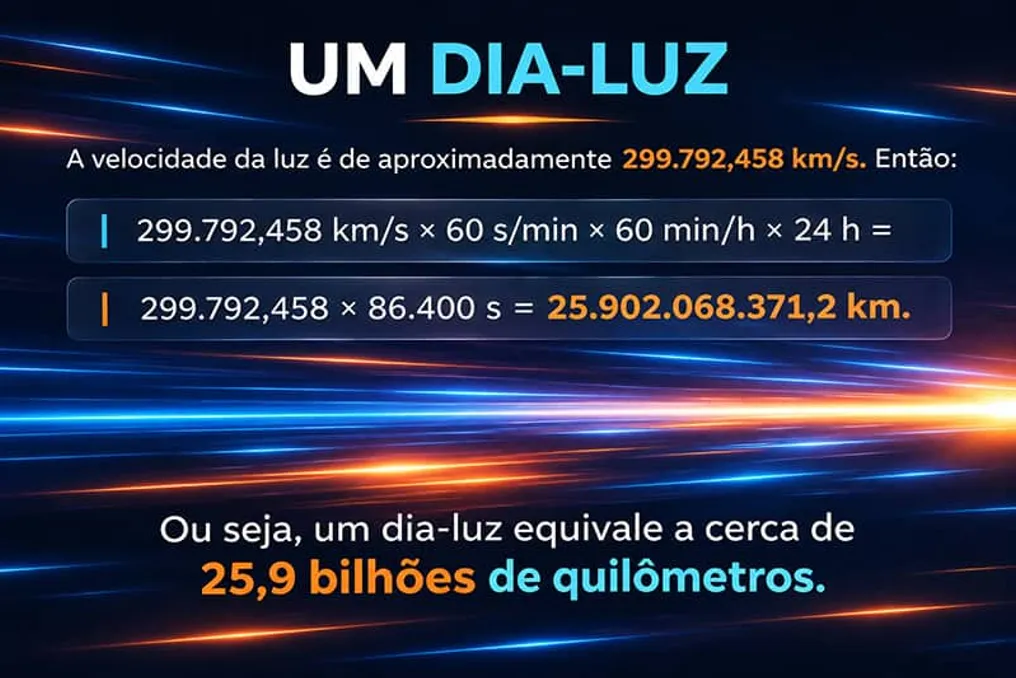
The Voyager 1 probe, launched by NASA in 1977, is about to reach a historic milestone in space exploration: for the first time, a human artifact will be at a distance equivalent to one light-day from Earth, which corresponds to approximately 25.9 billion kilometers.
One light-day is defined as the distance light travels in 24 hours in a vacuum. This concept follows the logic of the light-year, an astronomical unit known for the distance light travels in a year. Considering that light travels at about 300 thousand kilometers per second, one light-day is equivalent to about 25.9 billion kilometers.
Since its launch on September 5, 1977, Voyager 1 has been exploring space. It is currently located at about 173 astronomical units (AU) from Earth, making it the first spacecraft to pass through the heliosphere, cross the heliopause, and enter interstellar space. An astronomical unit represents the average distance between the Earth and the Sun, which is 149,597,870.7 km, placing Voyager 1 at a distance of 25,882,237,241 km at this moment.
At its current position, signals transmitted from Earth take 23 hours, 58 minutes, and 54 seconds to reach the probe. With its current speed of approximately 61,155 km/h, it is estimated that about seven days remain until Voyager 1 reaches the distance corresponding to 24 hours of light travel.
To celebrate this achievement, NASA has organized two special events and invited people from around the world to participate in the celebrations.
The first event, scheduled for Tuesday (17th), consists of a symbolic action to represent the trajectory of Voyager 1. Called 'Shine Brightly for Voyager Light Day,' the initiative aims to generate a wave of golden light around the planet after sunset, which will reach the spacecraft when it reaches the historic milestone. To participate, interested parties must access a specific website, which allows smartphones and tablets to be converted into light signals with the inscription 'VGR,' which is Voyager's call code in Morse code. NASA encourages participants to record and share photos or videos of this action on social media, using the agency's official tag, @NASA.
The second event will take place on Thursday (19th) at 12:00 PM Eastern Time (equivalent to 2:00 PM in Brasília), at NASA's Jet Propulsion Laboratory (JPL) located in Southern California. The program will include a panel discussion with mission members and space agency representatives.
According to NASA, the discussion will cover the current status of the Voyager 1 and Voyager 2 probes, ongoing scientific discoveries in interstellar space, and the challenges of keeping spacecraft operational for long periods and at great distances. Following the debate, there will be a question-and-answer session with the press.
The agenda also includes a preview of a documentary about the Voyagers, produced by NASA+, the agency's streaming service. The release of this documentary is scheduled for 2027, coinciding with the mission's 50th anniversary.
Confirmed participants include Nicky Fox, Associate Administrator of NASA's Science Mission Directorate; Jonathan Lunine, Chief Scientist at JPL and Planetary Science Professor at the California Institute of Technology (Caltech); Suzanne Dodd, Voyager Project Manager; Linda Spilker, Voyager Project Scientist; Kareem Badaruddin, Mission Manager, and Jamie Rankin, Deputy Project Scientist, affiliated with Princeton University.
Even though it is billions of kilometers from Earth, Voyager 1 continues to transmit data to NASA via a high-gain antenna that directs radio signals to the planet. These electromagnetic waves travel at the speed of light, but the journey between the spacecraft and Earth takes almost 24 hours.
This implies that any command sent from Earth takes approximately one day to reach the probe, and a subsequent response requires a similar interval. Consequently, a complete round-trip communication can take almost 48 hours.
The capture of this data depends on large antennas installed on Earth, designed to receive extremely weak signals. The equipment processes these transmissions to recover the scientific information sent by the spacecraft. The signal transit time is also used by NASA to calculate the exact location of Voyager 1, since the speed of light is known.
In 2012, Voyager 1 crossed the heliopause, which is the boundary of the heliosphere, a region shaped by the influence of the solar wind, thus becoming the first spacecraft to enter interstellar space. However, crossing this boundary does not necessarily define the end of the Solar System, as there is no single established limit. One interpretation suggests that the limit extends to where the Sun's gravitational pull is still felt. From this perspective, the boundary is located beyond the Oort Cloud, a distant area containing icy bodies. According to NASA, the Voyager probes will still take about 40 thousand years to reach this limit, covering a distance equivalent to approximately two light-years.
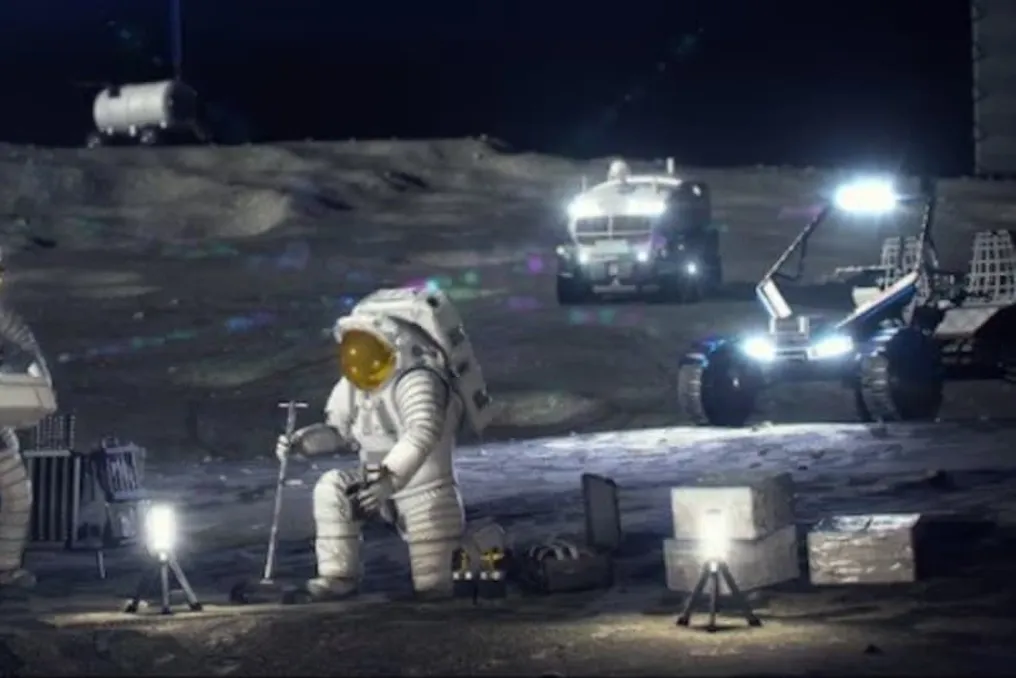
The National Aeronautics and Space Administration (NASA) has begun accepting applications from candidates for new astronaut programs that will participate in missions to establish a permanent human presence on the Moon. Selected specialists will contribute to the preparation for the Artemis program, the future lunar base, and subsequent missions to Mars.
The American space agency is looking for people capable of working at the proposed lunar base. These astronauts will also help accumulate the necessary technologies and experience for sending humans to Mars. NASA plans to send astronauts back to the lunar surface in 2028.
Applications are open only to US citizens, and the deadline for submission is set for December 4th at 10:29 AM Indian Time. The agency reports that the next crew will undergo training to perform complex missions, including expeditions to the lunar surface. Final selection is expected to be announced in late 2027.
The lunar base project is part of NASA's large-scale plan to ensure long-term human presence on the Moon. The goal is not just to send astronauts for a short time and bring them back to Earth, but to create conditions for prolonged work and life on the Moon.
As part of the Artemis program, NASA aims to return astronauts to the lunar surface. The agency is developing plans to explore areas near the Moon's south pole and gradually create the infrastructure necessary for long-term habitation. NASA Moon Base previously stated that 'there is no such thing as too high a goal, too distant a path, or too difficult terrain; we are going back to the Moon. This time, we are going to live there.'
The proposed lunar base may include living quarters, power sources, vehicles, and robotic equipment. This will allow astronauts to conduct scientific research, explore the surroundings, and work on the Moon for extended periods. The Moon's south pole is of particular significance because scientists believe there is water ice present in permanently shadowed regions, which could serve as a source of water and oxygen for future missions.
NASA's long-term goal is to use the experience gained on the Moon to prepare for sending humans to Mars.
Under the Artemis program, NASA has set a goal to land astronauts on the lunar surface in 2028. These missions are intended to lay the foundation for a long-term human presence on the Moon. Private companies such as SpaceX and Blue Origin, which develop spacecraft and lunar landing systems for NASA, are involved in the planning.
However, creating a fully functional lunar base will take significantly longer than the first landing. This will require regular mission launches and the gradual creation of equipment and infrastructure capable of meeting astronauts' needs far from Earth.
Recruitment is exclusively open to US citizens. Candidates must hold a master's degree in science, technology, engineering, or mathematics, along with at least three years of professional experience in the relevant field. Medical qualifications or certain doctoral degrees and test pilot training may substitute for the educational requirement. Pilots must meet established flight hour requirements.
All applicants must undergo a NASA medical examination to participate in long-duration space flights. In addition to professional skills, the agency will assess the candidate's abilities in leadership, teamwork, and communication.
NASA Moon Base reported in a post dated August 4, 2026, that the clean room access process had begun. This announcement presented commercial spacecraft from Blue Origin, Firefly Space, Int Machines, and Voyager Tech, which will deliver NASA scientific developments and technologies to the Moon to build the first lunar base.
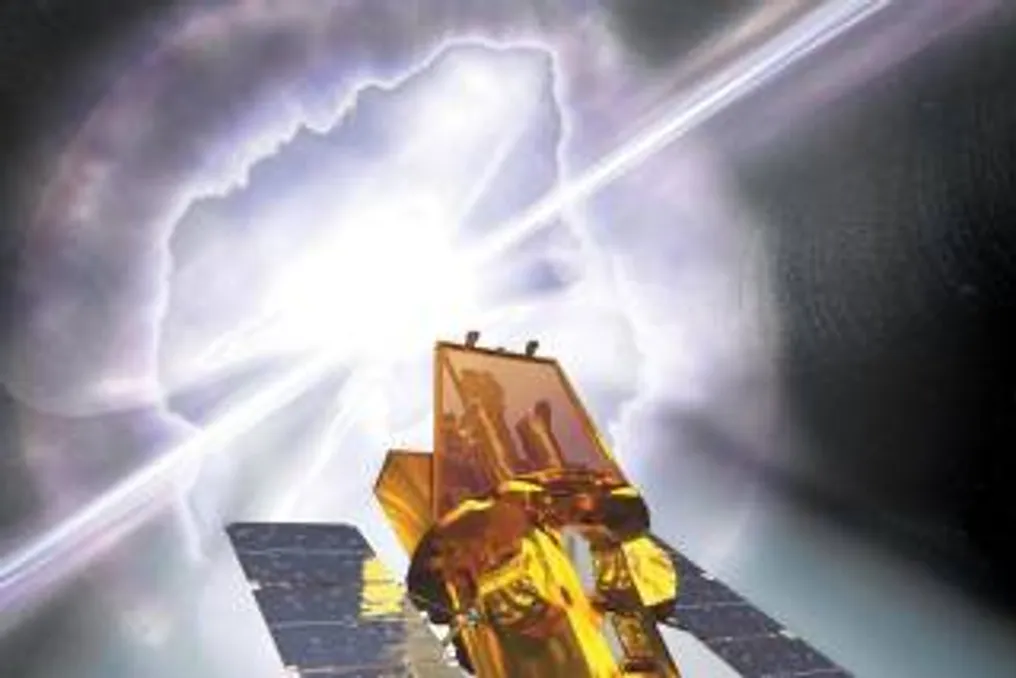
The Swift Space Observatory from the U.S. National Aeronautics and Space Administration (NASA) has completed its mission after 22 years of productive activity.
This was reported by the Turkish news agency Anadolu.