Porsche develops patented system that uses heat to recharge battery and prevent failures in cold weather
Read more
AutoPapo
autopapo.com.br

Porsche develops patented system that uses heat to recharge battery and prevent failures in cold weather

Porsche has filed a patent application for an innovative system that uses heat from a fuel-powered heater to recharge a vehicle's starting battery. This technology was specifically designed to prevent vehicles from experiencing issues during periods of extreme cold, when low temperatures can reduce battery capacity by half.

The design stipulates that a small burner should automatically activate if the 12-volt battery does not have sufficient charge to start the engine. The resulting heat is then converted into electricity via a thermoelectric module, which channels this energy to the battery, enabling the vehicle to start without relying on auxiliary cables or roadside assistance.

Structurally, the heater is installed in the upper area of the front wheel, while the generator and battery are located under the hood. The module utilizes semiconductor elements capable of generating electric current from the temperature difference between its two faces. One face absorbs heat from the burner, while the other releases thermal energy to the bodywork, which acts as a heat sink.

According to the proposal, the greater the temperature disparity between the surfaces, the greater the electricity production. For this reason, the system may be particularly advantageous on very cold days, as the metal surrounding the engine compartment will also be at low temperatures.

Despite the promising concept, the patent still presents some uncertainties. Fuel heaters require power from the battery itself to operate essential components such as the pump, fan, and ignition system. Manufacturers like Webasto configure their devices to deactivate when voltage drops, thus preventing the total loss of energy needed to start the vehicle. The Porsche document does not detail how the burner would function under such circumstances.

Additionally, the automaker does not specify the generator's power, the time required to recharge the battery, or the fuel consumption. As a point of comparison, a prototype developed by BMW in 2008 could generate approximately 200 watts using exhaust heat. With this power, it is estimated that almost an hour would be required to restore one-fifth of a standard battery's charge.

Currently, this technology remains within the scope of patents, with no confirmation as to when or if it will be implemented in production models.
Similar stories

West Coast Customs created Project B-Zero, combining a 1955 Chevrolet Bel Air body with a Tesla Model 3 platform
Read more
autopapo.com.br

West Coast Customs created Project B-Zero, combining a 1955 Chevrolet Bel Air body with a Tesla Model 3 platform

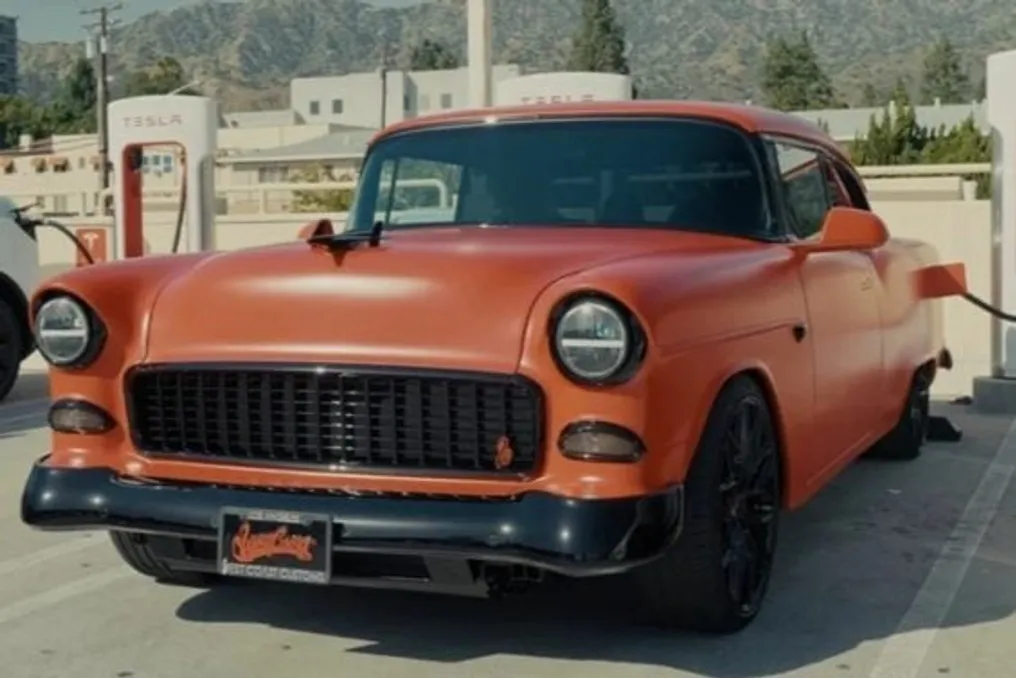
There is a vehicle known as Project B-Zero, which presents the external appearance of a 1955 Chevrolet Bel Air but internally uses the structure and mechanics of a Tesla Model 3.

This car was developed by West Coast Customs, a shop located in California, USA, that became known for participating in the MTV's Pimp My Ride program. The customizer replaced the iconic 1950s body with the electric platform, battery, and technology of the Model 3 sedan.

The request for this project came from a long-time customer of the shop, who is interested in converting his entire vehicle collection, including muscle cars, to electric models. To achieve this, the customer provided West Coast Customs with his Bel Air and a gray Model 3 that served as a donor part.

The process began with the team cutting the Model 3 body, keeping only the flat, skateboard-like structure where the mechanical components and battery are located. Then, the Chevrolet body was mounted onto this base. Due to differences in dimensions and wheelbase between the two cars, it was necessary to extend the rear wheel wells of the Bel Air.

The original Tesla suspension was replaced with a custom air suspension system, allowing the car to sit very close to the ground and hiding the 20-inch wheels inside the fenders. Inside, the classic retained elements such as the steering wheel and seats but incorporated the Model 3's central screen, and the dashboard was redesigned to accommodate the new controls.

The seats were customized with hexagonal stitching, inspired by current Lamborghini models. According to the shop, functionalities such as Autopilot (Tesla's driving assistance system) and automatic parking remain operational.

In terms of aesthetics, the original two-tone paint was replaced with a matte red tone, the chrome details were converted to black finishes, and the headlights were updated to LED technology. A subtle cover hides the charging port, allowing the Bel Air to connect to the Tesla Supercharger network.

It is worth noting that this is not the first 1955 Bel Air to undergo modifications by West Coast Customs; in 2005, an example from the same year was modified by the shop for an episode of Pimp My Ride.

Brabus developed Porsche 911 Turbo S model with 800 hp, adding 89 hp to the original version
Read more
autopapo.com.br

Brabus developed Porsche 911 Turbo S model with 800 hp, adding 89 hp to the original version

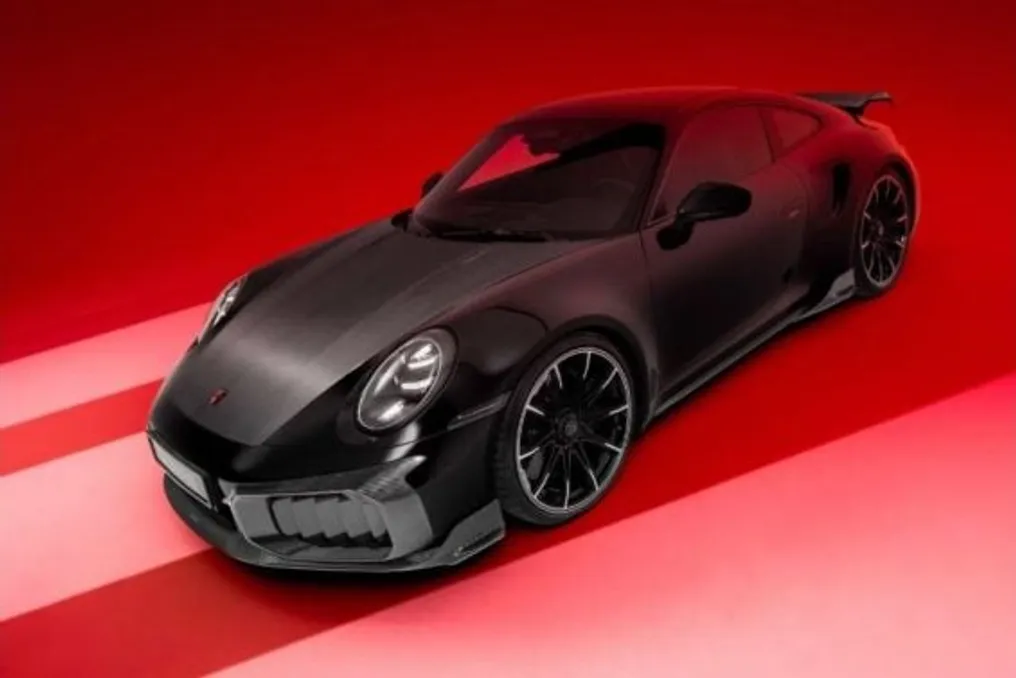
Brabus identified additional power capacity in the Porsche 911, considered the most powerful ever produced in series. The German tuner recently launched the Brabus 800, an adaptation of the current Porsche 911 Turbo S, which achieves 800 horsepower and 91.8 kgfm of torque.

This new performance represents an increase of 89 hp and 10.2 kgfm compared to the original sports car, whose starting price in Brazil is R$ 2.1 million. Although Brabus is known for modifying Mercedes-Benz vehicles, it also works with models from Land Rover, Rolls-Royce, Bentley, Lamborghini, and Porsche.

Previously, in 2022, the company had modified the previous 911 Turbo S, which did not have electrification, boosting its power to 820 hp by installing new turbines.

The challenge this time was that the modern 911 Turbo S integrates a 3.6 biturbo boxer engine with electric turbochargers and an electric motor coupled to the transmission. The implemented solution was the PowerXtra P36-800 kit, an auxiliary electronic unit that adjusts injection, ignition, and turbo pressure without altering the mechanical components or the existing hybrid system.

Thanks to this modification, the internal combustion engine goes from 640 hp and 77.5 kgfm to 729 hp and 87.7 kgfm, while the electric motor maintains its 71 hp. According to Brabus, the coupe can reach 100 km/h in just 2.4 seconds, and the convertible takes 2.5 seconds, beating the factory models' times by a tenth. The top speed remains at 322 km/h, equal to the original Porsche.

Aesthetically, the vehicle features visible carbon fiber parts, including a front spoiler, a higher rear wing, side skirts, and a diffuser equipped with four sporty exhaust outlets. The original active aerodynamics remain operational. The forged wheels, which have a center nut, are 21 inches in the front and 22 inches in the rear. Additionally, sports springs allow the car height to be reduced by up to 2.5 cm.

Inside, which is made to order, the open convertible has black leather upholstery, diamond-patterned padded seats, and carbon fiber details on the steering wheel and dashboard. An extra module has been added capable of memorizing the settings for the start-stop system, lane assist, and exhaust. In Germany, Brabus announced a ready convertible for approximately R$ 2.95 million (equivalent to 482,714 euros), already including local taxes.

Porsche launches coffee machine and grinder inspired by the 911 Carrera RS 2.7
Read more
autopapo.com.br

Porsche launches coffee machine and grinder inspired by the 911 Carrera RS 2.7

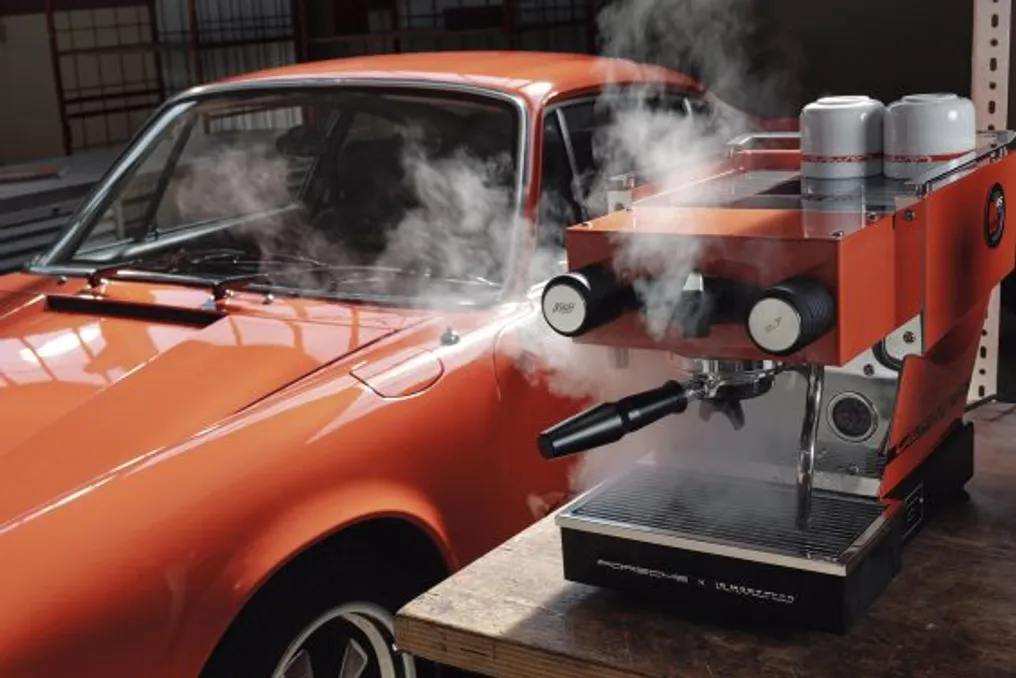
Porsche has adapted one of its most beloved automotive models to create coffee equipment. In collaboration with the Italian company La Marzocco, the brand has introduced a limited edition of the Linea Micra espresso machine and the Pico grinder, both inspired by the 911 Carrera RS 2.7 model, manufactured in 1972.

This is the second joint collection between the two companies, following the 2024 edition. The Linea Micra is available in three classic Porsche color schemes: Grand Prix white combined with green, tangerine with black, and Grand Prix white with blue.

A standout feature on the machine is the cup holder, which replicates the airfoil known as the 'ducktail' of the RS 2.7. Furthermore, the machine features the 'Carrera RS' engraving along with the old Porsche emblem, laser-engraved levers reading 'RS' and '2.7', and pressure gauges equipped with red and green pointers. A side plate displays the phrase 'One of 911', indicating the limited run.

The 911 Carrera RS 2.7 was conceived in 1972 with the purpose of homologating the vehicle for competition, being produced in a series of only 500 units. This car marked the beginning of the use of the Carrera name on the 911 model, a tribute to the Mexican Carrera Panamericana race, and represented the fastest production car in Germany at the time.

Internally, the Linea Micra is a two-boiler La Marzocco machine, which is handcrafted upon request. It features a 3-in-1 filter holder, an insulated steam wand, a 2-liter reservoir, and app control functionality, allowing temperature adjustment and scheduling.

The Pico grinder shares the same aesthetic and has a bean hopper with automatic closing. The white with green and tangerine with black editions will be limited to 911 units each. The white with blue version will have an exclusive distribution for Germany, totaling 150 pieces.

In terms of price, in Europe, the Linea Micra costs approximately R$ 35.7k (equivalent to € 5,790), while the grinder is priced at about R$ 9.6k (€ 1,550). In the United States, the machine price is approximately R$ 43.6k (US$ 7,911), a value that alludes to the 911.

The products can be purchased on the Porsche website, at selected points of sale, and in Porsche Design stores. The collection also includes complementary items, such as handmade cups, apparel, caps, socks, and 1:18 scale miniatures of the 911 Carrera RS 2.7.

Popular