Ola Electric reports significant losses and closure of its own stores due to revenue decline
Read more
Aaj Tak
www.aajtak.in

Ola Electric reports significant losses and closure of its own stores due to revenue decline

When Ola Electric entered the Indian market, its approach was revolutionary. The company's founder, Bhavish Aggarwal, launched the 'EndICEAge' campaign to mark the end of the era of gasoline two-wheelers and the beginning of the electric age. Initially, electric scooters were sold actively, and the company made bold statements. However, the situation has changed, and Ola's sales have been steadily declining, putting pressure on revenues and maintaining the burden of losses.

In response, the company decided to change its strategy: its proprietary retail stores will be closed, and sales will be transferred to dealer networks. The results for the second quarter of the 2027 fiscal year (Q2 FY27) show that the road ahead for the company will be challenging. The company, which was supposed to be an alternative to gasoline scooters, is now focused on stimulating its own sales.

The company claims that the problem is not a lack of buyers for electric scooters, but rather that production increases are outpacing demand. Ola Electric's founder and CEO, Bhavish Aggarwal, stated that the current volume of electric scooter production matches sales volume. As a result, the company is working to strengthen its manufacturing capacity and supply chain.

Ola Electric published its results for the second quarter of the 2027 fiscal year on Thursday. Although these results managed to reduce losses, the drop in revenue and increasing operational pressure raised several questions.

In a letter to shareholders, Bhavish Aggarwal reported that the company's production is continuously growing. In August 2026, Ola Electric produced 9,235 units, and this figure increased to 14,092 units in October. The company's goal is to produce 25,000 electric scooters monthly by December, for which accelerating supply chain strengthening is a priority.

Ola Electric has also significantly changed its business model. The company has stopped accepting new orders through its direct-to-consumer (D2C) store network. The focus has now shifted to increasing sales through third-party dealers. According to this plan, most of its own stores will be closed by the end of 2026.

This strategic change was announced in August 2026, and the first dealership point began operations in early September. By November 8, Ola Electric had 255 dealers across the country managing a total of 319 stores. The plan is to expand this network to 700 points by the end of the current fiscal year.

According to Bhavish Aggarwal, this transition will allow the company to reduce operating expenses. In Q2 FY27, operating expenses decreased to 369 crore rupees compared to 390 crore rupees in the first quarter. Adopting the dealer model will also reduce the company's need for working capital.

An analysis of Ola Electric's financial performance shows some positive aspects. The company's net loss in Q2 FY27 decreased to 362 crore rupees, compared to 418 crore rupees in the same period last year (Q2 FY26). Nevertheless, the decline in revenue remains a concern. Ola Electric's revenue in the second quarter fell to 421 crore rupees, whereas it was 690 crore rupees in the same period last year. Furthermore, the EBITDA loss increased to 218 crore rupees, exceeding 203 crore rupees in the corresponding period of the previous year.
Similar stories

Ola Electric reports reduced losses to 362 crore rupees for the second quarter of fiscal year 2027
Read more
business-standard.com

Ola Electric reports reduced losses to 362 crore rupees for the second quarter of fiscal year 2027

The electric vehicle manufacturer Ola Electric reported a consolidated loss of 3.62 billion rupees (US$38.66 million) for the three months ending September 30. This figure is lower than the loss of 4.18 billion rupees in the previous year.

The reduction in quarterly loss was made possible by cost control measures and restructuring. The company, led by Bhavish Aggarwal, has been conducting staff restructuring, reducing warranty expenses, and tightening working capital cost management in recent quarters as part of efforts to improve profitability.

These steps contributed to a 28.4 percent decrease in expenses in the second quarter, bringing them down to 6.39 billion rupees. Meanwhile, the consolidated gross margin stood at 29.93 percent compared to 30.9 percent the previous year.

Nevertheless, the company stated that it expects a decline in gross margin in the third and fourth quarters due to the expansion of its dealer network, although the operating margin is expected to improve significantly.

Ola Electric, once the largest producer of electric two-wheelers in India by sales, continues to face sales pressure amid aggressive competition from Ather Energy, as well as traditional automakers TVS Motor, Bajaj Auto, and Hero MotoCorp.

According to vehicle registration data, the company sold 41,651 units in the second quarter, which is less than the 51,775 units sold the previous year. This resulted in a revenue drop of approximately 39 percent, amounting to 4.21 billion rupees.

In a letter to shareholders, the company noted: 'Demand is no longer our constraint; supply is,' adding that it is actively collaborating with suppliers to increase capacity and monthly production volumes.

Omoda E5 receives updates, new entry version, and price reduction, but loses range
Read more
autopapo.com.br

Omoda E5 receives updates, new entry version, and price reduction, but loses range

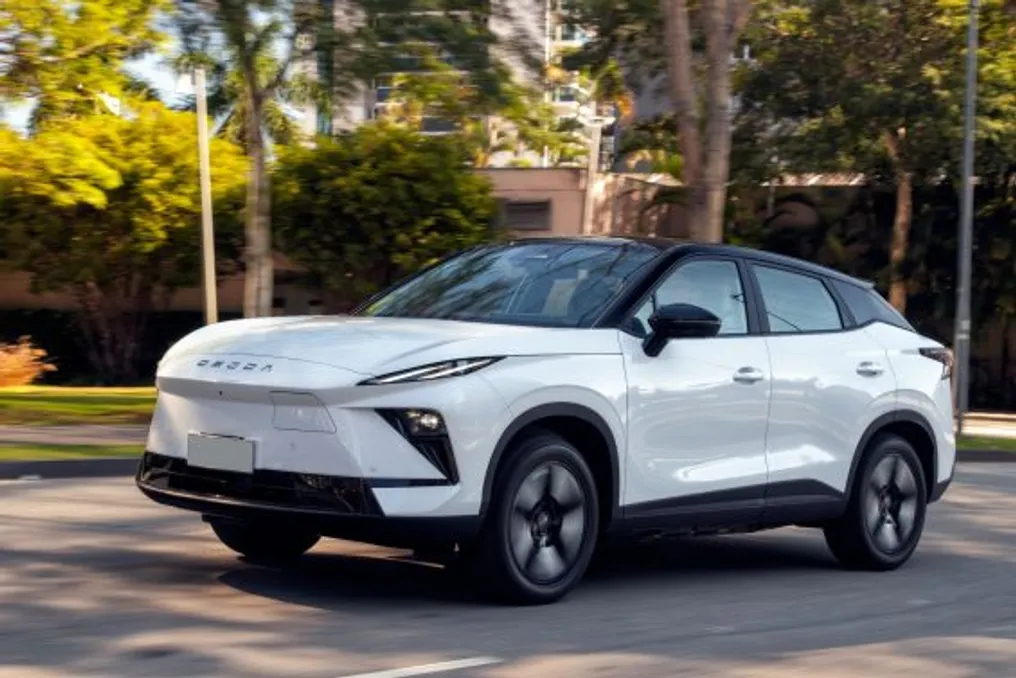
The electric coupe SUV Omoda E5, presented at the Interlagos Festival in August, was launched on the market with several updates and the introduction of a new entry-level version.

The current prices for the Omoda E5 are R$ 159,990 for the Elite version and R$ 184,990 for the Prestige version. Previously, there was only one model, equivalent to the top-of-the-line, costing R$ 209,990. For the first batch, promotional prices of R$ 149,990 for the Elite and R$ 179,990 for the Prestige were offered.

Aesthetic and Interior Changes

The visual modifications applied to the Omoda E5 served to better distinguish it from its hybrid counterpart. The front received a more minimalist, grille-less design, keeping the charging port positioned near the headlight. At the rear, taillights were installed that share the visual identity with the Omoda 7.

Inside, the dashboard was renewed, eliminating the bezel that connected the instrument panel to the multimedia center. The coupe SUV now features a prominent rectangular screen in the center and a second, thinner screen behind the steering wheel, following a trend observed in various Chinese vehicles.

In terms of screens, the Elite version has a 12.3-inch multimedia center, while the Prestige comes with a larger 15.6-inch screen. A distinction between the models also lies in the finish: the more economical option uses fabric upholstery, whereas the top version employs synthetic material.

Performance and Range

The mechanical system was updated, with the electric motor now generating 210 hp and 29.4 kgfm, resulting in greater power, although there is a loss of torque. The acceleration capability from 0 to 100 km/h improved, being achieved in 7.2 seconds.

The Prestige version is equipped with a 60.9 kWh battery, which guarantees a range of 320 km in the INMETRO cycle, representing a reduction of 25 km compared to the previous model. The entry-level Elite version has a 50.6 kWh battery and offers 278 km of range.

This decrease in range is compensated by the increase in DC charging power: in the Prestige version, it rose from 80 kW to 130 kW, and in the entry-level version, it reached 110 kW, a notable figure compared to competitors.

Features and Availability

The Omoda E5 Elite adopts the Chery group's strategy of differentiating versions, which implies the exclusion of the ADAS package. Generally, its set of equipment is similar to that of the hybrid model. Additional items present in the top-of-the-line Prestige version compared to the Elite include:

The entry-level version features a more basic LCD panel, similar to that found in the Jaecoo 5, and suffers cuts in simple details, such as courtesy mirror lighting. However, it retained the soft-touch finish present in the hybrid model.

The new Omoda E5 is already available on the market and will be offered in four shades. The vehicle comes with a total warranty of seven years for the body and eight years for the battery.

Popular