Young entrepreneur started a Ramen noodle business with 10 thousand rubles, achieved success, but later closed it due to financial problems
Read more
Aaj Tak
www.aajtak.in

Young entrepreneur started a Ramen noodle business with 10 thousand rubles, achieved success, but later closed it due to financial problems

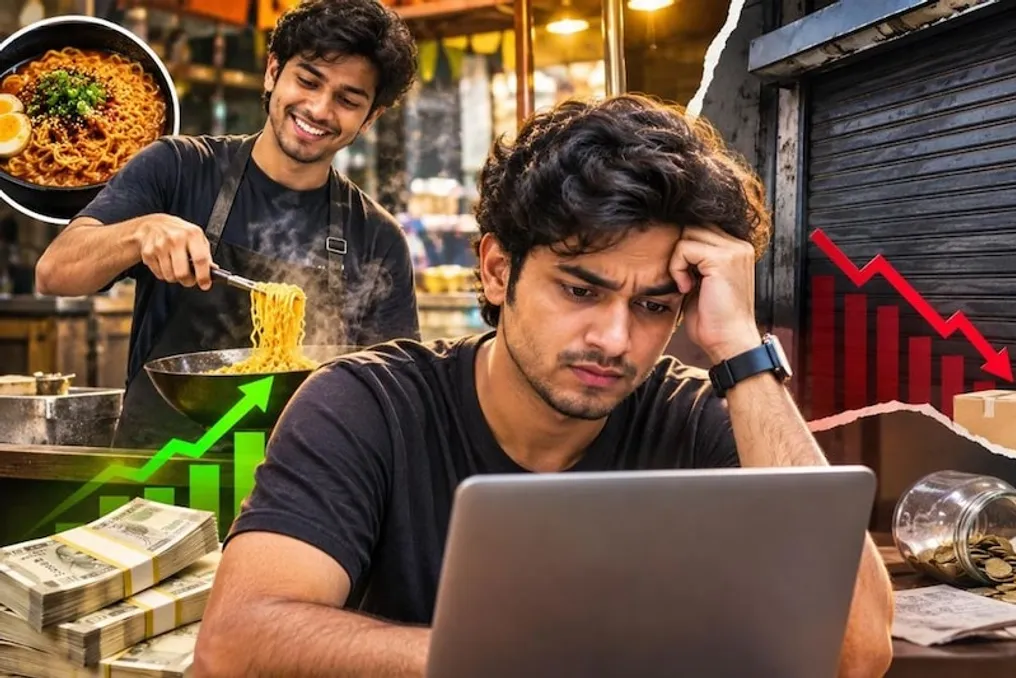
Success in business often begins with small investments, which is what happened to a young entrepreneur from Delhi. He launched a Ramen noodle production business starting with only 10 thousand rupees, and within a few months, the daily turnover reached 25 thousand rupees.

However, when the business started showing good results, the entrepreneur increased his personal expenses. Gradually, sales began to decline, and at the end of 2023, he had to decide to close his enterprise.

This entrepreneur shared that in August 2022, he founded the Ramen Noodles brand using a starting capital of 10 thousand rupees. Thanks to his marketing experience, he independently handled product recipe development, packaging, and shelf life. He rented a small room and, using limited resources and homemade equipment, turned it into a production site.

Initially, daily sales were 5–6 thousand rupees, but within two or three months, the sales volume grew to 25 thousand rupees daily.

After the initial rapid success, the entrepreneur felt that everything was under his control. Driven by this overconfidence, he began increasing his personal spending, purchasing PS5 game consoles and other gaming devices, as well as raising monthly expenses. Nevertheless, the income from the business remained unstable, and soon sales started to drop. The business, which previously sold 25 thousand rupees daily, reduced its turnover to 10–12 thousand rupees per day.

Despite the drop in sales, he continued to spend on advertising and launched various marketing campaigns, but they did not yield the same results.

The entrepreneur stated in his post that despite constant efforts, the business could not be stabilized, and by the end of 2023, he had to cease operations of the Ramen brand. The business, which previously generated revenue of 25 thousand rupees per day, effectively stopped. Even after closing the company, he continued to cover his monthly expenses, forcing him to take out loans and apply for credit. As a result, at the age of just 23, he found himself in a state of bankruptcy, unable to save a significant portion of profit for the future.

Despite the losses in the first venture, he did not abandon entrepreneurship. In a Reddit post, he mentioned that in 2026, he launched a new brand specializing in selling water fountains. He noted that sales are going well in this new business as well. He managed to prepare the production line in just two months and handled the marketing himself, but now, while trying to scale up his business, he faces issues with management and expansion.

He is currently struggling with the development of the new business and fears making repeated mistakes. Therefore, he reached out to users for help, asking other entrepreneurs questions about business management methods and promotion. Many users highly praised his efforts and ability to create a production line with limited funds. Others advised him to seek consultation from an experienced specialist or mentor in financial management.

Similar stories

Content Creator Santika Bomic Earned 3.06 Lakh Rupees by Declining Deals for Durga Puja
Read more
www.aajtak.in

Content Creator Santika Bomic Earned 3.06 Lakh Rupees by Declining Deals for Durga Puja

While a good job and high salary are traditionally considered successful, modern young people are increasingly striving to build a career in content creation, sometimes even foregoing their main jobs for this goal. Content creation is already being taught in some major universities.

Social media content creation has ceased to be just a hobby and has become a source of income. Many creators earn good money by collaborating with brands. This is what Santika Bomic, a content creator from Kolkata, did. Instead of taking on more advertising contracts in October, she decided to dedicate time to celebrating Durga Puja and worked with only five brands, earning 3.06 lakh rupees in the month. However, this entire amount has not yet been deposited into her bank account.

Santika shared details of her October earnings in a video posted on Instagram, and also talked about her experience working with brands. She explained the conditions and payment timelines that content creators must wait for when signing advertising deals.

In the social media video, Santika emphasized that October was a special month for her because of the Durga Puja festival. As a Bengali, this period holds great significance for her. She wanted to create and publish content related to the festival, so she consciously limited the number of advertising partnerships in October, agreeing to only five collaborations to find time to create content dedicated to the holiday.

Santika reported that she collaborated with only five brands: Tira, Myntra Beauty, Sprite, Pilgrim, and LoveChild by Masaba. For this work, she was paid a total of 3.06 lakh rupees. Despite the small number of deals, her income was significant. Santika clarified that the fees for different collaborations varied; some included advertising rights, meaning the brand had the right to use the content she created for promotional purposes.

She also mentioned that in some deals, she reduced her rate due to good relations with the brand and agency. According to her, established interaction with the agency provides her with constant opportunities for collaboration.

An interesting point in Santika's story is that despite completing the work in October, she has not yet received the 3.06 lakh rupees. She explained that the process of receiving payment for advertising deals usually takes 30 to 45 days, so she expects the funds for the October work to arrive in her account by the end of November. Thus, completing work with a brand and receiving money in the bank account are two different processes, and content creators often have to wait for the established payment cycle.

Social media reacted to Santika's video. Many users highly appreciated her openness regarding earnings, as well as information about work and payment. One user noted that her story became a source of inspiration for him, while another praised her honesty and directness.

Sharp rise in alcohol sales observed in Delhi during Diwali festivals
Read more
www.aajtak.in

Sharp rise in alcohol sales observed in Delhi during Diwali festivals

A significant surge in alcohol sales has been noted in the capital city of Delhi during the Diwali festival period. Over the past two weeks, alcohol sales in Delhi have increased by 13% compared to last year, bringing in revenue of approximately 600 million rupees for the tax department.

According to the tax department's data, 33.1 million bottles of various brands of alcohol were sold during the two festive weeks this year. Meanwhile, 29.6 million bottles were sold during the same period leading up to Diwali in 2025.

Regarding revenue, the tax department registered total earnings of 589.17 million rupees during the current year's two festive weeks, compared to 518.97 million rupees last year.

In accordance with a previous directive from the department, a 'dry day' was declared in Delhi on Diwali, and all liquor stores were closed. Because of this, the day preceding the festival, November 7th, saw a large crowd at liquor stores, leading to sales amounting to over 79 million rupees.

On the night before Diwali this year, 4.045 million bottles were sold worth 79.25 million rupees. This significantly exceeds the figures from last year, when 3.470 million bottles were sold worth 63.40 million rupees on the same day.

Officials stated that these sales figures are preliminary and may be adjusted after reconciliation with final data from four state corporations responsible for retail sale of alcohol in more than 700 stores across the city.

According to available data, revenue from alcohol sales reached 792.52 million rupees by 2026, compared to 634.08 million rupees in 2025, demonstrating a substantial growth of 24.9 percent.

It should be noted that the retail trade of Indian Made Foreign Liquor (IMFL), foreign alcohol, and beer in Delhi is restricted to four Delhi government corporations: DTTDC, DSIIDC, DSCSC, and DCCWS.

Sale of instant noodles and tea in the mountains brings significant income even in the low season
Read more
www.aajtak.in

Sale of instant noodles and tea in the mountains brings significant income even in the low season

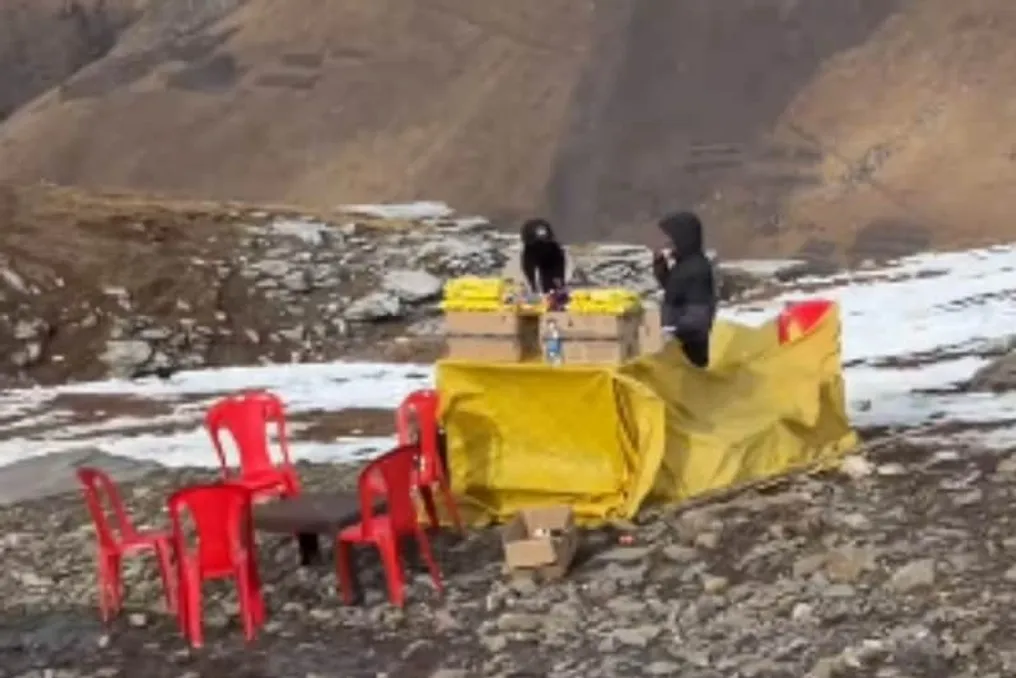
For people visiting the mountains, the taste of instant noodles and tea becomes part of the journey. In cold weather, tourists often stop to enjoy a hot bowl of noodles. However, the question arises about what daily income a noodle vendor by the roadside in the mountains can earn. The story of the noodle seller at Rohanga Pass in Himachal Pradesh is currently being actively discussed on social media.

It is claimed that even in the low season, his shop generates about 14-15 thousand rupees in daily revenue. Nevertheless, it is incorrect to consider this amount as net profit, as it includes expenses for goods delivery and shop maintenance. This fact was recorded and published by a tourist on social media.

Content creator Harsh Chauhan visited Rohanga Pass. During his visit, he spoke with the noodle vendor about his business. When Harsh asked about the sales volume, the vendor noted that it was the low season. After a follow-up question about sales specifically during the low season, the vendor stated that he sells approximately 60 to 70 bowls of noodles daily.

The price of one bowl is 100 rupees. Additionally, about 200 cups of tea are sold daily at a price of 40 rupees per cup. The shop also takes orders for eggs, although the quantity remains small.

According to the vendor's data, selling 60-70 bowls of noodles brings in 6,000 to 7,000 rupees daily. Meanwhile, sales of 200 cups of tea generate about 8,000 rupees. Thus, the total estimated revenue reaches 14,000–15,000 rupees per day. This amount does not include income from egg sales. Harsh Chauhan shared a video of this conversation on social media, emphasizing that these figures pertain to the low season, and questioned what the business volume would be during peak tourist season.

Social media users discussed not only the sales volumes but also the difficulties of operating in places like Rohanga Pass. Many noted that delivering goods to such locations is not easy. Transportation costs are related to the fact that goods such as noodles, tea, eggs, and gas cylinders must be delivered from Manali up the slope.

Some users also mentioned that water has to be brought from afar, and work is conducted in cold and windy conditions. In such weather, gas consumption for cooking may increase. One user stated that delivering goods from Manali to the shop costs approximately 2,000 rupees, although this expense is based on a claim made on social media.

Through this conversation, Harsh Chauhan wanted to demonstrate that the potential of a business is determined not by its size, but by its location, customer needs, and method of operation. The noodle and tea shop at Rohanga Pass serves as such an example. However, a daily revenue of 14-15 thousand rupees does not equate to equivalent profit, as the seller's actual costs and savings remain unknown.

Popular