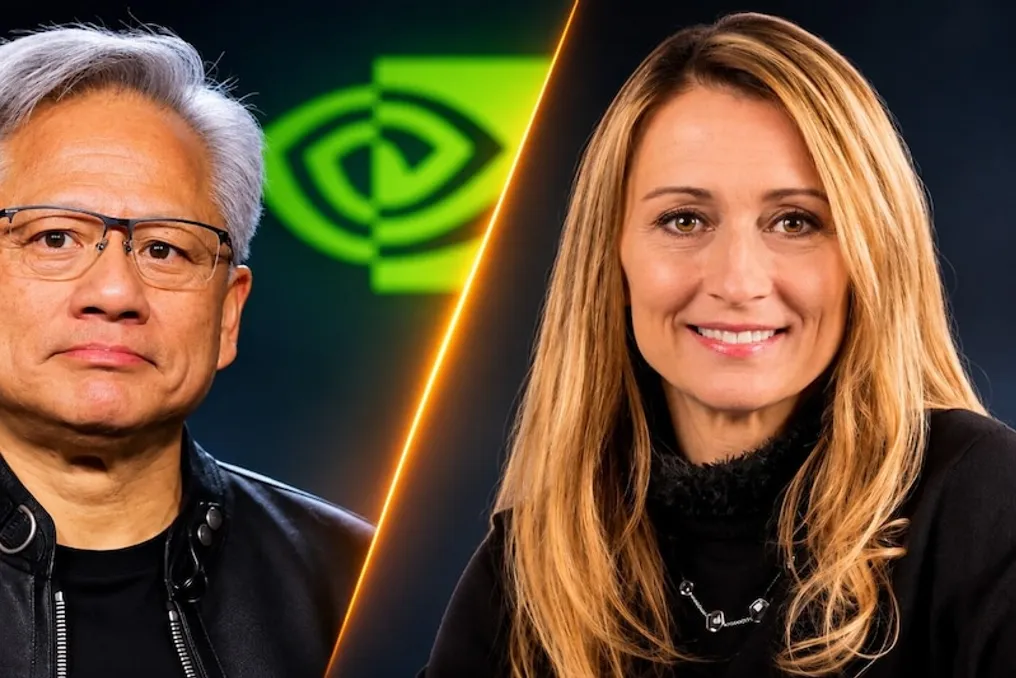
New Nvidia CEO Colette Kress: Her Salary and Comparison with Former CEO Jensen Huang
Read more
Aaj Tak
www.aajtak.in

New Nvidia CEO Colette Kress: Her Salary and Comparison with Former CEO Jensen Huang

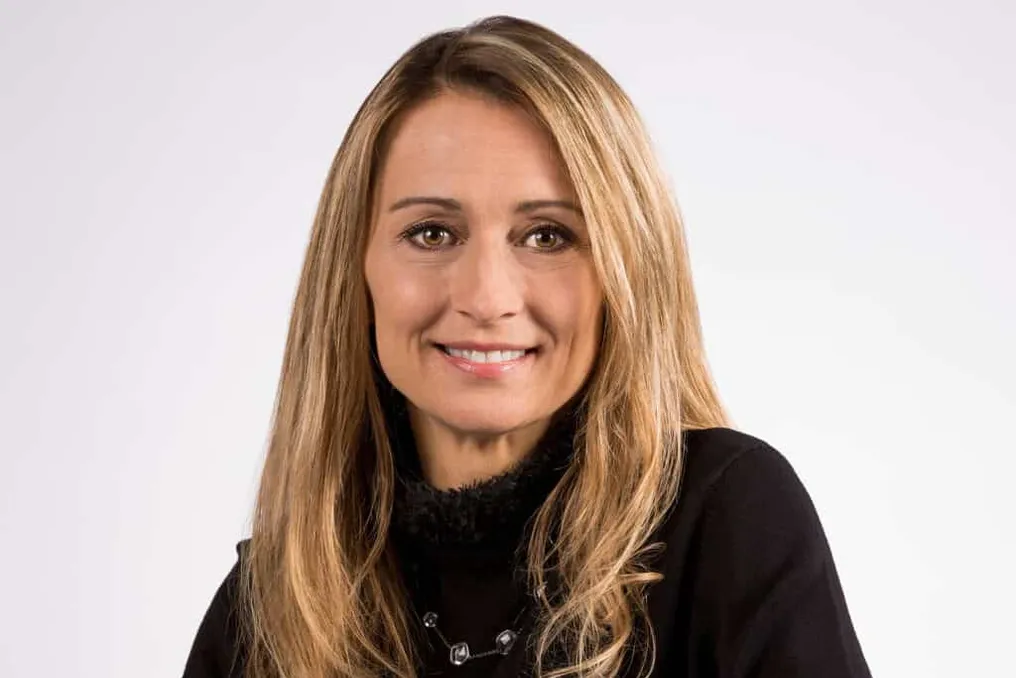
Significant changes have occurred at Nvidia, a company specializing in AI and chip development. After 33 years, Jensen Huang resigned as CEO, and the company's leadership was passed to current CFO Colette Kress, who was appointed interim CEO.

The company began searching for a new CEO. Questions arose regarding the salary of the new interim CEO, as well as how much she earned as CFO and what the former CEO Jensen Huang received.

Information about Colette Kress's salary is presented in Nvidia's 2026 proxy statement. In 2026, Colette Kress's total package amounted to $14.34 million (equivalent to approximately 1290 million rupees). This amount includes not only salary but also stock, cash bonuses, and other benefits.

Her annual base salary was $898,577 (about 81 million rupees). Additionally, she received stock options worth $12.82 million and a cash bonus of $600,000. However, information on her salary after being appointed interim CEO is currently unavailable.

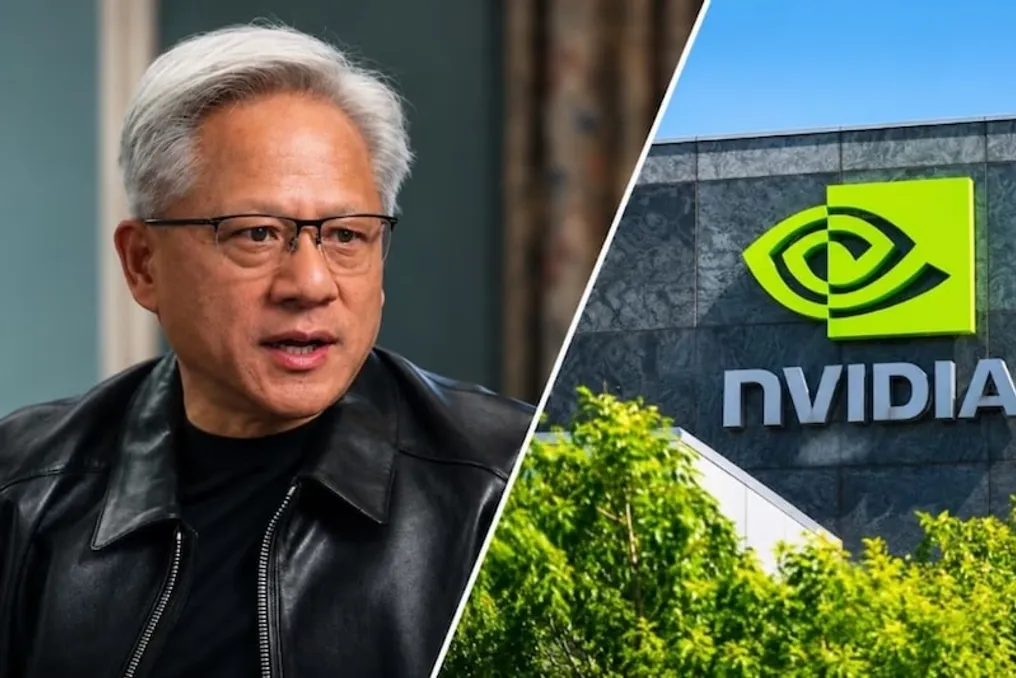
Jensen Huang's salary as CEO of Nvidia was significantly higher than Colette Kress's. According to Nvidia's 2026 proxy filing, Jensen Huang's total compensation in 2026 was $36.34 million, which is approximately equal to 3270 million rupees.

Colette Kress's total benefits were 1290 million rupees, whereas Huang received 3280 million rupees as CEO. Thus, there is a difference of about 1980 million rupees between their salaries.

Jensen Huang's departure became known when media reports surfaced about his extramarital affairs. Suspicion arose regarding his girlfriend that she might be a Chinese spy. The situation escalated, forcing him to leave the company.
Similar stories

Jensen Huang criticized the new Nvidia CEO before resigning from his post
Read more
olhardigital.com.br

Jensen Huang criticized the new Nvidia CEO before resigning from his post

Months before leaving Nvidia's leadership, Jensen Huang criticized Colette Kress, who was appointed interim CEO of the chip manufacturer. During a meeting held in August, the executive interrupted a presentation by Kress, referring to her as "a deer in the headlights," according to a source close to the events.

Huang also assessed Kress as a financial director focused on reporting, rather than someone capable of assisting in strategy definition or decision-making. This confrontation occurred while discussing billions of dollars in financial guarantees that Nvidia offered to companies unable to acquire its chips.

Among the businesses discussed were operations managed by Nico Caprez, Huang's son-in-law and promoted to vice president in January. Alongside Vice President Raj Mirpuri, Caprez provided financing to cloud providers and data center developers, aiming to convert them into long-term customers. Kress, in turn, raised doubts about the criteria used to select agreements, evaluate guarantees, and calculate return on investment, while also attempting to restrict Caprez's activities, according to employee reports.

In a notable example, Kress modified negotiations with OpenAI regarding a data center complex in Ohio, planned to be the world's largest. OpenAI planned to lease all the infrastructure, which would receive approximately $300 billion worth of chips from Nvidia (equivalent to about R$ 1.66 trillion). Initially, the manufacturer proposed a guarantee of $250 billion (about R$ 1.39 trillion) to facilitate bank loans. After this proposal was disclosed, Nvidia's shares fell by 5% on July 27, resulting in a loss of $250 billion in market value. Kress halved this financial commitment, and the companies formalized the reduced version of the agreement on August 17.

Kress took over provisional management after Huang's resignation on Thursday, due to revelations about two extramarital relationships: one with a woman suspected of being a Chinese spy and another with an employee. Nvidia is under federal and internal investigation and has announced it will consider both internal and external candidates for the permanent role. In a memo sent to employees, Kress praised the former leader and stated that she would continue "building upon the extraordinary foundation that Jensen created over the last 33 years."

At Nvidia, where he spent over a decade after experiences at Cisco, Microsoft, and Texas Instruments, the executive now has to deal with issues that were already a concern for Huang. Publicly, Kress defended the company's investments in artificial intelligence, refuting accusations that the model constituted circular financing. She stated at the end of August: "We recognize the scale of this support and we know some will call it circular financing. We see it differently." Additionally, she declared that "The returns on invested capital will be excellent."

Apprehension about Nvidia's valuation also grew; the average monthly stock multiple decreased from 23 in May to 16 in October. To calm investors, the company implemented measures such as the largest share buyback program in its history and, during the same period, began restricting new financial commitments.

This change in approach was also evident in October, during a conference in Berlin. Facing CEOs of major chip buyers, Huang shared the story of a soup vendor in Japan who refused to serve a second portion to preserve stock intended for other customers. The executive considered this merchant superior to those present. With this analogy, Huang argued that Nvidia should not commit its inventory or its commercial terms just to satisfy the demands of large buyers, demanding that customers recognize the value of the manufacturer's products. He told the executives: "You are not setting the value of my products."

After Jeffrey Huang's scandal, he left Nvidia; 10 directors are searching for a new CEO
Read more
www.aajtak.in

After Jeffrey Huang's scandal, he left Nvidia; 10 directors are searching for a new CEO

Jensen Huang, the CEO of Nvidia, a well-known chip manufacturer, has resigned. His leadership was under scrutiny as the board of directors considered keeping him in the CEO position following allegations of numerous extramarital affairs. Furthermore, suspicions arose that he was spying on China regarding one woman.

According to reports, current CFO Collette Kress has been appointed as interim CEO. Meanwhile, the company's board of directors has begun the search for a permanent leader for Nvidia. Nvidia, one of the most influential companies in the global artificial intelligence industry, is making a decision that rests with ten individuals, including an Indian woman.

The Nvidia board of directors is collaborating with an external firm to identify a potential successor and is also considering the option of appointing an interim chief executive officer. Keeping Jensen Huang could have led to closer scrutiny from legislators, investors, clients, and Nvidia employees.

The ten directors responsible for this decision include Arti Shah, an Indian board member. The following individuals represent the chipmaker's board of directors:

Steven C. Neil, who joined Nvidia in 2019, serves as honorary chairman and senior counsel at Cooley LLP, a long-standing legal partner of Nvidia. He is educated at Harvard and Stanford Law Schools.

Tench Cox, an investor and Nvidia board member since 1993, previously served as Managing Director at Sutter Hill Ventures from 1989 to 2020. He recently donated a large sum of $100 million to the University of Texas Medical Center in Austin.

John O. Dabiri, a professor of aeronautics and mechanical engineering at Caltech, joined Nvidia in 2020. His research includes mathematical models of jellyfish movement, and he has received funding from the National Science Medal and the MacArthur Foundation.

Hudson, an Nvidia board member since 2013, previously served as CEO of Pepsi-Cola North America and Head of Marketing for the NFL.

Harvey C. Jones, who has been on the Nvidia board since 1993, previously led Synopsys, a company specializing in chip design software. Since 2004, he has been a managing partner at Square Wave Ventures.

Melissa B. Laura joined Nvidia in 2023 after working as President of Taco Bell International. When announcing her appointment, Jensen Huang mentioned her financial expertise.

A. Brook Seibel, who joined the company in 1997, is a partner at New Enterprise Associates. He previously worked at NetDynamics and Synopsys.

Arti Shah, after 27 years at Eli Lilly, joined the chipmaker Nvidia in 2020, where she held the position of Senior Vice President and Director of Information and Digital Affairs. She holds a PhD in Applied Statistics from the University of California, Riverside.

Mark A. Stevens, one of Nvidia's early investors, served on the board from 1993 to 2006 and returned in 2008. Prior to this, he worked at Sequoia Capital, and now manages S-Cubed Capital.

Susan Nora Johnson, appointed in July, is the newest board member. She spent 21 years at Goldman Sachs, where she held the position of Vice President.

Jensen Huang resigned as CEO of Nvidia after 33 years at the company
Read more
techcentral.co.za

Jensen Huang resigned as CEO of Nvidia after 33 years at the company

Jensen Huang has stepped down from his role as CEO of Nvidia, concluding a 33-year tenure leading the firm he helped establish and developed into a leading provider of AI chips. The board of Nvidia formally announced on Thursday that Huang was resigning as president, CEO, and director.

Colette Kress, the Chief Financial Officer, who joined Nvidia in 2013 after spending almost 25 years in finance positions at firms such as Cisco and Microsoft, will assume the position of interim CEO while retaining her financial responsibilities. The board plans to evaluate both internal and external candidates to find a permanent replacement.

Kress is noted as the first individual, aside from Huang, to lead Nvidia since its founding in 1993. Furthermore, the board appointed Harvey Jones, a former CEO and executive chairman of the chip-design software company Synopsys, as its first chair. According to the company's proxy statements, Jones has served as an Nvidia director since 1993.

Nvidia's official statement did not provide any specific reasons for Huang's departure. It neither mentioned the board's inquiry into his association with Alice Huang, a businesswoman reportedly accused of being a Chinese spy, nor did it elaborate on the situation. Instead, the statement expressed gratitude for his 'immeasurable contributions to the company and the industry.'

This resignation followed a day after Reuters reported that the board was convening to determine whether to remove him. Earlier, The New York Times had published reports indicating that Huang was involved in an affair with Kimberly Powell, Nvidia's vice president of healthcare, who reported directly to him. Huang himself admitted to being unfaithful to his wife in a memo distributed to staff on November 8th.

A week of losses

The controversy rapidly intensified. US President Donald Trump stated that the FBI was investigating the affair. Consequently, Nvidia experienced a loss of approximately US$430 billion in market value across two trading sessions. On Thursday, Bloomberg reported that the company's shares dropped by around 10% during premarket trading in New York.

Harvey Jones assured stakeholders, stating, 'The board has full confidence in Colette and the leadership team, and we expect the company’s operations, customer commitments and product road map to continue without interruption.' Colette Kress affirmed her dedication, saying she was 'committed to building on the extraordinary foundation Jensen created over the last 33 years.'

Her initial challenge will arise on November 17th, when Nvidia is scheduled to release its third-quarter results for fiscal year 2027.

Popular