Official Spokesperson States Iran's Performance at Youth Olympics in Dakar Was Satisfactory
Read more
Tehran Times
www.tehrantimes.com

Official Spokesperson States Iran's Performance at Youth Olympics in Dakar Was Satisfactory

Hamid Azizi, head of the Iranian delegation to the Dakar 2026 Youth Olympic Games, expressed satisfaction with the overall level of performance of the country's athletes. He emphasized that comparing Iran's current results with its participation in Buenos Aires in 2018 is incorrect.

At the Dakar 2026 tournament, Iran finished 38th in the medal tally, winning one gold, four silver, and three bronze medals. This result represents a noticeable decrease compared to 2018 in Buenos Aires, when the Iranian delegation won seven gold medals and finished seventh.

Nevertheless, Azizi believes that several factors must be taken into account when evaluating the two campaigns. In Dakar, Iran participated with 29 athletes in 14 sports, whereas 49 athletes were involved in the previous event. The delegation included a women's futsal team of 10 people, and athletes also represented the country in beach volleyball, badminton, beach wrestling, taekwondo, fencing, athletics, triathlon, judo, and swimming.

Speaking exclusively to Tehran Times, Azizi noted the achievements of Iranian athletes and pointed out several historical accomplishments. He stated: 'Overall, we returned home with 17 medals. The women's futsal team won a bronze medal, beach wrestling secured one silver and one bronze, taekwondo won one gold and one silver, judo won a silver medal, wushu brought bronze, and swimming also won silver. In the official medal table, we finished with eight medals: one gold, four silver, and three bronze.'

Azizi characterized this campaign as important for Iranian sports, especially due to historical successes in several disciplines. He added: 'Among the valuable achievements of this tournament is Iran's victory in its first Youth Olympic Games medal in swimming. Wushu also won a medal at this level for the first time. Furthermore, our first female boxer participated in a competition of this scale, and we also won our first team medal at the Olympics.'

When asked about his satisfaction with Iran's overall performance, Azizi insisted that the comparison with Buenos Aires 2018 must be viewed in the proper context. He explained: 'To compare Iran's performance in Dakar with its results in Buenos Aires, we must first ensure that the comparison is based on the same criteria. We had 49 athletes in Argentina, whereas this time we competed with 29. Ten of these athletes were members of the women's futsal team, and we actually participated in 14 sports.'

He also drew attention to the absence of some traditionally successful sports for Iran from the Dakar program. Azizi noted: 'Sports such as freestyle and Greco-Roman wrestling, weightlifting, and karate, which are among the main sports bringing medals to Iran, were not included in the Dakar program. Therefore, I believe a fairer assessment requires us to take these differences into account.'

Azizi admitted that Iran did not expect medals in certain sports, including cycling, badminton, athletics, triathlon, fencing, and boxing, given the strength of the competitors. Nevertheless, he stated that the delegation participated in several other disciplines with realistic goals for winning medals and largely achieved the set objectives. 'In taekwondo, we aimed for medals and ultimately won one gold and one silver. We also expected podium finishes in swimming, wushu, judo, and futsal, and fortunately, we achieved these goals. In some of these sports, our athletes even performed better than expected.'

Regarding beach wrestling, Azizi acknowledged that Iran could have done better despite winning two medals. He concluded: 'We won one silver and one bronze medal in beach wrestling. Perhaps we could have done better, as the coaching staff expected a stronger result, but unfortunately, things did not turn out as planned.'
Similar stories

Iranian Students Achieve Success at Open World Astronomy Olympiad
Read more
www.tehrantimes.com

Iranian Students Achieve Success at Open World Astronomy Olympiad

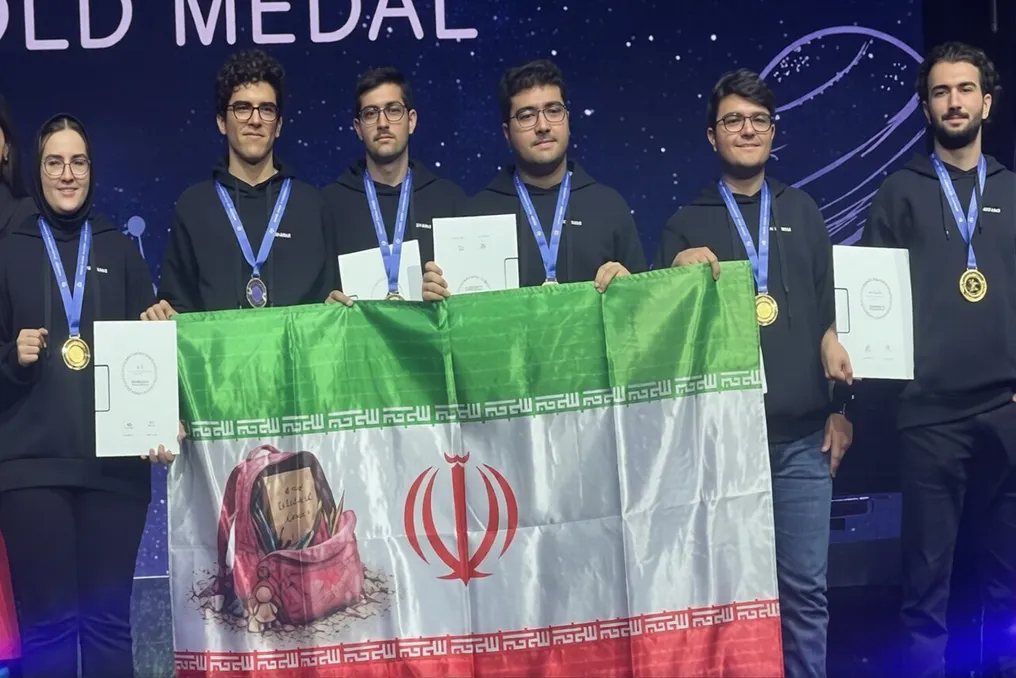
A team of six students from Iran demonstrated outstanding results at the fifth edition of the Open World Astronomy Olympiad (OWAO), winning six gold medals. The event took place in Russia from November 6 to 14.

The gold medals were won by Sarina Alampour, Parsia Hassanzadeh, Elshan Rouhani, Mohammad-Reza Mohammadi, Bardia Kilavizadeh, and Mehdi Aryafar, according to the IRNA agency. OWAO is a modern and rapidly developing competition that brings together talented and enthusiastic student astronomers from all over the world.

The Olympiad combines the best astronomical traditions with advanced knowledge assessment methods, and the tasks are developed by leading experts from various countries. The event was organized with the support of the Ministry of Education of the Russian Federation.

The competitions are open to teams of two to six participants (aged 18 or younger). Each team may have one supervisor and up to two observers (adults). Only one team can represent a country.

The Olympiad includes four stages: theoretical, practical, observational, and test rounds. The working language is English, but participants may use a glossary pre-translated by team supervisors into national languages.

The Iranian national team in astronomy and astrophysics was recognized as world champion for the third consecutive year after winning five gold medals at the XIX International Olympiad of Astronomy and Astrophysics (IOAA 2026).

Iranian students won five gold medals at an international competition held in Hanoi, Vietnam, from September 25 to October 5, 2026. This year, over 320 students from more than 66 countries participated in the Olympiad. The gold medals for Iran were won by Sarina Elmpoor, Mohammad-Hosseyn Hosseini, Hirbod Fodazi, Hossein Masumi, and Arshia Mirshamsi-Kahaki.

Iran's low results at the Dakar 2026 Youth Olympic Games raise concerns
Read more
www.tehrantimes.com

Iran's low results at the Dakar 2026 Youth Olympic Games raise concerns

Iran's unsatisfactory performance at the 2026 Youth Olympic Games in Dakar, Senegal, has raised serious questions about the country's ability to develop a new generation of sporting talents.

Iranian athletes won only one gold, four silver, and three bronze medals in Dakar, finishing 38th overall. This result represents a significant decline compared to the 2018 Youth Olympic Games in Buenos Aires, where Iran won seven gold, three silver, and four bronze medals, finishing seventh.

The contrast between these two campaigns is particularly worrying, given that the Youth Olympic Games serve as a platform for discovering, developing, and preparing young athletes for major international competitions. The event is intended to provide rising stars with valuable international experience and help them take their first steps toward becoming future Olympic and world champions. However, the Dakar campaign showed little sign of progress for Iran.

Winning only one gold medal compared to seven in Buenos Aires highlights the scale of the decline. Although the number of medals does not reflect the entire picture of the country's sports development, such a substantial drop in ranking should serve as a warning to Iranian sports officials.

Nevertheless, the Iranian delegation also had positive moments. The women's futsal team made history by defeating Italy in the third-place match and winning a historic bronze medal. This achievement demonstrated the potential of Iranian female athletes and was one of the brightest moments in what seemed to be a disappointing campaign.

However, isolated successes cannot hide broader problems reflected in Iran's overall results. Traditionally, Iran has been considered one of the leading sporting powers in West Asia, especially in disciplines such as wrestling, weightlifting, taekwondo, and combat sports. Maintaining this position requires constant investment in grassroots programs, improvement of coaching structures, and systematic talent identification.

The results in Dakar indicate that Iran risks losing its standing to new sporting powers if significant changes are not implemented. The responsibility now lies with sports administrators and national federations to study the causes of this decline. More attention must be paid to youth development, international experience, coaching standards, and ensuring young athletes have proper conditions and support.

It is expected that the athletes who participated in Dakar will form the foundation of Iranian sports in the coming years. Therefore, their development must be viewed as a national priority, not a short-term project. The Youth Olympic Games are not just about collecting medals; they are about building tomorrow's champions. Iran's performance in Dakar should serve as an alarm bell: without a clear strategy and serious investment in young talent, the country's sporting status may continue to deteriorate.

Mandana Dehghan expressed satisfaction with the results of her performance at the 2026 Asian Games
Read more
www.tehrantimes.com

Mandana Dehghan expressed satisfaction with the results of her performance at the 2026 Asian Games

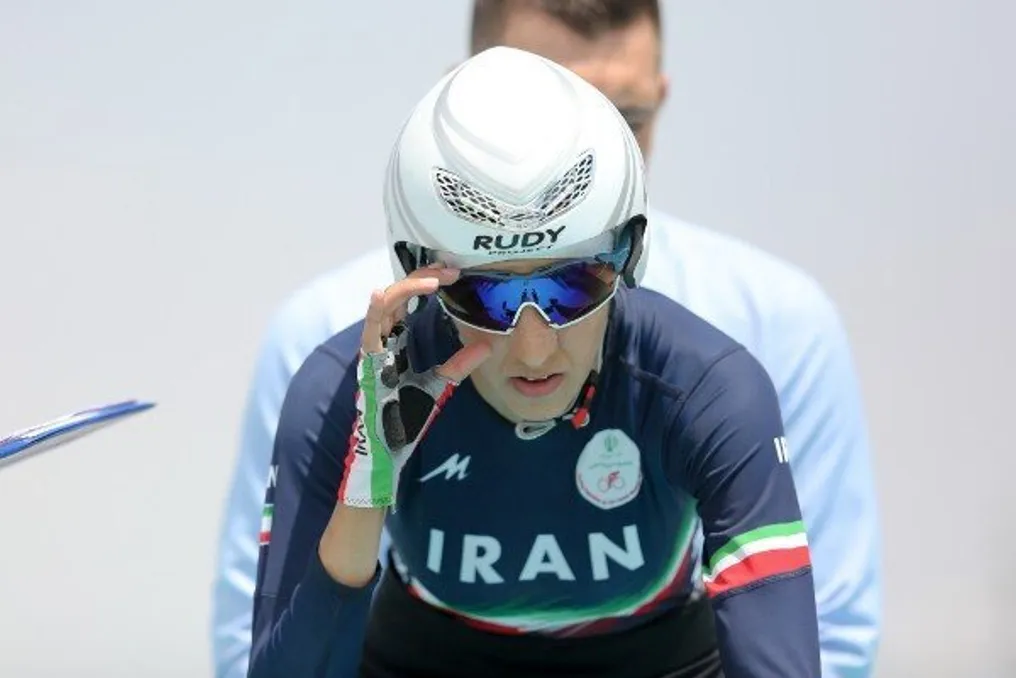
Iranian cyclist Mandana Dehghan shared her opinion on her performance at the Asian Games in Nagoya, noting the high technical complexity of the course and the difficulties she faced in both disciplines.

Dehghan finished 13th in the individual time trial with a time of 41:05.39, and subsequently secured 14th place in the women's road cycling race.

In an exclusive interview with Tehran Times, Dehghan emphasized that the Asian Games are the largest multi-sport event on the continent and hold immense significance for athletes across Asia. She noted that all participating countries conduct long-term preparation so that athletes can arrive in peak condition and achieve significant results.

Dehghan specifically highlighted that the course for the women's road cycling race in Nagoya was technically particularly challenging due to its numerous short and steep climbs. Several months before the start, it became clear that Iran would only receive one quota spot for the women's road cycling competition. The federation selected her based on her experience, athletic preparation, and previous participation in similar races in Europe and Asia.

Her goal was to present an athlete capable of competing with the best in Asia, not merely a participant whose main task was to finish the race. She participated in both the time trial and the road race. Her participation in the time trial was primarily aimed at preparing for the road race. Given the condition and characteristics of the course, they understood that competing for top spots in the time trial would be difficult, so she did not conduct special, targeted training for the time trial bike.

Strong teams from Asia participated in the road race, each fielding three athletes, which significantly complicated the competition. In previous editions of the Asian Games, each country was allowed two participants, so the competitive dynamic was different. Competing against powerful three-person teams under these conditions was extremely difficult. Nevertheless, she gave her all and ultimately finished 14th out of 41 participants.

Dehghan also pointed out the unpredictable nature of road cycling, explaining how external factors can significantly influence the outcome of a race. Unlike many closed or time-oriented sports where athletes compete in relatively stable and controlled conditions, road cycling is subject to numerous unpredictable factors. Rain, wind, the technical condition of the course, and incidents during the race can affect the final result. For example, an accident involving a rider ahead of the peloton can create a gap between rivals and the main group. Closing this gap requires significant energy expenditure. Unfortunately, something similar happened to her during this race, and she had to expend a lot of energy catching up on lost ground.

Another important aspect was her preparation for the Games. Three months before the competition, she worked diligently on developing an optimal training program. Furthermore, she participated in several international races and arrived in Nagoya in good physical shape.

According to her, success in cycling is not guaranteed simply by increasing financial investment or participating in a large number of races. She mentioned that teams from Japan, Uzbekistan, and the UAE invested significant financial resources and trained for months in Europe, yet their final results did not always meet expectations. This demonstrates that besides planning, resources, and physical fitness, the race conditions and unpredictable events play a decisive role in determining the outcome. Sometimes circumstances favor the athlete, and sometimes they go against all invested effort and preparation.

One of the most encouraging aspects of her performance is that several athletes who finished behind her were recognized Asian champions and prominent competitors in previous Asian Games. This shows that she reached a level that allows her to compete with some of the best cyclists on the continent in one of Asia's most important road cycling events. Dehghan expressed hope that the Iranian sports community and the wider cycling community will recognize the importance of this achievement and will not judge athletes solely by medals or their final positions.

Dehghan stressed her long-standing commitment to raising the profile of Iranian women's cycling on the international stage. Throughout her career, she has strived to promote the development and greater recognition of Iranian women's cycling in Asia and Europe. She has never accepted an invitation to a competition just to cross the finish line, gain experience, or participate for recreational purposes. She has always approached every international mission with the determination to perform at her best level. She overcame serious difficulties and prepared through meticulous planning, detailed course analysis, and comprehensive assessment of opponents.

Today, despite the lack of a medal, she is completely satisfied with her performance. This does not mean ignoring the gap between her current standing and higher aspirations. Rather, it reflects her confidence in the work done and her understanding of her own capabilities. She remains committed to long-term planning, continuous improvement, and achieving better results in future competitions. Dehghan concluded that her ambitions have always been greater than simply participating in races; she wants to represent Iranian women's cycling as an athlete capable of competing with the best in Asia and worldwide, and she will continue to work towards this goal.

Popular