Uzbekistan and ACWA signed memorandum to study carbon credit generation in wind farms
Read more
Podrobno.uz [uz]
podrobno.uz

Uzbekistan and ACWA signed memorandum to study carbon credit generation in wind farms

Uzbekistan and the company ACWA have signed a memorandum of cooperation aimed at working in the field of carbon markets and international methods for reducing greenhouse gas emissions.

The signing ceremony took place during the 31st session of the Conference of the Parties to the UNFCCC (COP31), which was held in Antalya, Turkey.

The signing was carried out by Aziz Abduhakimov, advisor to the President of Uzbekistan and chairman of the National Committee on Ecology and Climate Change, and Muhammad Abdullah Abunayyan, founder and chairman of the board of directors of ACWA.

The agreement provides for studying the possibilities of integrating the company's energy projects in the Republic into international carbon market mechanisms in accordance with the terms of the Paris Agreement.

Project Implementation Opportunities

The list of projects to be considered includes the 'Bash', 'Jankeldy', 'Karatau', and 'Kungrad' wind power complexes, the latter of which is equipped with an energy storage system using battery batteries. Experts will assess the compliance of these facilities with the requirements of the Paris Agreement, study the procedures for their official registration and approval, and develop methods for creating, transferring, and utilizing carbon credits and verified emission reduction results.

The partnership also covers aspects of technical and regulatory interaction. This includes exchanging experience on carbon market operations, improving monitoring, reporting, and verification systems, as well as strengthening specialized institutional potential.

Furthermore, the parties plan to work on increasing the climate resilience of renewable energy infrastructure. To this end, information exchange will be organized regarding the assessment of climate risks for wind power plants and energy storage under extreme temperatures, sand and dust storms, and the possibility of implementing early warning systems to protect energy facilities.

The implementation of this memorandum is intended to promote Uzbekistan's broader participation in global climate cooperation and utilize the potential of clean energy to achieve national environmental goals.

Similar stories

Uzbekistan and UN agree to expand programs to combat desertification and restore the Aral Sea region
Read more
podrobno.uz

Uzbekistan and UN agree to expand programs to combat desertification and restore the Aral Sea region

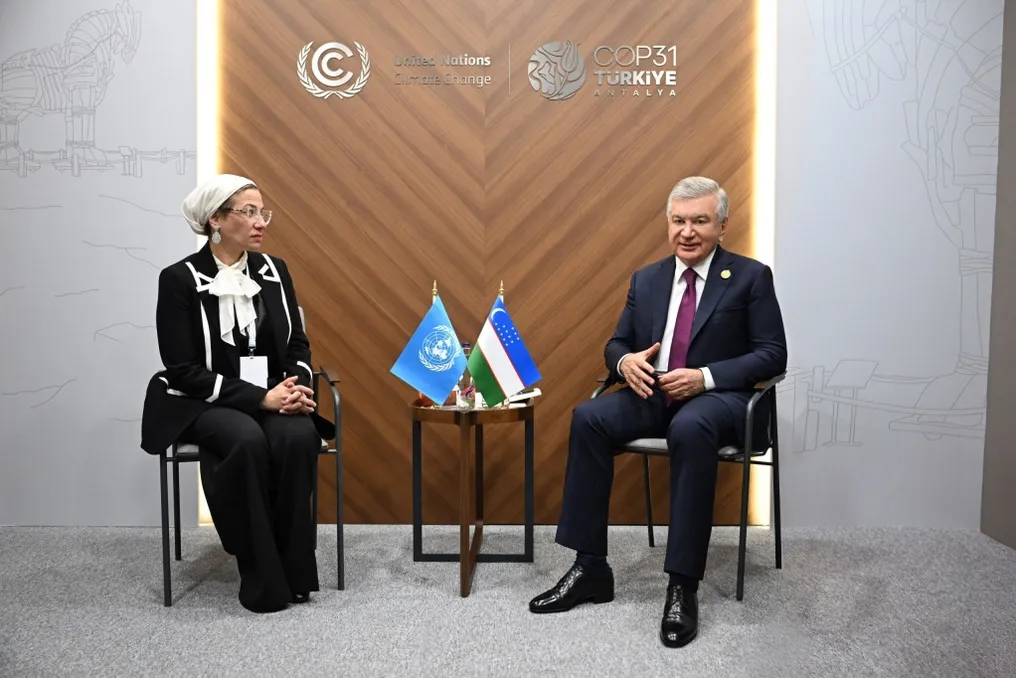
The President of Uzbekistan, Shavkat Mirziyoyev, met with Yasmin Fuad, Deputy Secretary-General of the UN and Executive Secretary of the UN Convention to Combat Desertification, during the World Climate Summit held in Antalya.

During this meeting, the parties discussed opportunities to strengthen cooperation in the areas of combating land degradation, fighting desertification, and adapting to the consequences of climate change.

Participants in the dialogue positively assessed the existing partnership, noting the successful implementation of fifteen joint projects over the past five years. Significant attention was paid to measures aimed at improving the environmental situation in the Aral Sea region, increasing the area of forest plantations, and enhancing the resilience of arid natural ecosystems.

The need to improve national carbon absorption accounting systems and actively utilize carbon financing mechanisms was also emphasized. As a result of the negotiations, agreements were reached on further deepening joint work and developing common environmental initiatives.

Uzbekistan presents initiatives to combat desertification and climate migration at COP31
Read more
podrobno.uz

Uzbekistan presents initiatives to combat desertification and climate migration at COP31

The 31st United Nations Climate Change Conference (COP31) took place in the Turkish city of Antalya. Uzbekistan is participating in this international event by presenting its national pavilion, which showcases various environmental protection projects and initiatives.

The event gathered delegates from governments, international organizations, financial institutions, scientific communities, and public associations. The main topics of discussion include the implementation of the Paris Agreement provisions, reducing greenhouse gas emissions, methods for adapting to climate change, and seeking funding sources for environmental endeavors.

Uzbekistan's national stand will serve as a venue for discussions on water security issues, the development of renewable energy sources, measures to counteract desertification, the restoration of degraded lands, and the preservation of biodiversity. Special attention will be paid to the environmental challenges of the Aral Sea region and finding foreign partners to implement climate programs.

A meeting is already scheduled in the pavilion for November 10th, which will bring together representatives from Central Asia and the South Caucasus to discuss the issue of climate migration. It is expected that the 'Silk Declaration' will be signed during this meeting, aimed at strengthening regional cooperation in the sphere of human displacement due to climate change.

On November 11th, Uzbekistan will hold a separate event with the United Nations Development Programme. Participants of this event will examine issues related to attracting investment into climate projects and fulfilling national commitments to emission reductions.

The UN conference will run until November 20th. It should be noted that Uzbekistan was previously included in the five countries of the Climate BRIDGE international initiative, through which experts assist in preparing climate projects to attract investments.

Major Uzbek Factories Connect to Digital Greenhouse Gas Emissions Register with World Bank Support
Read more
podrobno.uz

Major Uzbek Factories Connect to Digital Greenhouse Gas Emissions Register with World Bank Support

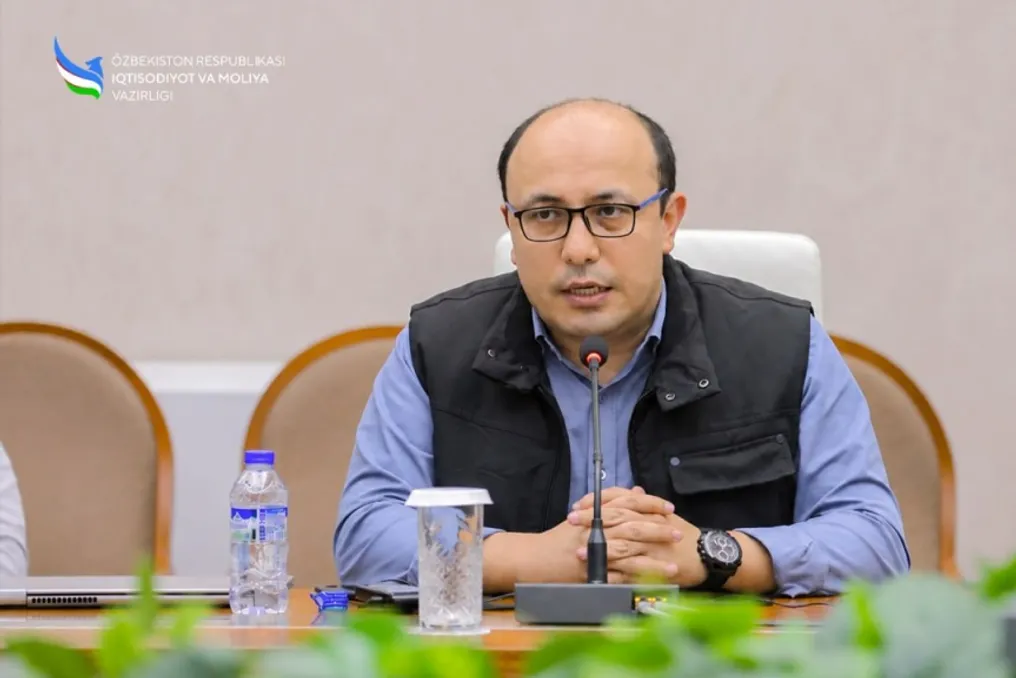
A presentation and discussion of the 'Roadmap' for the phased implementation of the Monitoring, Reporting, and Verification (MRV) system for greenhouse gas emissions at significant industrial and energy enterprises in Uzbekistan took place in Tashkent on November 3.

According to the Ministry of Economy and Finance press service, this meeting was held as part of a World Bank mission visit. The mission was led by Senior Specialist Wei-Zhen Liu, who represented the 'Knowledge Platform for Carbon Pricing in Europe and Central Asia' technical assistance program.

The event was organized by the Ministry of Economy and Finance together with the Green Economy Projects Center and World Bank experts. Representatives from the Ministry of Energy, the National Committee on Ecology and Climate Change, the Hydrometeorological Service Agency, as well as heads of several key companies from the energy, metallurgical, chemical industries, and construction material production sector, including 'Uzbekneftegaz', 'Thermal Power Plants', AGMK, NGMK, and 'Uzkhimprom', participated in the discussion.

Goals of Implementing the MRV System

The main objective of the meeting was to demonstrate practical ways to implement the 'Law on Limiting Greenhouse Gas Emissions' (ZRU-1073). Participants detailed priority areas for launching the MRV system at the level of specific facilities. These areas include forming the necessary regulatory and methodological framework, developing specific industry monitoring methodologies, creating a national database of emission factors for various types of fuel and production activities, and establishing data exchange between agencies and providing methodological support to factories.

Specialists paid close attention to creating electronic reporting forms and a digital register of greenhouse gas emissions, as well as their subsequent integration with the RISQ National Transparency System online platform. Furthermore, the development of IT infrastructure and strengthening institutional capacity were discussed within the framework of the World Bank's Partnership for Market Reforms (PMI).

The implementation of this initiative will ensure transparency and reliability in emissions accounting at large industrial sites. This will allow for the formation of a high-quality database for conducting national inventories and preparing the country for the introduction of a carbon tax and the launch of an Emissions Trading System (ETS).

Moreover, having accurate emission data at the enterprise level will help local exporters comply with the requirements of the European Union's Carbon Border Adjustment Mechanism (CBAM), thereby supporting their competitiveness in global markets.

Popular