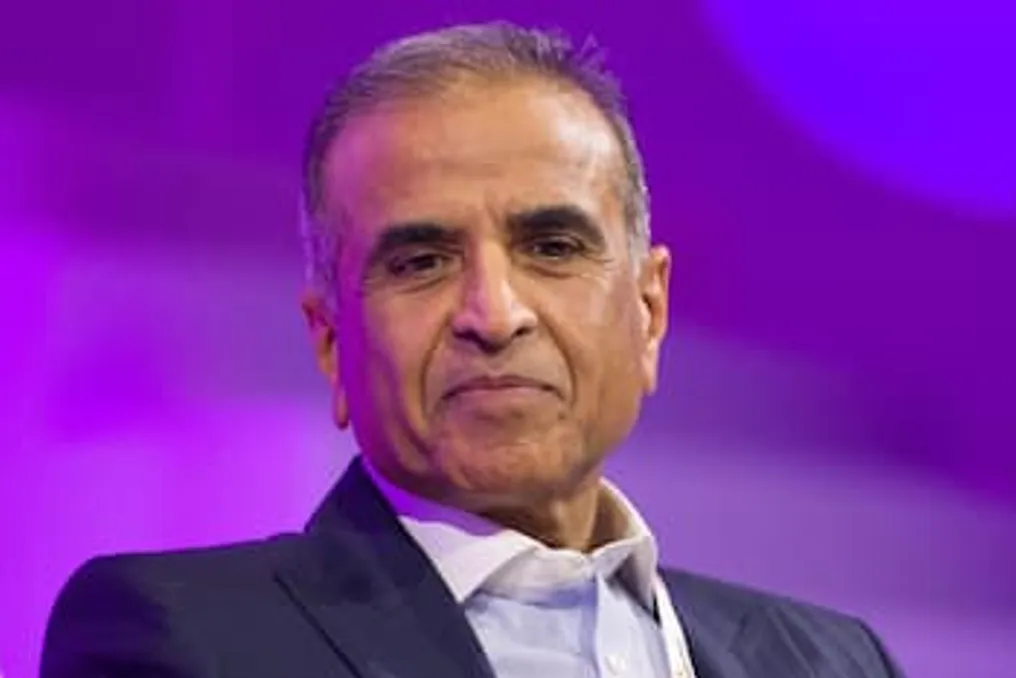
Sunil Mittal discusses the 50-year journey of Bharti Enterprises and plans to develop Airtel in AI and satellite services
Read more
Business Standard
business-standard.com

Sunil Mittal discusses the 50-year journey of Bharti Enterprises and plans to develop Airtel in AI and satellite services

On the occasion of Bharti Enterprises' 50th anniversary, Sunil Bharti Mittal presented plans for expanding Airtel's operations. He intends to transform the telecommunications operator into a technology company based on digital solutions, focusing on artificial intelligence, sovereign cloud services, digital finance, and satellite services.

The company's journey began in 1976 when a young Sunil Bharti Mittal, who was only 18 years old, opened a small production facility for bicycle parts in Ludhiana. Today, he leads a business empire whose flagship is Bharti Airtel, one of the world's largest telecommunications companies.

This journey from manufacturing bicycle cranksets to mobile networks, undersea cables, and satellite communication has been marked by bold bets that often outpaced the market, as well as difficulties caused by policy changes and three major crises that Mittal calls Bharti's 'Mahabharatas.'

Within his vision for India's digital economy, Mittal advocates for increasing mobile tariffs, strengthening the financial position of telecom operators, significantly expanding network infrastructure, and enhancing national control over strategic communication systems.

The most pressing aspect of his program is the cost of mobile services for consumers. Mittal believes that the Average Revenue Per User (ARPU) in India should rise to approximately 350 rupees per month, compared to the 300 rupee benchmark he supported about ten years ago. He explains the necessity for this increase due to growing operational expenses and investments in digital infrastructure.

In an interview with PTI, Mittal stated: 'Everything is growing. So, 350 would be the right ARPU for our industry.' He compared the cost of mobile services to daily purchases, asserting that for 10–12 rupees per day, consumers gain access not only to calls and data but also to banking services, education, medical records, direct benefit transfers, UPI payments, and entertainment, making it 'not unaffordable.'

According to Airtel, the ARPU in the September quarter was 271 rupees, which is higher than 256 rupees a year earlier. Achieving the level proposed by Mittal will require an increase of approximately 29 percent from the latest figure. The last major industry tariff adjustment occurred in June 2024, when operators raised prices by approximately 10–25 percent. When asked about the timeline for reaching the 350 rupee mark, Mittal replied: 'I do not know.'

Similar stories

Mitel introduces Mitel WX — a new communications platform focused on all employees
Read more
techcentral.co.za

Mitel introduces Mitel WX — a new communications platform focused on all employees

Mitel, a global leader in business communications, has announced Mitel Workforce Experience (Mitel WX) — a new foundational communication framework. This system was developed from scratch based on the company's integrated hybrid platform and is designed to meet the needs across all work areas, especially for frontline employees performing complex tasks.

Unlike many communication solution providers who use artificial intelligence (AI) to create tools that operate without human involvement, Mitel focuses on developing AI-enhanced platforms. These platforms sit at the intersection of business processes and communications, keeping human personnel at the center of attention during critical moments. This approach is applicable in industries such as healthcare, public administration, emergency response services, and manufacturing, as well as in sectors with complex communication needs, like hospitality and retail, where human experience and judgment are crucial.

Key Features

Mitel WX puts people at the center of business communication, using AI to better equip them. The system offers a role-based customizable layout, ensuring a consistent experience that adapts to each employee's profile on phone, tablet, or desktop. Furthermore, Mitel WX is easily deployed and administered at an enterprise scale thanks to built-in workflows and group-based visibility. Deployment flexibility, ranging from sovereign secure cloud to hybrid and fully on-premises solutions, aligns with CIO priorities regarding high availability, resilience, and regulatory compliance.

Mitel research shows that employees face difficulties: seven out of ten frontline workers feel pressure trying to 'manage' when communication systems are not designed with their needs in mind. This often forces them to use unapproved tools, creating security risks.

What is Mitel WX?

Mitel WX is a unified application that provides a consistent core communication experience regardless of whether the user is on a phone, tablet, or desktop computer. It allows users to maintain the same identity across different devices in the familiar format of voice calls and chat, utilizing a highly adaptive widget-based design. This design integrates Unified Communications (UC), Customer Experience (CX), and third-party service integrations—from everyday tools like Microsoft 365 and Google Workspace to mission-critical vertical-specific applications, such as electronic health records and clinical alerting systems—into one interface.

For example, in a busy medical center, this allows reception staff, nurses, and administrators to see vital information, including call queues, patient data, and specialized chats or alerts, on their preferred device. Simultaneously, a doctor on call can securely consult with staff by phone while traveling to the clinic, using their preferred work number via Apple CarPlay or Android Auto, with all relevant information synchronizing across devices.

Users working remotely also benefit from Mitel WX's customizable contact groups, which quickly assemble project teams with shared presence and availability status. Organizations can use dedicated call groups to route messages to the right people at the right time, receiving push notifications that function even during internet or power outages.

How does Mitel WX bring frontline and desk workers together?

Although about 80% of the global workforce does not have a permanent workstation, most of these workers are forced to use communication tools designed for their desk-bound colleagues, rather than for the realities of their daily frontline work. This creates friction and inefficiency in the workplace. According to Mitel's Workforce Communications State report, based on a Vanson Bourne study, more than half of workers (57%) spend time switching between an average of seven unrelated tools, with frontline workers twice as likely to resort to using unapproved tools to complete tasks.

Mitel WX is inherently designed for frontline workers, mobile users, contact centers, and knowledge specialists; it is not a knowledge worker platform deployed for everyone else. This design is based on Mitel research findings: 79% of workers turn to voice communication when immediate action is required. While messaging may be the most frequently used choice in daily life, when something cannot wait, Mitel WX provides voice communication without the need to change context or application.

Office workers can manage multiple conversation streams and access tools that manage critical workflows within a single structure, while frontline staff can use communications here and now and leverage vertical-specific integrations. For enterprises facing numerous channels in their technology infrastructure, Mitel WX helps eliminate communication barriers, boost engagement at the moment of activity, and simplify administrative overhead.

What AI capabilities are in Mitel WX?

Artificial intelligence is intentionally integrated into Mitel WX to facilitate communication by consolidating critical information needed by workers and the ways they prefer to share it onto a single screen. Through Mitel Workflow Studio, built-in workflows use AI to optimize requests and automate repetitive steps, saving time. Predictive suggestions and AI-powered voice and gesture control enable more accessible interaction, shortening the path from intent to action in complex environments such as hospitals, hotels, retail stores, and manufacturing sites. Instead of bolting AI onto separate collaboration and customer interaction tools, Mitel WX unifies voice, video, messaging, and contact center into a single architecture with shared context and no switching between them.

Luis Domingos, Mitel CTO, stated: 'We view AI as a technology that can make humans more capable, not obsolete.' He added: 'On the frontline, this could be responding to a message hands-free via voice, instant translation, automated call routing, or key customer insights. We apply AI in situations where it can genuinely change the situation without creating a feeling of coercion, allowing employees to focus on what truly matters.'

How is Mitel WX deployed?

Mitel WX operates in hybrid and private cloud environments, on-premises or at the edge using Mitel Edge. It is available both on a capital expenditure and operational expenditure basis, giving organizations deployment freedom backed by uncompromising control, security, and resilience for critical business environments. Thanks to simple installation and management via Mitel Central, the administrative web portal, and Mitel WX's easy modular architecture, it scales quickly and provides customers already using the Mitel voice platform with a straightforward upgrade path.

Jim Landy, CEO of Aragon Research, noted: 'The separation between internal collaboration and customer interaction is disappearing. The next important platforms will be those designed for every worker, not just those sitting at a desk. Mitel WX is built for this shift.'
Adaspace places artificial intelligence on satellites and plans to sell computing time
Read more
technode.com

Adaspace places artificial intelligence on satellites and plans to sell computing time

Adaspace has integrated artificial intelligence onto its satellites and now intends to begin selling computing power. During an algorithmic competition in Guangzhou, a team focused on traffic analysis directed its model to an already orbiting satellite. Collaborating with Adaspace, Jiazhihuihang, a subsidiary of the Chinese transport technology company PCI Technology, successfully launched this model into space. The satellite was capable of processing images before sending the analysis back to Earth, which reduces the need to transmit every pixel before starting work if the task is extracting information about the road network.

This experiment demonstrated a different business development vector for Adaspace. The company, which manufactures satellites for clients, can also provide them with the capability to run their own software. The Chengdu-based company expects its shares to begin trading in Hong Kong on November 13th. The Initial Public Offering (IPO) will help finance the engineering developments required to move this concept beyond isolated demonstrations.

Adaspace began operations in 2018 by tackling a more narrowly defined engineering problem: how to make AI function onboard a satellite at all. Its early efforts were concentrated on payloads—the equipment the satellite carries to perform its mission. In December of that same year, the first satellite platform with an AI application was launched.

The initial satellites used onboard computing to assist in their own operations. For an Earth observation satellite, this could mean analyzing collected data before transmitting it back. The next step involved designing satellites capable of performing computational tasks beyond their own functions.

This necessitated changes to the satellite design. Running more demanding software increases power consumption and generates more heat that the spacecraft must dissipate. Furthermore, placing multiple such satellites in orbit makes the spacecraft's form factor a practical issue: a flat design allows several modules to be stacked for launch.

The path to increased computing power in space was achieved through modifications to the satellites themselves. In May 2025, Adaspace launched 12 computing satellites into one orbital plane, followed by a second group of eight in October 2026. Between these launches, the company announced the deployment of Alibaba's Qwen3 model on an operational satellite. This test demonstrated the utility of the hardware post-launch: ground engineers can upload new software and assign the craft different tasks.

Adaspace has built a business based on both the spacecraft itself and the work that can be performed using satellite data. On one hand, it develops and tests satellites for customers, coordinates launches with third parties, and assists in post-delivery operations. On the other hand, it uses satellite data to create tools for clients on the ground. One example in the prospectus is a system that helps a digital content company convert satellite data into landscapes for games and films.

The balance between these two areas has shifted. In the first half of 2026, Adaspace reported that satellites and related services accounted for 57.7% of revenue, up from 0.6% in 2023. By October 20th, the company had orders for 114 AI satellites yet to be delivered, with total contract value amounting to 3.48 billion yuan.

What constitutes 'delivery' explains the mechanism of this business. A satellite might be fully ready at the factory, but months can pass before the client accepts it. Depending on the contract terms, some revenue may only be recognized after the spacecraft has been launched, tested in orbit, and handed over to the customer. Thus, a launch delay can push revenue into a later reporting period, even if the hardware is ready.

Selling access to computing power will allow Adaspace to establish different relationships with clients. The traffic analysis team provided a model and a task. The service built around this usage should then process the next task, and subsequent ones according to a schedule that clients can plan.

Under the Star-Compute plan, Adaspace aims to interconnect satellites so they can share computing power, storage, and software. The company aims to launch 100 satellites under this plan by the end of 2028. A much larger figure of 2800 refers to the satellites covered by the spectrum and orbital resources supporting this plan.

The proposed use of IPO funds reflects the current direction of work. Adaspace plans to allocate about 36% to research and development, and another 24% to a Shenzhen center for satellite design, development, and testing. These investments support the company's existing business—the creation and delivery of spacecraft, as well as the network it intends to operate.

The traffic experiment showed why a client might send a model into space. Adaspace's next step is to make the process so simple that the same client can return with a new task.

Jio and Starlink prepare to launch satellite internet in India: technology and price comparison
Read more
www.aajtak.in

Jio and Starlink prepare to launch satellite internet in India: technology and price comparison

Most of the territory in India is already covered by internet access via fiber optic cables. However, in some areas where laying fiber optics is difficult, satellite internet can be an optimal solution. The Indian government has granted licenses to three companies to implement this task.

Among the licensed companies are Reliance Jio, Mukesh Ambani's company, Starlink from Elon Musk, and OneWeb from Airtel. Soon, after the security phase and spectrum auction, they plan to launch their services in India.

The question arises regarding the differences between satellite-based internet and fiber optic cable internet, as well as the prices. We will examine these details in more detail.

In India, internet providers such as Reliance Jio and Airtel offer services through fiber optic cables. Their initial tariff plan with a speed of 100 Mbps costs 599 rupees.

As for satellite internet, its cost in India has not yet been disclosed. Nevertheless, Starlink provides its services in several countries, including the USA. In Chicago, USA, the initial residential plan for Starlink costs $60.50 USD (approximately 5600 rupees) per month and provides a speed of 100 Mbps.

Installing fiber optic internet in India is practically free; companies often provide installation free of charge when purchasing a three-month plan. For satellite internet, a terminal must be installed on the roof of the house. According to the Starlink portal in the USA, the equipment cost is zero, provided the equipment is returned upon service cancellation. Professional installation, however, will cost $99 USD, which is equivalent to approximately 9000 Indian rupees.

Starlink is a large and long-established player in the provision of satellite internet services, operating in the USA and other countries. The company installs a constellation of low-Earth orbit satellites. These satellites then form a network. After that, a terminal is installed on the roof of the house, which receives internet signals directly from the satellites. Subsequently, the terminal is connected to a Wi-Fi router by a cable that provides internet access inside the home.

With satellite internet, the internet will become available in regions that have not yet reached fiber optic cables. This will improve connectivity in the mountainous and border areas of India. Furthermore, students and residents of remote areas will be able to use the internet for online learning.

Reliance Jio and Airtel have a significant user base in India, offering internet services through fiber optic cables. The cost of internet services in India is significantly lower compared to other countries. For Indian users, not only the technological aspect but also its price is important. Currently, there is no information on what the cost of satellite internet service in India will be.

Popular