Huawei unveils Balong AI modem for Kirin 9050 chip supporting four SIM cards
Read more
Pandaily
pandaily.com

Huawei unveils Balong AI modem for Kirin 9050 chip supporting four SIM cards

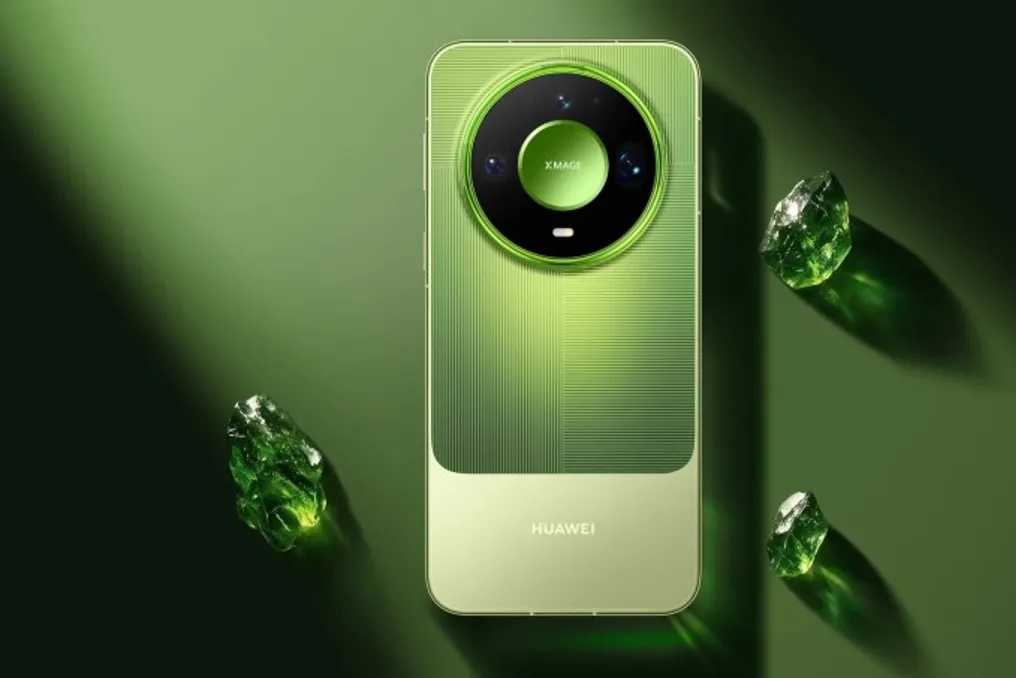
Huawei has disclosed new technical details of its Balong AI modem integrated into the Kirin 9050 chip series. These details are part of a series of publications dedicated to the components of this processor. According to information from IT Home, Huawei announced on November 15 that this modem is a convergent communication architecture and is the first in the industry to support four SIM cards with three in standby mode.

The convergent architecture, according to Huawei, combines three key elements: the Modem AI communication architecture, the multi-system coordination architecture, and the integrated satellite-terrestrial architecture. The modem is capable of providing intelligent network selection, subway mode operation, and fast connection recovery.

Huawei compared its modem to a device it simply called the 'Phone 18 Pro Max'. It should be noted that all presented figures are proprietary claims by the company, and the testing conditions were not published.

Furthermore, the modem supports a higher uplink speed for cellular communication. Compared to the mentioned device, the company claims a performance increase of 43% in peak scenarios, 83% under heavy load, 49% with weak signal, and 69% in high-speed modes.

The four-SIM card and three-in-standby feature allows users to use any three out of two physical SIM cards and two eSIMs. Huawei previously announced this capability for the Mate 90 Pro Max back in October. The modem is also equipped with an artificial intelligence function for detecting fraudulent calls routed from abroad, which, according to Huawei, identifies over 90% of such spam calls.

The Kirin 9050 series became the first Huawei chip created using LogicFolding technology and Tau scaling. During a media briefing in October, Sun Yu, head of wireless terminal product management at Huawei's semiconductor business, included the Balong AI modem among the components operating in this chip. He stated that the series entered mass production with the support of China's semiconductor industry and will mark a new era for Kirin. Following this, Huawei provided additional information about the CPU, NPU, GPU, and AI ISP of the chip.

Huawei has not yet specified whether the modem's functions will extend to phones outside the Mate 90 lineup or how they will operate outside of China.
Similar stories

Huawei presents how the Kirin 9050 chip runs a 30-billion parameter model on device
Read more
technode.com

Huawei presents how the Kirin 9050 chip runs a 30-billion parameter model on device

Huawei revealed on Wednesday details on how the Kirin 9050 chip series can perform artificial intelligence by running a 30-billion parameter model locally, without needing an internet connection.

The new Da Vinci neural processor in this chip allows the model to run directly on the phone through the use of low-bit quantization and efficient coordination of memory and computing resources.

The 'mixture of experts' type model activates approximately 2 billion parameters simultaneously. Previously, Huawei announced this figure during its October chip briefing, and this week the company described how the same processor supports features such as AI screen reading and page turning via eye tracking.

Lenovo unveils AI host Kaitian with Zhaoxin KX-7000 processor and Houmo LQ50 NPU for local 35B model execution
Read more
pandaily.com

Lenovo unveils AI host Kaitian with Zhaoxin KX-7000 processor and Houmo LQ50 NPU for local 35B model execution

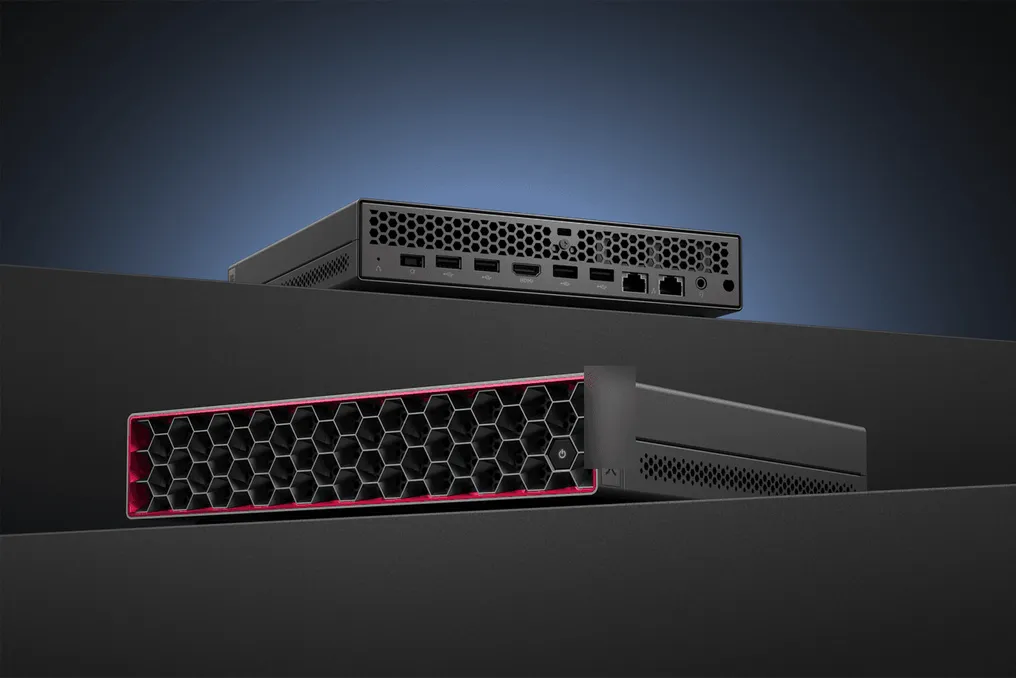
Lenovo has released the first AI host system in its Kaitian lineup, intended for China's IT innovation market (Xinchuang). This 1.6-liter desktop computer integrates a Zhaoxin processor with a Houmo AI NPU, enabling the local execution of models around 35 billion parameters.

The device is equipped with an eight-core Zhaoxin KX-7000 processor and the Houmo Liqing LQ50 NPU. In the standard configuration, the system provides 160 TOPS of computing power in INT8 format, which can reach 320 TOPS with the NPU option. The NPU features 24 GB of dedicated memory with a bandwidth of 153.6 GB/s. The host runs on Kylin OS and comes pre-installed with Lenovo's Tianxi AI Pro agent.

The company tested the device using open models, including the Qwen3.5 and Qwen3.6-35B-A3B series. When utilizing the 24 GB NPU and W4A8 quantization, the Qwen3.6-35B-A3B model generated text at a rate of approximately 28.99 tokens per second during local inference. The system supports input data up to 200,000 tokens for processing long documents and multi-turn tasks. The Houmo platform provides developers with tools for profiling, compiling, runtime management, and model quantization.

Lenovo positions this host as a perpetually active digital employee designed for round-the-clock operation. This allows agents to perform scheduled tasks such as local knowledge retrieval, document drafting, and information summarization, with output processing occurring directly on the device rather than through cloud tokens, thus keeping data local. During the event, Tianxi AI Pro testers instructed the device to check a mobile operator's application, and the device successfully executed a test call, measured the delay of a verification SMS code, and provided a report.

Regarding thermal dissipation, the processor and NPU have separate air channels behind the hexagonal front panel with high-pressure fans. Lenovo reports that at idle, the chassis temperature is about 33 degrees Celsius in a 25-degree room, and under full load, it reaches 41 degrees. In a 35-degree room, the temperature reaches approximately 46 degrees under full load. The noise level is 19.4 dB in standby mode and about 29.5 dB during full NPU inference. The device weighs about 1.5 kg and is equipped with two independent 2.5GbE ports.

It should be noted that the Kaitian host differs from the Lenovo AI Host P7, which was introduced in October with Houmo M50 and CIX P1 chips.

China Telecom, YOFC, and ZTE Demonstrate Bidirectional 800G Transmission over Over 1007 km Fiber Optic Cable
Read more
pandaily.com

China Telecom, YOFC, and ZTE Demonstrate Bidirectional 800G Transmission over Over 1007 km Fiber Optic Cable

The research institutes of China Telecom, YOFC, and ZTE have completed the implementation of what they call the world's first real-time bidirectional data transmission over fiber optic cable spanning over 1000 kilometers, as announced by the China Telecom Research Institute on November 2, according to sources IT Home and C114.

On a line measuring 1007.48 km, the partners achieved a speed of 800 Gbps per wavelength using PCS-16QAM modulation in the extended C+L band, transmitting signals in both directions through a single optical fiber cable, resulting in a total capacity of 128 Tbps. These three organizations collaborated as joint builders of a national key laboratory.

The partners reported three significant achievements. This experiment set a record for the longest single-point, non-loop real-time data transmission over fiber optic cable while maintaining a loss margin of at least 3 dB on each segment and an Optical Signal-to-Noise Ratio (OSNR) margin of at least 3 dB for system operation. Furthermore, it became the first real-time bidirectional transmission over a single optical fiber line at the 1000 km scale.

Although reflections reduced the OSNR by between 0.5 dB and 4 dB, the team believes this proves the feasibility of long-haul bidirectional operations. Finally, the longest fiber optic line in the extended C+L band free from gas line absorption was constructed.

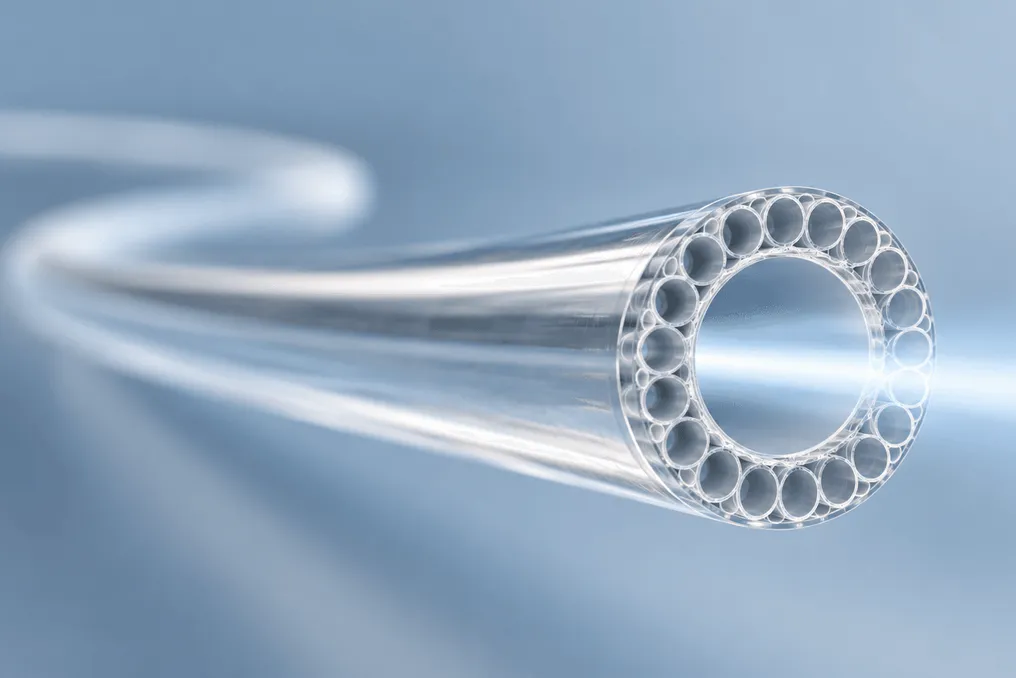
The last point concerns an issue specific to this technology. Since light in hollow-core fiber passes through gas rather than solid glass, traces of carbon dioxide and carbon monoxide in the core can absorb certain wavelengths and degrade transmission. To solve this problem, the team improved the manufacturing process to eliminate these absorption lines across the entire extended C+L band.

Regarding equipment, the partners eschewed high-power amplifiers and used commercial amplifiers with standard output power, matched to the fiber loss profile, to achieve optimal performance from a fully loaded 800G system. Light pre-equalization at the transmitter level maintained channel stability across the entire band. The team also developed an end-to-end model of the impact of reflections and intermodal interference on the line and tested an extreme scenario where part of the band failed without detecting any performance loss.

Operators are most interested in latency. Light in hollow-core fiber travels almost at the speed of a vacuum, approximately 30% faster than in traditional glass fiber, saving about 1.5 milliseconds in each direction over a 1000 km route. The announcement did not specify the measured latency value. Until now, hollow-core fiber in China has mainly been used for short connections, such as between data centers in Chunwei, Ningxia, whereas computing clusters in the west are often more than 1000 km away from demand in the east. China Telecom stated that the result provides a practical technical basis for creating high-capacity, long-distance, and low-latency backbone networks based on fiber optic cable.

Popular