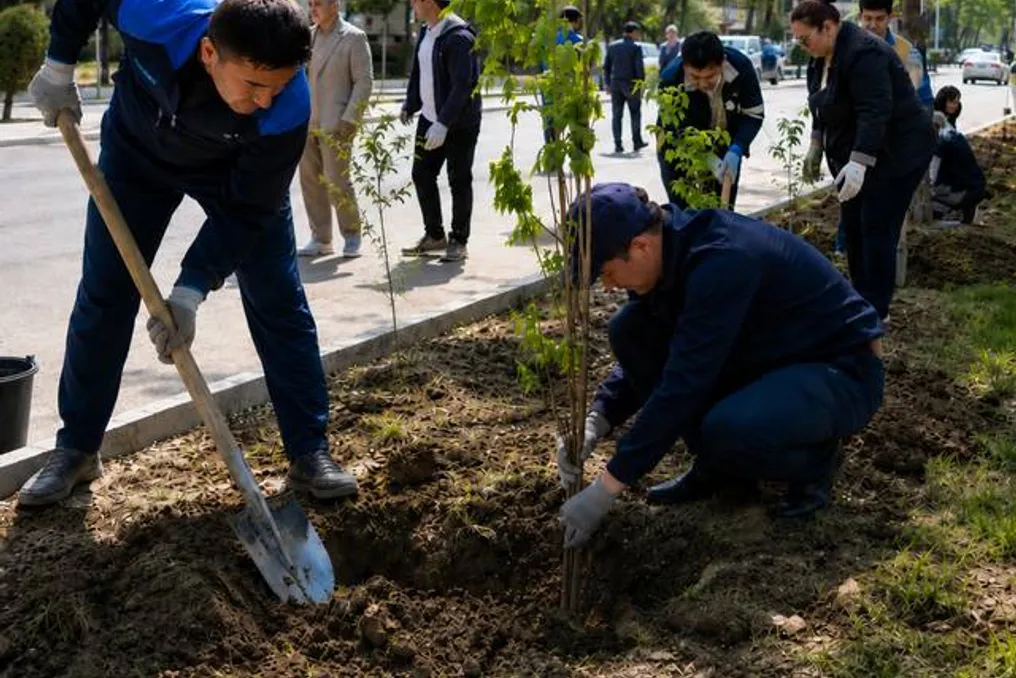
A large-scale greening project has begun in the Bukhara and Navoi regions of Uzbekistan. As part of the autumn phase of the 'Yashil Makon' program implementation, 20.5 million seedlings are planned to be planted in these two regions, and the approach to tree care will also be adjusted.
The greening effort will cover 24 different districts and cities. The work is expected to result in the creation of 48 public parks and an equal number of microforests. Special attention will be paid to creating areas where citizens can rest and walk in the shade of trees. Specifically, 26 green streets with a total length of 6.5 kilometers will be established in the Bukhara region, and another 26 such streets, 5.5 kilometers long, in the Navoi region.
In addition to direct planting, a key task is ensuring the survival of the seedlings, especially given the hot and arid climate. To solve this problem, water-saving irrigation methods are being introduced, and mulch and compost are being used to retain moisture in the soil.
48 waste processing sites for plant residues will be equipped in both regions, and 144 branch shredders will be installed. Materials obtained from processing will be used to maintain the condition of the green spaces. When selecting tree species and determining planting times, the specific characteristics of the soil and climate of each district will be taken into account.
Local communities (mahallas) are also involved in the greening process. Separate projects have been developed for them regarding the formation of green zones, and information stands on environmental issues will be placed in 826 mahallas.
It should be noted that plans were previously announced for creating microforests in residential courtyards, schools, and kindergartens in Tashkent as part of the same 'Yashil Makon' program. The autumn period for tree planting in the capital was set for November 10.