LICO Materials CEO forecasts revenue of 450-500 crore rupees in the current fiscal year
Read more
Business Standard
business-standard.com

LICO Materials CEO forecasts revenue of 450-500 crore rupees in the current fiscal year

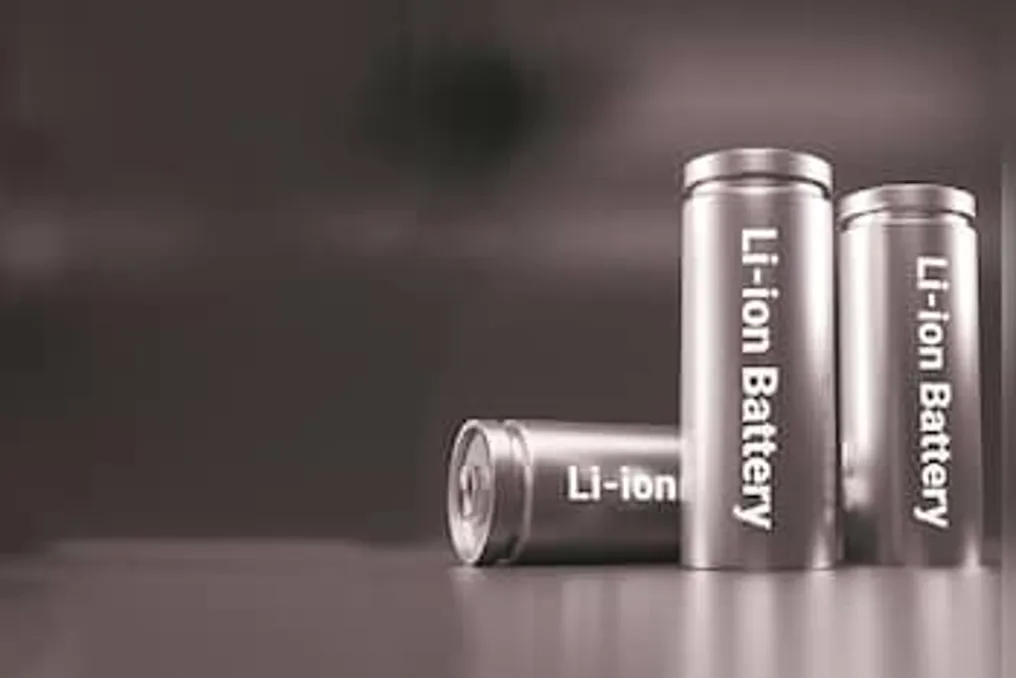
The CEO of LICO Materials, Gaurav Dolvani, stated that the company aims to achieve revenues between 450–500 crore rupees in the 2026–27 fiscal year. This growth is attributed to increased material recycling volumes, improved utilization of production capacities, and broader availability of used lithium-ion batteries.

Previously, in the 2025–26 fiscal year, the company earned approximately 350 crore rupees. Dolvani noted that since the last discussion of the company's activities around March of last year, its production capacity has significantly expanded.

This progress is significant against the backdrop of the country's rapidly growing electric vehicle market and efforts to establish a domestic battery recycling ecosystem capable of extracting critical minerals and reducing import dependence.

In an interview with PTI, Dolvani, who is also the founder of the company, emphasized that the revenue increase will be supported by the growth in raw material recycling volumes and increased efficiency in capacity utilization. The rise in the number of two- and three-wheeled electric bicycles increases the supply of available batteries in the market. Furthermore, despite existing challenges, the company has managed to import batteries from other parts of the world, helping it access materials more successfully than some competitors.

He explained that the current battery recycling capacity is about 4 GWh, and the company plans to increase it to approximately 10 GWh over the next three years. Dolvani expects that domestic cell production will also expand during the same period, supporting the development of the battery ecosystem.

However, he added that cell production proved more complex than initially anticipated and involves significant technological hurdles. Some firms have already launched pilot lines and invested in research and development, learning from previous issues. Dolvani stated that cell development is extremely difficult, and the industry should be given time to develop, acknowledging the complexity of the task, as while the political goal is correct, execution remains the key challenge.

When asked about geographical expansion plans, Dolvani reported that LICO Materials is collaborating with contract partners in the states of Uttar Pradesh and Haryana and seeks to strengthen its presence in this region. The company is also considering expanding into Western India, including Gujarat. In the long term, the company may either establish its own venture or acquire an existing business with relevant capabilities.

LICO Materials, founded in 2021, is engaged in the recovery, recycling, and reintegration of battery materials into the value chain. Its battery recycling and reuse operations are conducted at a facility in Bengaluru, Karnataka. There, it processes used lithium-ion batteries, extracts materials used in battery manufacturing, and gives useful cells a second life through its LiGRID energy storage system.
Similar stories

Motherson plans to expand its presence in India using global technologies to drive growth
Read more
business-standard.com

Motherson plans to expand its presence in India using global technologies to drive growth

Samvardhana Motherson International Ltd (SAMIL), a major auto component manufacturer, intends to leverage technologies gained from global expansion to capitalize on emerging opportunities in the Indian automotive market. The growing demand for advanced solutions is driven by rising product standards and the transition to stricter emission norms.

This strategy is part of the company's broader goal—Vision 2030—which aims to achieve a gross revenue of $108 billion by 2029–2030. Pankaj Mittal, Director and President, and Gandharv Tongia, Group CFO, presented the company's growth priorities in an interview with PTI.

These priorities include integrating globally acquired technologies into India, expanding presence across various business segments and geographies, and strengthening customer relationships. Mittal noted that India's growth will have a significant positive impact on the company, as it possesses numerous technologies, product quality in the country is improving, and the nation is moving towards the latest emission standards.

He added that through acquisitions, the company has gained access to new technologies that meet global standards and can now offer them to the Indian market as best-in-class solutions.

Regarding internal growth, Tongia reported that the Indian automotive industry has shown double-digit growth since the easing of GST, and the company expects this momentum to continue. He emphasized that structurally, India is a powerful consumer hub, and growth will persist.

Tongia also mentioned that Motherson maintains a strong balance sheet and order book supported by both organic and inorganic business expansion, contributing to the long-term revenue target. The company is targeting a gross revenue of $108 billion by 2030, and Tongia expressed optimism about the prospects.

Mittal clarified that the acquisition strategy will continue to be dictated by customer needs. If solutions cannot be provided independently by the group, joint ventures or acquisitions are being considered. Most such acquisitions have been initiated by clients.

The group is also striving to reduce dependence on demand fluctuations in individual markets by diversifying across automotive segments, geographies, and new verticals, while increasing vehicle content and attracting new customers. Strategy 3CX10 is being implemented, which ensures diversification, allowing for solutions to be found in other segments or markets if one experiences a downturn.

Concerning the rise in copper prices, Tongia explained that in the wire harness manufacturing business, which accounts for about 30 percent of the group's revenue, contractual agreements allow for passing on changes in input costs to customers quarterly or semi-annually. Therefore, he stated that no significant impact on profitability due to copper prices is expected.

Sunil Mittal discusses the 50-year journey of Bharti Enterprises and plans to develop Airtel in AI and satellite services
Read more
business-standard.com

Sunil Mittal discusses the 50-year journey of Bharti Enterprises and plans to develop Airtel in AI and satellite services

On the occasion of Bharti Enterprises' 50th anniversary, Sunil Bharti Mittal presented plans for expanding Airtel's operations. He intends to transform the telecommunications operator into a technology company based on digital solutions, focusing on artificial intelligence, sovereign cloud services, digital finance, and satellite services.

The company's journey began in 1976 when a young Sunil Bharti Mittal, who was only 18 years old, opened a small production facility for bicycle parts in Ludhiana. Today, he leads a business empire whose flagship is Bharti Airtel, one of the world's largest telecommunications companies.

This journey from manufacturing bicycle cranksets to mobile networks, undersea cables, and satellite communication has been marked by bold bets that often outpaced the market, as well as difficulties caused by policy changes and three major crises that Mittal calls Bharti's 'Mahabharatas.'

Within his vision for India's digital economy, Mittal advocates for increasing mobile tariffs, strengthening the financial position of telecom operators, significantly expanding network infrastructure, and enhancing national control over strategic communication systems.

The most pressing aspect of his program is the cost of mobile services for consumers. Mittal believes that the Average Revenue Per User (ARPU) in India should rise to approximately 350 rupees per month, compared to the 300 rupee benchmark he supported about ten years ago. He explains the necessity for this increase due to growing operational expenses and investments in digital infrastructure.

In an interview with PTI, Mittal stated: 'Everything is growing. So, 350 would be the right ARPU for our industry.' He compared the cost of mobile services to daily purchases, asserting that for 10–12 rupees per day, consumers gain access not only to calls and data but also to banking services, education, medical records, direct benefit transfers, UPI payments, and entertainment, making it 'not unaffordable.'

According to Airtel, the ARPU in the September quarter was 271 rupees, which is higher than 256 rupees a year earlier. Achieving the level proposed by Mittal will require an increase of approximately 29 percent from the latest figure. The last major industry tariff adjustment occurred in June 2024, when operators raised prices by approximately 10–25 percent. When asked about the timeline for reaching the 350 rupee mark, Mittal replied: 'I do not know.'

Operator Zappfresh DSM Fresh Foods reports profit of 7.3 crore rupees for the first half of fiscal year 27
Read more
business-standard.com

Operator Zappfresh DSM Fresh Foods reports profit of 7.3 crore rupees for the first half of fiscal year 27

DSM Fresh Foods Limited, which manages the meat and seafood brand Zappfresh, announced consolidated net profit of 7.30 crore rupees for the first half ending September 30, 2026.

Previously, during the six-month period ending March 31, 2026, the company, which went public in October 2025, recorded a net profit (after accounting for minority interests) of 7.31 crore rupees.

Total operating income on a consolidated basis for the period from April to September of fiscal year 27 amounted to 165.48 crore rupees, which is 32.42 percent higher than the figure of 124.97 crore rupees in the second half of fiscal year 26. Including other income, total consolidated revenue reached 165.89 crore rupees.

However, the company's expenses for this half-year period increased by 35.79 percent, reaching 155.67 crore rupees compared to 114.64 crore rupees in the previous six months, putting pressure on net profit growth.

Looking at the data on an individual basis, DSM Fresh Foods demonstrated a 25.64 percent increase in net profit to 8.83 crore rupees for the first half of fiscal year 27 compared to 7.03 crore rupees the previous year. Individual operating revenue sharply increased by 60.27 percent year-on-year, reaching 153.62 crore rupees against 95.85 crore rupees in the first half of fiscal year 26.

The consolidated financial results include the figures of its subsidiaries: Avyom Foodtech Private Limited, based in Dubai DM Fresh Foods FZ-LLC, and Varuna Aquatech Private Limited.

Popular