Thomas Cook India plans to spin off resort business by October 2027
Read more
Business Standard
business-standard.com

Thomas Cook India plans to spin off resort business by October 2027

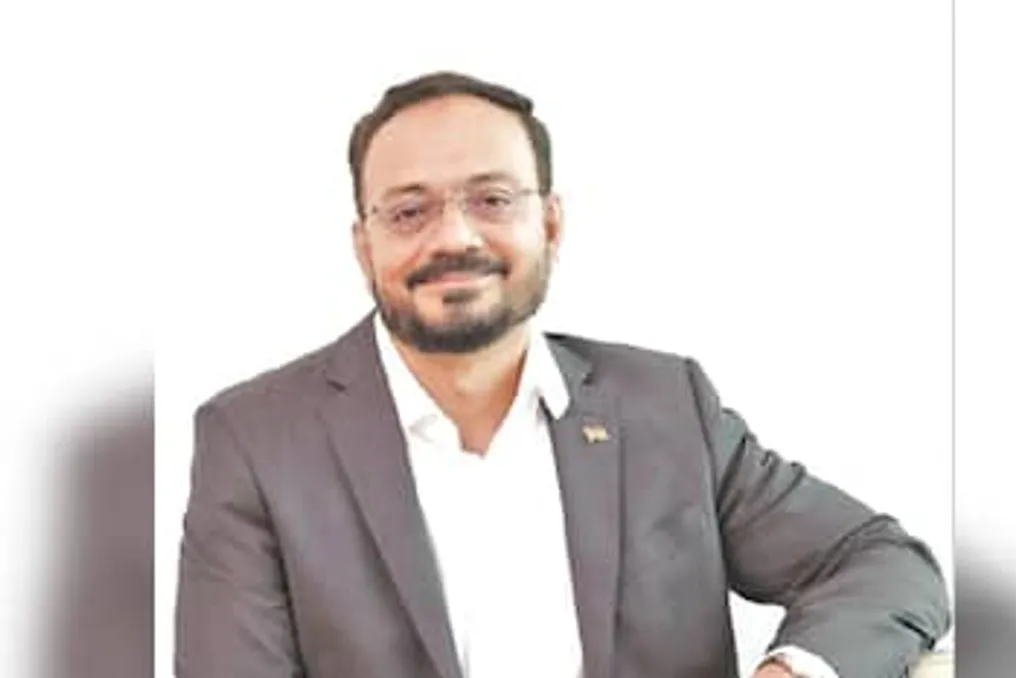
Mahesh Iyer, Managing Director and CEO of Thomas Cook (India) Ltd, stated that the company expects the scheme to separate its resort and resort management business in favor of Sterling Holiday Resorts to be effective by October 2027, with the scheme coming into force by mid-financial year 2028.

According to information provided by a senior company official in an interview with PTI, Thomas Cook (India) Ltd plans to proceed with the proposed separation of its resort and resort management business in favor of Sterling Holiday Resorts Ltd (SHRL). Iyer clarified that the application for the composite settlement scheme has been filed with the NCLT Mumbai, and the implementation of the scheme depends on obtaining necessary approvals from regulators and shareholders.

In March, the Board of Directors of Thomas Cook (India) Ltd (TCIL) approved the plan to separate the resort and resort management business into SHRL, as well as the subsequent capital restructuring of TCIL.

Regarding the strategy for inorganic growth, Iyer stated that Thomas Cook India is open to considering acquisitions and strategic partnerships that could strengthen its capabilities and accelerate development across all business verticals. He highlighted the significant potential in collaborating or investing in technology platforms that complement the existing ecosystem in travel, corporate travel, and foreign exchange.

The company continues to build organic growth, but partnerships and acquisitions can help gain faster access to new opportunities, integrate them into its system, and respond more effectively to changing traveler needs. Any such opportunity will be evaluated based on its strategic viability and ability to create long-term value.

The company's growth planning takes place against the backdrop of recovering travel demand following geopolitical disruptions that affected sentiment and operating conditions in some international markets during the first half of FY2027. Iyer noted that business momentum has significantly strengthened in recent months, with the Indian tourism sector showing a sharp recovery in the quarter from July to September 2027 (Q2 FY27).

He reported that the tourism business in India recovered, ending the quarter only 6 percent below the previous year's figures, with healthy Gross Profit (EBIT margins) standing at 3.8 percent. The recovery was driven by domestic and short-haul tourism, supported by sustained customer demand and a shift in preferences towards destinations with better connectivity and value.

The company anticipates maintaining this positive trend. Booking forecasts for domestic tourism in India for the third quarter of FY2027 indicate stable demand, despite high airfare and other resource costs. Iyer predicts that the current quarter (Q3 FY27) is expected to see a healthy level of advance bookings at 30 percent, signaling positive future demand trends.
Similar stories

Motherson plans to expand its presence in India using global technologies to drive growth
Read more
business-standard.com

Motherson plans to expand its presence in India using global technologies to drive growth

Samvardhana Motherson International Ltd (SAMIL), a major auto component manufacturer, intends to leverage technologies gained from global expansion to capitalize on emerging opportunities in the Indian automotive market. The growing demand for advanced solutions is driven by rising product standards and the transition to stricter emission norms.

This strategy is part of the company's broader goal—Vision 2030—which aims to achieve a gross revenue of $108 billion by 2029–2030. Pankaj Mittal, Director and President, and Gandharv Tongia, Group CFO, presented the company's growth priorities in an interview with PTI.

These priorities include integrating globally acquired technologies into India, expanding presence across various business segments and geographies, and strengthening customer relationships. Mittal noted that India's growth will have a significant positive impact on the company, as it possesses numerous technologies, product quality in the country is improving, and the nation is moving towards the latest emission standards.

He added that through acquisitions, the company has gained access to new technologies that meet global standards and can now offer them to the Indian market as best-in-class solutions.

Regarding internal growth, Tongia reported that the Indian automotive industry has shown double-digit growth since the easing of GST, and the company expects this momentum to continue. He emphasized that structurally, India is a powerful consumer hub, and growth will persist.

Tongia also mentioned that Motherson maintains a strong balance sheet and order book supported by both organic and inorganic business expansion, contributing to the long-term revenue target. The company is targeting a gross revenue of $108 billion by 2030, and Tongia expressed optimism about the prospects.

Mittal clarified that the acquisition strategy will continue to be dictated by customer needs. If solutions cannot be provided independently by the group, joint ventures or acquisitions are being considered. Most such acquisitions have been initiated by clients.

The group is also striving to reduce dependence on demand fluctuations in individual markets by diversifying across automotive segments, geographies, and new verticals, while increasing vehicle content and attracting new customers. Strategy 3CX10 is being implemented, which ensures diversification, allowing for solutions to be found in other segments or markets if one experiences a downturn.

Concerning the rise in copper prices, Tongia explained that in the wire harness manufacturing business, which accounts for about 30 percent of the group's revenue, contractual agreements allow for passing on changes in input costs to customers quarterly or semi-annually. Therefore, he stated that no significant impact on profitability due to copper prices is expected.

Sterling Holidays expected to be separated by July 2027, reports Thomas Cook
Read more
business-standard.com

Sterling Holidays expected to be separated by July 2027, reports Thomas Cook

The planned separation of Sterling Holiday Resorts Limited, a subsidiary of Thomas Cook (India) Limited (TCIL), is anticipated to be completed by July of next year. This transaction has already received approval from market and stock exchange regulators and is currently under review by the National Company Law Tribunal (NCLT).

Mahesh Iyer, Managing Director and CEO of TCIL, told Business Standard that the proposal was approved by NSE, BSE, and SEBI. He added that they have already approached the NCLT, which held its first hearing, and the company hopes that a shareholders' meeting will soon be called, setting the estimated completion timeline for the process in July 2027.

Despite a challenging operational environment in the quarter ending September 30, including a period of rising airfare tariffs, the company's profit remained largely stable. Iyer noted that this result was primarily driven by the tourism business in India and the foreign exchange segment.

The company plans to expand its distribution network, particularly in second and third-tier cities, and continue investing in technology, cyber resilience, and digital assets.

According to Iyer, traveler preferences vary significantly across different regions. Tourists from first-tier cities tend to choose exotic and long-haul destinations such as Europe, the USA, Africa, and Australia. Meanwhile, second and third-tier markets include a larger proportion of first-time travelers, who usually start with domestic trips before moving on to international destinations with short flights, such as Dubai and Southeast Asia.

Regarding the Meetings, Incentives, Conferences, and Exhibitions (MICE) segment, Iyer described the current year as mixed. He stated that while corporate demand for MICE remained strong, the pace of discussions and conversions did not meet expectations.

For winter travel, Europe, Australia, New Zealand, and Japan are gaining popularity, and autumn is also showing high demand. Iyer forecasts a 30% year-on-year growth, largely attributed to long-haul flights.

Furthermore, Thomas Cook manages the Digiphoto Entertainment Imaging (DEI) business, which, according to Iyer's expectations, will start gaining momentum in the current quarter. He suggested that October-December could be the largest quarter for the DEI segment, which had previously been sluggish because half of the business operated in the Middle East market.

The company announced its results for the second quarter on the 27th in Monday. Net profit decreased by 24% to 53.7 crore rupees from 70.7 crore rupees in the same period last year. However, the Earnings Before Interest, Taxes, Depreciation, and Amortization (EBITDA) increased by 3% to 151.2 crore rupees in the second quarter of the financial year 27 compared to 147 crore rupees the previous year.

Thomas Cook India's net profit fell by 24% in the second quarter, revenue decreased
Read more
business-standard.com

Thomas Cook India's net profit fell by 24% in the second quarter, revenue decreased

Thomas Cook (India) Limited, headquartered in Mumbai, reported consolidated net profit of ₹53.7 crore during the second quarter. This figure represents a 24% decline compared to ₹70.7 crore in the same period last year. Operating revenue also decreased to ₹1,944.2 crore from ₹2,073.8 crore the previous year.

The company's Earnings Before Interest, Taxes, Depreciation, and Amortization (EBITDA) stood at ₹151.2 crore for the second quarter of the fiscal year 2027, which is 3% higher than the ₹147 crore recorded in the same period last year. Furthermore, the company reported a net profit in its separate statement of ₹45.1 crore, which is 4% less than ₹46.9 crore in the corresponding period of the previous year, for the quarter ending September 30, 2026.

Forecasts and Segment Dynamics

Mahesh Iyer, Managing Director and CEO of Thomas Cook (India) Limited, commented on the results, noting that the second quarter of the fiscal year 2027 once again demonstrated the resilience of the TCIL group. He emphasized that Profit Before Tax (PBT) remained stable at ₹84.8 crore, despite the ongoing impact of the conflict in the Middle East. According to Iyer, disciplined management with a focus on margins helped offset some lost income in the tourism business.

The financial services segment showed confident growth: operating revenue increased by 21% year-over-year (YoY) in the second quarter of the fiscal year 2027 and by 14% in the first half of the fiscal year 2027. The travel company also noted a significant recovery in its business in India, although the beginning of July was slower, and by the end of the quarter, figures were 6% lower than last year. A recovery in revenue was also observed in the overseas tour management business, despite the continued impact of the Middle East conflict.

Within the leisure hospitality segment, the company opened seven resorts in the second quarter of the fiscal year 2027, marking the highest number for the quarter. These resorts are located in Jagdalpur, Sattala, Agra, Varanasi, Corbett, Tadoba, and Jawai. Regarding future prospects, the company reported positive demand, as healthy advance bookings show a 30% growth in the current quarter (Q3FY27) in travel tourism, even with high airfare and other raw material costs.

Iyer added that the company is optimistic about maintaining momentum in the Indian tourism business going forward, noting that advance bookings show healthy growth of 30% compared to last year, despite increased air travel and other input costs. He called this a positive signal for both the current and subsequent quarters.

Popular