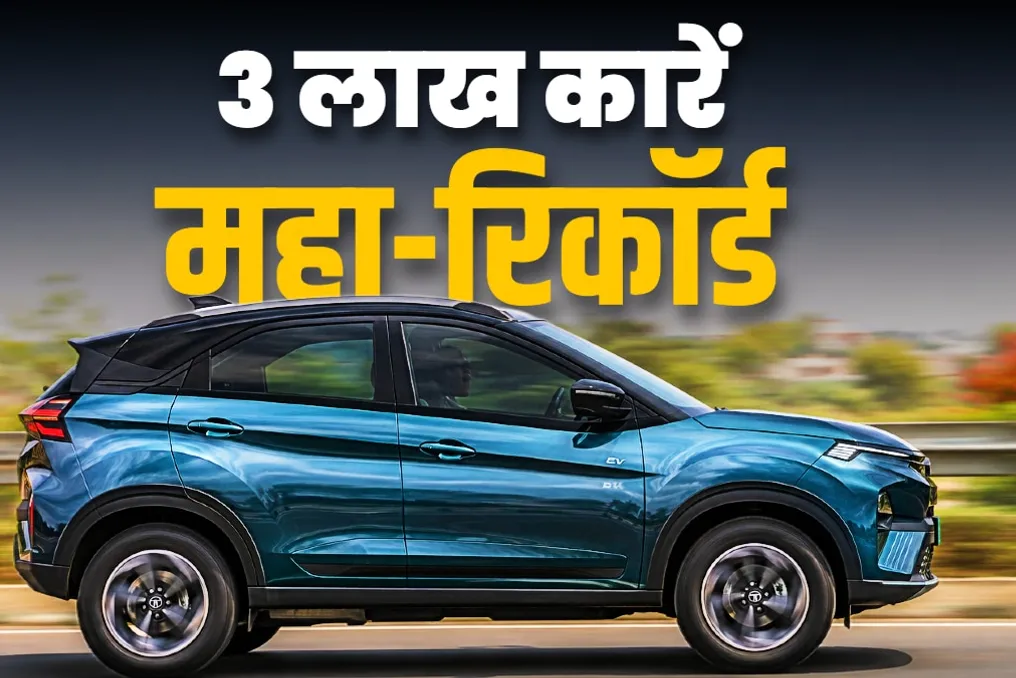
Over 300 thousand electric vehicles sold in India: Demand growth and company leadership
Read more
Aaj Tak
www.aajtak.in

Over 300 thousand electric vehicles sold in India: Demand growth and company leadership

The demand for electric vehicles in the Indian market is showing steady growth, reflected on the roads where significantly more electric cars can now be seen, especially in major cities. Sales have reached record levels.

In 2026, sales of electric passenger vehicles exceeded the 300,000 unit mark for the first time. Notably, this figure was achieved just one and a half months before the end of the year, surpassing the results of the entire previous year. Tata Motors maintained its lead in this race, while Mahindra secured second place, overtaking MG Motor.

According to VAHAN data, from January 1 to November 9, 2026, a total of 304,701 electric vehicles, including SUVs and MPVs, were sold in the country. This volume exceeds the figures for the same period last year by 66%. In 2025, 195,571 electric passenger cars were sold for the full calendar year, meaning that as of now in 2026, 109,130 more units have been sold, representing an increase of about 56%.

The growth in demand for electric vehicles this year accelerated starting in June, when monthly sales first exceeded 30,000 units, and this trend continued for the following five months. Sales set a new record in September.

The growing demand for electric passenger vehicles is influencing the entire electric vehicle market in India. To date in 2026, 29.7 million electric vehicles have been sold in the country, of which 304,701 are electric cars, SUVs, and MPVs. Consequently, the share of passenger vehicles in the total electric vehicle sales volume has increased to 10%, up from 8% last year.

Nevertheless, two-wheeled models lead the electric vehicle market, with 18.5 million units sold, accounting for 62% of the market. Next are three-wheeled electric vehicles, with 785,965 units sold, making up 26% of the market. Commercial electric vehicle sales amounted to 28,865 units, corresponding to approximately 1% of the market.

In the electric passenger vehicle segment, Tata Motors remains the largest company. From January 1 to November 9, 2026, the company sold 120,895 electric cars, which is 58% more than the 76,644 units sold in 2025. Tata Motors' share in the total volume of electric passenger vehicles sold this year is about 40%.

Tata Motors has the largest portfolio of electric vehicles. Among the company's six models, the Nexon EV is the best seller. Additionally, there is increased interest in the updated Tiago EV and Punch EV models.

The most significant change this year occurred in the battle for second place. Mahindra & Mahindra managed to secure the second position, surpassing MG Motor. The company sold 69,660 electric SUVs in 2026, which allowed it to increase its market share to 23%.

MG sold 56,988 electric cars so far. Its market share is 19%, placing it in third place. Last year, the company sold 57,239 electric cars for the full calendar year, holding a market share of 29%. The most popular MG model became the Windsor EV.

Vinfast, a Vietnamese electric vehicle manufacturer that entered the Indian market about a year and a half ago, has also made progress. To date, the company has sold 15,867 electric cars, ranking fourth with a 5% market share.
Similar stories

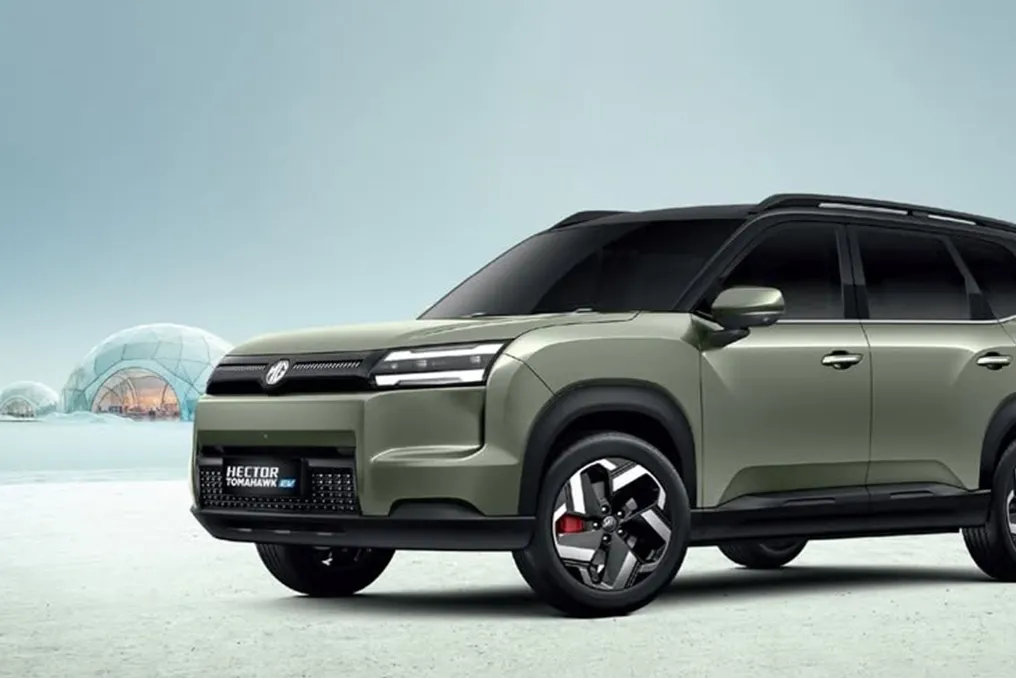
Sales of the MG Hector Tomahawk electric vehicle tripled; price starts from 13.99 lakh rupees
Read more
www.aajtak.in

Sales of the MG Hector Tomahawk electric vehicle tripled; price starts from 13.99 lakh rupees

JSVW MG Motor recently launched the Hector Tomahawk Electric model in the Indian market, and the car is in high demand. In October 2026, 1545 units of this car were registered, compared to 443 units registered in September, indicating a significant increase in sales.

Thanks to these figures, the MG Hector Tomahawk Electric has become the company's second best-selling electric vehicle. According to reports, MG sold 5965 electric vehicles in October, which is 8 percent more than in September. In September 2026, the company sold 5521 electric cars, and these figures reflect customer registrations.

Regarding the Tomahawk EV model itself, its registration only began in September, so the car had less time for sales in September than in October, when it was available for the entire month. This car is available in both five-seater and seven-seater variants.

Customers prefer the seven-seater variant, which accounted for about 65 percent of the total units sold, or approximately 1000 cars. The car is offered with a Battery as a Service (BaaS) rental price of 13.99 rupees, while the battery charging cost is 4.90 rupees per kilometer.

After the introductory offer ended, the car's price increased by 75 thousand rupees. Its export price now ranges from 20.25 to 24.25 lakhs. The car is equipped with a 69.2 kWh battery and a front electric motor that generates 201 hp and 310 Nm of torque.

The claimed range of the MG Hector Tomahawk EV is 518 kilometers. The car features numerous functions, including a 39.6 cm display, wireless charging, and a gesture control touchscreen. Safety features include 6 airbags, Level 2 ADAS, and a 360-degree camera.

In terms of luggage space, the five-seater MG Hector Tomahawk has a capacity of 610 liters, while the seven-seater variant has a trunk volume of 192 liters. When the rear seats are folded down, the trunk volume increases to 528 liters.

Bajaj Chetak Reaches One Million Sold Electric Scooters
Read more
www.aajtak.in

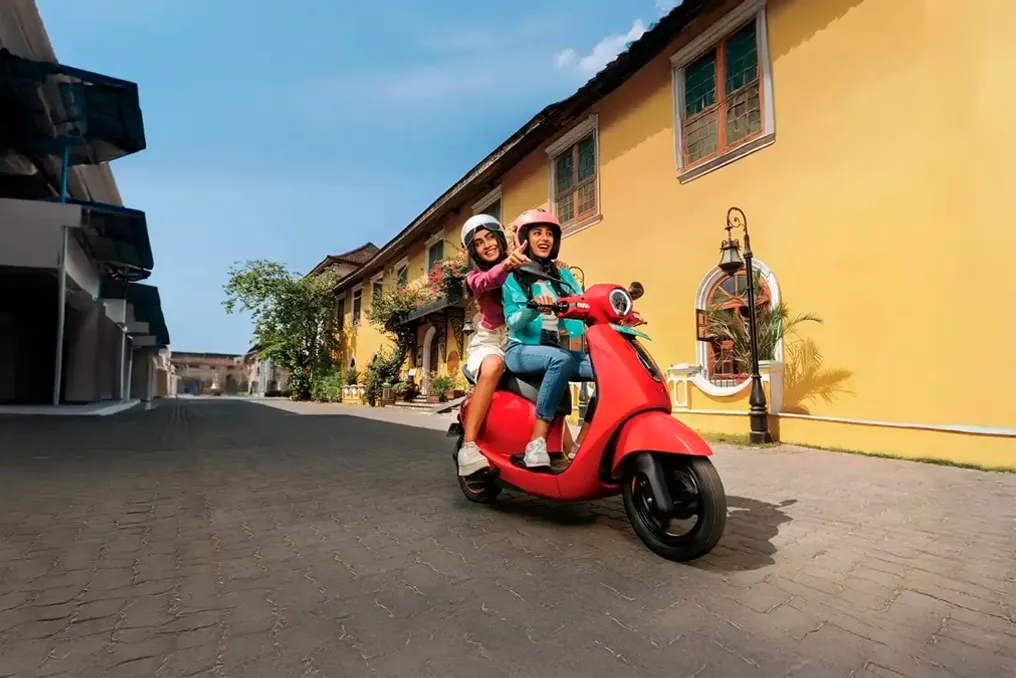
Bajaj Chetak Reaches One Million Sold Electric Scooters

Since the active promotion began, the Bajaj Chetak has demonstrated impressive results. Bajaj Auto has become the third company in India to reach the milestone of selling one million electric two-wheelers. Previously, this figure was achieved by Ola Electric and TVS Motor Company.

Since January 2020, the company has sold 1,011,135 units of Chetak in the domestic market. Demand for this scooter has significantly increased this year, with the company already reaching sales figures of 300 thousand and 400 thousand scooters for the year. There is a possibility that the 500 thousand unit mark will be exceeded this year.

In the early years, sales of this Bajaj scooter were slow: only 1,243 units were sold in 2020. Subsequent years showed growth: 4,765 units were sold the following year, the brand realized 26,758 Chetaks in 2022, 75,112 units in 2023, 201,167 units in 2024, and 279,691 units in 2025.

By 2026, the brand had sold 412,409 Chetaks. This Bajaj scooter is available in several battery variants. The lowest power model, C2501, is equipped with a 2.5 kWh battery, which provides a claimed range of 113 kilometers. Assuming home charging at a rate of 10 rupees per unit, the cost for a full charge will be about 25 rupees, providing a range of 113 kilometers. It is important to note that the actual range depends on many factors, including riding style and road conditions.

The Bajaj Chetak is manufactured in three series: in addition to the Series 25, Series 30 and 35 are available. The highest-end option is the C3503, which has an export price of 124,157 rupees. It is equipped with a 3.5 kWh battery, providing a claimed range of 153 kilometers. The basic model C2501 has an export price of 99,802 rupees and features such as a fully metallic body, music control, and an LCD display, as well as call and message notification functions.

New Energy Vehicle Sales Are Growing in South Africa
Read more
techcentral.co.za

New Energy Vehicle Sales Are Growing in South Africa

In the first nine months of 2026, South Africans purchased more new energy vehicles than in the entire previous year, with most of them being plug-in hybrids. Plug-in hybrids are selling more than two and a half times as often as fully electric vehicles.

According to industry body Naamsa, published in its October sales report on Monday, the total number of new energy vehicle sales—including hybrids, plug-in hybrids, and battery electric vehicles—reached 22,389 by the end of September. This figure is 34% higher than the 16,703 units sold throughout all of 2025, and there is still a quarter of the year left.

Rechargeable vehicles accounted for 50.5% of new energy sales this year, surpassing half of the cumulative volume in July. Of these, 8,082 were plug-in hybrids, and 3,217 were battery electric vehicles, compared to 11,090 traditional hybrids that cannot be charged from the electrical grid.

Battery electric vehicles (BEVs) made up about 14% of new energy sales and less than 1% of approximately 490,000 new cars sold in the first nine months. The publication TechCentral reported in August that the hybrid boom was masking the stagnation of the fully electric car market.

Fuel costs rose sharply in October: petrol with an octane rating of 95 in the Inland region exceeded the 30 rand per liter mark for the first time, reaching 30.25 rand on October 7, which is 12.4% higher than in September. According to Naamsa, even after the reduction in fuel levy announced in the medium-term budget—a decrease of 1.50 rand per liter for petrol and 3 rand per liter for diesel from November 4—the price of petrol will remain approximately 39% higher than the January level based on October prices.

Popular