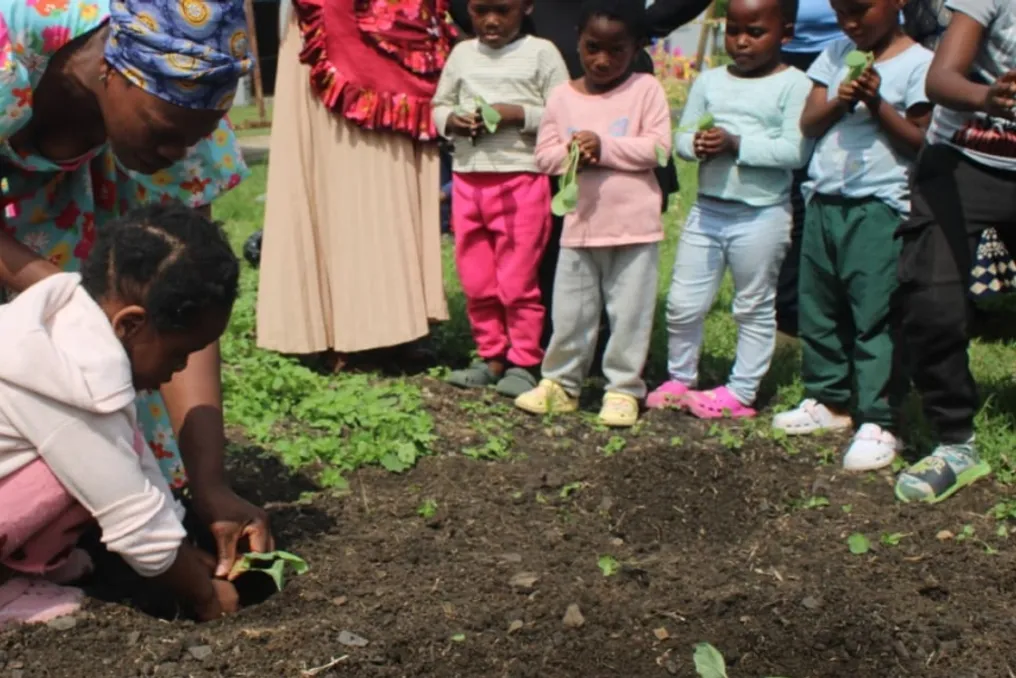
Teacher from KwaZulu-Natal promotes school vegetable gardens to combat child hunger
Read more
Food For Mzansi
foodformzansi.co.za

Teacher from KwaZulu-Natal promotes school vegetable gardens to combat child hunger

A teacher from KwaZulu-Natal, Mzikayise Ndlovu, known as Mzi, believes that school vegetable gardens can help solve the problem of malnutrition among children and is actively promoting this idea. He aims to establish vegetable gardens in every rural school in KwaZulu-Natal and beyond.

Ndlovu, who grew up in Kranskop, has personal experience with poverty and lack of nutritious food. This experience motivated him to become a teacher and work as a lead drama programmer on Radio Khwezi, where he spent his free time tending to the station's gardens. While working at Khwezi, he learned about the Emseni Farming project, which implements school vegetable gardens and provides agricultural training to local residents. He observed how youth were learning during youth conferences and were encouraged to start their own gardens.

Emseni has been teaching schools and communities for years how to grow vegetables at home and in schools, often providing seedlings to get started. Ndlovu decided that this project aligned with his vision of helping the community and became actively involved in it.

In September, Ndlovu, in collaboration with the organization Humana People to People in SA and in partnership with Emseni, organized agricultural training and invited preschool administrators to a seminar. The goal was to provide them with knowledge on how to start and maintain a school vegetable garden instead of buying vegetables from local supermarkets. Both organizations support joint initiatives to create vegetable gardens.

They initially started work at Khulakahle Pre-School in the Ndvedwe area and then moved to Emthonjaneni Rise and Shine Pre-School in Mandeni. They were provided with 600 seedlings of cabbage, beetroot, and spinach to support these gardens. Nine preschoolers from Ndvedwe and seventeen from Mandeni participated in the event, learning more about where vegetables come from.

Ndlovu's approach goes beyond simple gardening: it integrates practical agricultural education with traditional education and school sports, creating a holistic environment for development. His efforts are aimed not only at alleviating hunger and malnutrition among students but also at inspiring 12th-grade students to set higher goals for their future. Through collaboration with various strategic partners, he is strengthening community resilience one school at a time, encouraging people to take responsibility for their lives. Vegetable gardens also contribute to family self-sufficiency.

Through this initiative, Ndlovu and his team are not just planting seeds in the ground; they are sowing seeds of hope and ambition in the hearts and minds of young learners.

Ndlovu and his partners have visited many schools in remote areas of KwaZulu-Natal, where they have started vegetable gardens involving students and teachers. Recently, the team visited Beacon Ridge Primary School in Chatsworth and then went to Kethor Ridge, where they visited Jerusalem Church and helped start a vegetable garden there. They plan to harvest and consume the grown vegetables, selling any surplus for income.

In South Africa, many children face the harsh reality of attending school with empty stomachs, spending days without proper nutrition. This alarming situation threatens their health and significantly reduces academic performance and overall well-being. To address this pressing issue, schools can implement sustainable solutions such as establishing vegetable gardens. These gardens can provide nutritious food while simultaneously teaching students the principles of self-sufficiency and the importance of nutrition.
Similar stories

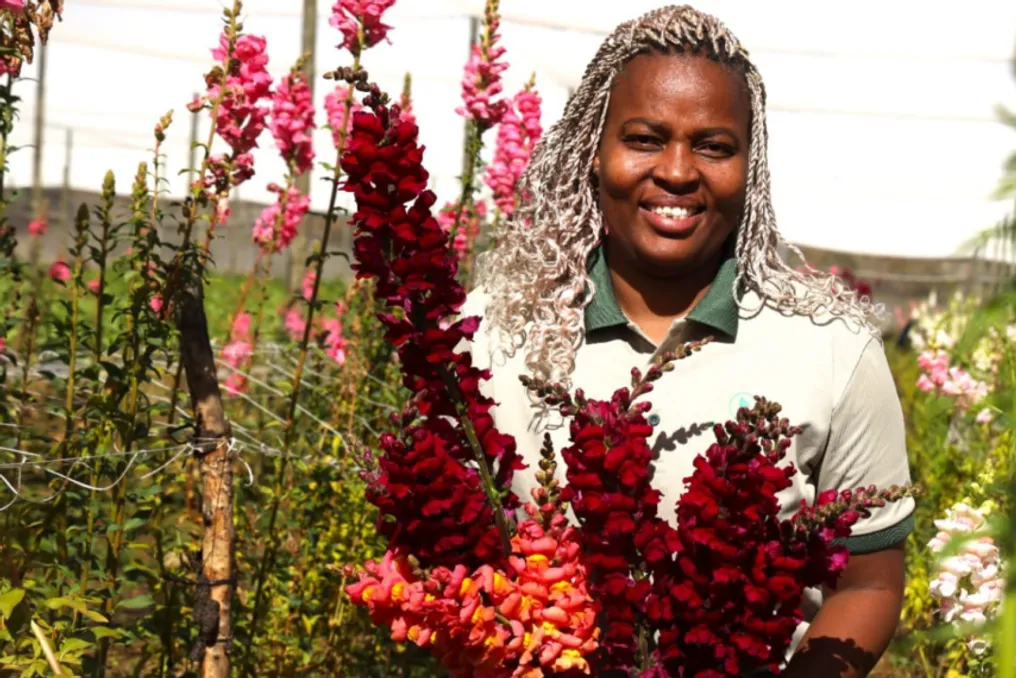
Koketso Mofokeng's Journey: From Farm Worker to Commercial Producer and Technological Innovator
Read more
foodformzansi.co.za

Koketso Mofokeng's Journey: From Farm Worker to Commercial Producer and Technological Innovator

Koketso Mofokeng's journey from the granddaughter of a farm worker to a commercial producer and technological innovator is an example of unwavering resilience, demonstrating her path through Diatla Tshweu Group. Her innovative work earned her second place at the Agricultural Development Agency (Agda) awards, where she developed farm management systems for the organization's incubator programs.

Despite significant personal and financial hardships, she established a multi-farm enterprise encompassing livestock, flower production, and seedlings, while providing employment for local youth.

Mofokeng grew up in De Waltland and later in Mmacaue, in the North West. Her agricultural roots trace back to her grandmother, Agnes Baloyi. For 37 years, Agnes worked as a farm laborer in Skilportfontein to support her family. When Mofokeng's mother, Flora, passed away in 2005, Agnes retired from farm work to care for her grieving grandchildren.

Mofokeng recalls: 'My grandmother and her sisters were farm laborers, but I never thought I would become a farmer. I thought farming was for the rich, and I felt limited by my background and the loss of my mother.'

Mofokeng's early school years were spent at Tlopane Primary, Sensechen Primary, and Sefolabanatso Middle School. However, at age 16, in Grade 9, she became pregnant with her first son, John. Facing financial pressure, she dropped out of school for two years.

The turning point came on her birthday in 2010 when her grandmother asked what gift she wished for. Mofokeng had only one wish: to return to school. Agnes promised to raise her great-grandchild if Mofokeng could find a place by the end of the day.

'I immediately got up and went to Malatse Motsepe High School,' she remembers. 'I cried in front of the principal, Mr. Phiri, and the teacher, Mrs. Motshoveni, saying that I wanted to go back to school, but I had a child and no uniform.'

Her plea was heard. She returned to Grade 9, receiving donated books and uniforms, and graduated from school in 2013.

Noticing her developing interest in photography in Grade 10, Phiri introduced Mofokeng to his daughter, Kagiso Phiri, a renowned photographer, to be her mentor. Phiri and Motshoveni provided funds for her application to Tshwane University of Technology (TUT) and covered travel expenses.

Mofokeng was accepted into the national diploma in photography. Although financial constraints forced her to drop out in her third year, she launched her own photography business, opening a garage studio and shooting weddings.

In 2021, after the birth of her daughter Tlolo, Mofokeng suffered from severe postpartum depression. She decided to radically change her profession.

She asked her husband, Katiso Mofokeng, to redirect funds saved for her lobola and wedding towards starting a farm. However, the land she bought in Mmacaue lacked critical infrastructure such as boreholes and fencing.

She then leased a one-hectare plot from local farmer Olga Nkwana in Mamogaleskraal to start immediately, while simultaneously selling the Mmacaue plot to a local chief to finance infrastructure.

Her path demanded immense perseverance. Leasing land from the Agricultural Research Council (ARC) in early 2022 led to the catastrophic loss of 110,000 cabbages due to a broken water pump.

Switching to leasing 18 hectares in Sonope later that same year, she officially registered Diatla Tshweu Group. Nevertheless, after investing R300,000 in infrastructure repairs and converting a looted house into a packing shed, constant theft and vandalism caused severe stress, leading to hospitalization.

Refusing to give up, Mofokeng and her husband sold their home to buy a farm in Elandskraal, Muinoe. When they discovered the land bordered a reserve where wild animals damaged open-field crops, they received an interest-free loan from Anglo American to install greenhouses and protective netting, allowing their business to stabilize and grow.

Today, the mother of three children—John, Tlolo, and younger son Lehumo—manages an enterprise that owns two commercial farms: one dedicated to livestock, and the other focused on small vegetables, flowers, and vegetable seedlings.

Her nursery produces 3,500 trays every six weeks, yielding 650,000 seedlings. Starting with just 100 trees in 2025, she increased her stock to 3,500 trees within a year, reinvesting crop revenues back into seeds and supplies.

Currently, her enterprise employs six female staff members in the nursery and 12 flower sales agents. She also enrolled her younger brother, Mpho Baloyi, in an agricultural school in the North West and hired him as her farm manager.

Mofokeng's innovations deeply penetrate the technology sector. She explains: 'It was difficult for me to find a good app for daily accounting, so I decided to create it myself. Then I presented it to Agda; they liked it, and I developed two systems for their incubator programs with Nedbank and Sasol.'

Her connection with Agda is profound. After first discovering an opportunity on Facebook, Mofokeng worked with the organization for three years. In 2023, participating in the Nedbank Incubator Program, her commitment to youth empowerment earned her the Nedbank Green Economy Award for Best Job Creator.

When Agda held its annual awards, participating in the competition felt like a natural continuation of her journey. Taking second place overall at the Agda awards, she felt a powerful sense of recognition. 'I felt incredibly honored and humbled,' shares Mofokeng. 'Starting from scratch and seeing your hard work recognized on such a large platform proves that every challenge was worth it.'

Recognizing her innate talent for technology, Mofokeng took her ambition to the next level by enrolling in software engineering at Stellenbosch University to formalize her coding skills. She is currently developing a specialized farm market application where farmers can sell their produce directly to buyers (currently undergoing internal testing on the farm before public release on the Play Store).

Her business currently serves 164 farmer clients who purchase seedlings and use her management application, with 78 of them returning as regular customers.

Mofokeng advises: 'Start farming with what you have. Don't wait for help. Start with what you have and use it to grow.'

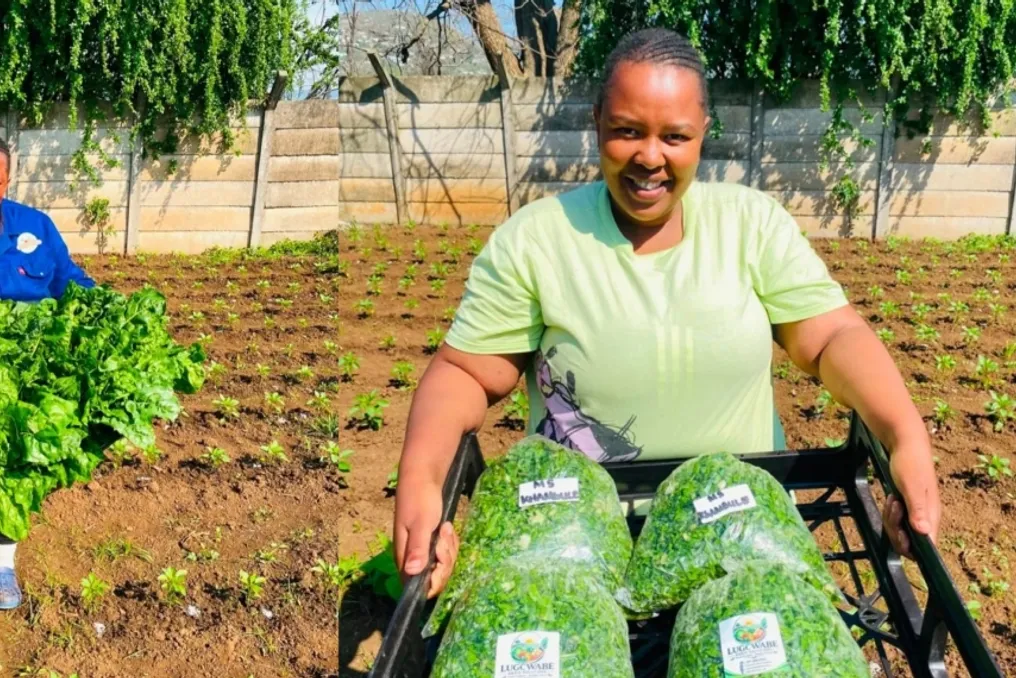
Mkhize turned family garden into agribusiness, relying on family heritage
Read more
foodformzansi.co.za

Mkhize turned family garden into agribusiness, relying on family heritage

Lungile Mkhize grew up watching her mother use gardening as a form of therapy, growing produce for the family in Edendale, Pietermaritzburg, KwaZulu-Natal. This early experience stayed with her, even after she studied opportunities outside of agriculture.

When unemployment forced her to reconsider her next steps, she decided to start small at home, utilizing the garden and a small starting capital. Today, this decision has transformed into the company Lugcwabe Agric Solutions.

After her father's death in 2000, Mkhize's mother, Thembi, turned to gardening for comfort. Mkhize notes that the family understood how gardening helped people cope with difficult times while also providing food. Every family member had responsibilities in the garden to ensure enough food was available.

Initially, she hoped to become a social worker, but her matriculation scores were insufficient to meet the requirements. Work in the corporate sector also attracted her attention, but her career took a different path, including a position as a teaching assistant.

Later, Mkhize studied entrepreneurship and business management at Umgungundlovu TVET College, gaining knowledge in finance, marketing, and customer service. Unfortunately, her mother passed away in 2018, and Mkhize took over responsibility for the family garden, which spans 269 square meters. With years of gardening experience, she began to see the potential of farming extending beyond simply feeding the family, prompting her to consider turning it into a business.

Lugcwabe Agric Solutions grows spinach and lettuce on the family land. Currently, Mkhize sells her produce through informal channels and hopes to expand her client base as the business develops. She has also analyzed local businesses and noticed a high concentration of coffee shops. Since many of them serve sandwiches, she sees an opportunity to supply them with lettuce as her business grows.

She states: 'My approach is to produce high-quality crops and let the product speak for itself. I also want to build strong relationships with customers.' Her marketing knowledge helps her identify potential buyers and think about what they need. She says her lettuce can sell out immediately once it is ready for the market.

'Spinach is also in demand. We sell it chopped, which simplifies use for busy customers,' Mkhize adds. She claims that her studies helped her understand how to manage the business side of farming, from budgeting and tracking income and expenses to managing cash flow and saving for future investments. 'My customer service training helps me work with different people, keep customers satisfied, and find new ones,' she concludes.

She completed an internship at the KwaZulu-Natal Department of Cooperative Governance and Traditional Affairs (Cogta) from 2024 to 2026.

Despite her gardening experience, Mkhize acknowledges that farming involves difficulties, especially when weather conditions and water scarcity affect the quality of her harvest. Such conditions can lead to losses if the vegetables do not meet the quality expected by customers. Mkhize emphasizes that appearance matters when selling fresh produce, as buyers often judge its quality before purchasing.

'When a product looks bad, it becomes a loss for the business,' she says. Although she has been involved in farming for years, Mkhize admits she only started taking the business seriously in 2026. Water access remains a challenge, but she recently received a JoJo tank donated by an office of a Nkosinathi Masoeu ward councilor from the Umsunduzi municipality. This donation, made about a month ago, should help her manage water on the plot.

'I want to improve my knowledge of pest and disease control because poor control affects crop quality and can hinder supply to larger markets,' she states. She hopes to learn more and afford irrigation systems to ease watering and reduce reliance on watering cans. She also wants to develop livestock management skills.

Mkhize's plans extend beyond vegetable production. She hopes to engage in poultry farming, focusing on egg production, as well as food processing. She views these areas as opportunities to meet her community's needs, create jobs, and provide training opportunities for students and interns in agriculture. She also wants to visit more children's centers as part of educational outreach, teaching children about agriculture and how it can open doors for them. 'I still have a love for serving people, but now I am doing it differently,' says Mkhize. For her, farming offers a way to continue serving people by using lessons learned in her family garden while building a business that can support her community.

Popular