Moroccan Author Discusses the Role of Literature in Broadening Horizons at Sharjah Book Fair
Read more
Khaleej Times
www.khaleejtimes.com

Moroccan Author Discusses the Role of Literature in Broadening Horizons at Sharjah Book Fair

Moroccan literature author Abdelmadjid Sebba shared his views on how reading novels can transform worldviews and deepen the understanding of other people. He believes that literature provides readers with the opportunity to question their knowledge, present alternative scenarios, and better comprehend the life experiences of others.

While participating in the International Book Fair in Sharjah in 2026, and speaking with Khaleej Times, Sebba emphasized that one of the greatest strengths of literature is its ability to change perspectives, especially among the younger generation.

He noted: 'The most beautiful aspect of literature is its capacity to give us the chance to change how we see the world and, consequently, define our place in it.' Through his works, Sebba explores themes of memory, history, and truth, prompting readers not to settle for simple explanations but to form their own vision of the world.

Sebba appealed to young people, stating that existing reality can be questioned and criticized. He added that imagination allows people to envision different life paths, and youth should approach the world without taking it for granted.

Amid growing uncertainty, which can exacerbate societal division, Sebba believes that books help readers find common ground. Reading allows people to experience the lives of others, even if they are separated by different cultures, countries, or historical eras. According to the author, 'when we read about their dreams, fears, and disappointments, we discover how much we have in common with them.'

For Sebba, this ability to transcend boundaries is one of literature's most vital contributions to society. He is also convinced that fictional works can help combat prejudice by introducing readers to characters whose backgrounds and choices may differ greatly from their own.

Great literature is not about presenting people as strictly good or bad; it deeply examines their motives, struggles, and internal contradictions. Sebba asserts: 'Every time a powerful literary work helps us understand a character who is different from us, it contributes to expanding our capacity to understand others.'

Sebba's personal journey has significantly influenced his creative output. Having grown up in Morocco, he later moved to France, where he engaged in literature, translation, and academic work, which impacted the themes he addresses. His novels, including 'The Zero Hour,' 'File 42,' and 'In the Labyrinths of Professor F.N.,' analyze the relationship between truth and fiction, as well as how historical events shape individual destinies.

'The Zero Hour' won the Moroccan Book Prize in 2018, and 'File 42' was nominated for the International Arabic Prose Prize in 2021. His letters also reflect the relationship between Moroccans and the rest of the world, exploring how personal memories connect to collective history.

Beyond writing novels, Sebba's experience as a literary translator has changed his approach to language. He explained that even a single word can affect how readers understand or emotionally react to a phrase. He observed: 'When translating a literary work, I realize that the choice of one word can alter the rhythm of a sentence, its meaning, or its emotional impact.'

This realization made him more attentive to language and more aware of the cultural and historical connotations that words can carry. However, Sebba does not believe that authors should strive to embed moral lessons into every story. Instead, he sees their primary duties as artistic honesty and respect for the reader.

He concludes: 'The writer's main responsibility lies in their artistic and intellectual integrity, and subsequently, in respecting the reader's intelligence.'

For young readers, his message is that literature can help them become more open to diverse viewpoints, even those they disagree with. By studying the reasons behind the choices made by fictional characters, readers develop the patience necessary for a deeper understanding of real people. Sebba believes that this willingness to look beyond the first impression is what makes literature particularly valuable in an increasingly complex world.
Similar stories

Sharjah Ruler Wrote Historical Novel About 19th Century Sheikh in Just Five Days
Read more
www.khaleejtimes.com

Sharjah Ruler Wrote Historical Novel About 19th Century Sheikh in Just Five Days

The Sharjah Ruler has written a new historical novel dedicated to the unusual life path of a 19th-century sheikh from the Al Qasimi family. This story covers themes of exile, imprisonment, governance, and unfulfilled love.

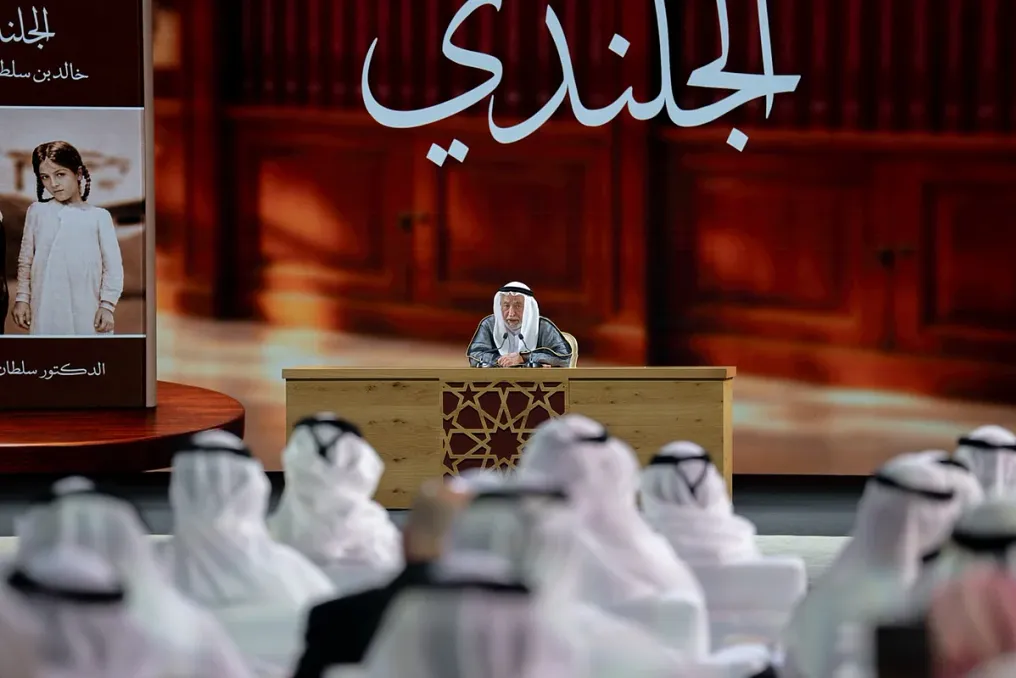
Sheikh Dr. Sultan bin Mohammed Al Qasimi announced that he completed the book 'Al Julanda Khalid bin Sultan Al Qasimi' in just five days. The printing took half a day, after which he presented and signed copies of the work at the Sharjah International Book Fair on Saturday.

The plot begins with Khalid being deposed from power in Sharjah. Following his father's instructions, he leaves the city in search of his youthful love, hoping to reunite with her. However, his journey leads him through a series of unexpected events, including migration, incarceration, governance, and pearl diving.

His journey spans 38 years and takes place between Sharjah, Ras Al Khaimah, Hasaab, Muscat, and Lengeh, against the backdrop of the turbulent political and maritime history of the Arabian Gulf in the 19th century. The novel, which combines historical documentation with fictional elements, explores the political, social, and maritime life of the Arabian Gulf in the 19th century, revealing a period marked by changes in power, personal ambitions, and unpredictable twists of fate.

One episode recounts how Khalid plunged into the rough waters near Muscat to save a stranger who was drowning. Not knowing the person's identity or origin, he removed his weapons and clothing before entering the sea and battling the waves to bring him safely to shore.

The novel also traces his enduring love for Amina bint Sheikh Abdullah bin Mohsen Al Zain. They were separated when Amina married Sheikh Saeed bin Kadhib Al Qasimi, the ruler of Lengeh. Years later, after her husband's death, Khalid hoped to marry her, but she passed away before they could be reunited.

Khalid was an unusual name in the Al Qasimi family of that time. His mother named him after the renowned Islamic military commander Khalid bin Al Walid, known as the Sword of God, whose bravery and military achievements made him one of the most famous figures in Islamic history. He later became better known by the name Al Julanda, which his father's wife, Mahra bint Ibrahim Al Marzouqi, who helped him grow up, gave him. She named him after the ancient Omani king Al Julanda Al Azdi, reflecting her Omani heritage. Eventually, this title became so closely associated with him that his original name was almost forgotten. The novel, published by Al Qasimi Publications, received its name from this title.

Speaking at the presentation, the Sharjah Ruler described historical fiction as a way of conveying historical facts through narrative, complementing academic research, historical studies, poetry, and short stories. He noted that he intentionally keeps his novels short to encourage people to read despite daily obligations. He also explained that shorter literary works often follow major scientific projects, helping readers familiarize themselves with various forms of cultural expression, including literature and theater.

This latest publication brings his total body of work to 219, covering history, research, literature, fiction, and theater. He emphasized that historical accounts must be based on authentic documents and should not rely solely on existing written narratives, stating that original records and manuscripts can help correct the historical record. He also urged university students and young researchers to study original historical documents, mentioning that he possesses hundreds of thousands of records to support academic research.

The event was attended by the Deputy Ruler of Sharjah, Sheikh Sultan bin Ahmed Al Qasimi, and the Chairman of the Sharjah Book Council, Sheikh Budur bint Sultan Al Qasimi, as well as other officials and cultural figures.

Book Fair in Sharjah Opens in Festive Atmosphere, Offering Books from Manga to Arabic Editions
Read more
www.khaleejtimes.com

Book Fair in Sharjah Opens in Festive Atmosphere, Offering Books from Manga to Arabic Editions

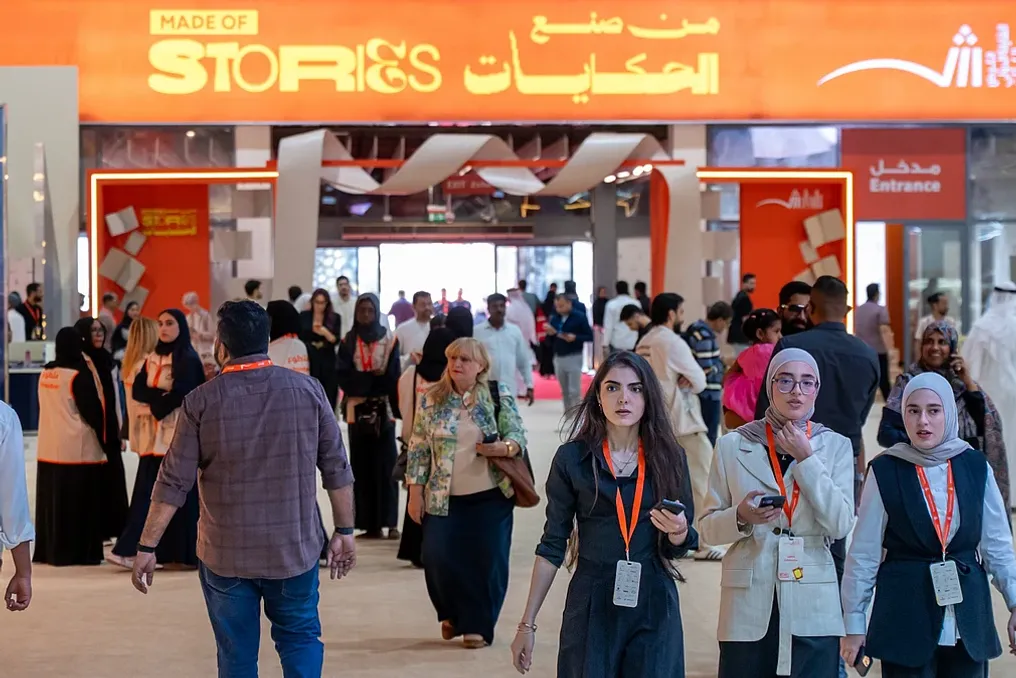
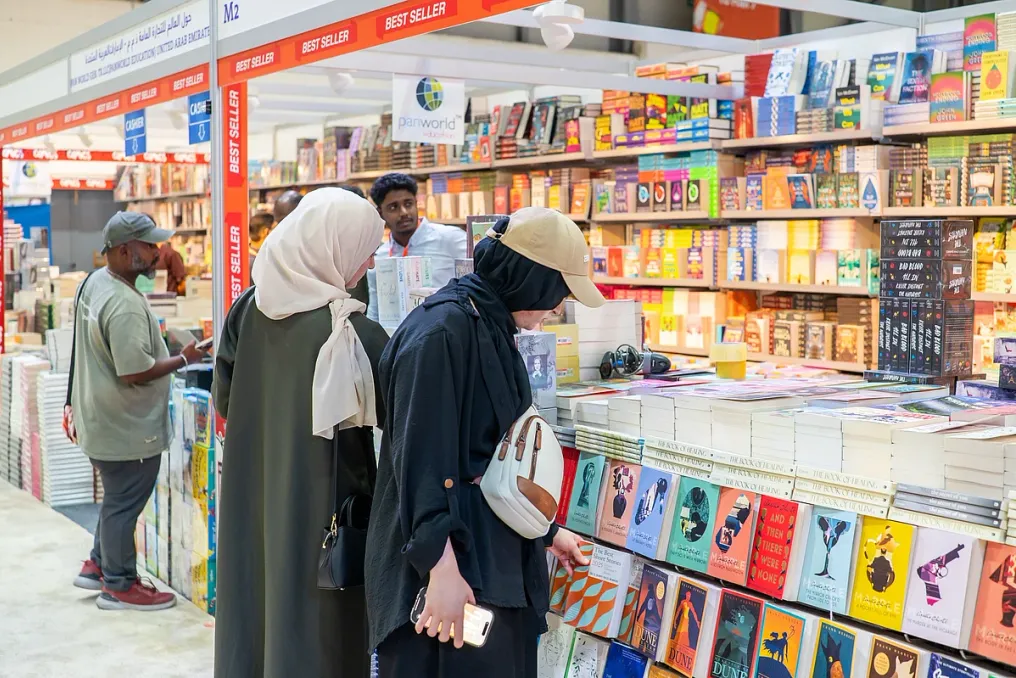
The first day of the Sharjah International Book Fair (SIBF) 2026 was marked by a familiar sight: visitors moving between book aisles, stopping at stands, flipping through pages, and deciding which publications to put in their bags. For some, this is an annual ritual, while for others, it is a first encounter with a world of stories and ideas.

Among the early guests were schoolchildren who arrived immediately after classes, families browsing the exhibition together, and regular attendees wishing to explore the exposition before the mass influx of people began. Some came with specific titles in mind, while others happily wandered, discovering books of various genres and languages.

Paravathi Shashikumar, Executive Director of Alpha Book Shop, based in Sharjah, noted the special appeal of the fair's early hours. As a long-time participant, she reported that on the first day, many visitors come who prefer not to rush.

"On the first day, we usually see early visitors who come to avoid the traffic jams and crowds that gather later. They like to take their time, browse the stands, and study the books at their own pace," she told Khaleej Times on Wednesday.

This 28-year-old bookstore, participating in the fair for many years, expects a good number of visitors this season. The shop offers a 20 percent discount on all books and has presented editions from major publishers, including Scholastic and Penguin, as well as international publications and bestsellers.

Shashikumar also believes that the reading culture in the region has grounds to remain resilient despite the growing presence of digital devices and artificial intelligence. She added: "I don't think reading is declining because of AI and increased device usage, at least in this part of the world. Considering the initiatives taken by the government and schools, including school book fairs and reading programs, there is still reason for hope."

For younger visitors, the appeal of the fair was often more specific. Karam Ayad, a 10th-grade student and Syrian expatriate, came right after school, expecting fewer visitors on opening day. His shopping list included manga and anime books, as well as a gift for a friend. Ayad, who is a regular visitor and lives nearby, noted that the annual exhibition remains an event he looks forward to, although he feels reading habits are changing.

He shared his opinion: "The fair is really cool. I come here every year because I live nearby. Unfortunately, I feel that most people don't read as much as they used to."

Meanwhile, for 10-year-old Rossel, the fair was a completely new experience. Accompanied by her parents and sister after school, she made her first purchase—an Arabic edition of the book 'Heidi'. She said: "It's my first time at a book fair, and I am very happy to be here. My parents brought me after school, and my sister is here too. I bought an Arabic book called Heidi."

The excitement of searching for a book for home was reflected in the choices of visitors exploring literature beyond children's works. Zuhair Qpaqipr, who works with a book distributor at the fair, has also been participating in SIBF for almost eight years. He reported: "Our books include children's literature and university books on artificial intelligence, computer science, and IELTS preparation, reflecting the diversity of subjects available under one roof."

As the day progressed, the exhibition brought together readers of different generations: from children making their first purchases to booksellers and exhibitors returning to an event they have observed for several decades.

Bashir Ali from Dar Knooz Eshbelia for Publishing and Distribution, based in Saudi Arabia, stated that his publishing house has participated since the earliest days of the fair. Founded in 1988, the company specializes in Islamic books but has gradually expanded its catalog into many other areas. Its assortment includes editions on medicine, business, entrepreneurship, family, and education, as well as books on learning Arabic and Islamic studies. This year, the publisher also added new works on communications and other topics.

For Ali, the appeal of the fair lies not only in the opportunity to present books but also in observing its expansion over the years. He noted: "We are very happy to be part of the book fair. It is wonderful to see how it has continued to expand over the years, and we see this growth everywhere we go."

In addition to the book stalls, the fairgrounds were filled with activity in the evening: interactive events, live performances, and dancing artists along the aisles entertained visitors. Their colorful performances added a festive atmosphere, attracting curious onlookers, families, and children who stopped to watch, take photos, and join the fun.

Exhibition in Dili presents 30 works of Portuguese literature and stimulates discussion about missing books
Read more
rtp.pt

Exhibition in Dili presents 30 works of Portuguese literature and stimulates discussion about missing books

The exhibition, featuring 30 works of Portuguese literature, was organized by curator Maria Joan Branco from the Faculty of Social and Human Sciences at the New University of Lisbon. This initiative was conceived a year earlier by the Portuguese Embassy in Dili, headed by Duarte Bué Alves.

The exhibition is titled 'Inventory Stripped Bare on Your Soul — 30 Classics of Portuguese Literature,' inspired by a line from the poet Rui Sintati, who lived in Timor-Leste between 1946 and 1947, and again from 1951 to 1955 before returning in 1966, after which he was forbidden from returning to Salazar's island.

Maria Joan Branco explained to Lusa that the main goal of the exposition is to provoke a discussion about Portuguese literature, as well as to re-evaluate and revive the history of Portuguese literature. She emphasized that although the exhibition is structured chronologically, the idea is that the works should not remain prisoners of their era; on the contrary, the past has a future, and this is an exercise in freedom that allows for the reinterpretation and recreation of what we today call classics, while also serving as 'a tribute to the Portuguese language.'

The exhibition includes contemporary works of art, such as music by composer João Madureira, a short film by João Cesar Monteiro about Sofia de Mello Breyner, and poetry recitation by Herbert Calder Louis Miguel Sintra.

The curator stated that, in her opinion, these elements help 'revitalize a language that is actually a living organism, and we bear the responsibility and freedom to do this constantly.'

The exhibition covers 800 years of Portuguese literary history, starting from 'Cantigas de Amigo' and ending with Gonçalo M. Tavares' 'Uma Viagem à Índia' (A Journey to India). The Portuguese Ambassador noted that the presented list is only one of many possibilities, as every person reflecting on this will create their own list.

Duarte Bué Alves reported that they aim to challenge and start a discussion so that visitors leave the exhibition feeling dissatisfied because a book by author A, B, or C is missing, or because their favorite book is X, Y, or Z. He stressed that the main thing is to encourage people to analyze what they have read and what they can read.

All exhibited books are available for viewing at the Portuguese Cultural Center library. The exhibition, which opened on Wednesday with the participation of Timor's President, José Ramos-Porto, has already received hundreds of visitors, including schoolchildren from various educational institutions. The Portuguese Ambassador added that he considers the goal achieved if there is any dialogue about the significance of these books or this list in Timorese schools.

The exhibition will be open to the public throughout November, and at the end of the visit, visitors can write down the name of the missing book and author on a special board.

Popular