Umpiring error in India vs New Zealand match: Shreyas Iyer replaced Axar Patel at the striker's end
Read more
Aaj Tak
www.aajtak.in

Umpiring error in India vs New Zealand match: Shreyas Iyer replaced Axar Patel at the striker's end

A serious umpiring error occurred during the last ODI series match between India and New Zealand, held at Bay Oval on Mount Maunganui on Sunday (November 15), casting doubt on the decisions made on the field.

The mistake happened during the drinks break concerning the striker's position of the batsmen. Neither the field umpires nor the third umpire noticed this inaccuracy.

The situation arose during the Indian innings, in the 14th over. After Blair Tickner's last ball, Axar Patel earned one run. Consequently, Axar should have been at the striker's end for the first delivery of the 15th over. However, after play resumed following the drinks break, Shreyas Iyer was at the striker's end, meaning the next over started with the wrong batsman.

The actions of field umpires Paul Riffl and Wayne Knights regarding this oversight are questionable. Notably, third umpire Kumar Dharmasena also failed to notice this error. Such a lapse in an international match calls into question the vigilance of the officiating.

Technical issues also arose during the game: due to a power outage at the stadium, the broadcasting team could not provide live coverage from the ground, creating difficulties for viewers watching the match.

The Indian squad included: Rohit Sharma, Rituraj Gaikwad, Virat Kohli, Shreyas Iyer (captain), Ishan Kishan (vice-keeper), Axar Patel, Naman Dira, Akib Nabi, Yash Thakur, Arshdeep Singh, and Mohammed Siraj. The New Zealand squad consisted of: Will Young, Timifert (vice-keeper), Nick Kelly, Dean Foxcroft, Finn Allen, Michael Bresshaw, Mitchell Santner (captain), Christian Clark, Matthew Fisher, Jacob Duffy, and Blair Tickner.

Similar stories

Mohit Ulva discusses the secret to India's victory over Pakistan in the Asia U-19 final
Read more
www.aajtak.in

Mohit Ulva discusses the secret to India's victory over Pakistan in the Asia U-19 final

Mohit Ulva, who helped India defeat Pakistan in the Asia U-19 Cup final by winning the match by one wicket on the last ball, has become a subject of discussion. Coming onto the field as batsman number 10, Mohit scored 49 runs off 26 balls, securing the team's victory over Pakistan. After the match, he shared his thoughts on what was going through his mind in the final over and the confidence with which he walked onto the field.

Mohit stated that he felt no pressure in the final over. He trusted himself and God completely. He said that nothing special was happening, only that he believed in himself and in God, knowing that this day belonged to him, and he would finish the match.

He also mentioned that he waited for the last ball, confident that he could end the game by hitting a boundary. He always tells himself: 'I can do it, I will do it and see it through.' According to Mohit, his performance in the tournament up to that point had not been very good. He knew he was a bowler but considered himself an all-rounder. He had not yet had enough chances to prove his potential, but his self-belief never wavered.

In his speech, Mohit highly praised the contribution of Manul Chauhan. He noted that the way Manul came onto the field before him and created a moment in the game was excellent. His job was simply to come out and fulfill his role.

He also commended Chigurupati Venkata for constantly boosting his morale. Venkat constantly told him that he could do it, so he should just go out and play. He said that both of them could finish the match on the last ball. Venkat's belief strengthened his confidence.

The coach also spoke to him personally before he went to bat. The coach told him that he could do it and that he just needed to believe in himself. After that, he went onto the field without thinking too much and continued to play his shots, watching the ball.

He added that he wasn't thinking about what was happening or what would happen next; his attention was focused solely on watching the ball and playing his shots. Mohit believes that coming in at number 10 was lucky for him, as he always considered this position lucky because most of his runs came from playing from this spot.

In the final, Pakistan batted first and scored 337 runs in 50 overs, losing 9 wickets. Usman Khan scored 107, Abdul Kadir scored 80, and Farhan Yusuf scored 60 runs. For India, Kavya Patel took 4 wickets, and Venkat took 3 wickets.

In response, the Indian team scored 339 runs in 50 overs, winning the match by one wicket. Captain Lakshya Randhani scored 80, and Aryavir Saxhaga scored 58 runs. Manul Chauhan added 47 runs, while Mohit Ulva remained scoreless with 49 runs. For Pakistan, Rizwanullah took 3 wickets.

Matt Henry took 6 wickets for 27 runs, leading India to a 244-run victory
Read more
www.aajtak.in

Matt Henry took 6 wickets for 27 runs, leading India to a 244-run victory

Despite the status of big names in Indian cricket, players are responsible for scoring runs on the field. India's defeat against New Zealand in the third day-one match, with a score of 244 runs, once again exposed the weaknesses of the Indian batting lineup. The way Indian batsmen were under pressure from the swing, seam, and bounce bowling of Matt Henry is not just a failure of one match, but a serious question regarding the technique and preparation of the Indian batting unit.

In the five-match series, India leads 2-1 in day games, but New Zealand opened the door to a comeback after this victory. There is one more match remaining, scheduled for November 15th at Mount Maunganui, which will determine the course of the series. New Zealand has a chance to level the score at 2-2. For the Indian team, this is a battle not only for winning the series but also for maintaining the authority of their batting.

The figure of three completed innings in this series reflects the true picture of the Indian batting. Only Virat Kohli managed to score a half-century, posting 74 runs. No other Indian batsman reached the 50-run mark. This statistic raises particular concern, as the Indian squad is not lacking in experience. There are big names, extensive international cricket experience, and batsmen who play domestic cricket. Nevertheless, the Indian batting consistently crumbles when faced with New Zealand's bowling.

The question arises: does our batting depend solely on flat pitches and favorable conditions? As soon as the ball starts to spin in the air, gains movement off the seam, or gets extra lift, why do the feet of the Indian batsmen stop working? In this match, Matt Henry highlighted the biggest weakness of the Indian batting. His deliveries possessed spin, seam movement, and bounce. However, the Indian batsmen lacked the footwork most necessary in such conditions.

Many batsmen failed to correctly judge the line and length of the ball. Some fell into a trap on the front foot, while others hesitated with the movement to the back foot. The feet were not used properly before the ball was played. This is precisely why Henry constantly troubled the Indian batsmen. This is not just praise for Henry; good fast bowling globally exploits advantages in such conditions. The real question is why the Indian batsmen had no answer to such bowling? If the entire batting collapses due to slight spin and seam movement, it is a cause for concern.

What Matt Henry did in this match will be remembered for a long time. He took 6 wickets, conceding only 27 runs in 9.4 overs. Two of his overs were without a single run conceded. His statistics are the biggest proof of the Indian batsmen's failure. Henry forced the batsmen into errors by constantly pitching the ball around the off-stump, relying on line and length and seam movement rather than pace. The Indian batsmen had neither a plan to counter him nor confidence in rotating the strike.

The dominance of a single bowler indicates how deep the technical flaws in the Indian batting are. It is necessary to move beyond big names and establish accountability. Although criticizing the performance of big players in Indian cricket is often considered awkward, reputation does not earn runs in international cricket. Rohit Sharma, Virat Kohli, and other experienced batsmen are expected because they have proven themselves on the big stage. However, current results cannot be justified solely by past records and achievements. Every batsman in the squad must fulfill their duty. Discussing the possibility of giving chances to young players will only be meaningful if the problems of the current batting are honestly addressed.

India still has a chance to win the series, but New Zealand made the match interesting. The final day game will take place on November 15th at Mount Maunganui. By winning, New Zealand can level the score at 2-2. Before this match, the Indian team needs to seriously work on its batting. The problem will not be solved merely by longer net practice. Batsmen need to learn to read the line of the ball, improve footwork, and find ways to play against spin and seam movement. It is easy to dismiss the 244-run loss as a bad day, but the fact that there was only one half-century in three innings and Matt Henry's performance of 6 wickets for 27 runs shows that the matter is much more serious. The Indian batting needs to look in the mirror. The question is not about losing to New Zealand, but why our batsmen stop as soon as there is slight spin, slight seam movement, and bounce?

Sunil Gavaskar supported the decision to field Axar Patel before Kell Rahul in the match against New Zealand
Read more
www.aajtak.in

Sunil Gavaskar supported the decision to field Axar Patel before Kell Rahul in the match against New Zealand

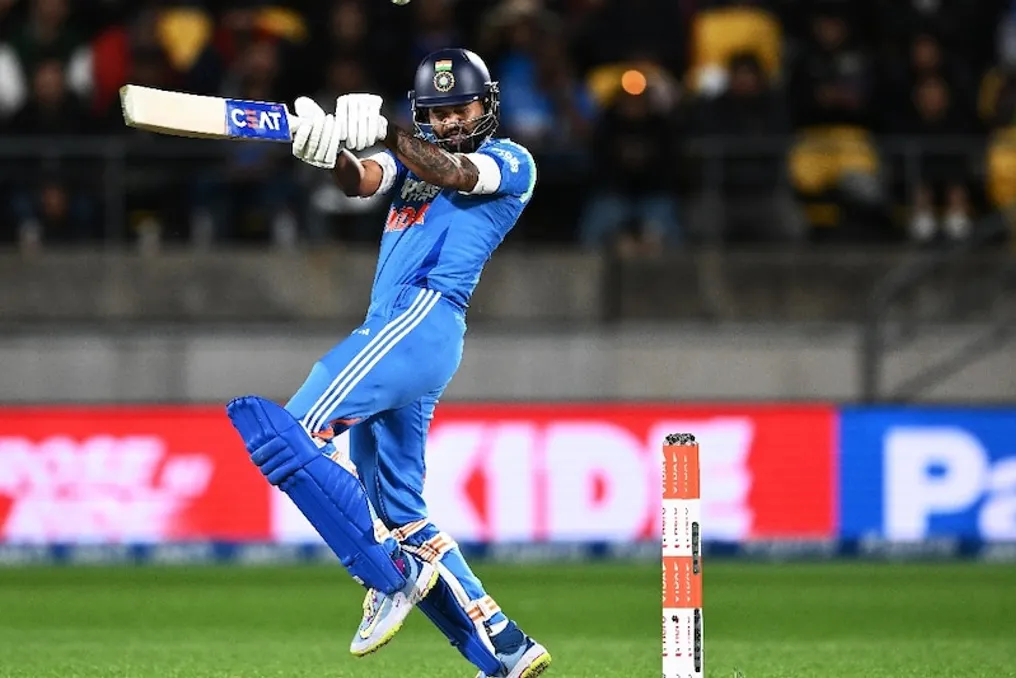
In the second match of the series against New Zealand, Axar Patel came out onto the field before Kell Rahul. Patel played at the fifth position but managed to score only seven runs. In the first match of the series, he also played at this position but was unable to start scoring runs. These decisions by the coaching staff raise questions.

Nevertheless, the great batsman Sunil Gavaskar expressed support for the decision of head coach Gautam Gambhir and captain Shubman Gill. He believes that the idea behind this change was to disrupt the bowlers' tactics.

In the game played at Henry Stadium in Wellington on Saturday (November 7), India was 135 runs short of the target, having scored only 39 runs after Shubman Gill, Virat Kohli, and Rohit Sharma were dismissed. After this, Axar was given a chance at the fifth position, but he did not meet expectations. Then Kell Rahul came out, who, along with Shreyas Iyer, tried to stabilize the game.

In an interview with Sony Sports, Sunil Gavaskar noted that bringing in the left-handed batsman forces the bowlers to change their line and length of delivery. This can also affect the strategy against a right-hander, creating opportunities to score runs.

He stated: 'There was nothing wrong with this idea. If Axar had scored runs, you would have praised the captaincy. Such experiments are sometimes successful, and sometimes they are not. This time it didn't work. You also knew that after him there was a strong batsman like Kell Rahul.'

In Wellington, Kell Rahul continued the game with Shreyas Iyer. Shreyas scored 30 runs off 46 balls, and Rahul remained not out, scoring 26 runs. When the game was interrupted due to rain, India's score was 113/7. Thanks to the DLS method, the Indian team gained a four-run advantage and was declared the winner.

Earlier, Indian bowlers restricted New Zealand to 134 runs in 41 overs. Guruner Bharadwaj took four wickets for 30 runs, while Axar Patel, Akib Nabi, and Anshul Kamboj each took two wickets. Daryl Mitchell scored the most runs for New Zealand—55 runs. With this victory, India took a 2-0 lead in the five-match series.

Popular