China and the US Agree to Stabilize Trade Relations at First Council Meeting
Read more
CGTN
cgtn.com

China and the US Agree to Stabilize Trade Relations at First Council Meeting

China's Ministry of Commerce announced on Saturday that the first meeting of the China-United States trade council took place on Friday as part of the bilateral mechanism for economic and trade consultations, which was held via video conference.

During this initial meeting, representatives from both countries held frank, in-depth, and constructive discussions on issues of mutual interest. Topics discussed included the implementation of previous economic and trade consultations between China and the US, as well as an agreement on mutual tariff reductions totaling $30 billion from each side, and agricultural trade issues.

The parties agreed to continue interaction through the trade council, resolve each other's economic and trade problems, expand areas of cooperation, and eliminate disagreements. The goal of these actions is to strengthen constructive and stable strategic relations between China and the US, based on mutual respect, fairness, and reciprocity.

Similar stories

American Secretary defends trade balance between US and China due to economic dependence
Read more
noticiasaominuto.com

American Secretary defends trade balance between US and China due to economic dependence

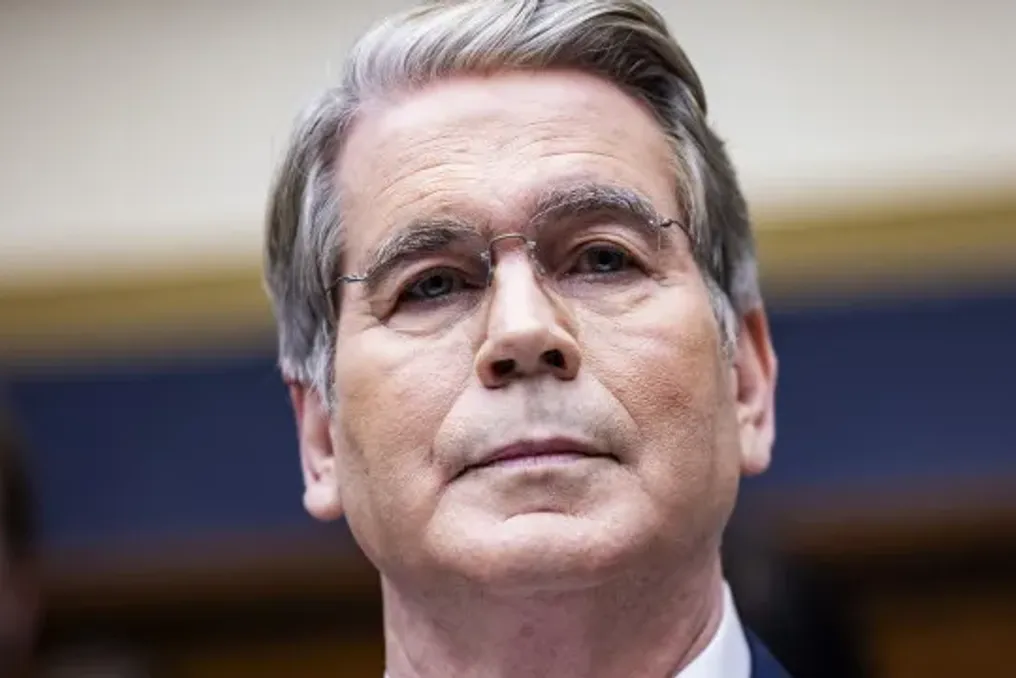
The United States Treasury Secretary, Scott Bessent, defended the need to establish a more balanced trade relationship between the United States and China, arguing that the American economy has become excessively dependent on foreign imports.

During a gala dinner organized by the National Committee for US-China Relations, held Tuesday in New York, Bessent characterized the bilateral relationship as 'one of the most important of this century.' He also described the ties between US President Donald Trump and his Chinese counterpart, Xi Jinping, as genuine friendship.

However, the official emphasized that reducing US economic dependence on China is crucial for the benefit of both countries. Bessent observed that 'the North American economy has become too dependent on external supply, while China increasingly depends on foreign demand.'

He continued by explaining that, practically speaking, 'the United States must produce more than it consumes, while China must consume more than it produces.' Bessent believed that greater economic complementarity could strengthen both economies, stressing that this stance did not indicate hostility, but rather the desire to restore 'a spirit of reciprocity.'

The Chinese ambassador to the United States, Xie Feng, who was also present at the event, supported the idea of reciprocity in bilateral relations. However, he warned that 'China and the United States gain from cooperation and lose from confrontation.'

Xie Feng mentioned that 'the great revitalization of the Chinese nation and making America great again can complement each other,' alluding to Trump's political slogan.

These statements come amid ongoing trade tensions between the two largest world economies, even with a fragile truce that may end in January. Trump plans to visit Shenzhen, in southern China, next week to attend the Asia-Pacific Economic Cooperation (APEC) summit, where there should be a new meeting with Xi Jinping, which will be the third of the year.

Trade will be a central theme in the discussions. The previous week, American Trade representative Jamieson Greer held a video conference with Chinese Vice Premier He Lifeng, requesting Beijing to 'take concrete measures to fully comply with previous commitments.' Greer's request specifically focused on the acquisition of American agricultural products, rare earths, and other strategic minerals.

The official Chinese news agency Xinhua reported that Beijing expressed concern over the economic and trade restrictions imposed by Washington against China.
US demands China comply with 2025 trade truce agreement
Read more
noticiasaominuto.com

US demands China comply with 2025 trade truce agreement

The U.S. government has requested that China fully and immediately comply with the agreements established in 2025 as part of discussions aimed at reducing trade friction between the two countries.

Scott Bessent, the U.S. Secretary of Finance, emphasized during a meeting with his Chinese counterpart, He Lifeng, the importance for China to fully implement the commitments made in Busan, South Korea, in October 2025. Bessent's Department released a statement detailing this position.

Bessent also expressed concerns regarding certain recent actions taken by China, although the statement did not specify what these measures were.

Jamieson Greer, White House representative for Trade, was present at the discussion. This meeting took place shortly before the Asia-Pacific Economic Cooperation (APEC) summit, which Donald Trump is scheduled to attend.

This will be the first time Chinese President Xi Jinping meets with Trump since his visit to Washington at the end of September 2025. On that occasion, both agreed to a trade truce valid until January 10, a pact that was reaffirmed in October in South Korea, resulting in the cessation of customs tariff increases and other trade restrictions.

The root of the controversy lies in access to so-called Chinese rare earth minerals, substances essential for the automotive, defense, and smartphone manufacturing sectors.

China calls on the US for mutual concession to stabilize and improve trade relations
Read more
cgtn.com

China calls on the US for mutual concession to stabilize and improve trade relations

A spokesperson for China's Ministry of Foreign Affairs, Guo Jiakun, stated on Friday that sustainable growth in economic and trade ties between China and the United States serves the interests of both countries and their populations, and also contributes to the development of the global economy.

Guo emphasized that China and the United States must find a compromise, adhere to an approach that is mutually beneficial and advantageous, and strive for continuous, stable, and improving bilateral economic and trade relations.

Popular