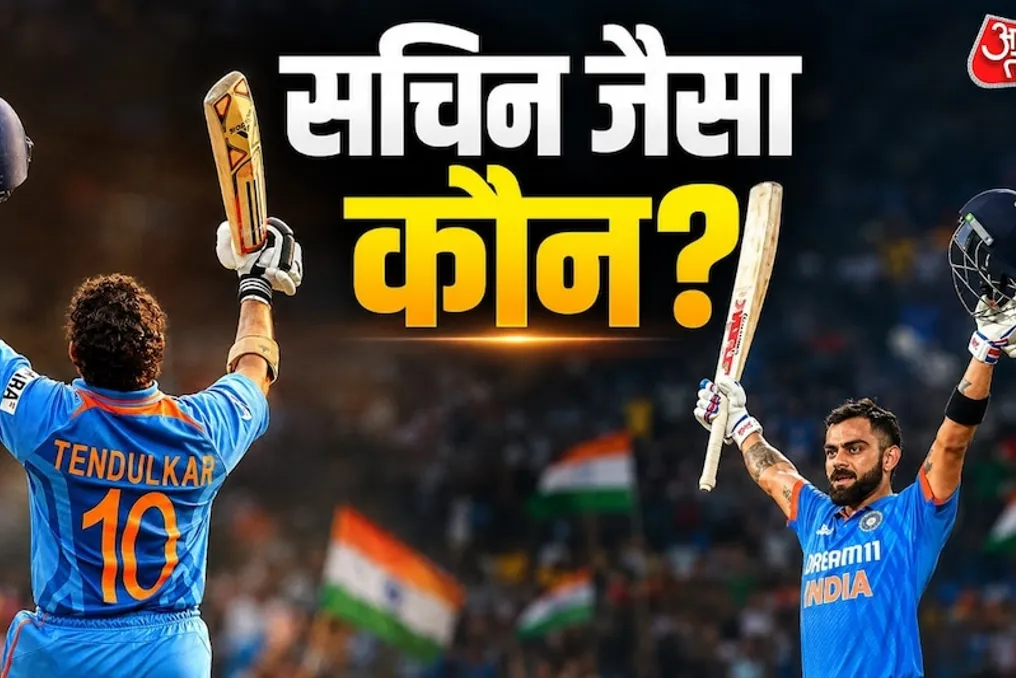
Sachin Tendulkar's Record: 100 International Centuries and Virat Kohli's Gap
Read more
Aaj Tak
www.aajtak.in

Sachin Tendulkar's Record: 100 International Centuries and Virat Kohli's Gap

In cricket, records are set, broken, and then new ones enter history. Some batsmen create mountains of runs, others demonstrate a flurry of double centuries, and third ones astonish bowlers with a deluge of sixteenths. However, there are records before which stand not just numbers, but the entire cricketing journey of an entire generation.

The record of 100 international centuries set by Sachin Tendulkar is precisely such an example. It is not just statistics, but a history spanning 24 years of exceptional career, incredible talent, physical fitness, discipline, consistency, and a passion for cricket that is almost impossible to replicate today.

This record, which can be called 'Ajuba 100' (Miracle 100), is hard to describe any better. 100 international centuries is an achievement where a batsman scores three digits 100 times in Tests and ODIs. Although it sounds simple, achieving it on the field proved to be much more complex. Many great batsmen have played, scored runs, and set records, but none could reach Sachin's peak.

When the 16-year-old boy first stepped onto the international arena against Pakistan in Karachi on November 15, 1989, hardly anyone could imagine that this teenager would set the biggest century record in cricket history. 37 years have passed since this historic debut. In these 37 years, the entire world of cricket has changed: the rules of the game have changed, the style of play has changed, T20 cricket has emerged, franchise leagues have expanded, and physical fitness standards have completely transformed. Nevertheless, Sachin's record of 100 international centuries stands as strong as ever.

The main question is this: has Sachin's record become a cornerstone of cricket that future generations can only dream of? Will cricket ever see another batsman score 100 international centuries? Great batsman Virat Kohli is 14 centuries away from this record. And serious challenges related to age, career longevity, and format restrictions also face him.

Sachin Tendulkar's international career began in November 1989 and ended in November 2013, meaning he maintained his presence on the most demanding cricketing stage in the world for about 24 years. During this time, he played 200 matches in Tests and 463 in ODIs, and has one match in T20 Internationals. In total, in 664 international matches, he scored 34,357 runs and 100 centuries. Looking at these figures makes it clear that Sachin's record was the result not only of his batting abilities but also a model of maintaining himself among the best players in the world over a long period.

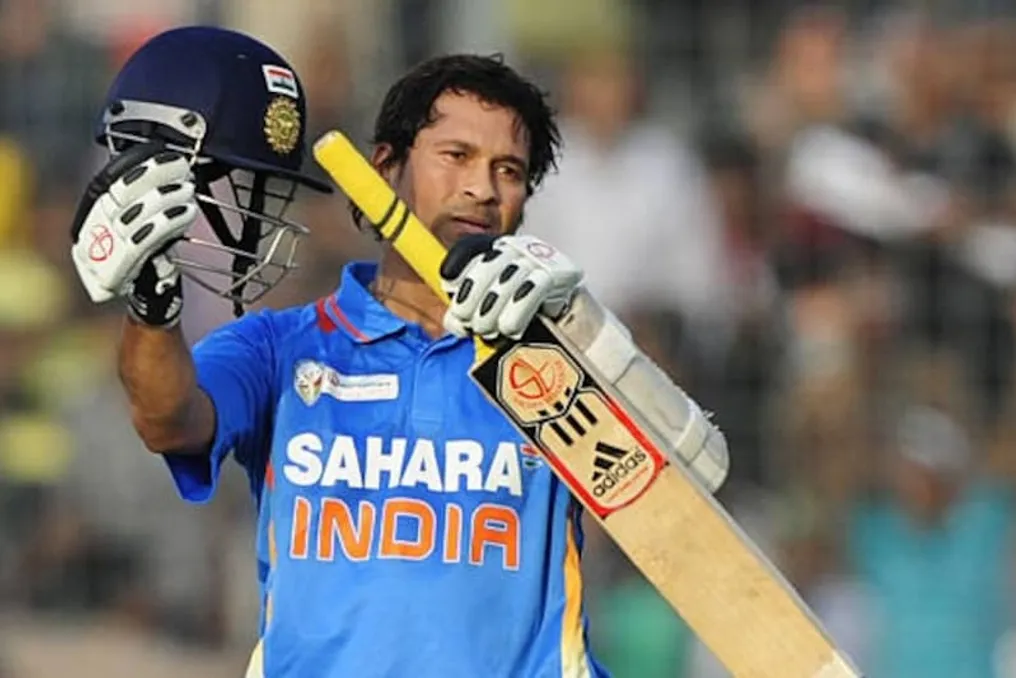
Of Sachin's 100 centuries, 51 were in Tests, and 49 were in ODIs. It is important to note that he scored his first international century in 1990 in a match against England in Manchester. After that, the streak of centuries continued for more than 22 years. His 100th international century was scored in March 2012 during the Asia Cup against Bangladesh. Thus, it took him more than two decades from the first century to achieving a hundred centuries. This is the story of a player who started in his youth and faced the most diverse challenges on the biggest cricketing stage.

Here, one thing needs to be understood: Sachin did not just score 100 centuries; he sustained his game for 24 years to reach this mark. He proved himself among different captains, coaches, teams, and in the changing cricketing world—from the fast pace of fast bowlers to the spin of spinners, from flying overseas grounds to turning wickets in the Indian subcontinent. Many generations of bowlers came and went before his bat, but Sachin's bat kept working.

It is interesting to examine Sachin's career in three phases. In the initial phase, he was a fearless teenager who was not afraid to face the world's most dangerous bowlers. In the middle of his career, he became the backbone of Indian batting. Then, in the latter part of his career, he played as an experienced batsman whom every opposing team had to try to stop. In each of these three phases, his game developed differently, but the thirst for scoring centuries never faded. Sachin scored 100 centuries not in one format or in a specific period. The 51 centuries in Tests and 49 in ODIs prove that he succeeded equally in both major disciplines of the game.

When it comes to who can challenge Sachin's record of 100 centuries, Virat Kohli comes to mind first. The reason is that Virat ranks second on this list after Sachin. Currently, he has registered 86 international centuries. That is, to match Sachin's record, he still needs to score 14 centuries.

Virat currently has played 30 matches in Tests, 55 in ODIs, and one match in T20 Internationals. In ODI cricket, he has surpassed Sachin and...
{language:

Similar stories

Sachin Tendulkar to Exhibit Collection of 26 Bats at Museum After 13 Years Since Retirement
Read more
www.aajtak.in

Sachin Tendulkar to Exhibit Collection of 26 Bats at Museum After 13 Years Since Retirement

Sachin Tendulkar left behind a legacy on the cricket field that is difficult to erase. He set a record in international cricket by scoring 100 centuries, which no one else has come close to. Now, it is his bats that will tell the story of these historic moments of his career. The master blaster is set to donate 26 of his special bats to the Cricket Museum of the Mumbai Cricket Association (MCA).

Among these bats will be those with which he scored his memorable international centuries. In addition to these bats, fans will see many other priceless memorabilia related to his career, including helmets, jerseys, and personal notes connected to important moments of his career. All these items will be displayed at a special event on November 16th.

This special exhibition is titled 'Batography'. It will present Sachin's journey in international cricket through the bats he used and the memories associated with them.

The date of this exhibition is significant in itself: November 16, 2026, marks the 13th anniversary of Sachin's retirement from international cricket. He played his 200th and final Test match against West Indies at the Wankhede Stadium in Mumbai on November 16, 2013, and it was there that he bid farewell to international cricket. Thus, on the 13th anniversary of his retirement, mementos related to his career will appear before cricket lovers.

'Batography' will not just be an exhibition of old cricket bats; it will provide an opportunity to view key stages of Sachin's long and brilliant career up close. Through the 26 bats used during different periods, fans will be able to connect with those unforgettable innings and achievements that made Sachin one of the greatest players in cricket history.

Helmets, jerseys, and personal notes will add extra value to this exhibition. These items will allow people to understand aspects of Sachin's career that usually go unnoticed on the field. The MCA believes that this initiative will give museum visitors a unique opportunity to learn the story behind Sachin's achievements.

MCA Chairman Ajinkya Naik stated that through 'Batography', the museum will gain a new dimension. Viewers will be able to understand the story of achievements by looking at the items with which these historic moments were created. He noted that Sachin decided to share these invaluable items with the MCA, which is a sign of respect. This will help preserve Sachin's exceptional legacy for future cricket enthusiasts.

The goal of this initiative is to preserve and celebrate Sachin's contribution to Indian and world cricket. For Sachin, these bats are not just sports equipment; they are linked to numerous memories, struggles, and historical successes of his career. Now, fans will have a chance to see these bats up close, with which greatness was created on the cricket field.

Aryavir Sehvag scores one hundred runs in U19 Asia Cup match against UAE
Read more
www.aajtak.in

Aryavir Sehvag scores one hundred runs in U19 Asia Cup match against UAE

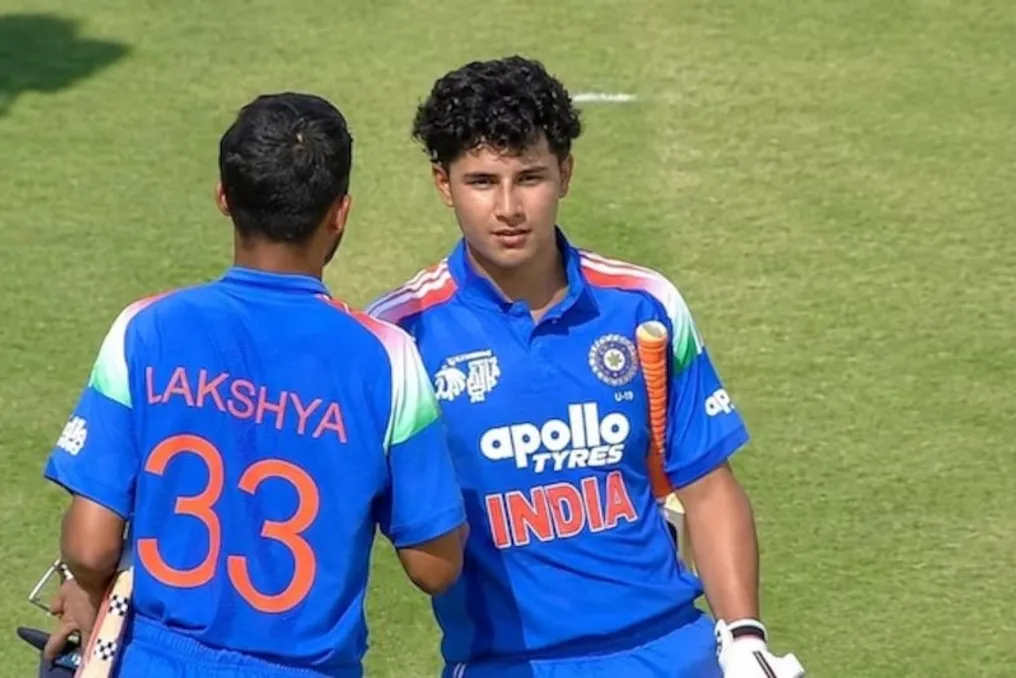
In the eleventh match (Group A) of the U19 Asia Cup 2026, featuring the Indian junior team, opening batsman Aryavir Sehvag delivered an impressive performance. During the match against the UAE, Aryavir, son of legendary Indian batsman Virendra Sehvag, scored a magnificent century, showcasing his class.

In this century innings, he scored 13 fours and two sixes. The UAE captain decided to win the toss and allowed India to bat first. According to the game rules, the ball had no high bounce and remained quite low. Initially, the fast bowlers from the UAE restricted the Indian batsmen.

After Captain Celak Raichandani (17 runs) was brought onto the field in the 14th over, caught by Nurullah Ayubi, Aryavir's composure and aggression became outstanding. He skillfully used his footwork against spinners, sending the ball over the covers and mid-wicket for boundaries off full deliveries.

Once Aryavir settled into the game after the initial overs, he began batting in the style of his father, Virendra Sehvag. He clearly showed his intentions by hitting two fours in one over from Nurullah Ayubi. Aryavir scored 100 unbeaten runs off 131 balls at an average strike rate of 76.34.

The second player, VK Vinith, supported him from the other end of the pitch, playing cautiously and scoring 29 unbeaten runs, including one four and one six off 40 balls, which helped the team solidify its position. By the completion of 33.5 overs, the Indian team had scored 159 runs while losing one batsman, confidently approaching a large total.

Blair Tickner achieves historic feat by hitting 4 sixes in one game against India
Read more
www.aajtak.in

Blair Tickner achieves historic feat by hitting 4 sixes in one game against India

In the first day match between India and New Zealand, held at Eden Park stadium in Auckland, the Indian batsmen demonstrated an impressive performance. Before the powerful displays by the Indian players, the New Zealand team was struggling, losing 9 wickets for 146 runs.

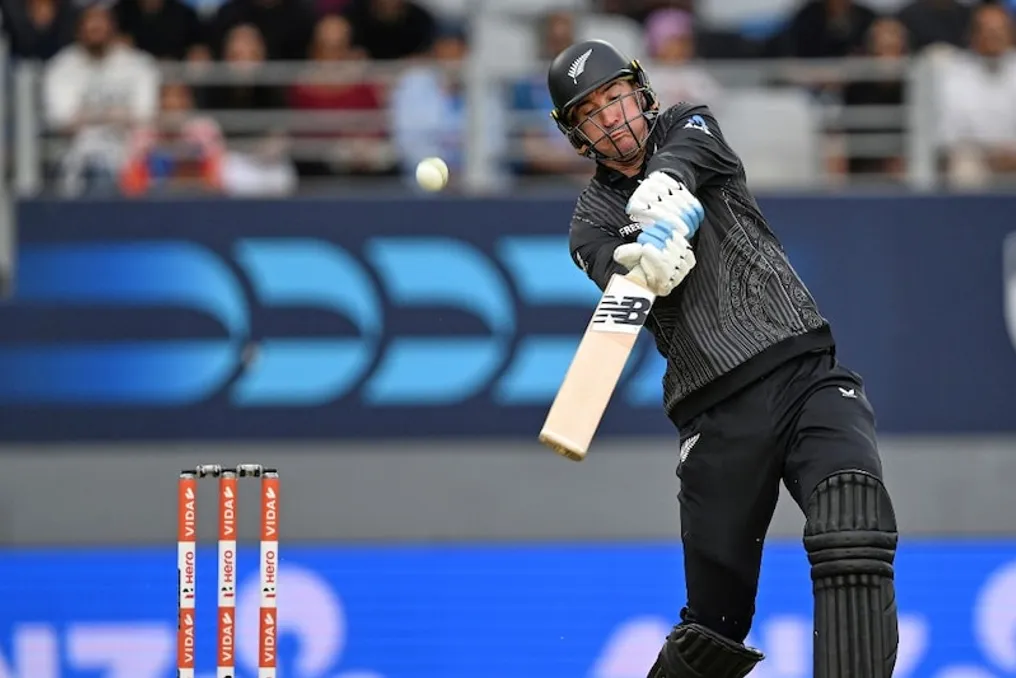
At this moment, fast bowler Blair Tickner came onto the field to bat at number 11 and created a real storm. Tickner launched a lightning attack, scoring 34 runs with one four and four sixes in just 23 balls, thereby setting a major world record in ODI cricket format.

During this aggressive innings, Blair Tickner hit three sixes in the last over bowled by Arsh Deep Singh. Because of this, he became the third player in ODI history to hit four sixes in a single innings while batting at number 11. Before him, this feat was achieved only by Mohammad Amir of Pakistan (four sixes against England in 2016) and Naseem Shah of New Zealand (four sixes against New Zealand in 2025).

Tickner's achievement broke the 23-year record set by legendary fast bowler Shane Bond. Bond hit three sixes against India in Auckland on January 11, 2003. Now, after 23 years, Blair Tickner has created new history by hitting four sixes. This elite group also includes Chris Priingle (2 sixes against West Indies in 1994) and Trent Boult (2 sixes against Sri Lanka in 2015).

Thanks to this counter-attacking innings, the New Zealand team managed to achieve a competitive total of 185 runs in 40.2 overs. In the New Zealand team, Tim Seifert scored 38 runs, and Glenn Phillips scored 30 runs. For India, Arsh Deep Singh took 4 wickets, Gurnoor Barar took 3 wickets, and Anshul Kamboj took 2 wickets.

Popular