
UniPat AI SPU Test Shows No AI Agent Could Predict Lab Experiment Results Better Than Random Guessing
Read more
Pandaily
pandaily.com

UniPat AI SPU Test Shows No AI Agent Could Predict Lab Experiment Results Better Than Random Guessing

UniPat AI has introduced a benchmark called Science Prediction Universe, or SPU. This tool is designed to test the ability of artificial intelligence agents to predict the outcomes of real laboratory research before actual data is obtained.

According to the company's data, among the thirteen tested agent configurations, the average score was below 0.5 on a scale where perfect prediction is rated as 1 point and random guessing as 0.

SPU includes 116 tasks covering 4207 experiments conducted in the fields of chemistry, materials science, biology, and medicine. One hundred publicly available tasks were created based on 85 scientific papers published in 11 Nature portfolio journals between January 2025 and August 2026. An additional 16 closed tasks are based on unpublished experiments conducted in collaboration with partner laboratories concerning VHH nanobodies, reaction conditions, electrolytes, and Magrolimab antibody variants; these private tasks are not published.

Each task records the candidates, materials used, testing conditions, and measurement method of a real experiment. The agent is provided with eight hours of work time in a container equipped with 8 central processors, 16 GB of RAM, and one NVIDIA H20 GPU. It has the capability to search the internet and install scientific software, after which it must rank the candidates according to the measured result. A separate offline container evaluates this ranking using Spearman correlation, and the output of the tools is checked for source article identifiers to restrict answer searching.

The first round of testing included 12 advanced models in 13 different configurations. UniPat AI reports that the Claude Opus 5.5 model demonstrated the highest average score—0.486, but most of its runs failed due to safety concerns, so it was evaluated on fewer tasks. Overall, only 34% to 52% of tasks managed to exceed the set probability threshold. The company grouped six configurations into a leading tier, which shows results approximately 0.15 higher than the others when performing the same tasks.

The analysis indicates that the bottleneck is judgment, not tool usage. During the study, agents showed a higher degree of agreement among themselves (0.52) than with real experimental data (0.33). Other findings noted that consultants for the project were drawn from institutions such as Stanford, Cornell, Harvard, Peking University, HKUST, and FutureHouse, alongside laboratory partners. One hundred public tasks are available on Hugging Face as Harbor tasks under the CC BY 4.0 license, and the corresponding code is hosted on GitHub under the Apache 2.0 license.

Similar stories

How to find the real value of artificial intelligence in business by exploring non-obvious processes
Read more
techcentral.co.za

How to find the real value of artificial intelligence in business by exploring non-obvious processes

Every company has some 'wild' element—outdated systems created decades ago that continue to function, but no one has touched them for a long time, and the last specialist for them retired in 2011. These systems were not abandoned because they are unimportant; attention simply shifted to other areas and never returned. It is in these unnoticed places that the true value of artificial intelligence lies.

When enterprises talk about wanting to benefit from AI, they usually refer to the same areas: customer service, call centers, or mobile applications. These areas have already received twenty years of investment, so the remaining benefit is only refinement, which brings only a minor increase.

However, the places that remain unattended are different. They lack modern software and investment; some processes are still performed using faxes. Work that was previously too tedious to perform can now be done quickly and reliably. In such areas, AI acts not as an improvement, but as the result of a twenty-year evolution achieved in just a few months.

We admire those who go beyond the usual, but then we stay within safe boundaries. The investigation looks romantic from the outside, but internally it means a costly effort to find out what is over the next ridge. We have made such trips with our clients, and here are our field notes.

Define Your Horizon

The decision to 'implement AI' is not just a choice. If left to chance, organizations choose obvious places because that is where complaints come in, and complaints receive funding. Instead, you should ask: where do we hire people just to maintain the current level of work? Where does someone retype one document onto another screen? Where is there a rule in the documentation, but it is applied manually? And if the person responsible for this process leaves tomorrow, will anyone know how it works? Don't ask where AI would look impressive; ask where no one is looking.

Send Out a Scout

No one has yet been able to justify a business case for implementing AI, so buyers have to approve real expenses based on the benefit they have to present. Galileo faced a similar problem in 1609. He did not lecture the Doge of Venice on optics; he pointed his telescope at the harbor and showed him approaching ships long before people on the ground could notice them. He showed Venice its own world through this tool.

We did the same with one underestimated process. Validation, which used to take an hour, now takes a minute. Approximately 100,000 such validations per year is equivalent to recovering almost 100,000 hours. Stop trying to prove the business case; start showing it.

Prepare for the Terrain

The initial impulse is to apply the largest and most general model to a narrow, repetitive, and verifiable task. Such a model is prone to hallucinations, drifts, and costs a fortune. Furthermore, when a regulator asks why a certain decision was made, no one can answer. You must assign AI only what it is good at. A model reads a dirty scanned document and finds a number; deterministic code checks if these numbers match, ensuring the answer is always the same. Small, specially designed models should be used: a frontier model for document extraction is like Einstein hired by a machinist who got bored and started improvising. And always control your own infrastructure. We learned this when the model we depended on was decommissioned mid-project, according to someone else's schedule. Be careful what you outsource.

Update Your Map

Most organizations change workflows but leave metrics unchanged, causing employees to continue working toward old targets, and the benefits gained leak away. You need to document on one page every place where AI has been applied. Empty space does not mean no activity; it means no measurement. Your Key Performance Indicators (KPIs) are anchor points. They need to be moved.

Choose Your Team

No competent person goes into the unknown alone. The owner of the business problem must define the outcomes from the beginning, and the people who will use the system must help build it. Then you will never have to sell it to them. Measure cycle time, not the number of replaced employees. Expand the scope of work, not just the quantity. And share the benefits gained.

AI Can Bring Humanity Back to Work

Our measure of success has never been how many people we can lay off. What surprised us was that the people whose jobs this work was supposed to replace actually asked for more tasks. The back-office mass never ends, and clearing it faster makes the workday better. The principle of 'Ubuntu' is this: we can do more with people than instead of them. In one bank, the monthly workload decreased from 223 hours, including 47 overtime hours, to 136 hours without overtime, while productivity increased from 3.3 to 5 times, and revenue remained the same. The bank achieved a reduction in cycle time, and people had the opportunity to rest.

Find Your Chance

Define your horizon. Send out a scout. Prepare for the terrain. Update your map. Choose your team. Every company has its own 'wild' element.

Researchers claim AI's internal workings may be more understandable than previously thought
Read more
techcentral.co.za

Researchers claim AI's internal workings may be more understandable than previously thought

There is a claim that artificial intelligence models are much simpler to understand than researchers previously believed, which has drawn significant attention in the field of AI safety. However, academics from South Africa warn that these findings have not yet been verified or peer-reviewed.

Nick Kammarata, a researcher at the startup Goodfire who previously worked at OpenAI, puts forward this hypothesis in his document titled 'informal research essay and working hypothesis.' He asserts that 'the canonical evidence of polysemy and superposition, which convinced most of the scientific community, including myself, about the arbitrary packaging of concepts in networks, was misinterpreted.'

He explained to MIT Technology Review: 'We were looking at it wrong.' Stephen Boyke Sidley, an invited professor at Rhodes University, believes that the nature of AI's 'black box,' which even its creators cannot decipher, lies at the heart of many concerns surrounding it.

Sidley noted that 'this caused concern because if you cannot understand how AI thinks, how can you prevent it from doing bad things, such as encouraging someone to commit suicide? That is the essence of what is called AI alignment.' He added that 'Kammarata's paper suggests that there is no such complexity inside the AI's neural network—we were simply looking at it through the wrong lens. His partial and (for now) unverified results are promising because they offer hope that we can make AI a subservient tool rather than the uncontrollable and disobedient child it currently is.'

Cats, cars, and the letter V

The essay examines a well-known example in interpretability—a discipline aimed at figuring out the processes occurring inside AI models. In Google Inception v1 image recognition model from 2014, neuron 4e:55, which activated upon detecting a specific feature, responded to both cats and cars.

In the 2020 paper 'Zoom in,' co-authored by Kammarata as part of a project led by Chris Olah, now head of interpretability research at Anthropic, this neuron was considered a textbook example of mixing unrelated concepts. However, Kammarata now argues that they are linked by the common shape of the letter V: the pointed profile of a cat and the front end of a car viewed at an angle. This same neuron also triggers on the corner of a pool table and the nose of a high-speed train, while round shapes elicit an inverse reaction.

An update to the essay from October 30th emphasizes that the neuron still recognizes cats and cars, with the overall characteristic being the V shape. Kammarata told MIT Technology Review that he only needed five seconds to study the model he had worked on for 'probably thousands of hours.'

He posits that if most neurons perform one primary function, researchers will be able to analyze models without resorting to pre-training a second model to decode them. Preliminary checks of Alibaba's Qwen3-32B model show that approximately 90% of 'neuron polarities'—positive and negative ends of neuron activity—have one main task; about 7% perform two related tasks, and 2–4% are still unexplored, although these figures depend on threshold values. Furthermore, the project he started at OpenAI in 2023 found that only about 1.7% of neurons could be interpreted 'by our most generous estimate.'

Not yet peer-reviewed

Professor Benjamin Rosman, founder of the Institute of Mind at the University of Witwatersrand, who was included in Time magazine's list of the 100 most influential people in AI in 2025, called this an 'interesting and potentially very hopeful development for AI safety.' Nevertheless, he stressed: 'the research has not yet been peer-reviewed, and it is too early to draw strong conclusions about what this means for AI safety.'

Others express greater skepticism. Neil Nanda from Google DeepMind wrote on X that 'this is interesting work, but I don't think it's a significant update to the overall picture of interpretability.' Jacob Hilton from the Alignment Research Center added: 'For full understanding, we need to go beyond individual neurons and explain how they connect to form circuits.'

Rosman concluded that 'even if we become much better at understanding how these systems work, it does not necessarily mean we know how to make them behave safely.'

Vignesh Subrahmaniam from Intuit discusses the shift from prompt engineering to building functional artificial intelligence systems
Read more
yourstory.com

Vignesh Subrahmaniam from Intuit discusses the shift from prompt engineering to building functional artificial intelligence systems

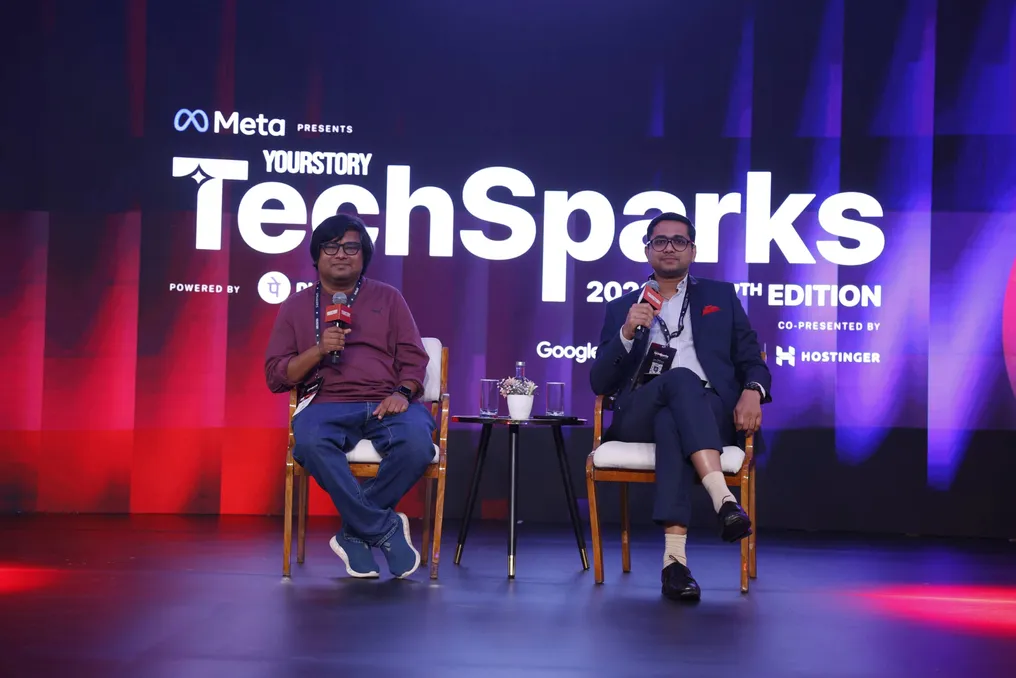
In recent years, improving AI performance has depended on the ability to write higher-quality prompts. However, this paradigm is rapidly changing as AI systems begin to reason, make decisions, and perform actions within entire workflows autonomously.

At the TechSparks 2026 event, YourStory's flagship event, Dr. Vignesh Subrahmaniam, an AI lead scientist at Intuit, held a discussion with Aditya Charlie, Editor-in-Chief of YourStory and The CapTable. The discussion, titled 'Beyond the Prompt: Building AI That Thinks, Acts, and Learns,' focused on what developers need to rethink as intelligence becomes increasingly autonomous.

The session began with questions about Subrahmaniam's typical workday and a request to simplify fintech and AI concepts for the audience. He used a chess analogy, asking: if an algorithm is not taught the rules of chess but shown a million completed games with winners, can it deduce both the rules and the most probable winning strategies?

Intuit's team applies a similar approach to support small businesses, as the company serves both consumers and accountants. Subrahmaniam noted: 'We study the game of business by analyzing data, real actions, and the results that enterprises undertake.' The goal is to understand the factors that contribute to business success in customer acquisition, rapid growth, and improved cash flow.

The conversation then shifted to the paradigm shift for developers: moving from years of studying how to write smarter prompts to designing agents given a goal, which they determine the steps to achieve themselves. Subrahmaniam compared prompt engineering to the long history of programming languages, starting from binary code and assembly up to Fortran, C, and Python. Large language models have allowed anyone to program in simple English, but this method has its limitations.

Researchers quickly realized that intelligence should not reside only within the model. The model must act as an orchestrator, breaking down a complex task into a sequence of actions and tool calls. Real intelligence moves into the called tools; and these tools must also be designed differently: 'not so that a human, or a software developer, or anyone else can use them, but in such a way that the LLM orchestrator can actually use them.'

This requires creating highly precise tools with extremely deterministic outcomes. For developers, mastery shifts from clever phrasing to reliable components that the model can call repeatedly without surprises.

Regarding sources of new data, Subrahmaniam openly stated that training on text data is largely solved. The more complex task is training on multimodal sources and real-world actions. He cited the example of how a young child primarily learns through what they see, hear, and observe, rather than reading, asserting that incorporating such real-world signals into AI systems will help models move beyond text generation and start suggesting actions. He called this the next frontier.

When considering regulated industries, he took the audience back 18 years, to one of the first machine learning labs in Bangalore where he worked on logistic regression and multilayer perceptrons. Back then, the biggest problem was not the algorithm itself. He recalled: 'Actually, it was the quality of the data.'

This problem has not changed. Whether a team is training simple regression or fine-tuning a transformer, the principle of 'garbage in, garbage out' remains valid. According to him, companies capable of collecting, aggregating, and storing the highest quality data will gain an advantage.

During a short Q&A session, one participant asked how restrictions on storing financial data affect Intuit's operations. Subrahmaniam named consent as the foundation of any training system and referenced the Framingham study, where residents of Massachusetts were allowed to track their health over time, which shaped the modern understanding of cardiovascular disease. He added that companies are also obligated to explain the benefits of data usage to the general public.

As the conversation concluded, the overarching idea was that as AI transitions from reacting to acting, foundations become more important than interfaces. Prompts will remain a starting point, but the real work now lies in creating robust tools that agents can call, supplying systems with high-quality data, and obtaining the consent that allows them to learn. It is here, beyond the prompt, that the next wave of AI will be won for developers.

Popular