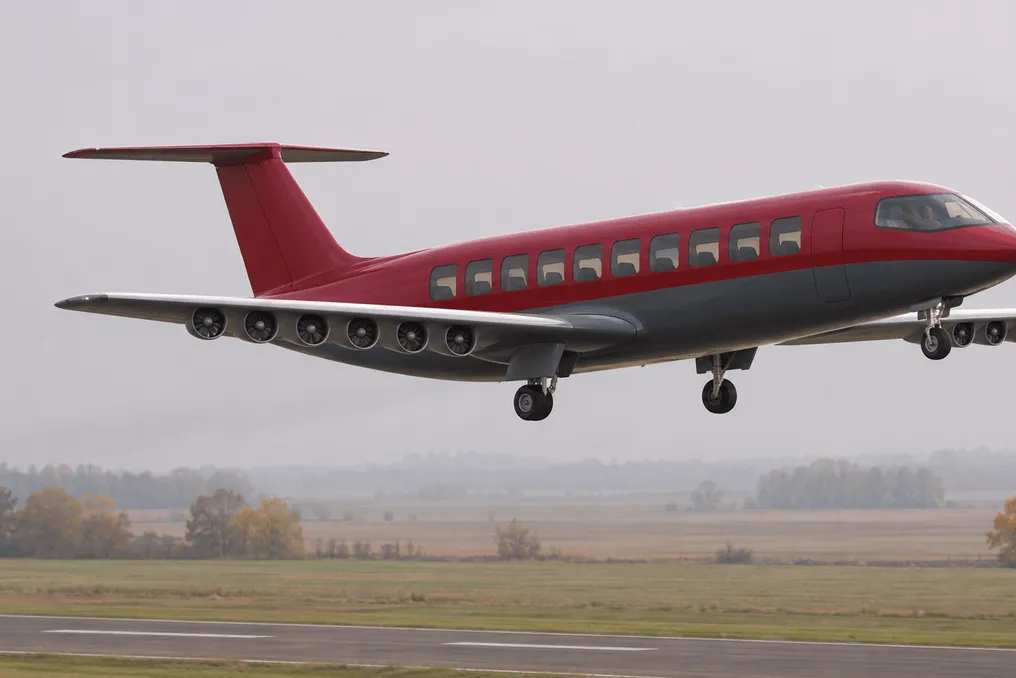
COMAC has successfully completed the first crewed flight of its electric commercial aircraft, the CE-25A. The 10-ton aircraft flew in Binzhou, Shandong province, on November 14, according to reports from China Central Television and Xinhua, which cited the company itself.
The crew consisted of two pilots and one flight test engineer. The flight lasted 57 minutes and 46 seconds, including 16 minutes and 38 seconds airborne, during which the aircraft covered a distance of 60.4 kilometers. COMAC reported that the operation proceeded normally, and all indicators met expectations.
This significant milestone followed the first unmanned intelligent flight of the CE-25A, which took place on February 2 of this year. Since then, the aircraft has completed 19 autonomous test flights. The Civil Aviation Administration of China has accepted COMAC's application for a type certificate, which is necessary for the aircraft design to begin commercial operation.
The CE-25A is COMAC's first electric commercial aircraft and is designed primarily for intercity passenger transport. The company provided detailed technical specifications and explained every letter in the model name. The letter 'C' stands for China and is the first letter of COMAC. 'E' indicates electric propulsion, and the aircraft is equipped with a distributed electric motor system with wing-mounted propellers.
The number '25' refers to Part 25 of Chinese civil aviation regulations (CCAR-25), which establishes airworthiness standards for transport categories. COMAC emphasized that this means the CE-25A meets the same safety requirements as large commercial airliners. The letter 'A' designates it as the first product in this line.
The selection of this regulatory category distinguishes the CE-25A from many other electric aircraft projects focused on smaller classes or eVTOL taxis. Certifying a 19-seater electric aircraft under transport category rules is a complex process, and the submission of the type certificate application marks the official start of this process.
The aircraft's development was conducted in collaboration with battery manufacturer CATL, Jiaotong University of Shanghai, and other partners. The company has not yet set a timeline for receiving certification or commencing commercial operations, nor has it disclosed details about the battery system or the number of propellers.
The transition to carrying human passengers marked the program's shift from the autonomous testing phase to crewed flights.