Christopher Nolan's 'Odyssey' Film to Be Screened and Analyzed in Tehran
Read more
Tehran Times
www.tehrantimes.com

Christopher Nolan's 'Odyssey' Film to Be Screened and Analyzed in Tehran

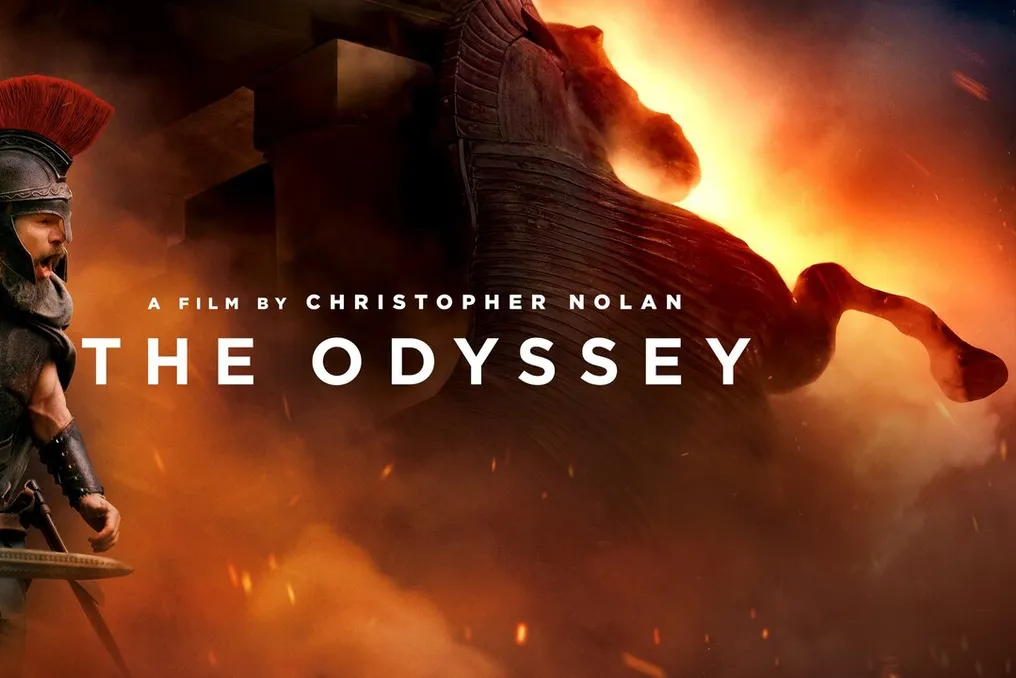
The epic fantasy film 'Odyssey' from 2026, written and directed by Christopher Nolan, is scheduled to be shown in Tehran. The screening will take place at the Book Garden Cinema Complex on Wednesday at 16:30. Following the session, there will be a discussion with experienced film critic Masoud Farassati, according to the ILNA agency.

'Odyssey' is an adaptation of Homer's ancient Greek epic poem. The film stars actors such as Matt Damon, Tom Holland, Anne Hathaway, Robert Pattinson, Lupita Nyong'o, Samantha Morton, Zendaya, and Charlize Theron.

The plot depicts Odysseus (Damon), the Greek king of Ithaca, who embarks on a long and perilous journey home after the Trojan War. During this wandering, he encounters mythical creatures while trying to reunite with his wife, Penelope (Hathaway).

During his voyage, he must contend with the whims of the gods, mythological monsters, and trials that push both his cunning and humanity to the limit. The film, with an estimated budget of $250 million, is among Nolan's most expensive works and is the first feature film shot entirely on 70mm IMAX film.

Despite critical acclaim for its direction, acting, and spectacular scenes, some viewers criticized Nolan's deviations from the original source material. The film grossed $1.804 billion worldwide, becoming Nolan's highest-grossing film, the second highest-grossing film of 2026, the highest-grossing R-rated film, the highest-grossing film distributed by Universal, and the eleventh highest-grossing film of all time.

'Odyssey' is one of the two great epics of ancient Greek literature attributed to Homer, first compiled around the 8th or 7th century BCE. It is one of the oldest surviving literary works that remains popular among modern audiences. Like the 'Iliad,' 'Odyssey' is divided into 24 books. It tells the story of the heroic king of Ithaca, Odysseus (also known by the Latin name Ulysses), and his return home after the ten-year Trojan War. His journey from Troy to Ithaca lasts another ten years, during which he encounters numerous dangers, and all his crew members perish. In Odysseus' absence, he is presumed dead, leaving his wife Penelope and son Telemachus to fight a group of unfaithful suitors vying for Penelope's hand.

Critics noted numerous differences between Nolan's versions and Homer's. Some questioned the accuracy of Nolan's depiction of Mycenaean Greece; others argued that Homer's epic was merely myth, while a third stated that although 'Odyssey' is a story, it was rooted in history.

Nolan removed some plot elements and characters, including several gods, in an attempt to maintain a suitable tone. He chose to portray Odysseus as a war-weary veteran haunted by murder. This provides a modern explanation for the length of Odysseus' return—he was avoiding going home.

Sir Christopher Nolan, 56, is a British and American filmmaker. Known for his complex narrative Hollywood blockbusters, Nolan is considered a leading cinematic figure of the 21st century. His films have earned over $8 billion worldwide, making him the third highest-grossing director of all time.

Nolan's awards include two Academy Awards, Golden Globes, and two BAFTA awards. In 2019, he was appointed Commander of the Order of the British Empire (CBE), and in 2024, he received a knighthood for his contribution to cinema. Nolan began his interest in filmmaking at an early age. After studying English literature at University College London, he made several short films before his feature film debut with 'Following' (1998). Nolan gained international recognition with his second film 'Melancholia' (2000) and transitioned to studio filmmaking with 'Insomnia' (2002).

He became a renowned director with the 'Dark Knight' trilogy (2005–2012) and achieved further success with 'The Prestige' (2006), 'Inception' (2010), 'Interstellar' (2014), and 'Dunkirk' (2017). After the critically divisive 'Tenet' (2020), Nolan severed ties with his long-time distributor Warner Bros. Pictures due to the streaming release strategy and signed a contract with Universal Pictures for the highly successful 'Oppenheimer' (2023) and 'Odyssey' (2026). The first film earned him Academy Awards for Best Director and Best Picture.
Similar stories

Restored version of the film 'Bishu, Stranger' to be shown in Canada
Read more
www.tehrantimes.com

Restored version of the film 'Bishu, Stranger' to be shown in Canada

A restored version of the film 'Bishu, Stranger' will be screened in Canada in 4K format. This film, created by the late Iranian filmmaker Bahram Beyzai, will be shown at the Carbon Arc Cinema in Halifax on November 22nd at 5:30 PM local time.

This screening offers Canadian viewers the opportunity to see a restored version of one of Iran's iconic cinematic works. The film will be accompanied by English subtitles.

According to information from the Public Relations and International Affairs Department of the Institute for Intellectual Development of Children and Youth (Kanun), this screening is part of a series of international screenings of the restored version, which has presented Beyzai's works to audiences in various countries.

The Halifax screening followed a previous presentation of the restored 4K version in Montreal, where the film was shown at Cinéma Moderne on October 14th. Both screenings are part of the film's international distribution following its restoration with support from Kanun.

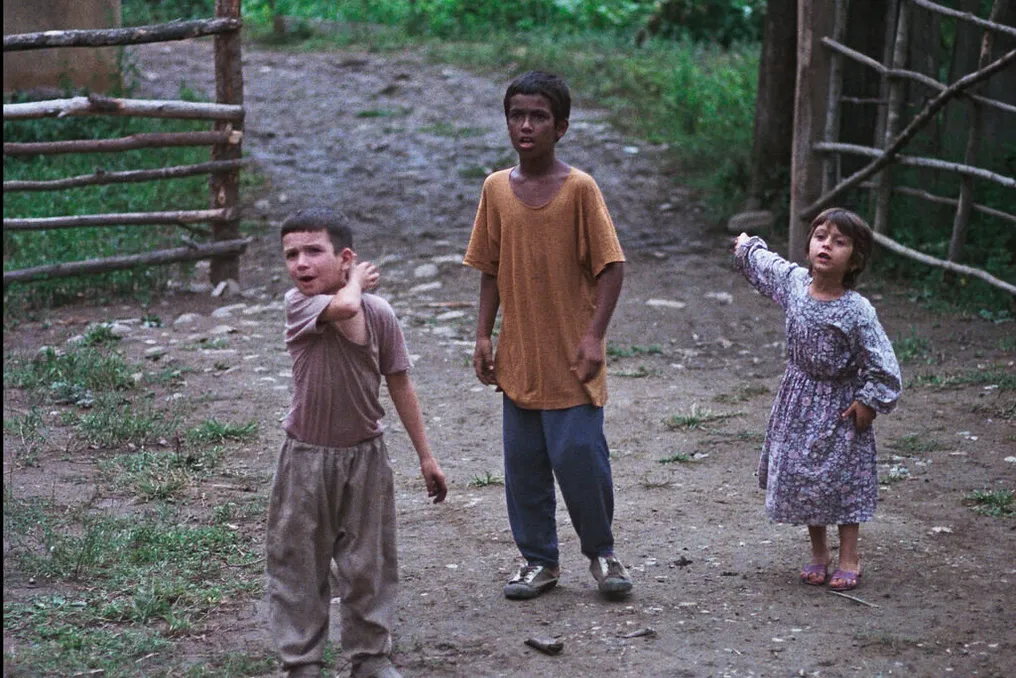
The film 'Bishu, Stranger', released in 1989, tells the story of a young boy from southern Iran who loses his home and family during the Iran-Iraq War. Fleeing the destruction, he finds refuge in a village in northern Iran, where he encounters an unfamiliar environment, surrounded by people speaking a different language and adhering to different cultural traditions.

The boy's arrival initially causes suspicion and rejection from the local community. However, a village resident named Naiya takes him under her protection, and a close bond gradually forms between them. Their relationship becomes the emotional core of the story, overcoming linguistic, cultural, and ethnic differences.

This touching drama touches upon subtle aspects of human emotion, such as loneliness, love, and unfamiliarity. Through Bashu's experience, Beyzai explores the impact of war on civilians and children while raising broader themes of displacement, self-identity, social acceptance, and coexistence. The film depicts the difficulties of finding a sense of belonging in a foreign environment and emphasizes the importance of compassion and human connection in overcoming differences.

'Bishu, Stranger' is widely recognized as a significant achievement of Iranian cinema, especially for how it portrays the human consequences of war through a child's eyes. In 1999, the film was recognized by a survey of 150 film experts as the best Iranian film of all time.

Bahram Beyzai, born in Tehran in 1938, was a renowned Iranian playwright, filmmaker, and scholar whose work combined Persian mythology, epic literature, particularly Ferdowsi's Shahnameh, and contemporary social issues.

Before moving into cinema in the 1970s, he established himself as a leading playwright and historian. He was often called the 'Shakespeare of Iran,' and he admired Beyzai's mastery in using the Persian language, as well as his exploration of Iranian history and cultural identity through drama.

Among his well-known works are 'Ballad of Tara' (1979), 'Death of Yazjerd' (1982), and 'Murder of the Mad Dogs' (2001).

After moving to the United States in 2010, Beyzai continued his cultural and academic activities at Stanford University, teaching and researching Persian theater, cinema, and mythology. His unwavering creative dedication was also reflected in the manuscript 'Dash Aqol according to Marjan,' completed five years before his death.

The new 4K restoration of the film was carried out at the Roashana studio with the support of Kanun. This project is part of efforts to preserve and revive important works of Iranian cinema, making them accessible to new generations of viewers both in Iran and abroad.

Carbon Arc Cinema, located in downtown Halifax, is an independent arthouse venue whose program includes international, Canadian, and independent films, as well as significant works from film history.

TMoCA Cinema will screen French documentary about Iran
Read more
www.tehrantimes.com

TMoCA Cinema will screen French documentary about Iran

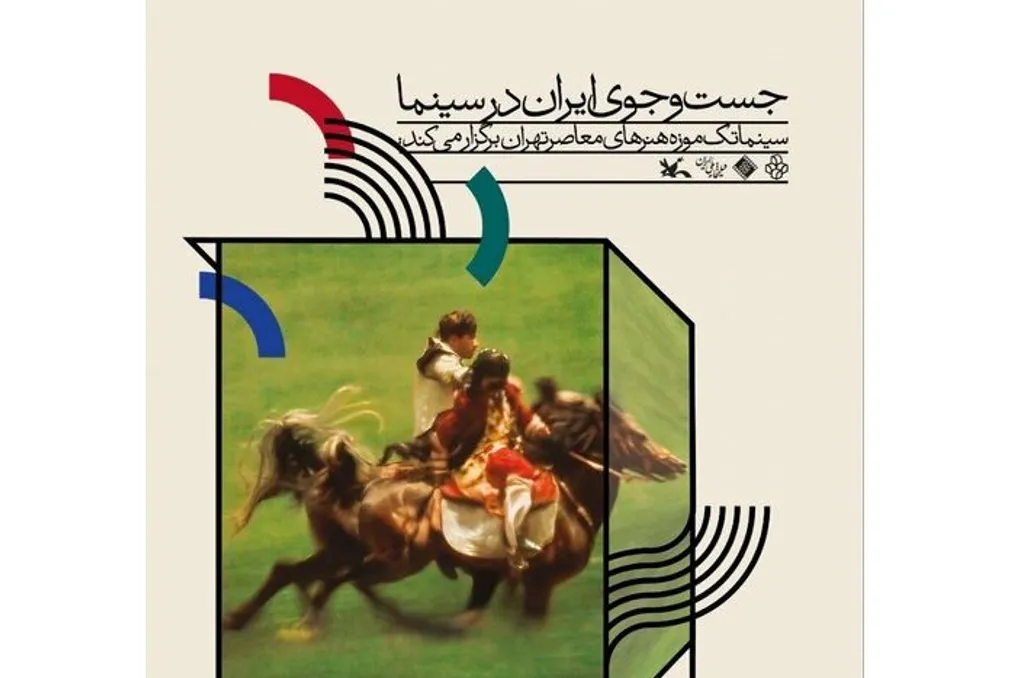
As part of the exhibition 'In Search of Iran: In the Collection of the Tehran Museum of Modern Art,' a program titled 'In Search of Iran in Cinema' will be held at the museum's cinema. The event will feature films where Iran plays a significant role, and the program will run for five weeks at the Tehran Museum of Modern Art (TMoCA) in Tehran, according to IRNA.

The first screening will take place on Sunday, November 8, featuring the documentary film 'Wind of Lovers' by Albert Lamorisse. Following the screening, film critic Mehrzad Danesh will give a presentation on it.

'Wind of Lovers' is a dreamlike documentary that explores the diverse landscape of Iran, both natural and man-made. The film paints a picture of Iranian landscapes from a bird's-eye view, showing the waters of the Caspian Sea in the north and the Persian Gulf in the south, palms in the west, central deserts and eastern plains, as well as ruins of ancient historical sites such as Susa and Persepolis, alongside images of people in various locations.

Approximately 85 percent of the film was shot using a helicopter. Although it shows real footage of the country, the narrative is fictional (and sometimes humorous) and belongs to the renowned Iranian veteran filmmaker, writer, editor, translator, and voice actor Manouchehr Anwar. The film is also accompanied by traditional and ethnic Iranian music. Master Hossein Dehnavi's composition includes several pieces using Persian instruments such as tar, tonbak, santur, nay, and violin, which significantly enriches every scene.

In Persian, the film's title translates to 'Saba Wind,' which comes from the northwest and symbolizes a message of love. The film is lyrically voiced by the wind.

Anwar, born in Tehran, at the age of 98, graduated from the Royal Academy of Dramatic Art in London and began his creative career in 1958 after returning to Iran. Lamorisse (1922–1970) was a French film director, producer, and screenwriter of short films, which he began shooting in the late 1940s. He also invented the strategic board game Risk in 1957.

In film production, he developed a camera mounting system for helicopters called 'Helivision,' which fueled his long-standing passion for filming aerial and ground subjects from the air. Thanks to his unique capabilities in aerial documentary filmmaking, Lamorisse received a commission from the Iranian Ministry of Art and Culture in 1968 to create a film celebrating the magnificent culture of Iran from ancient times to the present day, utilizing his patented aerial photography.

Lamorisse completed most of the filming for the movie in 1969, much of which (about 85 percent) was aerial photography, in line with his own poetic vision of what the film should be. In 1970, he returned to shoot more material on modern industrial developments but died in a plane crash while filming the Karaj Dam (Amir Kabir) 63 km northwest of Tehran.

His widow and son, who worked as assistants on the production of this film, completed it based on his production notes and released it eight years later, in 1978. In 1979, he was nominated for a posthumous Academy Award for Best Documentary Feature.

There is also an epilogue to this story in the form of a six-minute film. After the Karaj accident, Lamorisse's camera was recovered from the wreckage, and its film was processed in the Ministry of Art and Culture laboratory. The recorded material was then edited by members of his original film crew in recognition of the director and in memory of his death.

The 'In Search of Iran in Cinema' program will continue in the coming weeks with films such as Nasser Taghavi's 'About Iran,' Abdolhossein Sepanti's 'Ferdowsi,' Parviz Kimiavi's 'Iran - My Land,' and Bahram Beizai's 'Bashu, Stranger.' The program is organized in collaboration with the National Film Archive of Iran and the Institute for Intellectual Development of Children and Youth (Kanoon). Admission is free and open to the public.

Film 'Insidious: Out of the Further' Screened and Discussed in Tehran
Read more
www.tehrantimes.com

Film 'Insidious: Out of the Further' Screened and Discussed in Tehran

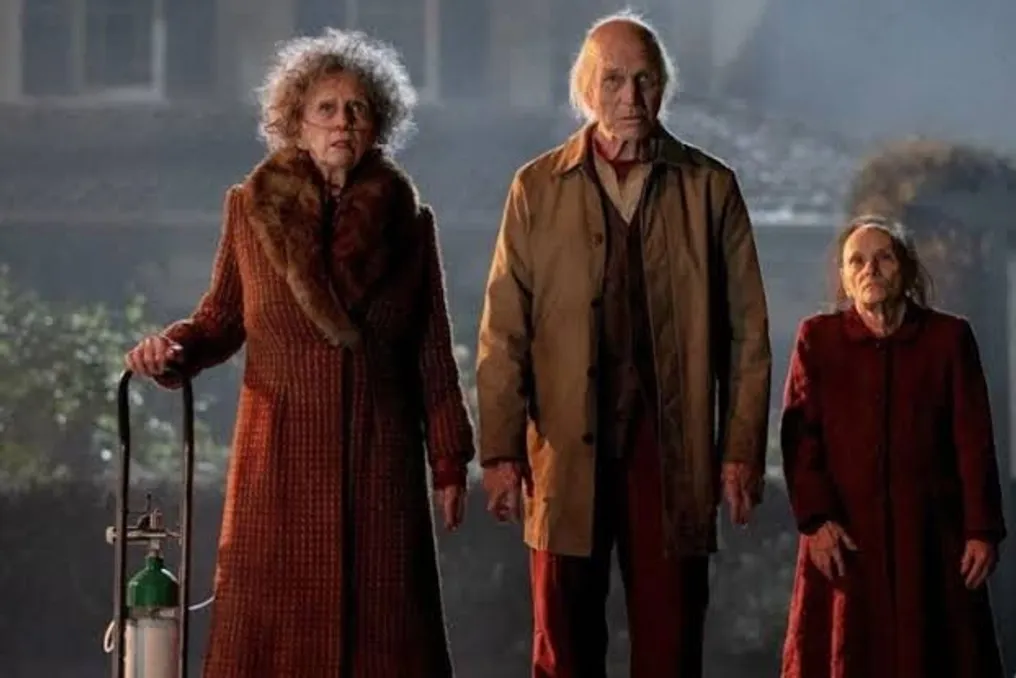
The horror film 'Insidious: Out of the Further' was screened at the Arasbaran Cultural Center in Tehran on Wednesday, followed by a discussion session for film enthusiasts. This American-Australian project, scheduled for release in 2026, was shown with Persian subtitles and Dolby six-channel sound.

The central figure of the film is Gemma, played by Amelia Eve. She is a young mother raising her daughter Maia in a house where she herself once lived. Gemma's life changes when she discovers an unusual ability to travel to the 'Further'—a mysterious afterlife dimension populated by lost souls and supernatural beings. What initially seems like an exceptional experience gradually turns into a dangerous confrontation with forces beyond her comprehension.

Gemma soon realizes that her gift is far more unusual and potentially destructive than she imagined. She is capable not only of entering the 'Further' but also of bringing its inhabitants and other elements back into the physical world. This discovery changes the nature of the threat to her and her daughter, as the otherworldly realm ceases to be an impenetrable barrier separate from their daily lives.

As malevolent entities learn of Gemma's powers, they begin to view her as a means to penetrate the living world. The distinction between the two dimensions becomes increasingly fragile, allowing forces lurking in the 'Further' to threaten the safety of ordinary people. The story continues themes of the franchise related to supernatural obsession, the afterlife, and family vulnerability to unexplained phenomena, while introducing a new central character and a different dimension into its mythology.

Lin Shaye also returns in the role of Alice Rainier, a medium whose image was a key element throughout the franchise. Her return links the film to previous installments, while Gemma's unusual abilities set a new direction for the series. The cast also includes Brandon Pierre, Maisie Richardson-Sellers, Sam Spruell, Laura Gordon, and Island Austin, who plays Maia.

'Insidious: Out of the Further' is the sixth installment of the horror franchise created by James Wan and Leigh Whannell. Since the original 'Insidious' was released in 2010, the series has developed a unique supernatural universe based on the 'Further,' astral projection, and encounters with demonic forces. The new part shifts the focus from the Lambert family, whose experiences shaped several previous chapters, and introduces a new family whose connection to the mysterious world opens up fresh possibilities for the plot.

Chase, the director of the supernatural thriller 'Come Play' (2020), also wrote the screenplay. The film's plot was developed by Chase in collaboration with David Leslie Johnson-MacGullick. Jason Blum, Oren Peli, James Wan, and Leigh Whannell served as producers, bringing together filmmakers associated with some of the most famous modern horror productions.

Following the screening, there was an analysis and review session with Kourosh Jahad, a film professor and critic, who discussed the production with those present.

Popular