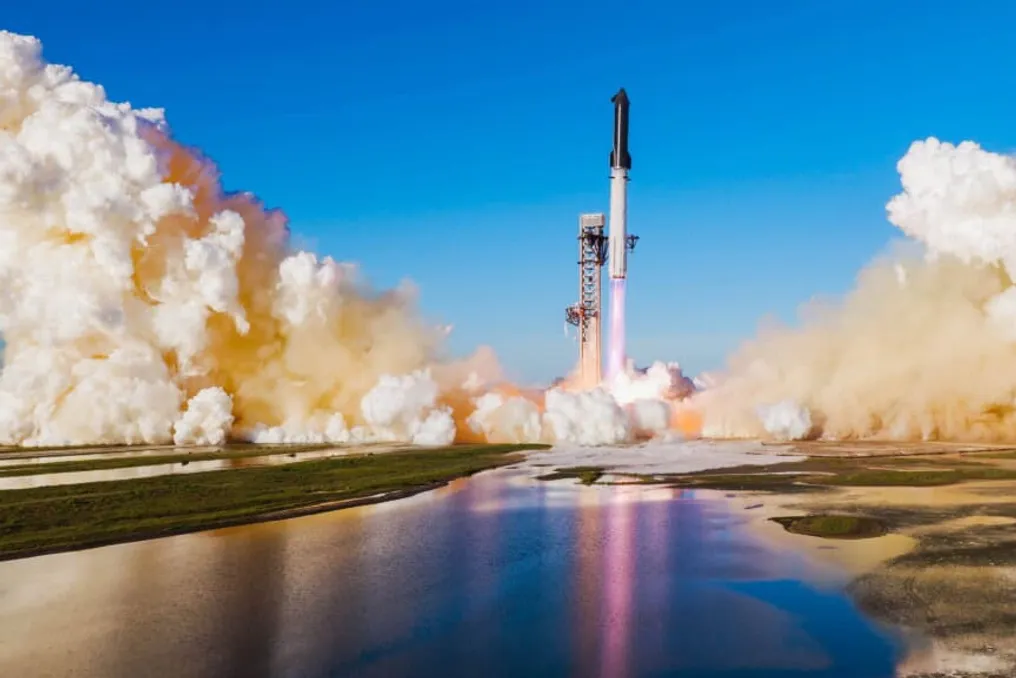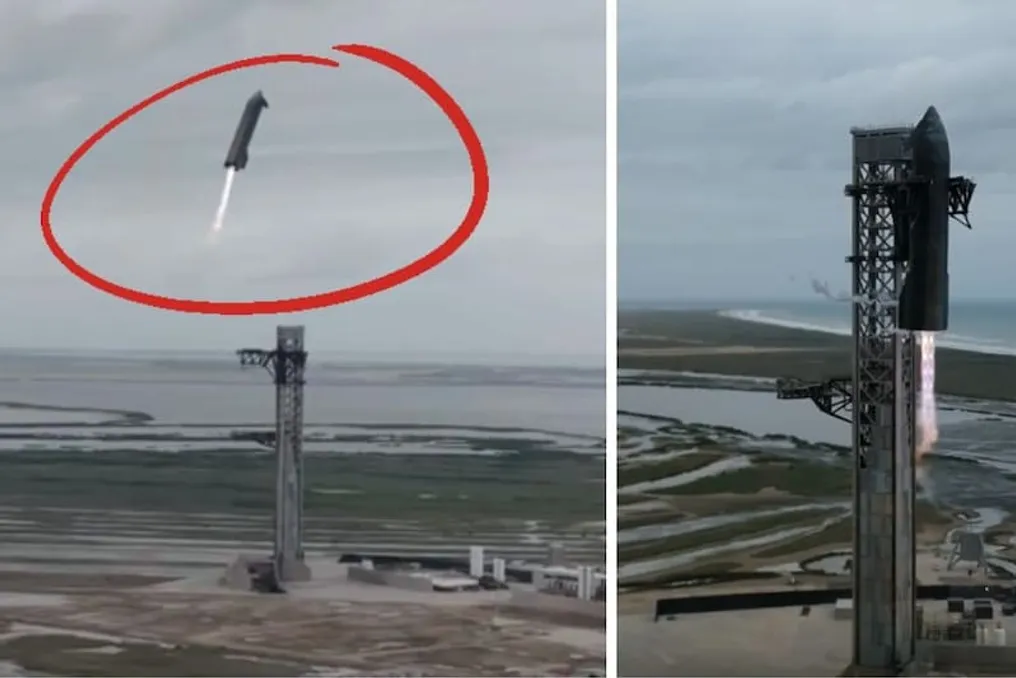
SpaceX, founded by Elon Musk, has achieved a significant milestone in space exploration. When the StarShip spacecraft returned to Earth after its space flight, two massive installations mounted on the launch tower managed to catch it directly in mid-air. This marks the first instance where a StarShip returning from space was captured by the launch tower in this manner.
This spacecraft was designated Ship 42. It launched from SpaceX's central facility in Texas, USA, on November 14th. After spending approximately 22 hours in space, it returned to the launch tower on November 15th, around 2:52 AM Indian time. During its flight, it completed approximately 14 orbits around the Earth.
Two large mechanical arms, referred to as 'Chopsticks,' were installed on the launch tower to capture the StarShip. When the spacecraft returned, these two arms caught it in flight, allowing it to safely settle on the launchpad. Previously, SpaceX had successfully used this technology to capture the first stage of its rocket, the booster, but the successful capture of the StarShip after a space flight represents a new achievement.
During this flight, the StarShip reached an altitude of about 275 kilometers and deployed 26 new Starlink satellites. These satellites are intended to improve internet services.
The spacecraft completed 14 orbits of the Earth. During these orbits, onboard cameras took pictures of the external surface and the ship's protective shield. This data will help scientists understand the impact of space on the spacecraft during reentry.
SpaceX's goal this time was to recover both components of the rocket. However, the first stage, or booster, did not function correctly upon return from the launch. Its engine shut down prematurely, altering the trajectory, causing it to fall into the Gulf of Mexico. The company's engineers are currently investigating the cause of this issue.
Nevertheless, despite the setback with the booster recovery, the safe return of Ship 42 is considered a major success. The company asserts that this technology will enable reusable rockets, which could contribute to lowering the cost of space travel.