The first ten months of 2026 revealed a worrying scenario for the Brazilian automotive sector, marked by difficulties in vehicle exports. While the domestic market maintained positive growth of 16.1% compared to 2025, production, which is responsible for job creation, advanced by only 8%.
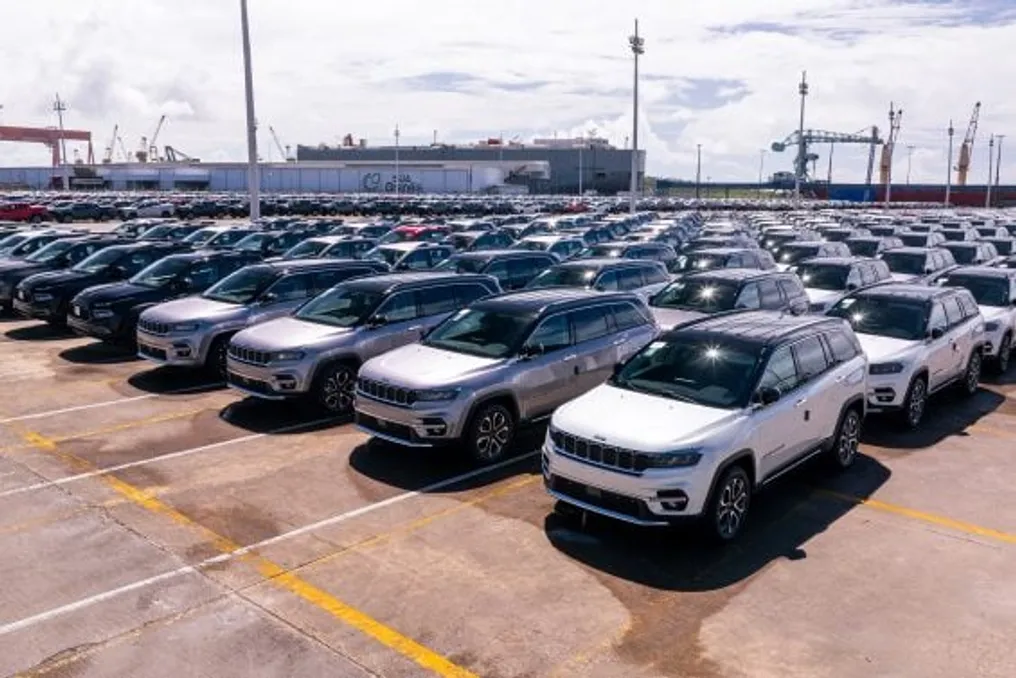
This unsettling outlook is evidenced by a 23.5% drop in exports, contrasting with a 29.5% increase in imports. This resulted in a deficit of 157.6 thousand units in the first ten months of 2026, reversing the surplus recorded in the same period of 2025. China remains the leader in imports, registering an expressive growth of 101%.
The Federal Government minimizes the situation, claiming that the 35% import tax is within the limit established by the World Trade Organization (WTO). However, it is observed that in the United States and Europe, the WTO faces demoralization, as Chinese vehicles are subjected to barriers above this level, in addition to import quotas. This international pressure has already led to factory announcements in Europe, a trend that may manifest in Brazil.
However, production based on imported vehicles, whether in SKD (semi-knocked down) or CKD (completely knocked down) form, generates a reduced number of jobs. Despite this, the daily average sales in October reached 12.6 thousand units, suggesting a smooth close for 2026. Fenabrave, the entity representing all dealerships in the country, reports that the government programs Sustainable Cars and Move Brazil (intended for taxis and ride-sharing cars) are progressing well.
In terms of new passenger and light commercial vehicle registrations (national and imported) between January and October, the data shows: gasoline at 2.6%; ethanol at 0.1%; diesel at 9.1%; electric at 7.8%; hybrid at 6.2%; plug-in hybrid at 6.6%; and flex at 67.6%.
News in the pickup truck market
The Niagara, successor to the Oroch, is being positioned as an authentic intermediate due to its dimensions, similar to the Toro. It offers four initial configurations, with two more expected in 2027, including 4x4 traction in March and a flex hybrid version with a date to be confirmed. Among its notable features is a towing capacity with brake of 710 kg, the highest in the category, although Renault has not yet disclosed the unbraked capacity. Its cargo compartment has a volume comparable to the Toro. The warranty offered is eight years (compared to five years for the Toro and Rampage, and three years for the Maverick).
The Niagara's dimensions are a strong point: length of 4,912 mm, wheelbase of 2,956 mm, width of 1,833 mm (2,082 mm with mirrors), and height of 1,710 mm. Volumes include 938 L in the bed and 50 L in the tank. It weighs 1,484 kg. It is equipped with a 1.3L turbocharged 4-cylinder, flex engine, generating 160 hp (E) / 156 G and 27.5 kgfm of torque (E) / (G). Fuel consumption (Inmetro km/L, city/highway) is 7.5/8.8 (E) and 11/12.8 (G), with a range of 375/440 km (E) and 550/640 km (G). It has front-wheel drive and a six-speed manual or dual-clutch automatic transmission. Acceleration from 0 to 100 km/h takes 9.9s (E) / 10.3s (G).
Aesthetically, the Niagara has an imposing look, especially at the front, with a raised hood, wide grille, and standard LED headlights on all models. Its load capacity (with five occupants) ranges between 601 and 652 kg, and functional roof racks support 80 kg. The interior has also been improved, focusing on rear seat comfort, featuring a 25° backrest tilt and 20 cm of legroom.
The vehicle features 26 advanced driver assistance systems (ADAS), including pedestrian and cyclist detection. Key features include rollover mitigation, forward collision warning, grip control on various surfaces, front and side parking sensors, 360° camera, and semi-autonomous parking assistant. The price ranges from R$ 154,990 to R$ 209,990, with discounts applicable during the three-month launch period.
BMW electric SUV launch
A new electric SUV was presented, adopting the architecture that will guide future launches from the premium German brand. This model is the first of the Neue Klasse (New Class) in production and uses the sixth generation of BMW xDrive technology. The complete technical presentation took place at Senai SP and was part of the launch strategy initiated last September.
This specific configuration features two electric motors, one on each axle, providing a combined power of 469 hp and 65.7 kgfm of torque. The vehicle weighs 2,360 kg and can accelerate from zero to 100 km/h in just 4.9 seconds. The battery has a capacity of 108.7 kWh and uses next-generation cylindrical cells. The electrical system operates on an 800 V architecture, allowing for high-power DC charging. Under ideal conditions, it is possible to recover from 10% to 80% charge in approximately 21 minutes.
In Brazil, the average range approved by the Inmetro Vehicle Labeling Program (PBEV) is 570 km. BMW also reported that a technical team traveled 1,015.8 kilometers between Brasília and São Paulo on a single charge, although this data refers to a controlled test and should not be confused with the official range approved by Inmetro.
Another innovation is the Heart of Joy, which manages the electric motors, braking, energy recovery, and driving dynamics, with processing up to ten times faster than the previous generation. The interior also introduces the Panoramic iDrive, which displays information along the base of the windshield and works with a 17.9-inch central screen, aiming to keep the driver focused on the road.
The price of this electric SUV is R$ 587,950.
Chinese SUV arrives in the market
An SUV from a Chinese brand entered the Brazilian market with five and six-seater options, presenting notable technical specifications and size. Its main competitors in the market are the Land Rover Defender and the BYD Denza B5 (although the Denza B8 is considered a direct rival and has not yet arrived in Brazil). The vehicle has ample dimensions: length of 5,190 mm, wheelbase of 2,870 mm, height of 1,956 mm, and width of 2,050 mm. Its curb weight reaches 3,150 kg (an increase of 30 kg with six seats). It comes with a 100 L fuel tank and offers matte paint as the only optional extra for R$ 5,000.
It is a plug-in hybrid model. It combines a 2.0L turbocharged gasoline engine with 211 hp and 34.7 kgfm, plus two electric motors: a front one of 286 hp/34.7 kgfm and a powerful rear one of 400 hp/44.4 kgfm. Jetour sums up the power and torque of the three motors, although technically this may be questionable. Nevertheless, the declared performance is impressive, with acceleration from 0 to 100 km/h in 4.8 seconds, falling below the 5-second mark. It has on-demand all-wheel drive and two non-selectable gears. The battery is LFP (lithium iron phosphate) type with a capacity of 34.1 kWh. The estimated range is 1,300 km according to the optimistic Chinese standard, while Inmetro approved 930 km (city) and 870 km (highway).
Internally, the vehicle features up to four screens: a narrow 35.7-inch screen at the base of the windshield, a 15.6-inch multimedia center, a retractable 17.3-inch screen on the roof for rear passengers, and a smaller 8.8-inch screen in the six-seater version for seat adjustments, climate control, and entertainment.
For off-road enthusiasts, the car offers 4x4 traction and front, center, and rear differential locks. There are eight driving modes available: Normal, Eco, Sport, Snow, Mud, Sand, Rock, and X (the latter manages the first seven). Additionally, it has the Tank Turn feature, which reduces turning radius on narrow trails, and a crawling mode to overcome more difficult obstacles. Prices are R$ 469,900 for the five-seater version and R$ 499,900 for the six-seater version.