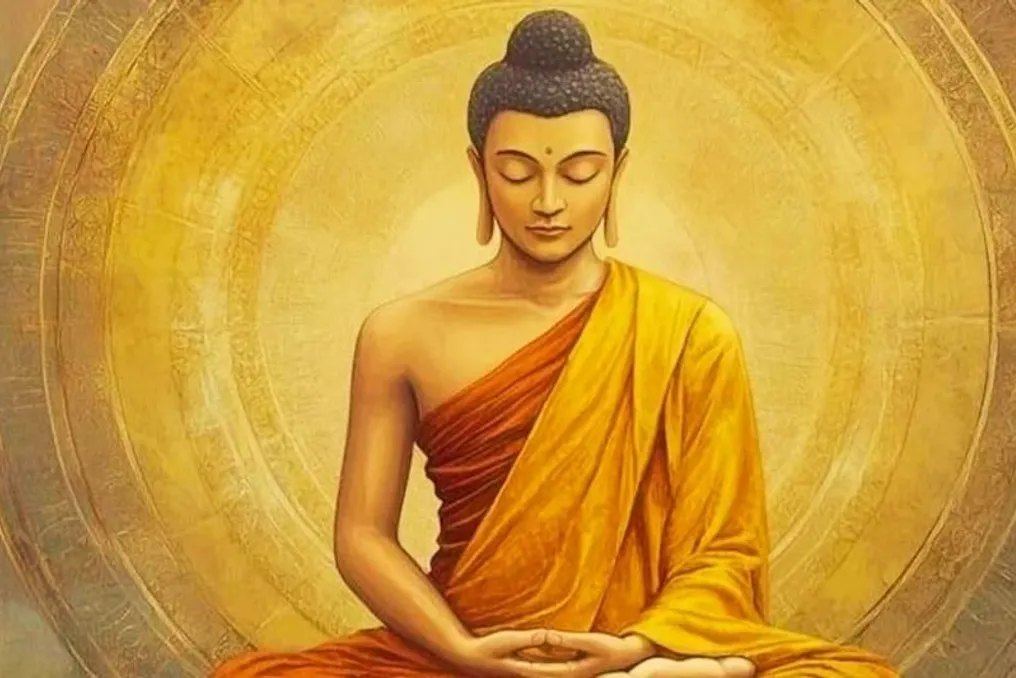
Sacred relics associated with the Buddha arrived in Arunachal Pradesh, in the Namsai district, on Saturday, November 14. These relics are housed in the Golden Pagoda, and pilgrims can visit until November 20. Afterward, on November 21, the relics will be returned to the National Museum in Delhi.
These artifacts are linked to the Piperhawa area in Siddharthnagar district, Uttar Pradesh. It is believed that the Piperhawa territory is connected to the ancient Kapilavastu and the Shakya clan, to which the Buddha belonged. These relics are highly valued by followers of Buddhism.
The relics first arrived in Arunachal Pradesh on October 31. Initially, they were displayed at a historical monastery in Tawang, where an exhibition took place for seven days, allowing about 31,000 pilgrims and other people to see them. Then, on November 8, they were transported to Bomdila, Paschim Kameng district, where a six-day exhibition was held at the TGL monastery, known as Lower Gompa, from November 8 to 13.
The Deputy Minister of Arunachal Pradesh, Chowna Men, called the arrival of the relics in Namsai an important moment for the state's Buddhist community. He emphasized that these relics are connected to the ancient Shakya clan and the life of the Buddha, holding immense religious and historical significance for Buddhist communities worldwide.
On social media, he wrote that the sacred relics from Piperhawa of the Shakyamuni Buddha clan arrived in Namsai on the occasion of Abhidhamma Day, or Lhabab Duchen. This exhibition provides pilgrims with the opportunity to pray, meditate peacefully, and connect with the Buddha. Abhidhamma Day is a special day in Tibetan Buddhist tradition when the Buddha's return from the heavenly realm to Earth is commemorated.
The history of these relics spans about 128 years. In 1898, British engineer William Clakston Pepp conducted excavations of an ancient Buddhist stupa in Piperhawa, Uttar Pradesh. During these works, stone and crystal boxes containing bone fragments and many valuable items were discovered.
One of the boxes bore an inscription mentioning the role of people from the Shakya clan in preserving the Buddha's remains. This is why these relics are associated with the ancient Shakya clan and the Buddha himself. Piperhawa is considered an area connected to ancient Kapilavastu, the place where the Shakya clan resided and where the Buddha spent the beginning of his life.
These relics, found in Piperhawa, are kept in the National Museum in Delhi. The organization of the exhibition in Arunachal Pradesh was carried out by the Ministry of Culture of the central government in collaboration with the Government of Arunachal Pradesh, the International Buddhist Confederation, and the National Museum.
In addition to the exhibition itself, special exhibitions are being held dedicated to the discovery of the Piperhawa relics and their historical significance to inform people about this story connected to the Buddha. Pilgrims will have the opportunity to see these relics in Namsai until November 20, after which they will be returned to Delhi on November 21.