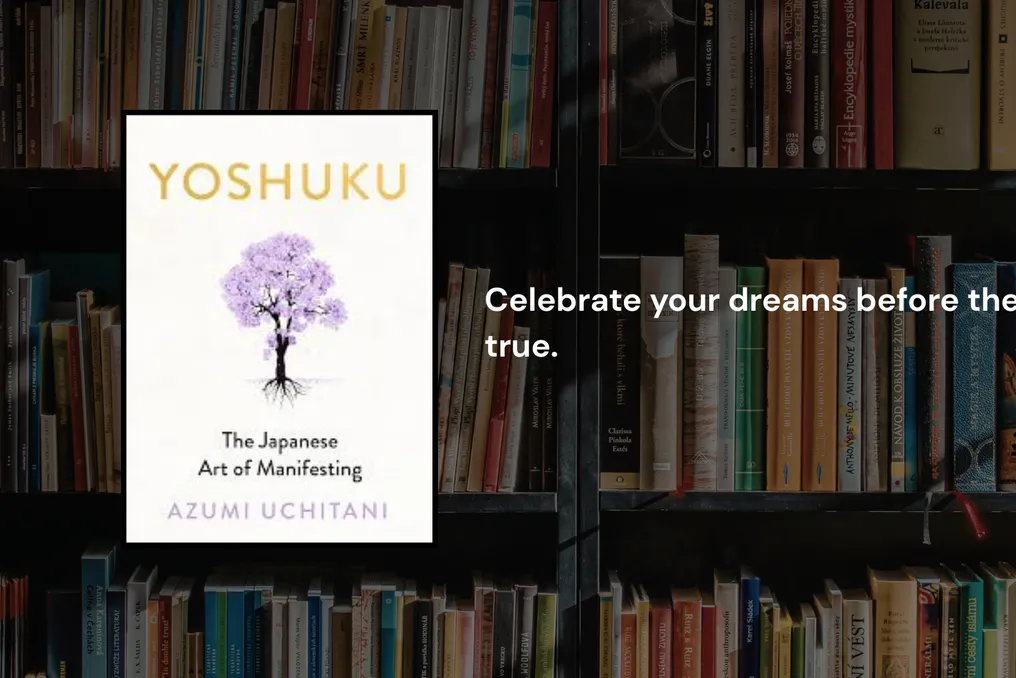
In the book 'Yoshuku: The Japanese Art of Manifesting,' Azumi Uchitani introduces readers to the Japanese concept of Yoshuku, which means pre-celebration. This practice involves expressing gratitude and celebrating a desired future as if it has already arrived.
The book combines Japanese wisdom, traditional rituals, gratitude, and collective intention, demonstrating how one can build a more meaningful connection with their dreams. It also emphasizes that personal growth is not always about achieving something, but rather about the value of the journey itself.
The core idea of Yoshuku is to celebrate the desired future before it becomes reality. Instead of waiting for success to arrive, one should practice feelings of gratitude and delight regarding upcoming opportunities. For example, if a person dreams of starting their own business, they are encouraged to imagine celebrating its success with those who supported them. This helps foster a positive connection with goals and provides a significant purpose for work.
The lesson is to enjoy the anticipation of one's dreams, rather than making one's happiness entirely dependent on their achievement. Often, we spend too much time contemplating what we want next, forgetting to appreciate what we have now.
The book highlights the concept of Kansha, the Japanese notion of appreciation and gratitude. It encourages readers to notice the people, experiences, and opportunities that give meaning to their lives. The practice of gratitude does not mean abandoning ambition; it means learning to value the present while maintaining hope for the future.
One of the beautiful ideas explored in the book is the interconnectedness between personal development and nature. Uchitani uses the image of cherry blossoms after strong storms to explain how difficulties can help us strengthen our roots. Life does not always go according to plan; we encounter disappointments, unexpected changes, and moments when moving forward seems difficult. However, these experiences can teach us patience, resilience, and strength. Instead of viewing every failure as a setback, we must learn to see opportunities for growth in difficult circumstances.
Manifestation does not necessarily have to be an exclusively personal journey. The book illuminates the importance of collective intention and shared celebrations. When you share your dreams with supportive people, you create conditions for encouragement, connection, and mutual motivation. Shared celebration also reminds us that success is not just individual achievement; it becomes more meaningful when the people around us participate in the process.
While having dreams and envisioning a better future is important, significant change also requires constant effort. The book urges readers to create daily rituals that support their intentions. Whether it is practicing gratitude in the morning, setting aside time for self-development, or taking small steps toward a career goal, daily actions help keep one connected to their vision. Instead of constantly waiting for the perfect moment, one should focus on what can be done today to move closer to the desired life.
'Yoshuku: The Japanese Art of Manifesting' by Azumi Uchitani offers a fresh perspective on manifestation, presenting the idea of celebrating the future while simultaneously appreciating the present. Her lessons on gratitude, resilience, collective energy, and daily rituals remind us that the journey to dreams deserves as much attention as the destination itself. The main takeaway is that one does not need to wait for everything to fall into place to experience happiness; one must learn to celebrate small victories, cherish the present, and meet the future with hope and intention.