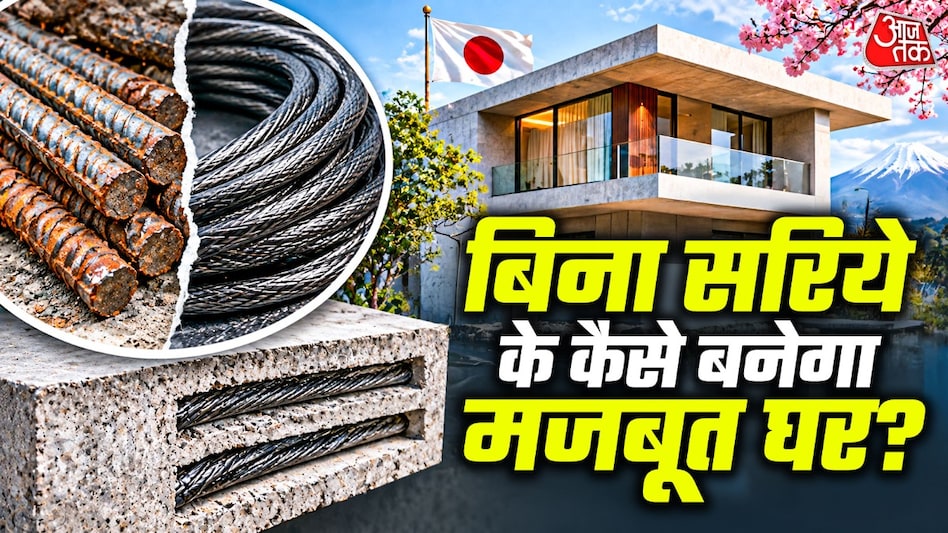
Japanese carbon fiber technology allows for the construction of stronger houses without using rebar
Read more
Aaj Tak
www.aajtak.in

Japanese carbon fiber technology allows for the construction of stronger houses without using rebar

In residential construction, the focus is usually on cement, bricks, sand, and rebar. Traditionally, steel reinforcement is used with concrete to provide strength to roofs, walls, and columns, ensuring the building's durability and its ability to withstand loads.

However, in Japan, a method is being developed that replaces traditional iron rebar with special carbon fibers. The advantages of this technology include the possibility of reducing the thickness and weight of concrete, as well as eliminating the rusting problem inherent in iron. Nevertheless, this does not mean that any house can be built without reinforcement; it is a specialized construction method applied according to established design and engineering standards.

The technology developed in Japan is called Hybrid Prestressed Concrete (HPC). Instead of ordinary steel rebar, it uses extremely strong strands of carbon fiber. Carbon fiber is a lightweight yet very strong material also used in aviation, automotive manufacturing, and other modern technologies. Its characteristic feature is its ability to withstand significant stress at low weight.

Within this methodology, carbon fiber strands are integrated inside the concrete. These strands provide the support that steel bars usually offer. Thus, the goal of maintaining concrete strength while simultaneously reducing its mass and thickness is achieved.

Steel rebar is usually necessary when building houses because although concrete is resistant to compression, it can crack under tension. Rebar serves as additional support, preventing concrete failure. However, steel rebar has a drawback: over time, contact with moisture, water, and air leads to its corrosion. When rebar inside concrete rusts, it expands, causing cracks in the concrete and reducing the overall reliability of the structure.

The Japanese technology uses carbon fiber strands, which are not susceptible to rusting like iron. This helps maintain the structural elements inside the concrete for a long time.

The most interesting feature of this technology is the ability to create light and thin structures. According to information published by the Japanese government, concrete made using this method can have a thickness of about 38 millimeters while maintaining strength comparable to conventional concrete structures. This means that where traditional concrete requires greater thickness and weight to ensure strength, carbon fiber allows for the creation of strong frames with less thickness. This contributes to reducing the overall weight of the building and increasing design flexibility.

Japan has a high risk of earthquakes, so particular attention is paid to designing buildings to withstand seismic shocks. The use of light and strong materials in carbon fiber structures can help make certain parts of buildings stronger and lighter. However, the mere application of this technology does not make a house earthquake-resistant. For this, the entire building design, foundation, walls, and other elements must comply with seismic standards.

Work is also underway in India on new construction methods and lightweight materials. However, before applying this specific Japanese technology in mass construction in India, information regarding its availability, cost, and approval according to Indian building codes must be obtained. Currently, it cannot be considered a direct and universally applicable replacement for steel rebar. Nevertheless, in the future, such technologies could radically change the construction sector. Overall, this Japanese development demonstrates that the future of construction should not depend solely on heavy concrete and iron; new paths to light, thin, and durable construction are opening up thanks to materials like carbon fiber.

Similar stories

Fergana Region Discussed Construction Material Production Project
Read more
uzdaily.uz

Fergana Region Discussed Construction Material Production Project

The administration of the Fergana region reported that the possibility of creating an enterprise for the production of construction materials was discussed, which would utilize energy-efficient and environmentally friendly technologies.

The governor of the region, Khayrullo Bozorov, met with Cui Junqian, deputy general manager of the Chinese company Yude Intelligent Building Materials, as well as with the company's partners from Kyrgyzstan.

The parties discussed the prospects of creating modern production facilities in the construction industry. Company representatives presented information about the international activities of Yude Intelligent Building Materials and their experience working in various countries.

Furthermore, they gave a positive assessment of the investment climate in the Fergana region. Bozorov emphasized the significance of projects based on advanced technologies for industrial growth and attracting foreign capital investments. He expressed the region's readiness to expand cooperation with Chinese investors.

As a result of the negotiations, the participants reached an agreement on developing specific steps for implementing the mutually beneficial project.

Choosing Steel for Stairs: Recommendations on Material Selection and Cost Savings
Read more
www.aajtak.in

Choosing Steel for Stairs: Recommendations on Material Selection and Cost Savings

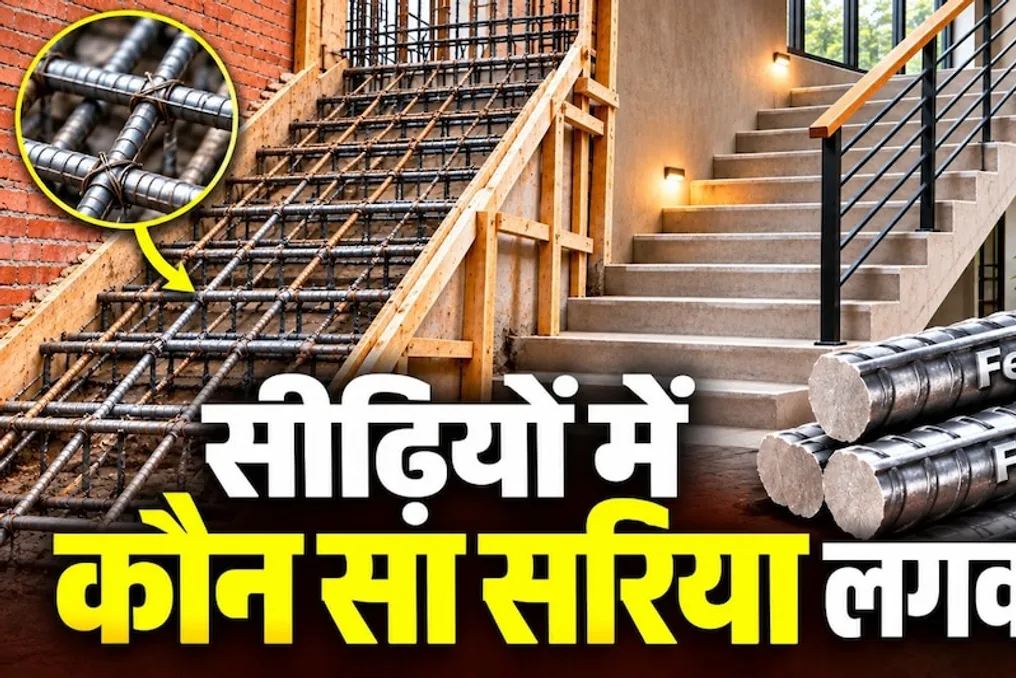
When building a home, people often focus on purchasing bricks, cement, sand, and rebar, but they may be less cautious when constructing stairs. Nevertheless, household stairs are used daily and are subjected to constant loads. Therefore, it is crucial to choose the appropriate steel and reinforcement to ensure the strength of the staircase.

Sometimes builders advise using reinforcement based on their own preferences or material availability. Since homeowners often lack deep knowledge about steel, they tend to follow the advice of craftsmen. Later, it turns out that where thick rebar should have been used, thin rebar was installed, or insufficient metal was used. Consequently, before starting the construction of the stairs, it is necessary to know what type of steel is suitable for this purpose, what diameter the reinforcement should be, and what points to pay attention to when purchasing.

For creating reinforced concrete stairs in a house, TMT reinforcement is usually used. This reinforcement, interacting with the concrete, gives the staircase the necessary strength. TMT reinforcement grades Fe 500 and Fe 500D are available on the market. Among them, Fe 500D is often considered the more preferable option. Its feature is that it is sufficiently strong yet possesses some elasticity. This allows it to withstand certain pressure during vibration or load instead of suddenly breaking. The elasticity of steel is also critical in the event of an earthquake. However, the strength of the staircase is determined not only by the grade of the reinforcement; the design, the quality of the concrete, and the correct installation of the reinforcement are also important.

Some believe that installing rebar with a diameter of 8 or 10 mm is sufficient. However, this is not always the case. The diameter of the reinforcement depends on the length, width, structure, supports, and the ability to bear the weight of the stairs. Some household stairs may use rebar with a diameter of 8, 10, or 12 mm. But the decision on which reinforcement, in what quantity, and at what distance will be installed must be based on the design developed by a structural engineer. The size or quantity of the reinforcement cannot be determined solely by a craftsman's advice.

  • Always check the brand: buy steel from a reliable company.
  • Check the class: the rebar must indicate information about the class, such as Fe 500 or Fe 500D.
  • Get an invoice: when buying steel, always demand an official receipt to keep track of its quantity and class.
  • Check the weight: the weight of the reinforcement must comply with established standards.
  • Check for rust: avoid reinforcement with severe corrosion or deposits.
  • Compliance with the design: purchase reinforcement according to the diameter and quantity specified by the engineer.

When building stairs, ask the craftsman what grade of reinforcement is used, what its size is, and at what distance it will be placed. It is also recommended to take photos of the rebar placement before starting work. It is important to remember that the strength of the staircase is achieved not only by using expensive or thick reinforcement. Proper design, the use of high-quality steel, and the proper application of cement and concrete play an equally important role. Therefore, one should not compromise on the engineer's design for the sake of saving money.

How to hide an open drainage channel: 9 stylish and budget-friendly ways for your home
Read more
www.aajtak.in

How to hide an open drainage channel: 9 stylish and budget-friendly ways for your home

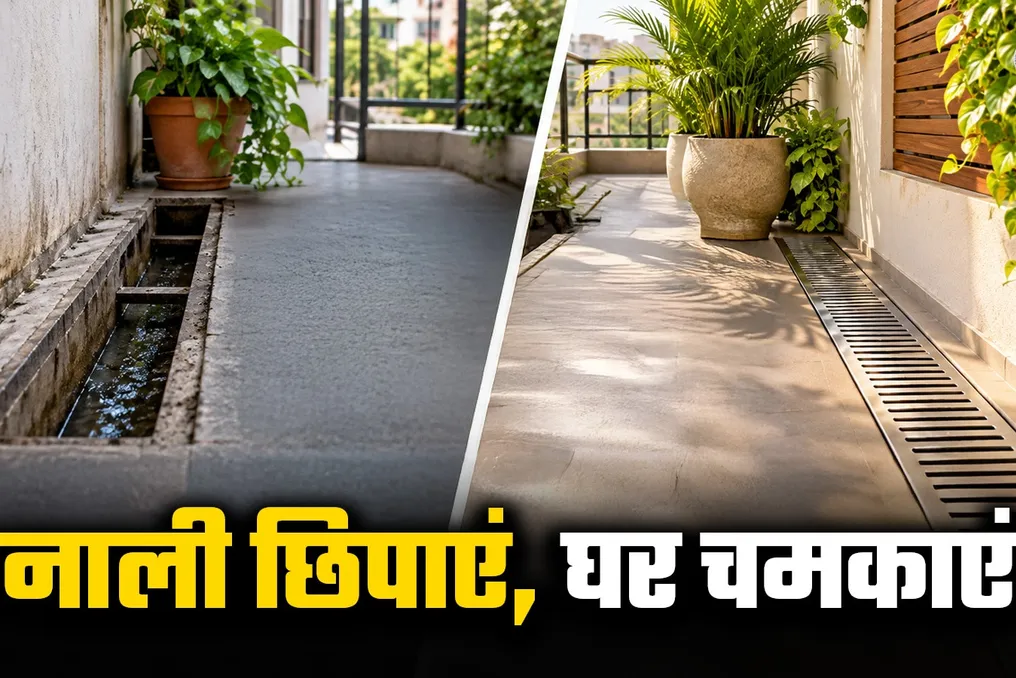
Even if a house is impeccably clean, the presence of an open drainage channel on a balcony, in a bathroom, or in a yard can spoil the overall appearance of the dwelling. Furthermore, such channels can become a source of unpleasant odors and dirt accumulation. Usually, in such cases, people consider installing expensive covers or removing flooring. However, there are simple and inexpensive methods that allow you to cover the channel without major renovation.

These methods not only help conceal the drainage but also contribute to creating a clean and aesthetic look for the home. Below are nine simple methods that will improve the appearance of the residence and simplify the cleaning process.

  1. Using steel covers

    If you have an open channel in your bathroom or on your balcony, you can cover it with a stainless steel lid. These lids have small holes that ensure free water drainage. They can be removed and the drain easily cleaned when necessary.

  2. Installing tile-mimicking drainage covering

    To make the channel less noticeable on the floor, you can install a special drainage covering that resembles tiles. This allows it to blend harmoniously with the flooring. When installing, ensure that water drains properly and choose a covering that is easy to remove for cleaning.

  3. Decorating the area around the channel with colored stones

    In the yard, garden, or on the balcony, you can make the area around the channel more attractive by scattering colored pebbles. White, gray, or black stones give the place a beautiful look. It is important to remember not to throw stones directly into the channel, as this can block water flow.

  4. Laying wooden decking tiles on the balcony

    To conceal the drainage and improve the appearance of the balcony floor, you can use wooden decking tiles. You must choose tiles that are resistant to moisture and water. They should be laid in a way that allows water to drain freely, and the tiles should be removable for maintenance.

  5. Creating a green look with artificial turf

    On the balcony, you can lay artificial turf around the drainage channel to give the area a green and picturesque look. The turf should be placed so that it does not cover the channel and can be easily removed for cleaning.

  6. Masking the channel with potted plants

    On the balcony or in the yard, you can place pots with standing plants next to the channel. This will draw the eye away from the channel itself to the plants, making the space more aesthetic. You should ensure that the pots do not impede water drainage and that they can be easily moved during cleaning.

  7. Covering visible pipes with a PVC box

    Drainage pipes visible on walls in the bathroom, kitchen, or on the balcony can be hidden using a PVC box. Choosing a box that matches the wall color will help discreetly hide the pipe. It is important, however, to ensure that the box can be opened for pipe repair if necessary.

  8. Installing a sturdy concrete coating for outdoor channels

    For an open channel located outside the house, you can install a sturdy concrete coating. This will make the area tidier. The cover must be one that can be removed when necessary. If vehicles pass over this area, you should choose a coating capable of withstanding significant weight.

  9. Using decorative metal mesh

    To give the channel a beautiful appearance, you can install a metal mesh with a decorative pattern. It can be chosen to match the tile or the house railings. The mesh must allow water to pass through and be removable for cleaning purposes.

Popular