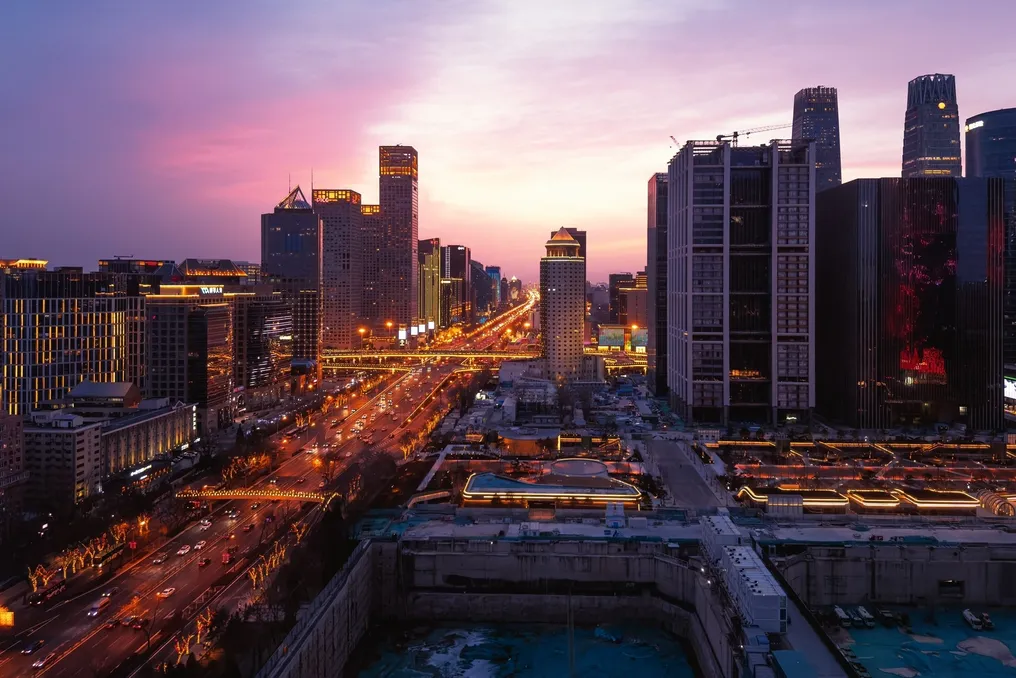
How China improved air quality in Beijing by comparing it to Delhi's pollution
Read more
Aaj Tak
www.aajtak.in

How China improved air quality in Beijing by comparing it to Delhi's pollution

The air in Beijing, much like the air in Delhi, was extremely polluted; for instance, the average Air Quality Index (AQI) in Delhi on November 14, 2026, was 563, which is classified as 'hazardous'. The distance between Delhi and China's capital, Beijing, is about 3780 kilometers. On Friday, November 13, the AQI in Beijing was around 170. Although this figure is still considered very poor, the situation in Beijing was once no less critical, when the smog was so thick that buildings were difficult to distinguish.

During the 2013–2014 period, the AQI in Beijing exceeded the 700 mark (severe level) during winter. However, thanks to the implementation of policy measures, strict regulations, and significant investments, China has achieved impressive changes in this situation.

In China, once called the 'bicycle kingdom,' the introduction of internal combustion engines instead of pedal transport created a complex problem for the economy, society, and environment. The city of Beijing became shrouded in smoke and smog, facing serious air pollution. Rapid economic growth, population increase, and the rise in the number of vehicles severely worsened the ecological situation, especially the air quality in the city.

In recent years, in several Chinese cities, pollution reached such levels that a specific term—'Chinese haze'—was created to describe the air quality problem in China. The existence of this term itself testifies to the seriousness of the problem in China.

2013 proved to be a decisive year for Beijing. In January of that same year, the pollution level in the capital and surrounding areas reached an extremely hazardous level. According to a World Bank report, the average daily PM 2.5 level in Beijing reached 569 micrograms per cubic meter at that time. This figure was compared to the PM 2.5 level in Delhi in November 2017, which was 576 micrograms per cubic meter.

Following this critical situation, the State Council of China approved the 'Action Plan for Preventing and Controlling Air Pollution' in September 2013. The plan's goal was not only to reduce current pollution but also to eliminate sources of toxic air. The government set the task of reducing the annual average PM 2.5 level in Beijing by approximately 25% by 2017. To achieve this goal, the administration, industry, and transport sector had to work together.

At that time, days occurred in Beijing when people could not breathe, and their eyes would start to hurt. Patients with respiratory problems and asthma suffered from suffocation. The Chinese government, which views education, healthcare, sports, and industrialization as missions, approached the anti-pollution campaign with the same enthusiasm.

The main cause of pollution in Beijing was the use of coal. Coal-fired boilers were used for home heating, and coal played a major role in industry and power generation. China began by changing this system. According to a United Nations Environment Programme (UNEP) report, restrictions were introduced and control over coal-fired boilers in the city was strengthened. Clean fuels began to be provided in homes instead of coal. Polluting factories were either closed or relocated to other areas. Emission standards at factories were tightened, and measures were taken against violators.

These transformations were not limited to Beijing. China also included Tianjin and Hebei province in the pollution control campaign, as the pollution problem was not confined to the borders of one city; smoke from nearby industrial areas also made the air in Beijing toxic.

To improve the air in Beijing, China also made significant changes in the transport sector. Emission standards for private cars were tightened to reduce pollution from them. Restrictions were introduced on old and more polluting vehicles. Alongside strengthening public transport, the metro network was expanded. Furthermore, attention was paid to making cycling part of the transport system. Plans for bike-sharing received a new impetus so that people would not use cars for short trips.

In addition, work was carried out to control dust rising from construction sites, increase green spaces, and restore degraded ecosystems in the vicinity. Thus, China viewed pollution not just as a problem related to transport or straw burning, but as a complex task requiring the simultaneous resolution of all major sources.
Similar stories

Air Quality Index crosses 400 in several areas of Delhi and Noida due to pollution
Read more
www.aajtak.in

Air Quality Index crosses 400 in several areas of Delhi and Noida due to pollution

The morning in the Delhi-NCR region began amidst a polluted atmosphere instead of clean air, as air quality remained extremely poor in many locations. Latest data from CPCB shows no relief from pollution in the capital and surrounding cities.

According to the 7 AM data, the Air Quality Index (AQI) was recorded at 442 in Sector-62 of Noida, while it stood at 419 in the IIT area of Delhi and 414 in ITO. The air in these areas has reached the severe category.

An AQI of 442 was recorded in Sector-62 of Noida, which is the highest among all monitoring stations. Additionally, the figure was 361 in Knowledge Park-V of Greater Noida. An AQI of 355 was recorded in Ghodi Bacheda, while it was 318 in Gaur Yamuna City and 312 in Knowledge Park-III. On the other hand, the AQI in Sector-110 of Noida was 313, and the situation was slightly better in Sector-39, where the figure was recorded at 287.

In the capital Delhi, the air in several areas has also reached the severe category. AQI was recorded at 419 in IIT Delhi, while it was 414 in ITO. It reached 395 in Chandni Chowk, 390 in JNU, and 381 in Anand Vihar. Furthermore, the AQI was 359 in Aya Nagar. At IGI Airport Terminal-3, it was 348, in Badarpur it was 314, and in Okhla Phase-2 it was 318.

Previously, on October 13, the pollution level in Delhi-NCR had also increased significantly. On that day, the AQI in the IIT area of Delhi was recorded at 488, close to the severe category limit of 500. The average AQI of the capital that day was 403, and around AIIMS it was recorded at 418. On that day, the AQI crossed 400 in 33 monitoring stations across Delhi.

AQI, or Air Quality Index, indicates how clean or polluted the air is. AQI is classified as 'Very Poor' between 301 and 400, and 'Severe' between 401 and 500. Air in the severe category can affect healthy individuals, but it can be more harmful to those with respiratory or heart diseases. Therefore, this level of pollution cannot be ignored.

Delhi becomes the world's most polluted city, causing breathing problems
Read more
www.aajtak.in

Delhi becomes the world's most polluted city, causing breathing problems

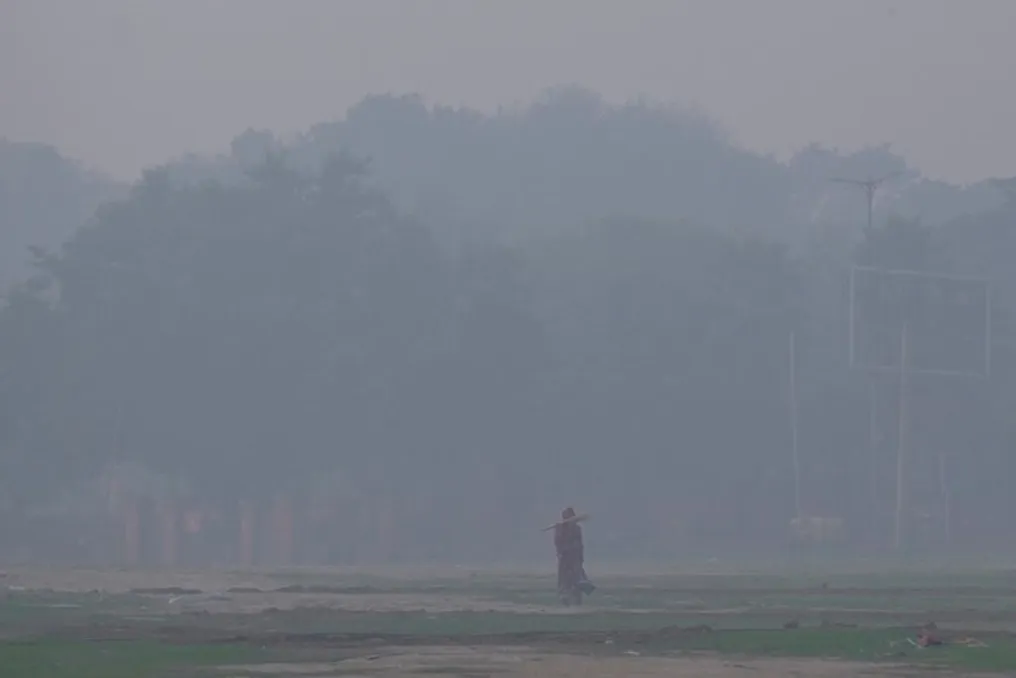
The capital of India, Delhi, surpassed Lahore from Pakistan on Friday to take the title of one of the world's most polluted major cities. The air quality in the city reached such low levels that it was classified as hazardous. This metropolis, with a population of about two million people, was enveloped in thick smog, significantly reducing visibility and hindering movement on the streets.

According to the Swiss group IQAir, the Air Quality Index (AQI) in Delhi reached 334, which is classified as a dangerous level. The official Central Council for Pollution Control of India assessed the situation even more seriously, assigning it a score of 403 and categorizing it as 'severe'. The difference between the readings is due to the various scales and calculation methods used by these organizations.

The impact of air pollution goes beyond mere statistics; it has a profound effect on public health, daily life, and the economy. This problem recurs annually during the winter in Delhi. Cold and heavy air contributes to trapping pollutants near the ground surface.

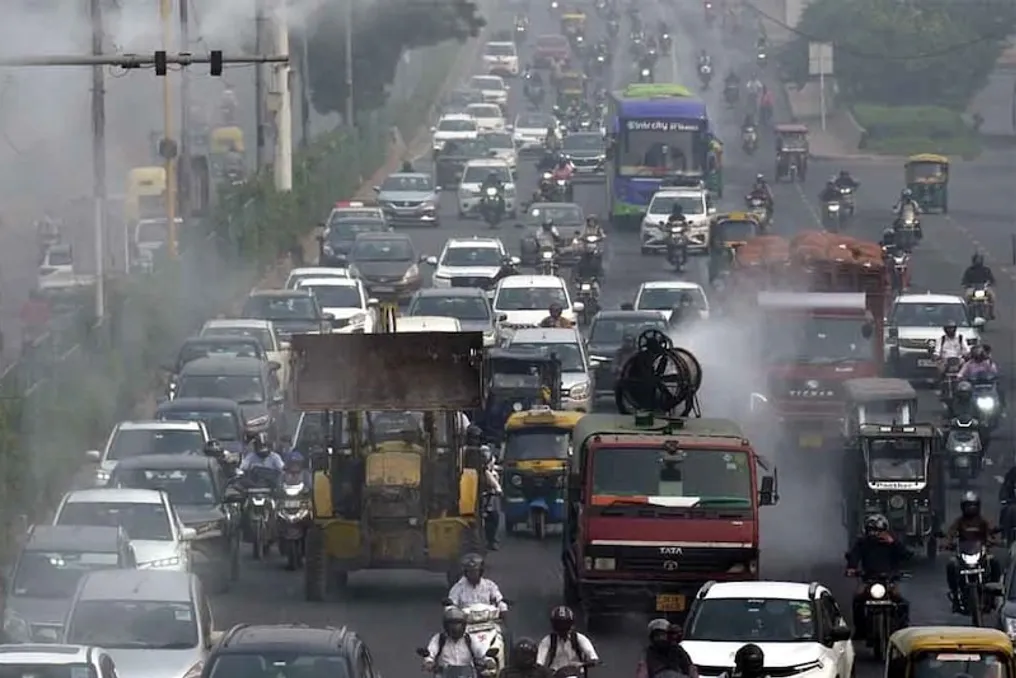
The city turns into a kind of gas chamber due to smoke from transport, dust raised by construction work, and smoke generated from burning crop residues in surrounding areas. This time, the situation repeated itself: dense smog hung over the main roads, obscuring even streetlights, and cars and motorcycles moved slowly. These scenes were captured by video footage from the ANI news agency.

The Air Quality Index measures the concentration of toxic particles in the atmosphere. When the indicator does not exceed 50, the air is considered clean, and the health threat is minimal. However, when the mark exceeds 300, the situation becomes dangerous. Readings of 334 and 403 in Delhi indicate a high content of fine particulate matter PM 2.5 and PM 10 in the air.

These particles penetrate deep into the lungs and can cause respiratory diseases, heart problems, eye irritation, and may have serious consequences for children and the elderly. Prolonged exposure to air of this level increases the risk of developing diseases such as cancer. Lahore has also long appeared in the lists of the most polluted cities in South Asia. The problems in both cities are similar: winter, high population density, increasing number of vehicles, industrial pollution, and straw burning. Nevertheless, this time Delhi surpassed Lahore.

This is not an isolated incident but a consequence of the deteriorating situation year after year. Air pollution in North India and neighboring Pakistan has become a seasonal crisis in winter. Cold air prevents the rise of pollutants. Furthermore, the practice of farmers burning straw intensifies in November-December. Millions of vehicles operate in Delhi-NCR, and construction work is ongoing. All these factors combine to surround the city.

Governments periodically introduce a Graded Emergency Response Plan, suspending construction, restricting the use of old vehicles, and closing schools. However, such measures only provide temporary relief. Achieving a sustainable solution requires reducing transport emissions, strengthening public transport, providing alternatives to straw burning, and enhancing control at construction sites.

During foggy morning hours, people are forced to go outside wearing masks. Children are reluctant to go to school, and the elderly are advised to stay home. The number of patients with respiratory illnesses in hospitals is rising. Workers are also late for work due to increased traffic jams caused by low visibility. Tourism and other activities suffer from this situation. In the long term, this damages both the city's productivity and the quality of life of its residents. The situation in Delhi is not just a local problem but also a subject of global concern. International organizations monitoring air quality in major cities constantly issue warnings. This crisis could be exacerbated against the backdrop of climate change and urbanization.

If decisive steps are not taken, this picture will repeat every winter. Clean air is the right of every citizen, and bringing Delhi out of this dangerous state requires collective efforts, strict policies, and long-term planning.

Air pollution levels in Delhi improved after Diwali due to strong winds, but AQI remains in the poor category
Read more
www.aajtak.in

Air pollution levels in Delhi improved after Diwali due to strong winds, but AQI remains in the poor category

Despite the heavy use of fireworks after the Diwali festival, air pollution levels in the Delhi-NCR region were lower than expected thanks to strong winds. Nevertheless, the Air Quality Index (AQI) remains in the extremely poor category.

In areas such as Burari, Jahangirpuri, and Sonia Vihar, the AQI exceeded the mark of 400. Visibility is also deteriorating due to smog and fog.

Furthermore, political statements regarding stubble burning have intensified, along with data obtained from air monitoring weather stations.

Popular