Content Creator Santika Bomic Earned 3.06 Lakh Rupees by Declining Deals for Durga Puja
Read more
Aaj Tak
www.aajtak.in

Content Creator Santika Bomic Earned 3.06 Lakh Rupees by Declining Deals for Durga Puja

While a good job and high salary are traditionally considered successful, modern young people are increasingly striving to build a career in content creation, sometimes even foregoing their main jobs for this goal. Content creation is already being taught in some major universities.

Social media content creation has ceased to be just a hobby and has become a source of income. Many creators earn good money by collaborating with brands. This is what Santika Bomic, a content creator from Kolkata, did. Instead of taking on more advertising contracts in October, she decided to dedicate time to celebrating Durga Puja and worked with only five brands, earning 3.06 lakh rupees in the month. However, this entire amount has not yet been deposited into her bank account.

Santika shared details of her October earnings in a video posted on Instagram, and also talked about her experience working with brands. She explained the conditions and payment timelines that content creators must wait for when signing advertising deals.

In the social media video, Santika emphasized that October was a special month for her because of the Durga Puja festival. As a Bengali, this period holds great significance for her. She wanted to create and publish content related to the festival, so she consciously limited the number of advertising partnerships in October, agreeing to only five collaborations to find time to create content dedicated to the holiday.

Santika reported that she collaborated with only five brands: Tira, Myntra Beauty, Sprite, Pilgrim, and LoveChild by Masaba. For this work, she was paid a total of 3.06 lakh rupees. Despite the small number of deals, her income was significant. Santika clarified that the fees for different collaborations varied; some included advertising rights, meaning the brand had the right to use the content she created for promotional purposes.

She also mentioned that in some deals, she reduced her rate due to good relations with the brand and agency. According to her, established interaction with the agency provides her with constant opportunities for collaboration.

An interesting point in Santika's story is that despite completing the work in October, she has not yet received the 3.06 lakh rupees. She explained that the process of receiving payment for advertising deals usually takes 30 to 45 days, so she expects the funds for the October work to arrive in her account by the end of November. Thus, completing work with a brand and receiving money in the bank account are two different processes, and content creators often have to wait for the established payment cycle.

Social media reacted to Santika's video. Many users highly appreciated her openness regarding earnings, as well as information about work and payment. One user noted that her story became a source of inspiration for him, while another praised her honesty and directness.
Similar stories

VinFast lowers price of seven-seater car by 4.1 lakh rupees ahead of Diwali
Read more
www.aajtak.in

VinFast lowers price of seven-seater car by 4.1 lakh rupees ahead of Diwali

VinFast has made significant changes to the pricing policy of its powerful seven-seater vehicle. The company has reduced the cost of the VF MPV 7 to a level that is 4.1 lakh rupees lower.

This car was introduced only six months ago, and its price has already been significantly reduced in this short period. Initially, VinFast launched the VF MPV 7 with an exclusive showroom starting price of 24.49 lakh rupees. After the price reduction, the cost of this vehicle is 20.39 lakh rupees, including the exclusive showroom. Previously, it was among the most expensive models in its segment, but now it has become a more affordable option.

When compared to competitor models, the Kia Carens Klavis EV starts from 18.04 lakh rupees. Other options include the MG Hector Tomahawk EV priced from 20.25 lakh rupees and the Mahindra XEV 9S from 20.65 lakh rupees.

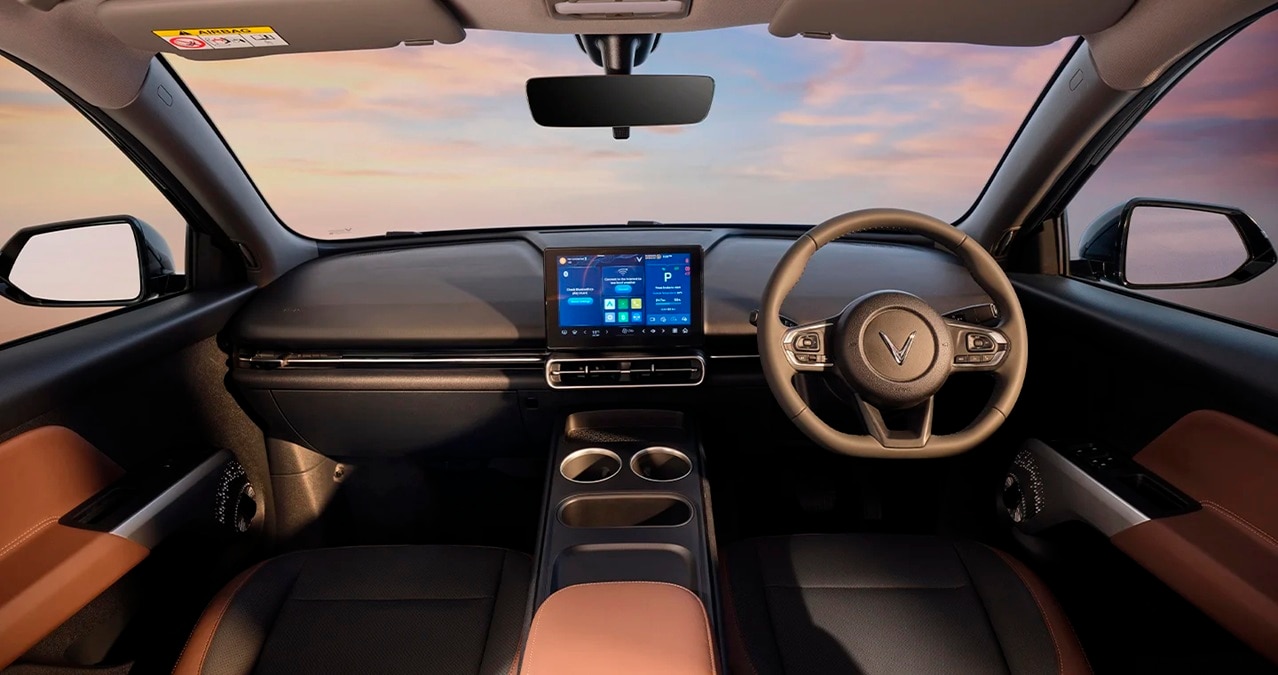
The VinFast VF MPV 7 is equipped with a 60.13 kWh battery, which provides 204 hp and 280 Nm of torque. The car has a front electric motor and can accelerate from 0 to 100 kilometers per hour in just 9 seconds. The maximum speed of this car is 140 kilometers per hour, and the claimed range reaches 517 kilometers.

Regarding charging, the vehicle supports both 80 kW DC fast charging and 6.9 kW AC charging. After the price reduction, this model has become a very attractive choice.

VinFast is demonstrating strong results in the Indian market, while many other companies require many years to understand the specifics of this market. Since entering the electric vehicle segment, VinFast has entered the top 5 companies. Having started its journey in the Indian market in 2025, the company sold 2571 vehicles in October, according to Auto पंडित्ज report. This figure represents a growth of 1710 percent compared to the previous year, making VinFast the fourth company in terms of electric vehicle sales in India.

Sale of instant noodles and tea in the mountains brings significant income even in the low season
Read more
www.aajtak.in

Sale of instant noodles and tea in the mountains brings significant income even in the low season

For people visiting the mountains, the taste of instant noodles and tea becomes part of the journey. In cold weather, tourists often stop to enjoy a hot bowl of noodles. However, the question arises about what daily income a noodle vendor by the roadside in the mountains can earn. The story of the noodle seller at Rohanga Pass in Himachal Pradesh is currently being actively discussed on social media.

It is claimed that even in the low season, his shop generates about 14-15 thousand rupees in daily revenue. Nevertheless, it is incorrect to consider this amount as net profit, as it includes expenses for goods delivery and shop maintenance. This fact was recorded and published by a tourist on social media.

Content creator Harsh Chauhan visited Rohanga Pass. During his visit, he spoke with the noodle vendor about his business. When Harsh asked about the sales volume, the vendor noted that it was the low season. After a follow-up question about sales specifically during the low season, the vendor stated that he sells approximately 60 to 70 bowls of noodles daily.

The price of one bowl is 100 rupees. Additionally, about 200 cups of tea are sold daily at a price of 40 rupees per cup. The shop also takes orders for eggs, although the quantity remains small.

According to the vendor's data, selling 60-70 bowls of noodles brings in 6,000 to 7,000 rupees daily. Meanwhile, sales of 200 cups of tea generate about 8,000 rupees. Thus, the total estimated revenue reaches 14,000–15,000 rupees per day. This amount does not include income from egg sales. Harsh Chauhan shared a video of this conversation on social media, emphasizing that these figures pertain to the low season, and questioned what the business volume would be during peak tourist season.

Social media users discussed not only the sales volumes but also the difficulties of operating in places like Rohanga Pass. Many noted that delivering goods to such locations is not easy. Transportation costs are related to the fact that goods such as noodles, tea, eggs, and gas cylinders must be delivered from Manali up the slope.

Some users also mentioned that water has to be brought from afar, and work is conducted in cold and windy conditions. In such weather, gas consumption for cooking may increase. One user stated that delivering goods from Manali to the shop costs approximately 2,000 rupees, although this expense is based on a claim made on social media.

Through this conversation, Harsh Chauhan wanted to demonstrate that the potential of a business is determined not by its size, but by its location, customer needs, and method of operation. The noodle and tea shop at Rohanga Pass serves as such an example. However, a daily revenue of 14-15 thousand rupees does not equate to equivalent profit, as the seller's actual costs and savings remain unknown.

Gautam Singhania criticizes Maserati over poor service after new model launch in India
Read more
www.aajtak.in

Gautam Singhania criticizes Maserati over poor service after new model launch in India

The dream of owning a luxury car exists for many, especially when it comes to the famous Italian company Maserati, whose magnificent design, powerful engine, and premium features attract attention. However, what if after spending millions of rupees you constantly have to go to service centers? This is the experience shared by Gautam Singhania, chairman and billionaire of the Raymond Group. He sharply criticized the company for Maserati's substandard after-sales service and advised caution to those planning to purchase the brand's vehicle in India.

Gautam Singhania expressed his dissatisfaction with Maserati's service on the social media platform X. He stated that the company ignores the problems of its long-standing customers. According to him, complaints related to his own car have not yet been resolved, and even new dealers have proven incapable of fixing his issues.

Singhania also questioned Maserati's strategy for returning to the Indian market. He believes that launching a new business without solving the problems of existing customers is an incorrect step. He called this an insult to Indian car buyers and the entire automotive community.

In his post, Gautam Singhania emphasized that people buy supercars for their impressive handling, not to run around seeking solutions from service managers. He characterized the company's after-sales service as completely inadequate. Singhania wrote in his post: 'I paid for luxury but received a defective product. How can a brand ask Indian buyers to trust their hard-earned money again if it cannot solve serious problems for its current customers? Be careful with exaggerated claims.'

Gautam has repeatedly criticized Maserati on social media. He also noted that the high price, the use of carbon fiber, and the excellent engineering of the car are meaningless if the company does not provide quality service and support to its customers. Singhania described his experience as extremely disappointing, stating that he felt he received a low-quality car despite paying a premium price.

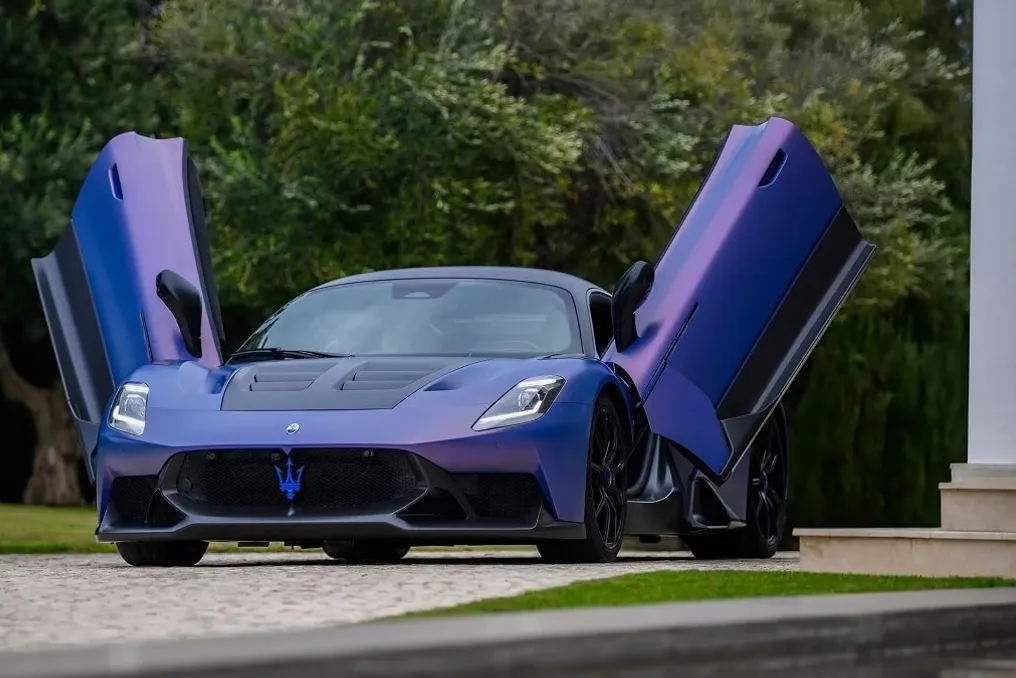
In reality, the Italian luxury car manufacturer Maserati is trying to strengthen its business in India by relaunching its operations. The company is actively running marketing campaigns and working to expand its network of dealerships in major cities, while also introducing new models. Recently, the company launched the new luxury sports car Maserati GT2 Stradale in the Indian market. Its starting price is 5.72 crore rupees (excluding taxes).

Along with the launch of this car, the company opened a new showroom in Mumbai in collaboration with Navneet Motors. This is the third Maserati showroom in the country after Delhi and Bangalore. With this opening, the company also presented its Grecale, GranTurismo, and GranCabrio models.

The Maserati GT2 Stradale is known for its powerful engine and magnificent appearance. It is equipped with a 3.0-liter twin-turbo V6 gasoline engine that generates 631 hp and 720 Nm of torque. This engine is connected to an 8-speed dual-clutch automatic transmission. The company claims that this car can accelerate from 0 to 100 km/h in just 2.0 seconds, and its top speed reaches 324 km/h. The car offers 4 driving modes: Corsas, Sport, GT, and Wet Mode.

Popular