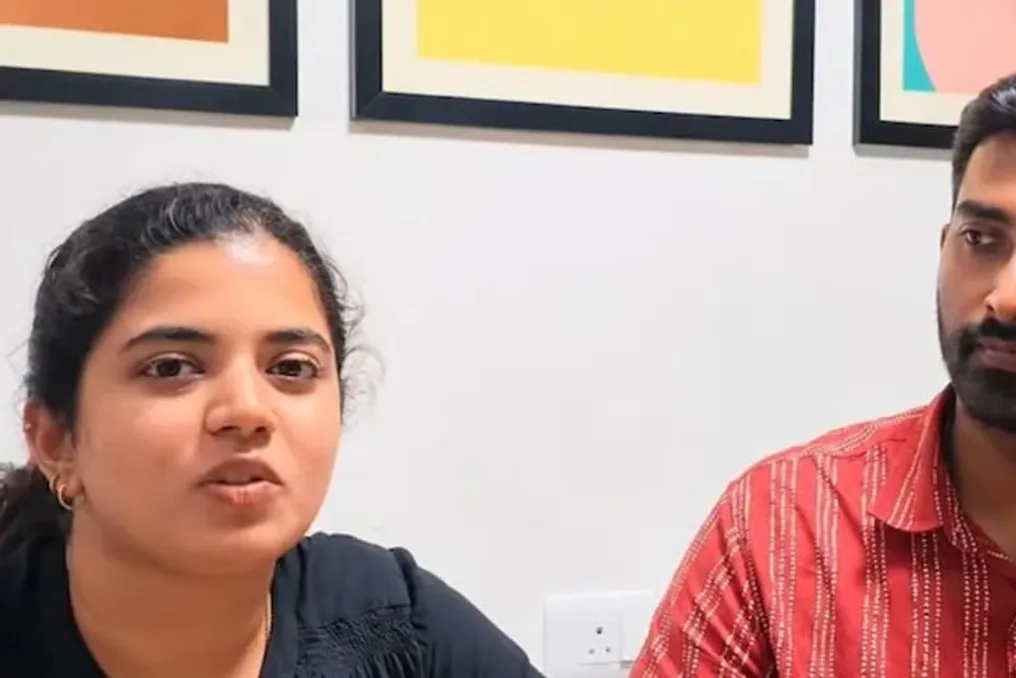
Bangalore couple starts food service after leaving IT sector, earning 5.6 million in 9 months
Read more
Aaj Tak
www.aajtak.in

Bangalore couple starts food service after leaving IT sector, earning 5.6 million in 9 months

One of the main problems for people who move from one state to another for work is the lack of home-cooked meals. Often, eating out leads to illness, and sometimes people go hungry. The couple residing in Bangalore, Diya Krishnakumar and Aditya Natarajan, faced similar difficulties. However, they decided to turn this problem into a business.

After a long day at the office, it was often difficult for them to cook at home. While ordering food was an easy option, they wanted the food to be healthy, affordable, and reminiscent of home cooking.

Since they could not find a meal subscription service that met their needs, they decided to create their own service. In September 2024, they resigned from the IT sector and launched a healthy food subscription startup in Bangalore called Wellfed.

To launch the business, the couple gathered about 1.5 million rupees from their savings. Between January and September 2026, Wellfed achieved a revenue of approximately 5.6 million rupees. The company served over 1500 customers and delivered more than 55,000 meals.

Diya and Aditya studied computer science in Bangalore and started their careers at the same IT company. After more than three years in the corporate sector, they found it difficult to balance work and managing their diet. Aditya mentioned that due to his work schedule, he often lacked time to cook; some days he relied on takeout, while other days cooking dinner at home became challenging.

Diya also noticed that preparing dishes from online recipes took longer than stated. She reported to the startup Pedia that an online 20-minute recipe took twice as long when she started cooking it in her kitchen.

The couple began looking for meal subscription services that could provide lunch and dinner, but discovered that many services offered large portions and diverse food instead of simple Indian cuisine. They needed regular food such as dal, vegetables, roti, and protein sources. When they couldn't find such a service at an affordable price, they decided to open their own establishment.

It is worth noting that the couple launched Wellfed in September 2024 with an investment of 1.5 million rupees. Their initial team consisted of six people: founders, a nutritionist, a chef, a waiter, and a courier. The nutritionist helped with meal planning and nutritional calculation. Initially, the team sent food to friends and family to get feedback before serving a large number of customers. This response gave them confidence in maintaining their approach to serving familiar Indian food.

Wellfed's menu includes dishes such as dal, potato with cauliflower, sorghum roti, adrak chicken, and chhole chat. Protein sources like cheese, tofu, soy, and chicken are also available. The menu also features rolls, biryani, and Indo-Chinese food, which customers seek as alternatives.

However, the business gained momentum when a nutritionist from Bangalore shared a video about the startup on social media. This helped Wellfed attract its first 100 customers. The founders chose reusable containers with steel lining instead of disposable packaging. These containers were sourced from a manufacturer in Maharashtra.

In the first year of operation, Wellfed earned about 4.5 million rupees. Between January and September 2026, the company generated 5.6 million rupees, exceeding the revenue from the first nine months of its first year. The startup also faced operational difficulties. In early 2026, a shortage of liquefied petroleum gas affected kitchen operations, forcing the founders to make menu changes, which slowed the company's growth during that period.

Currently, Wellfed offers three subscription plans. The trial plan for three days costs 289 rupees per meal. A two-week subscription is 279 rupees per meal, and the monthly plan is 269 rupees per meal. Plans include lunch and dinner, free delivery, and nutritionist consultations. Customers with long-term subscriptions can take leftover food with them.

Currently, the founders aim to expand Wellfed's delivery area across Bangalore and improve the kitchen's production capacity. They also plan to reach customers outside the IT and startup areas of the city.
Similar stories

Three friends created a business based on banana stem waste, achieving a turnover of 2.5 crore rupees
Read more
www.aajtak.in

Three friends created a business based on banana stem waste, achieving a turnover of 2.5 crore rupees

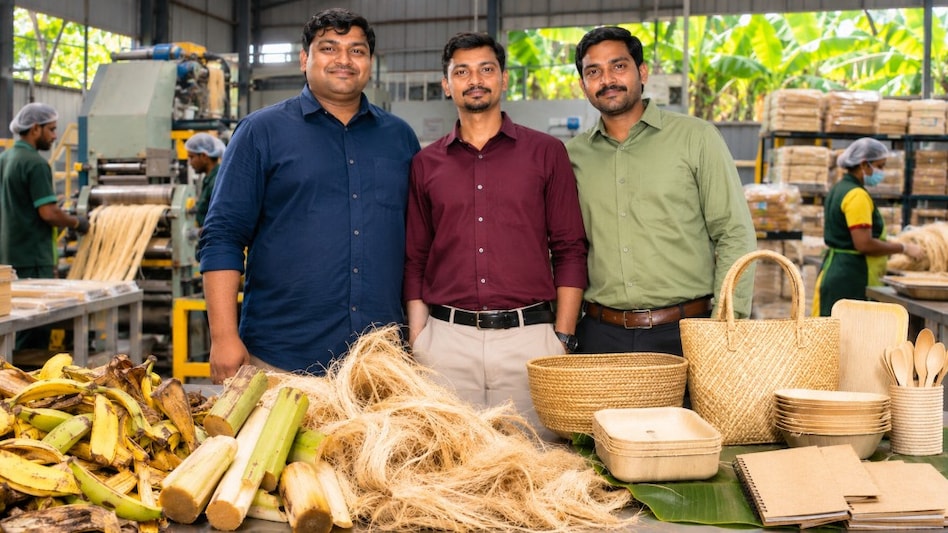
In Bihar, banana stems that farmers usually discarded after harvesting became the foundation of a multi-million rupee business for three friends. Jagat Kalyana, Satyam Kumar, and Nitish Kumar Verma saw a business opportunity in these banana crop wastes.

In 2021, they founded Taruvar Agro, which began producing mats from natural fibers derived from banana stems, as well as baskets, prayer mats, and file folders. The business, which started with an investment of about 20 lakh rupees, achieved a revenue of approximately 2.5 crore rupees for the financial year 26. This information was presented in a YourStory report. The company also produces vermicompost from other parts of the banana plant and plant nutrition-related products. Furthermore, it has entered the mahana market and is exploring opportunities to enter the international market.

All three founders met while studying management at Taxila Business School, where they earned a PGDM degree specializing in SAP. Jagat Kalyana, originally from Haghdia, studied engineering in Bangalore before his management studies. He had job offers from institutions in Tanzania and Dubai, as well as from IDFC First Bank, gaining experience in sales, marketing, and business operations. Satyam Kumar from Darbhanga studied economics before obtaining an MBA, and before co-founding Taruvar Agro, he worked in sustainable development at Ecohoy. Nitish Kumar Verma from Bihar Sharif received a B.Com Hons from Nalanda and worked at institutions such as S&P and Infosys.

Despite having opportunities to build a career in the corporate sector, all three decided to start their own business in their home state. The COVID-19 pandemic became a turning point for them, prompting them to consider starting their own venture instead of a traditional corporate career. According to Jagat Kalyana, the company's CEO, the founders preferred business over a well-paid job abroad during the COVID-19 pandemic. They aimed to create something of their own and bring recognition to Bihar nationally and globally.

Their search for business opportunities eventually led them to a banana farm, where they discovered a resource that was not fully utilized and could become the basis for a new enterprise.

All three noticed that farmers often discard thick banana stems after harvesting the fruit. Farmers were unaware that the natural fibers contained in these stems could have commercial applications. Under the guidance of Dr. Sunita Kushwaha, former director and senior scientist at the Vaishali Agricultural Sciences Centre, they began looking for ways to extract and process banana fibers.

Taruvar Agro organized the collection of discarded banana plants from farmers and developed a fiber extraction system using specialized equipment. After cleaning, preparing, and drying, the fibers are used to make file folders, yoga mats, baskets, and prayer mats. The company is also exploring the potential of using this fiber to create vegan leather and blended fabric. The company's activities are not limited to fiber extraction; vermicompost is produced from the residues left after fiber extraction. Other applications of plant parts in agriculture are also being studied, and the company produces liquid fertilizers for plant nutrition. Taruvar Agro's goal is to reduce agricultural waste by utilizing various parts of the banana plant, as well as providing farmers with additional sources of income.

During the establishment of the business, the founders faced several difficulties. Initially, they invested about 15 lakh rupees from their savings and family assistance, along with 5 lakh rupees in working capital. The company did not attract external investments. Initial challenges included developing the fiber extraction process, transporting heavy banana stems, and finding skilled workers. To address the labor shortage, the company trained local residents. Currently, women account for about 60 percent of the company's total employees.

Taruvar Agro operates on two models: business-to-business and business-to-consumer. The company supplies fiber to other enterprises and sells finished products through its platform on online marketplaces such as Amazon, Flipkart, and Meesho. The company has also ventured into the mahana business, selling raw and roasted mahana in over ten flavors. It is currently exploring the possibility of producing banana flour, starch, vegan leather, and eco-friendly fabric. To study international market prospects, the company sent samples of its products to France and the Philippines.

The journey of Taruvar Agro from creating everyday products from discarded banana stems demonstrates how value can be found in waste.

Krishna Yadav turned a modest pickle business into a multi-million rupee enterprise
Read more
www.aajtak.in

Krishna Yadav turned a modest pickle business into a multi-million rupee enterprise

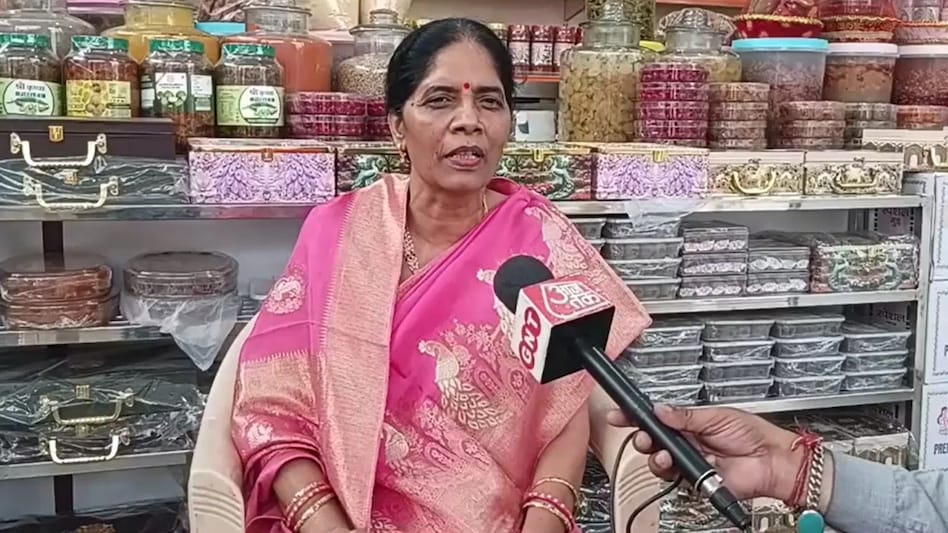
Krishna Yadav, residing in Najafgarh, Delhi, has become an inspiration for women who dream of achieving something significant despite difficult life circumstances. Initially earning a living by selling vegetables by the roadside due to financial hardship, Krishna Yadav started her journey by producing and selling pickles with just 500 rupees. Thanks to her perseverance and hard work, this small business has transformed into an enterprise worth millions of rupees.

When Krishna Yadav arrived in Delhi with her family from a small village in Uttar Pradesh, she faced serious economic problems. The situation was so severe that the family had to survive on meager means. During this period, she decided to use her traditional skills as a basis for earning a livelihood. Pickles were already being prepared at home, and Krishna Yadav underwent training at an agricultural science center, gaining knowledge about processing fruits and vegetables and adding value to them.

In 2002, she began selling pickles, setting up a small roadside stall with an initial capital of 500 rupees. Her start was with carunda pickles. To attract customers, she offered them samples of the pickles and provided drinking water by the roadside. Gradually, the taste of her pickles gained popularity, and the business began to grow.

Afterward, she started making various types of pickles, including pickled peaches, lemons, and chilies, and named her business 'Shri Krishna Pickles'. Today, under this brand, not only pickles but also various food products such as chutneys, jams, and syrups are produced. According to Krishna Yadav, the product range exceeds 250 items, and the annual turnover has reached millions of rupees.

Krishna Yadav's special contribution is that she managed to involve other women in her business, helping them achieve self-sufficiency. She is currently actively working to make women more independent. Her struggle and entrepreneurial spirit have received national recognition; she has been awarded the Women's Power Award, the Uttar Pradesh Ratna Award, and various awards from Indian agricultural departments and ministries, as well as honored by the President of the country.

Krishna Yadav's story proves that huge capital is not required to achieve success; what is needed is skill, diligence, and firm determination. Her journey, which started with 500 rupees, is today a shining example of women's empowerment and self-reliance.

Popular