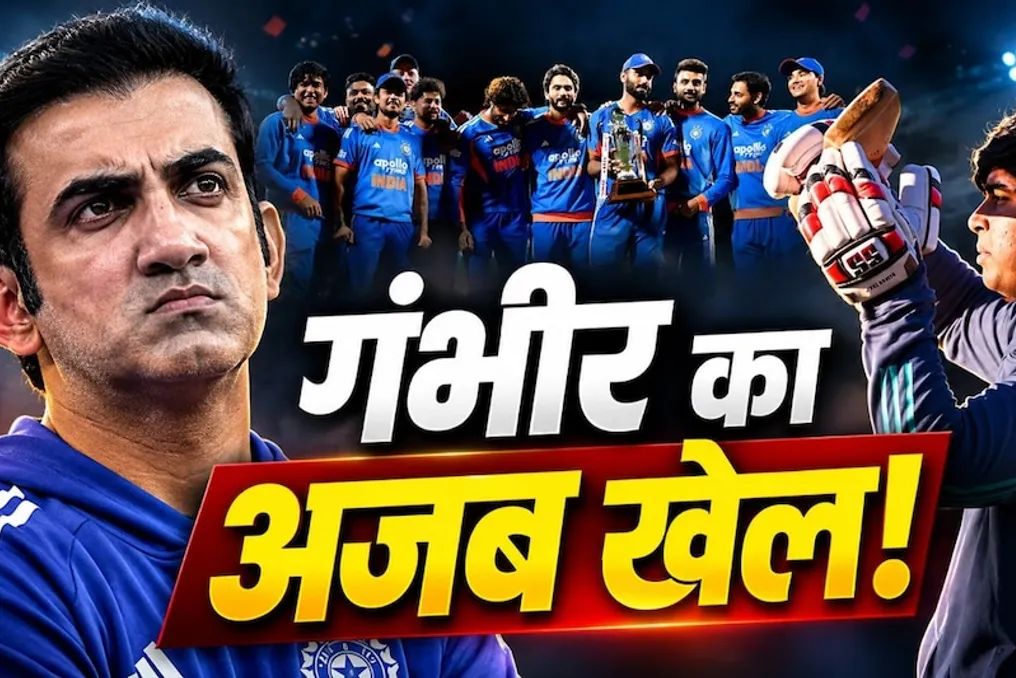
Changes to India's squad ahead of the test series against New Zealand: Kuldeep Yadav released and Ghurnoor Barar included
Read more
Aaj Tak
www.aajtak.in

Changes to India's squad ahead of the test series against New Zealand: Kuldeep Yadav released and Ghurnoor Barar included

The Indian team continues its preparation for the test series matches despite the series being held in one-day format. Earlier, Shubman Gill, KL Rahul, and Anshul Kamboj had already left the squad for the one-day matches. Furthermore, Ghurnoor Barar will also be unable to participate in the final one-day match of the series.

The Board of Control for Cricket in India (BCCI) has included fast bowler Ghurnoor Barar in the squad for the upcoming series against New Zealand. Ghurnoor will join the rest of the team for the Test matches. However, because of this, he will not be able to participate in the fifth one-day match of the series, which will take place at Mount Maunganui on Sunday, November 15.

Meanwhile, spinner Kuldeep Yadav has been dropped from the Test match squad and will now play in domestic home matches in India. The first Test match between India and New Zealand is scheduled for November 19 at Basin Reserve in Wellington, and the second match will be on November 27 at Hagley Oval in Christchurch.

In the updated Test squad, wicketkeeper-batsman Rishabh Pant has been added, joining the team in Wellington, as well as Dhruv Jurel, who has taken over the wicketkeeper position.

India's squad for the Test series against New Zealand includes: Shubman Gill (captain), Yashasvi Jaiswal, KL Rahul (vice-captain), Devdutt Padikkal, Rishabh Pant (wicketkeeper), Dhruv Jurel (wicketkeeper), Ravindra Jadeja, Anshul Kamboj, Jasprit Bumrah, Prasidh Krishna, Akash Dip, Sai Sudarshan, Nitish Kumar Reddy, Washington Sundar, Mohammed Siraj, and Ghurnoor Barar.

The updated India squad for the fifth one-day match includes: Shreyas Iyer (captain), Rohit Sharma, Virat Kohli, Tilak Verma, Ishan Kishan (wicketkeeper/vice-captain), Axar Patel, Naman Dihr, Akib Nabi, Rituraj Gaikwad, Arshdeep Singh, Kumar Kushagra (wicketkeeper), Mohammed Siraj, Yash Thakur, and Kuldeep Yadav.

Similar stories

Three players—Rohit, Kohli, and Iyer—were dismissed for zero in the match between New Zealand and India
Read more
www.aajtak.in

Three players—Rohit, Kohli, and Iyer—were dismissed for zero in the match between New Zealand and India

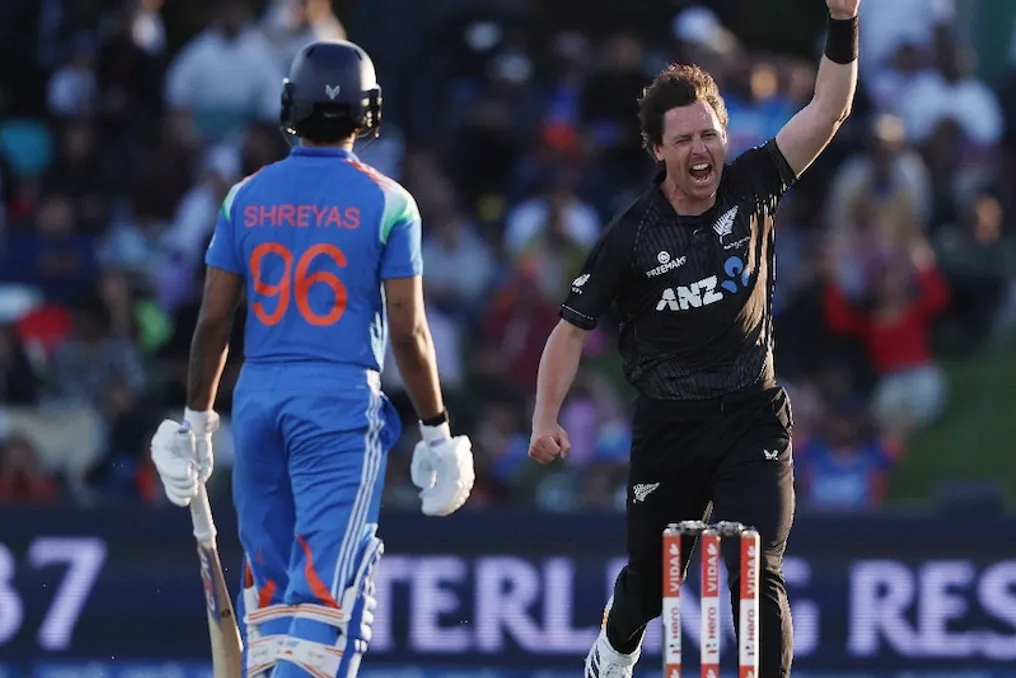
In the fourth one-day match between New Zealand and India, held on November 13th at Bay Oval on Mount Maunganui, the Indian team scored 334 runs. The start of the game for the Indian team was extremely unsuccessful, as fast bowler Matt Henry took three wickets before even a single run was scored on the scoreboard.

Rohit Sharma, Virat Kohli, and captain Shreyas Iyer returned to the bench without scoring any runs. Matt Henry, who had been absent from the first three matches due to injury, dismissed Rohit Sharma on the very first delivery, catching him to Finn Allen in the first mid-slip. Subsequently, Virat Kohli was bowled on the fifth delivery, and the next batsman, Shreyas Iyer, was dismissed via LBW.

This is the second instance in the careers of Rohit Sharma and Virat Kohli where they were dismissed for zero in the same match. A similar situation occurred in an ODI against Sri Lanka in Danbulle back in 2010. That match was also notable because Virender Sehwag failed to complete his century, as his six was called a no-ball.

Rohit Sharma is now included in the list of Indian batsmen who have been dismissed for zero on the first ball in ODIs. Saurav Ganguly and Virender Sehwag lead this list, each having lost their wicket on the first ball three times. Also on this list are Sunil Gavaskar, Ravi Shastri, Krishnamachari Srikkanth, and Manoj Prabhakar, each having been dismissed once.

This marks the fifth time in ODI history that the first three wickets of a team have been lost without any runs being scored. Previous similar instances occurred in matches between Pakistan and New Zealand in 1983, Pakistan and South Africa in 1997, and Bangladesh and Sri Lanka in the 2003 World Cup. In 2026, Bangladesh and India became part of this undesirable record in matches against Australia and New Zealand, respectively.

List of matches where the first three wickets were lost without scoring runs in ODIs:

  • Pakistan vs New Zealand, Edgeストン, 1983
  • Pakistan vs South Africa, Lahore, 1997
  • Bangladesh vs Sri Lanka, Pietermaritzburg, 2003
  • Australia vs Bangladesh, Mirpur, 2026
  • India vs New Zealand, Mount Maunganui, 2026
Despite the absence of Bumrah and Shami, Indian pace attack raises concerns for New Zealand in second ODI
Read more
www.aajtak.in

Despite the absence of Bumrah and Shami, Indian pace attack raises concerns for New Zealand in second ODI

The Indian team currently lacks experienced fast bowlers like Jasprit Bumrah and Mohammed Shami, but this does not mean that the opposing team's batsmen will feel relieved. In the first ODI against New Zealand, India's young and relatively inexperienced pace attack displayed such a performance that the hosts had to reconsider their tactics. Now it is expected that the Indian fast bowlers will replicate this performance in the second ODI, which will take place on Saturday in Wellington. The match will start at 7:30 AM Indian time.

In the first match of the series, played in Auckland, Arshdeep Singh, Anshul Kamboj, and Gurnor Barar made a significant impact with their play. These bowlers prevented the New Zealand batsmen from playing freely. Notably, all three complicated matters for the hosts in different ways. While Arshdeep managed to take wickets, Kamboj held the batsmen through his accurate line and length of bowling.

In the first ODI, Anshul Kamboj emerged as one of India's most influential players. He created pressure on the New Zealand batsmen by conceding 46 dot balls. While other bowlers used short deliveries to gain extra bounce from the field, Kamboj continued to bowl at a length characteristic of Test matches. This strategy proved effective.

There is also a possibility that Kamboj might be given new ball duties alongside Arshdeep Singh in the second ODI. Although Arshdeep and Akib Nabi started the bowling in Auckland, the style of movement demonstrated by Kamboj makes him a strong contender for this role.

Nevertheless, on the pitch in Wellington, the Indian bowlers will face a different challenge. In Eden Park in Auckland, the boundaries were short, whereas at Henry Stadium in Wellington, the short boundaries are square. Under these conditions, the fast bowlers will have to change their bowling length. Instead of trapping the batsmen with short balls, bowling at a slightly longer length may be more effective.

It is expected that this ground will offer good bounce and the ability for the ball to maintain its trajectory. This could help the fast bowlers. This is good news for the Indian pace attack. The New Zealand batsmen, who suffered from extra bounce in the first ODI, may face difficulties again.

The Indian team also has an experienced option in Mohammed Siraj. In the first ODI, Akib Nabi was unable to take a wicket. If Siraj is available for the second match, there may be changes in the squad. However, the team management has not yet revealed its cards on this matter.

When asked about Siraj's potential chance by field coach Shubdeep Ghosh, he replied: 'I do not know, the team management will make the decision.' Siraj's possible presence could add experience to the Indian bowling, but the performance of the young bowlers in the first ODI presented the team management with an interesting choice.

As for the Indian batting, Rohit Sharma is set to play a big innings in the second ODI. In the first match of the series, he was dismissed in the very first over. Nevertheless, his form prior to this was good in the home series against West Indies. The team hopes that Rohit will regain his form in Wellington.

How Virat Kohli played in the first ODI could also have provided some relief to the Indian side. Despite the extra bounce at Eden Park, Kohli looked confident and scored runs easily. His role was important in stabilizing the Indian innings.

However, other batsmen struggled to cope with the short balls. Shreyas Iyer and Axar Patel faced difficulties due to the constant bouncers from the New Zealand bowlers. They need to improve their technique against bouncing balls. The New Zealand bowlers may target this weakness again in the second ODI.

On the other hand, New Zealand's problems are not diminishing. The team's key batsman, Devon Conway, is ruled out of the entire series due to a concussion. He sustained this injury after a collision during fielding practice. Nick Kelly has been included in the team to replace him. New Zealand fast bowler Blair Tickner called the absence of Conway a major blow to the team. He stated that Conway was an extremely important player for the team.

Questions about the team's bowling weakness arise after India's T20 series victory against New Zealand
Read more
www.aajtak.in

Questions about the team's bowling weakness arise after India's T20 series victory against New Zealand

Despite India's 3-2 victory in the T20 series against New Zealand, many questions remain that cannot be ignored. Although India dominated at the start of the series, winning the first three matches, two subsequent defeats exposed the team's weaknesses.

In the fifth T20 match, held in Hamilton on Sunday, New Zealand defeated India by seven wickets. The Indian batsmen scored 191 runs, but the bowlers failed to defend this total. The question arises whether India can remain world champions solely on the strength of its batsmen, especially when the team's tactical decisions, including the constant exclusion of Vaibhav Suryavanshi, are being questioned.

The attacking power of the Indian team was its main advantage in this series. Abhishek Sharma's aggressive play, in particular, put pressure on the opponents. However, in the last two matches, another side of the game emerged: when Abhishek couldn't score runs, the team struggled.

Nevertheless, in the fifth match, Ishan Kishan and captain Shreyas Iyer showed brilliant half-centuries. Ishan scored 61 runs off 32 balls, and Shreyas scored 50 runs off just 23 balls. Together they added 93 runs off 43 balls for the third wicket, taking India to a comfortable score of 112/2 in 10.1 overs.

It seemed from there that the Indian team was heading towards a large score, but the New Zealand bowlers managed to turn the game around. Edam Milne took four wickets for only 19 runs. Nathan Smith and Blair Tickner also succeeded at critical moments. In the end, the Indian team managed to reach 191/8.

India's main problem is its bowling. After scoring 191 runs in Hamilton, the Indian team created a difficult total to defend in T20 cricket, but New Zealand achieved it in only 18 overs. The hosts won the match by seven wickets, and the Indian bowlers looked as if they were craving wickets.

Tim Seifert was the main hero of New Zealand's victory, showing explosive play by scoring 93 runs off 50 balls. Glenn Phillips also helped create problems for the Indian bowling attack by scoring a half-century. Together they made the achievement very easy.

Another issue for the Indian team is fielding. Naman Dir dropped an easy catch by Seifert in the fourth over when he was scoring 13 runs. If this chance had been utilized, the picture of the New Zealand innings could have been different. Interestingly, New Zealand's fielding was not perfect either, and they missed several catches, but India's error proved decisive.

India's ability to score big in T20 cricket is undoubtedly a strength. However, to remain world champions, offense alone will not be enough. India needs bowlers capable of defending large totals and taking wickets at crucial moments.

The last two matches of this series showed that when opponents attack openly, the Indian bowling comes under pressure. Bowlers must have a clear plan not only to contain the run-scorers but also to take wickets. Furthermore, it is crucial to utilize the opportunities provided in fielding.

In the fifth match against New Zealand, the Indian team lacked ideal bowling resources, and the pitch became more favorable to batsmen at night. Nevertheless, one cannot ignore how easily New Zealand reached its target despite these conditions.

One reason for the questions regarding the Indian team's strategy is the constant exclusion of Vaibhav Suryavanshi from the starting lineup. The question of why a young explosive batsman like Vaibhav is not given a chance remains a subject of discussion.

The team management has several options in the upper order: Abhishek Sharma, Sanju Samson, Ishan Kishan, and other batsmen. The question arises as to who will give way to Vaibhav. However, naturally, questions arise about the strategy of constant experimentation and player exclusion.

It is not necessary for the decision to be to play Vaibhav at all costs, but if he is considered part of future plans, he should also be given opportunities to demonstrate his talent. Simply being in the squad does not allow a young player to prepare at the international level. The team management needs to clarify its plans regarding Vaibhav.

The T20 series against New Zealand is over, and now both teams will meet in ODI format matches. In this regard, the Indian team management has the opportunity to review its strategy and squad.

Gautam Gambhir and the team management must find a balance between attack and bowling. In addition to the ability to score big runs, they need to develop the ability to defend them. Player selection should also be based on the team's needs and current form.

Popular