COP31 Delegates: China Demonstrates Possibility of Sustainable Green Growth
Read more
CGTN
cgtn.com

COP31 Delegates: China Demonstrates Possibility of Sustainable Green Growth

Delegates at the COP31 conference stated that nations do not necessarily have to trade their natural environment for economic growth. Steven Magninus, Deputy Director General of the International Union for Conservation of Nature, noted in Antalya that China's concept of an 'ecological civilization' proves that 'economic development and environmental protection should not compete, but rather work together.'

Magninus explained that China is actively engaged in restoring and protecting ecosystems, placing natural resources at the center of its development model. UN-Environment Secretary Simon Steele characterized China's green transition as unprecedented globally, adding that it stimulates innovation and reduces costs worldwide.

Fatih Birol, Executive Director of the International Energy Agency, highlighted these green achievements—in electric vehicles, renewable energy, and battery energy storage. He stated: 'China has shown the world the way.'

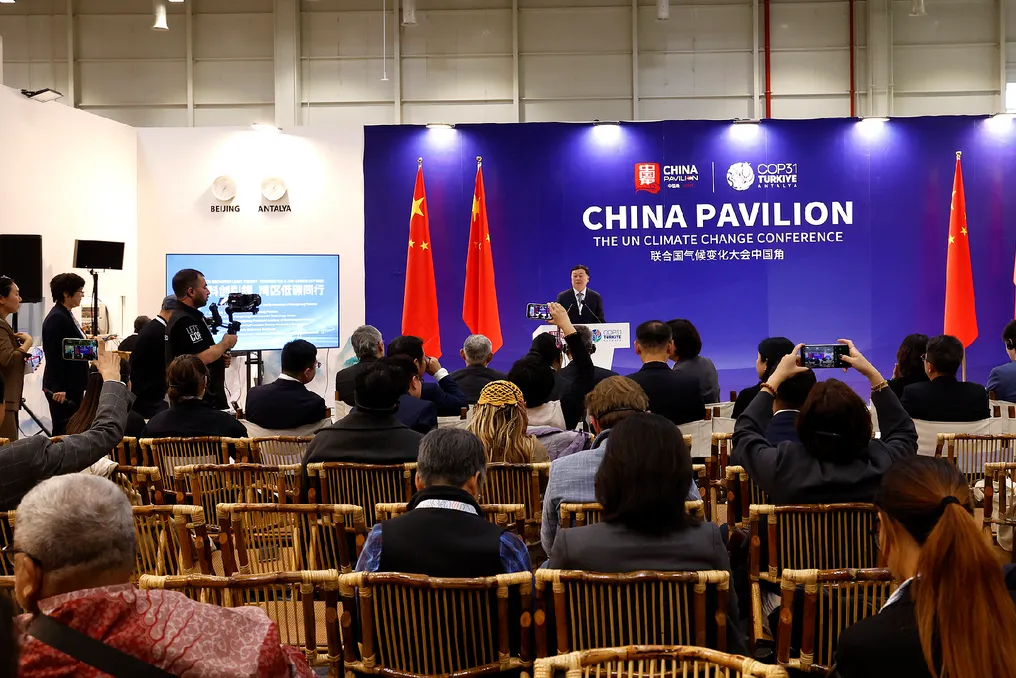
These comments came on the sidelines of the release of the English version of the report 'Precious Assets—Clean Water and Lush Mountains: China's Path to Green Development' at the Chinese Pavilion at COP31 on Tuesday. The report details China's vision for green development, how it is implemented at the national level, and its global impact.

Tenant Reid, Director of Climate and Energy Issues for the Australian Industrial Group, was present at the presentation. Reid welcomed the document and shared his experience traveling to China. He noted 'truly remarkable improvements in some key areas, including urban air quality,' and emphasized how encouraging it is to see the country establish national policies and support the growth of green energy sources for industry and households.

Reid also stressed that China's progress is important not only for the country itself but also for global climate action. China has become a major source of clean energy and low or zero-emission technologies, and its experience provides other nations with tools to achieve decarbonization goals.

Australia's Minister for Climate Change and Energy, Chris Bowen, who is chairing the COP31 negotiations, stated that China's investments in clean energy are making batteries and solar power more accessible to everyone. He added: 'This benefits China's own economic development, and it benefits the rest of the world.'

The COP31 conference will run until November 20 in the Turkish coastal city of Antalya, gathering international delegates and climate experts to boost global climate measures, collaborate on green initiatives, and advance the Paris Agreement.

Similar stories

English-language report on China's green development presented at COP31
Read more
cgtn.com

English-language report on China's green development presented at COP31

On Tuesday, at the 31st UN Climate Change Conference (COP31), held in the Turkish coastal city of Antalya, the English version of an analytical center's report on China's green development was released.

The report, titled 'Transparent Waters and Lush Mountains are Priceless Assets – China's Path to Green Development,' aims to provide the international community with a comprehensive understanding of China's vision for green development, its practical implementation, and its global significance.

The presentation took place at a parallel event themed 'Ecological Civilization and the Practice of Beautiful China,' which was held at the China Pavilion at COP31.

Hu Jun, director of the Xi Jinping Thought on Ecological Civilization Research Center, stated at the event that under the guidance of Xi Jinping Thought on Ecological Civilization, China firmly adheres to a course of green development that prioritizes ecological preservation.

He added that China continues to contribute to the expansion of the 'global landscape of green development' through its own green transition, thereby increasing confidence in the global shift towards a green economy.

The report was a collaborative effort by a research group from the Xi Jinping Thought on Ecological Civilization Research Center, the Xinhua Institute, and the National Forestry and Grassland Administration Research Center of China.

COP31 Delegates Call for Climate Finance and Justice for Developing Countries
Read more
cgtn.com

COP31 Delegates Call for Climate Finance and Justice for Developing Countries

At the 31st UN Climate Change Conference (COP31), which began in the Turkish coastal city of Antalya and will run until November 20, delegates demanded the elimination of the climate finance deficit and ensured climate justice for developing nations. The conference gathered representatives from nearly 200 countries and regions, focusing on transitioning from setting goals to implementing concrete climate solutions.

Mohammad Nurunnabi, UNESCO's Director for Sustainable Development Education, told Xinhua during the opening ceremony that practical actions, not just talk, are necessary. He noted that only 15% of the Sustainable Development Goals are on track, and many countries fail to provide adequate national statistics to track climate initiatives, making it impossible to assess real progress.

Nurunnabi also warned that despite the limited contribution of Global South countries to global emissions, climate financing from Global North countries is 'significantly decreasing every year,' strongly urging wealthy nations to take responsibility for the trillion-dollar gap.

Bangladesh's Minister of Environment, Forests and Climate Change, Abdul Awal Mintu, stated that poorer countries bear the greatest costs due to greenhouse gas emissions, which are primarily generated by wealthy nations. Mintu informed Xinhua that his population is severely affected by river erosion, coastal flooding, and saltwater intrusion, emphasizing the urgent need for adaptation funds to restore vulnerable communities.

He called on developed countries to fulfill their commitments to mobilize at least $300 billion annually for developing countries by 2035, and appealed to all participants to increase the total volume of climate finance to at least $1.3 trillion annually by that time. Mintu stressed that this contribution was initially non-binding for anyone, and his main goal at COP31 is to ensure that all responsible wealthy countries undertake this commitment.

To overcome these fundamental financial obstacles and implement local projects, some officials point to alternative economic models. Saiful Adib bin Abdul Munaff, the current CEO of the Malaysian Green Technology and Climate Change Corporation, noted that while many environmental initiatives successfully pass pilot stages, scaling up remains a serious challenge. According to him, there is an increasing role for blended finance, and successfully launching larger programs now requires the creative combination of multiple stakeholders, merging government grants with private funding, insurance companies, and even crowdfunding.

COP31 begins in Turkey with divergences over climate finance and action targets
Read more
noticiasaominuto.com

COP31 begins in Turkey with divergences over climate finance and action targets

The 31st United Nations Climate Change Conference (COP31) has begun in Turkey. The event takes place after a year marked by extreme weather events, such as floods and heatwaves, generating tensions regarding the financial resources needed for adaptation and mitigation of the climate emergency.

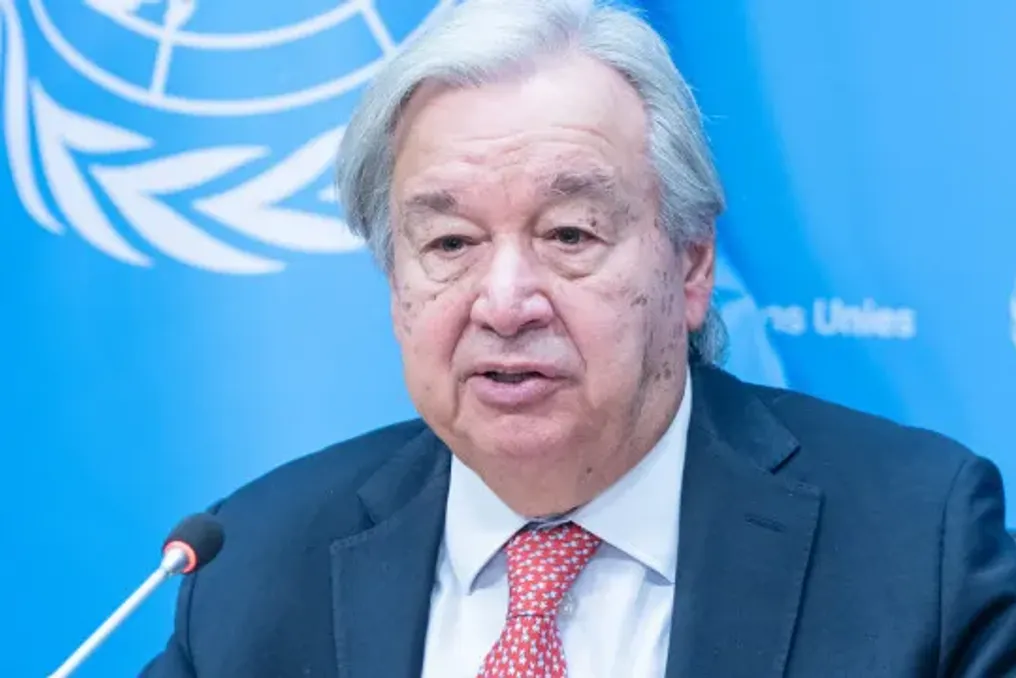
António Guterres, UN Secretary-General, called on leaders to 'be up to the task,' while Murat Kurum, Turkish Minister of Environment and conference president, emphasized during the opening session that 'any delay weighs particularly heavily on climate action.'

In 2026, the planet was again affected by climate change, evidenced by fatal floods in Nepal, heatwaves in Europe, and fires in Indonesia. Simultaneously, the energy crisis, driven by the Middle East conflict, has pressured costs and created significant budgetary challenges for governments, which ultimately diminishes climate ambition.

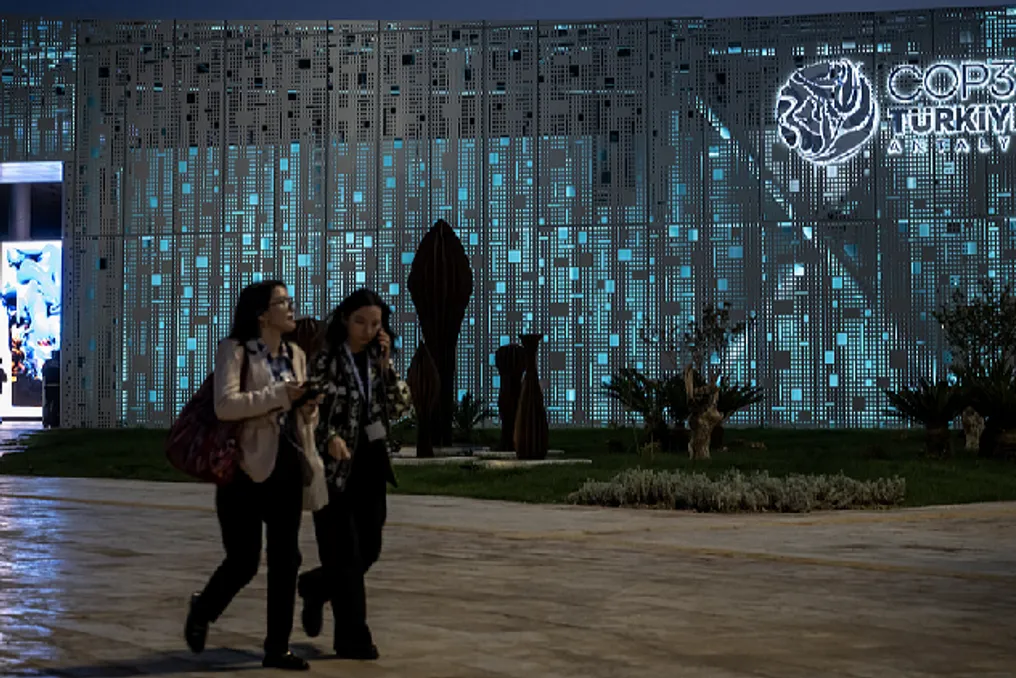
Held at the large exhibition center of the Turkish coastal city of Antalya, COP31 aims primarily to transform commitments made in previous UN meetings into practical measures. Maria da Graça Carvalho, Portugal's Minister of Environment and Energy, had previously argued that COP31 should be a conference focused on actions.

COP31, which brings together nearly 200 nations under the UN umbrella and has 68,544 accredited participants, is expected to be the forum for the 'implementation' of promises, according to Murat Kurum. Delegations spent the early hours of the start day negotiating the agenda. The main point of disagreement lies in the funding promised by developed countries—historically the largest greenhouse gas emitters—to developing countries.

A representative from the European Union had already signaled on Friday a lack of political will to increase spending. Jasper Inventor, leader of the Greenpeace delegation, described the start of COP31 as 'difficult,' warning that rich countries are refusing, especially, to include certain funding items on the agenda.

The 'Climate Finance Working Programme,' a mechanism defined at COP30 in Brazil in 2025 to discuss financial agreements, will be officially discussed. However, the tripling of funding for climate change adaptation, crucial for protecting nations most susceptible to droughts, floods, or sea-level rise, is not guaranteed.

The UN reported last week that developing countries will need $305 billion annually by 2035, an amount almost ten times higher than what they currently receive from wealthy nations. Simon Stiell, the UN's Climate Change Officer, acknowledged that 'frustration is palpable' in this context.

Another controversial issue is Turkey's intention to make electrification a central focus of COP31, suggesting that countries commit to raising the share of electricity in global energy consumption to 35% by 2035, compared to the current 20%. The European Union supports electrification with renewable sources, a position also defended by Maria da Graça Carvalho. However, several hydrocarbon-producing countries show resistance to accepting this proposal.

COP30, held in Belém, in the Brazilian Amazon, concluded without explicitly mentioning fossil fuels. In contrast, Brazil presented last week a 'roadmap' for countries to voluntarily replace oil, coal, and gas with renewable energies.

During a summit co-chaired by Turkey and Australia, Chris Bowen, Australian Minister for Climate Change, encouraged delegations to overcome divergences and prove that international cooperation can still yield results. He argued that 'we will show the world that multilateralism works,' despite the boycott by the US government, motivated by President Donald Trump's denial of climate change.

Popular