Documentary Film on Shenzhen's Transformation into a Dynamic Chinese City
Read more
CGTN
cgtn.com

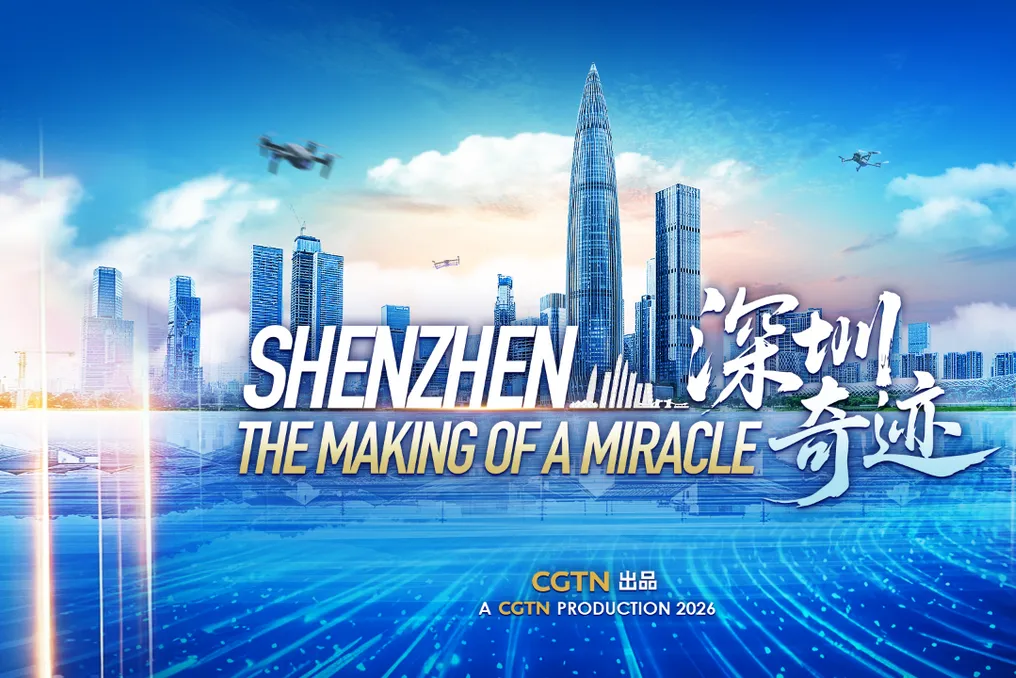
Documentary Film on Shenzhen's Transformation into a Dynamic Chinese City

The film explores how a small fishing village managed to transform into one of China's most dynamic cities. This city has achieved colossal growth, increasing its GDP by over 10,000 times, and has also held the top spot among Chinese cities for export volume for 33 consecutive years.

Furthermore, Shenzhen demonstrates the highest level of research and development intensity in the entire country. To uncover the secret behind this remarkable transformation, Bert Hoffman, former World Bank Director for China, Mongolia, and Korea, and Zach Dittwald, author of the book 'Young China,' were brought in.

The filmmakers met with young residents shaping the future of Shenzhen, visiting studios, factories, and competition arenas to reveal the stories behind the city's impressive rise.

The film's premiere is scheduled for November 17 on the CGTN channel.

Similar stories

Guterres: Those who profit from the planet's destruction cannot dictate the future
Read more
noticiasaominuto.com

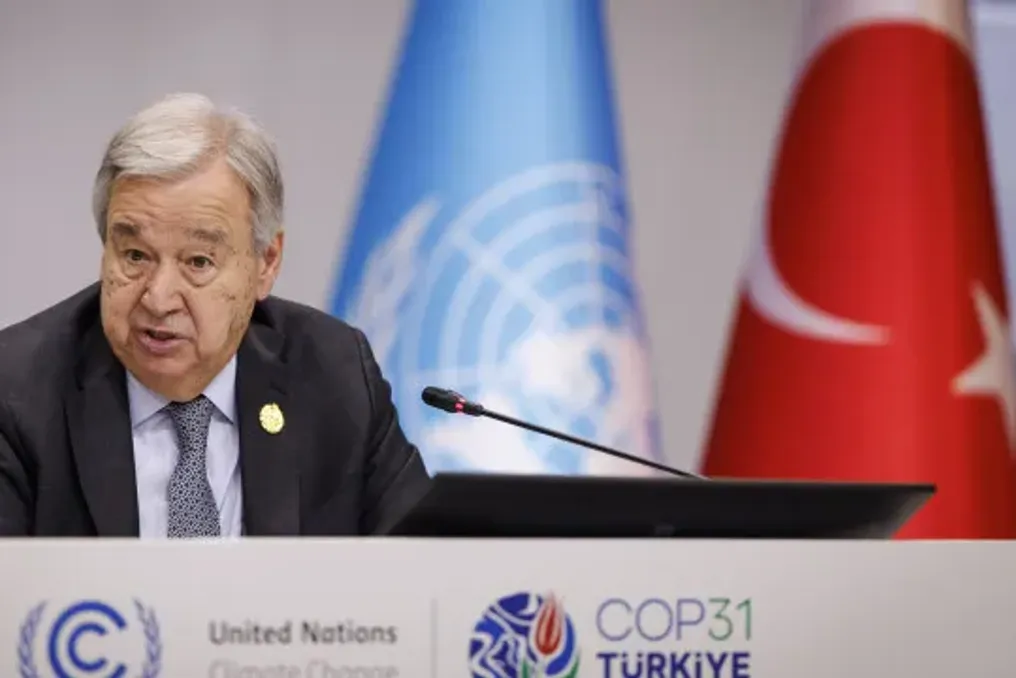
Guterres: Those who profit from the planet's destruction cannot dictate the future

UN Secretary-General António Guterres concluded his participation in climate summits, issuing a warning against the influence of oil interests and calling for resilience against global warming.

In his final speech at COP31 in Antigua, Turkey, Guterres, who will leave office at the end of this year, stated the necessity of countering the disproportionate influence of fossil fuel lobbying. He emphasized that the planet's future should not be determined by those who profit from its destruction.

He argued his position by stating that fossil fuels are the cause of the climate crisis, asserting that achieving climate security is impossible without abandoning them. The former Portuguese statesman summarized nearly ten years of work at the United Nations, saying he always sought to speak the truth about climate change, even when it was uncomfortable or met with negative reactions.

Guterres reminded that global warming exacerbates hunger, population migration, debt burdens, and the struggle for land and water, noting: 'It is impossible to build a world on a burning planet.'

He maintained that climate action must encompass all areas of UN activity—from eradicating poverty to protecting human rights. Guterres condemned the injustice where the least responsible parties suffer the most severe consequences of the problem.

In his farewell address, he called for an accelerated just transition away from fossil fuels for climatic, economic, and security reasons. He pointed out structural injustice: those who pollute the most have failed to create conditions for an adequate response to the needs of those affected.

The Secretary-General added that dependence on oil and gas exposes countries to price fluctuations and geopolitical instability, insisting that reducing dependency, rather than changing suppliers, is the solution to the problem.

Guterres supported the expansion of clean energy but stressed that this growth must lead to a real reduction in the production, consumption, and emissions of fossil fuels. He also endorsed electrification but emphasized that electricity generation must be clean.

He warned that exceeding the 1.5-degree warming threshold is already inevitable and strongly urged limiting this situation as much as possible to subsequently return to a level below this threshold. To achieve this, he demanded immediate emission reductions of around 6% annually in the coming years.

Under current national commitments, he warned that the world is heading toward approximately 2.5 degrees of warming by the end of the century, which he termed a 'recipe for catastrophe.' Faced with these challenges, he called for greater support for vulnerable countries, reminding that even tripling adaptation funding would cover less than 30% of their needs.

Despite the alarming signals, Guterres noted progress in renewable energy sources and stated that a cleaner and safer energy future is achievable, provided the necessary resources are provided.

Overview of Unnao District in Uttar Pradesh: History, Culture, Industry, and Political Landscape
Read more
www.aajtak.in

Overview of Unnao District in Uttar Pradesh: History, Culture, Industry, and Political Landscape

Unnao district, located in the state of Uttar Pradesh, is situated between the major metropolises of Lucknow and Kanpur, on the banks of the Sai River and the sacred Ganges. This district holds immense historical, cultural, and strategic significance. Administratively, it falls under the Lakhimpur district. The main transport corridor between Lucknow and Kanpur passes through it.

The history of Unnao encompasses both mythological tales and glorious chapters of the Indian struggle for independence. According to legends, the ashram of the great poet Valmiki was located near the Sai-Ganga in the Pariar area. It is also believed that Sita's mother spent part of her exile here, and Lava and Kusha were born on this land. During the First War of Independence in 1857, Unnao played a very brave role; Prince Rao Rambhash Singh (Daundia Kera) started an uprising against the British and ultimately sacrificed his life for the country.

Unnao is also known as the 'fertile literary land.' Many prominent figures of great Hindi literature, such as Suryakant Tripathi 'Nirala', Pratapnarayan Mishra, and Shivamgal Singh 'Suman', are closely associated with the lands of Unnao.

The industry of Unnao, adjacent to Kanpur, is particularly renowned globally for its leather production. Leather goods and tanning enterprises produced here export shoes, jackets, and other items abroad. Over 80% of the district's territory remains rural. Major agricultural crops include rice, wheat, oilseeds, pulses, and maize. Local husbandry is also supported by vegetable farming and mango orchards.

As part of the development of the state of Uttar Pradesh (UPSIDA), large industrial zones such as Bantara and Dahi Chauki have been established.

Locals travel from afar to places like Pariar (Valmiki's ashram), Chandika Devi Temple (Baksar), Maa Janki Temple (Janki Kund), Daundia Kera (Rao Rambhash Singh's fort), Nawabandjan Bird Sanctuary (Shaheed Chandra Shekhar Azad sanctuary), Shuklaganj, and Ganges ghats, such as Nana Mau.

In the political life of Unnao, significant population groups play a decisive role: upper castes (particularly Brahmins and Kshatriyas), other backward classes (OBC, including Lodhi, Yadavs, and Kurmi), and lower-caste communities (SC, including Pasi and Jatav).

The socio-political structure of the district revolves around voters from Dalit, Lodhi, and upper castes. The Parliamentary constituency of Unnao includes six assembly constituencies: Bangarmau, Safipur, Mohan, Unnao, Bhagwantnagar, and Purva.

In the 2022 Uttar Pradesh Legislative Assembly elections, the Bharatiya Janata Party (BJP) achieved a complete victory in the district, winning all six assembly seats.

In the Unnao Sadar constituency, BJP candidate Pankaj Gupta won, defeating Abhinav Kumar of SPA by a large margin. Meanwhile, the Congress candidate (Asha Singh, mother of the victim of violence in Unnao) managed to gather only 1555 votes.

In the Bhagwantnagar constituency, Ashutosh Shukla of BJP won, defeating Ankita Singh of SPA. BJP backed Ashutosh Shukla instead of the sitting MLA who held the post of chairman, Hriday Narayana Dikshit, and he won with a huge advantage of 43,010 votes.

In the Purva constituency, Anil Kumar Singh of BJP defeated Udayraj Yadav of SPA by a margin of over 30 thousand votes. It is worth noting that in 2017, Anil Singh won on BSP tickets, and in 2022, he participated in the election under the BJP banner.

In the Mohan (SC) constituency, Brijesh Kumar Rawat of BJP defeated Do Anchal of SPA by a margin of 43,179 votes. In the Safipur (SC) constituency, Bamba Lal Diwakar of BJP defeated Sudhira Rawat of SPA by a margin of 31,643 votes.

Bangarmau constituency is one of the well-known constituencies not only in Unnao but also in Uttar Pradesh, as it is where Kuldeep Sangar, a deputy involved in the Unnao violence case, was convicted. In 2022, this constituency was won by Shrikant Katiyar of BJP, defeating Do Munnu Alvi of SPA by a margin of 15,793 votes. Furthermore, Shrikant Katiyar also won the 2020 by-election following the Kuldeep Singer case.
Popular