Trump threatens to double tariffs on Mexican goods over migration flows
Read more
CGTN
cgtn.com

Trump threatens to double tariffs on Mexican goods over migration flows

US President Donald Trump stated on Thursday, November 12, his intention to 'immediately' double tariffs on goods from Mexico if the country does not stop the flow of migrant caravans heading to the US.

Mexican President Claudia Sheinbaum promptly reacted to this threat, stating that since Trump returned to power in 2025, migrant caravans have not reached the US border.

CGTN correspondent Alasdair Bavestock visited a tomato farm in the state of Sinaloa, Mexico, where farmers told him how US tariffs affected them.

Similar stories

Bangalore couple starts food service after leaving IT sector, earning 5.6 million in 9 months
Read more
www.aajtak.in

Bangalore couple starts food service after leaving IT sector, earning 5.6 million in 9 months

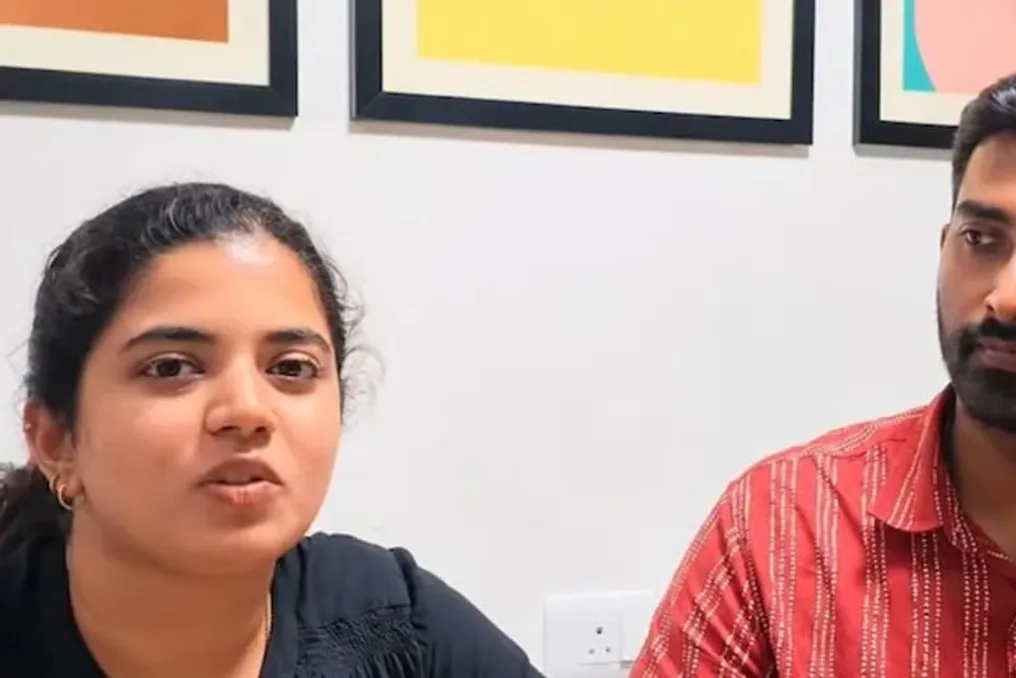
One of the main problems for people who move from one state to another for work is the lack of home-cooked meals. Often, eating out leads to illness, and sometimes people go hungry. The couple residing in Bangalore, Diya Krishnakumar and Aditya Natarajan, faced similar difficulties. However, they decided to turn this problem into a business.

After a long day at the office, it was often difficult for them to cook at home. While ordering food was an easy option, they wanted the food to be healthy, affordable, and reminiscent of home cooking.

Since they could not find a meal subscription service that met their needs, they decided to create their own service. In September 2024, they resigned from the IT sector and launched a healthy food subscription startup in Bangalore called Wellfed.

To launch the business, the couple gathered about 1.5 million rupees from their savings. Between January and September 2026, Wellfed achieved a revenue of approximately 5.6 million rupees. The company served over 1500 customers and delivered more than 55,000 meals.

Diya and Aditya studied computer science in Bangalore and started their careers at the same IT company. After more than three years in the corporate sector, they found it difficult to balance work and managing their diet. Aditya mentioned that due to his work schedule, he often lacked time to cook; some days he relied on takeout, while other days cooking dinner at home became challenging.

Diya also noticed that preparing dishes from online recipes took longer than stated. She reported to the startup Pedia that an online 20-minute recipe took twice as long when she started cooking it in her kitchen.

The couple began looking for meal subscription services that could provide lunch and dinner, but discovered that many services offered large portions and diverse food instead of simple Indian cuisine. They needed regular food such as dal, vegetables, roti, and protein sources. When they couldn't find such a service at an affordable price, they decided to open their own establishment.

It is worth noting that the couple launched Wellfed in September 2024 with an investment of 1.5 million rupees. Their initial team consisted of six people: founders, a nutritionist, a chef, a waiter, and a courier. The nutritionist helped with meal planning and nutritional calculation. Initially, the team sent food to friends and family to get feedback before serving a large number of customers. This response gave them confidence in maintaining their approach to serving familiar Indian food.

Wellfed's menu includes dishes such as dal, potato with cauliflower, sorghum roti, adrak chicken, and chhole chat. Protein sources like cheese, tofu, soy, and chicken are also available. The menu also features rolls, biryani, and Indo-Chinese food, which customers seek as alternatives.

However, the business gained momentum when a nutritionist from Bangalore shared a video about the startup on social media. This helped Wellfed attract its first 100 customers. The founders chose reusable containers with steel lining instead of disposable packaging. These containers were sourced from a manufacturer in Maharashtra.

In the first year of operation, Wellfed earned about 4.5 million rupees. Between January and September 2026, the company generated 5.6 million rupees, exceeding the revenue from the first nine months of its first year. The startup also faced operational difficulties. In early 2026, a shortage of liquefied petroleum gas affected kitchen operations, forcing the founders to make menu changes, which slowed the company's growth during that period.

Currently, Wellfed offers three subscription plans. The trial plan for three days costs 289 rupees per meal. A two-week subscription is 279 rupees per meal, and the monthly plan is 269 rupees per meal. Plans include lunch and dinner, free delivery, and nutritionist consultations. Customers with long-term subscriptions can take leftover food with them.

Currently, the founders aim to expand Wellfed's delivery area across Bangalore and improve the kitchen's production capacity. They also plan to reach customers outside the IT and startup areas of the city.

Railway services are considering abolishing the RAC ticketing system due to discrepancies between payment and seat allocation
Read more
www.aajtak.in

Railway services are considering abolishing the RAC ticketing system due to discrepancies between payment and seat allocation

The RAC (Reservation Against Cancellation) ticketing system on Indian Railways may be changed for passengers traveling on trains. Indian Railways is considering the possibility of abolishing this long-standing service. The main reason is that passengers who purchase RAC tickets pay the full fare but are not provided with a proper sleeping berth.

Under the RAC system, one side lower berth is shared by two passengers, forcing them to share sleeping space. RAC, which stands for Reservation Against Cancellation, is part of the old railway system. According to this system, passengers are allowed to travel on the train, but they are not allocated an entire seat. Nevertheless, they are obliged to pay the same amount as for a confirmed ticket. Questions arise about the feasibility of charging the full price if the passenger does not receive a proper sleeping place.

According to sources, the Ministry of Railways is studying this system. The railway considers it unfair to charge the full fare from a passenger who is not provided with enough sleeping space. With an RAC ticket, two passengers occupy one side lower berth: during the day it is used as a seat, and at night both passengers are forced to sleep on the same surface. In such conditions, it is difficult for passengers to find a comfortable spot. Furthermore, it becomes difficult for the Ticket Examiner (TTE) to arrange an alternative seat if there are no vacant seats on the train.

The issue of charging the full fare to RAC passengers was also raised before a parliamentary committee. The committee questioned the existing railway practice and recommended a review of it. The committee asserts that the rules regarding charging the full fare to passengers who are not allocated separate full berths must be re-examined. That is, the railway should assess how justified it is to charge the full fare to passengers traveling in a shared space. Following this recommendation, discussions about maintaining or changing the long-standing RAC system have intensified.

RAC stands for Reservation Against Cancellation. It is a railway ticket status where the passenger may not be allocated an entire seat but is allowed to travel in a reserved coach. It can be seen as an intermediate state between a confirmed ticket and a waiting list. Passengers with waiting list tickets usually wait for their ticket confirmation to board the reserved coach. Meanwhile, passengers with RAC tickets can travel in their assigned spot. If a passenger's confirmed ticket is cancelled, the vacated seat may go to the RAC passenger. Thus, an RAC ticket can be upgraded to a full seat upon cancellation and availability of a seat. However, this depends solely on the ticket cancellation and seat availability.

The RAC system was introduced when railway reservations were mainly done manually. At that time, it was difficult to quickly find out about cancelled tickets or available seats. Therefore, the railway introduced the RAC system to utilize last-minute cancellations and provide the opportunity to travel to the maximum number of passengers. This system allowed those who could not get a confirmed seat to travel on the train. Later, the railway ticketing system became computerized. This simplified the process of detecting cancelled tickets, vacant seats, and providing full seats to RAC passengers. Despite this, the RAC service continued to operate.

This is not the case currently. The Ministry of Railways is considering abolishing the RAC system, but no final decision has been announced yet. Consequently, passengers with RAC tickets can travel in reserved coaches just as before, according to current rules. If the railway decides to abolish or change this system in the future, it may affect ticket booking rules and seat allocation. For now, passengers need to await an official announcement from the railway.

Popular