How Art Exhibitions Provide a Unique Experience of Aesthetics, Scale, and Technique
Read more
YourStory [india, en]
yourstory.com

How Art Exhibitions Provide a Unique Experience of Aesthetics, Scale, and Technique

PhotoSparks, a weekly column from YourStory launched in 2014, presents photographs that celebrate the spirit of creativity and innovation. Across more than 1030 publications, various events have been featured, including an art festival, a comic gallery, a world music festival, a telecommunications exhibition, a grain fair, a climate change exhibition, a wildlife conference, a startup festival, a Diwali coloring, and a jazz festival.

At the 65th National Art Exhibition, organized by Lalit Kala Akademi (LKA) in New Delhi, awards were presented to 20 artists. Among the awardees were Sanjay Kumar Sahani, Sanjib Kumar Gogoi, Santa Deb, Siddharth Shajirao Singade, Usharanjan Mandal, and Vijendra Sharma.

Sanjay Kumar Sahani is a contemporary visual artist who focuses on youth as an object of artistic contemplation, exploring themes of their identity, energy, and daily experience.

Sanjib Kumar Gogoi is known for his approach to figurative and abstract painting, characterized by textural effects and styles inspired by antiquity. He holds a Master's degree in Painting from Rabindra Bharati University in Kolkata and has over twenty years of creative experience.

Santa Deb is a contemporary sculptor whose practice demonstrates simplicity, balance, and aesthetic qualities of form. Siddharth Shajirao Singade and Usharanjan Mandal experiment with mixed media and alternative artistic materials, while Vijendra Sharma has established himself as a contemporary painter.

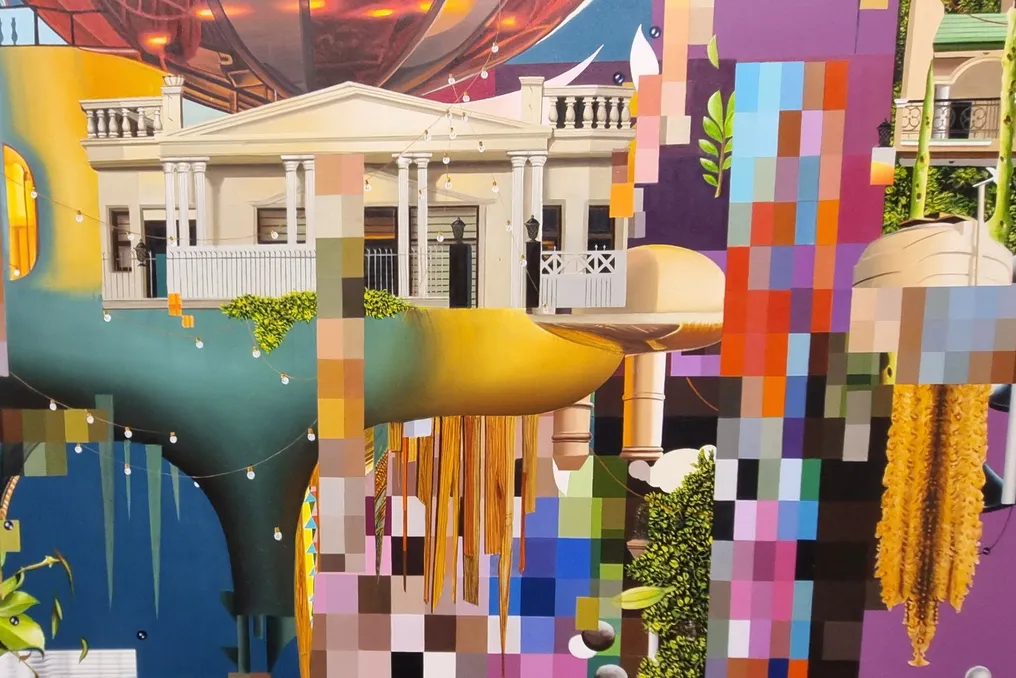
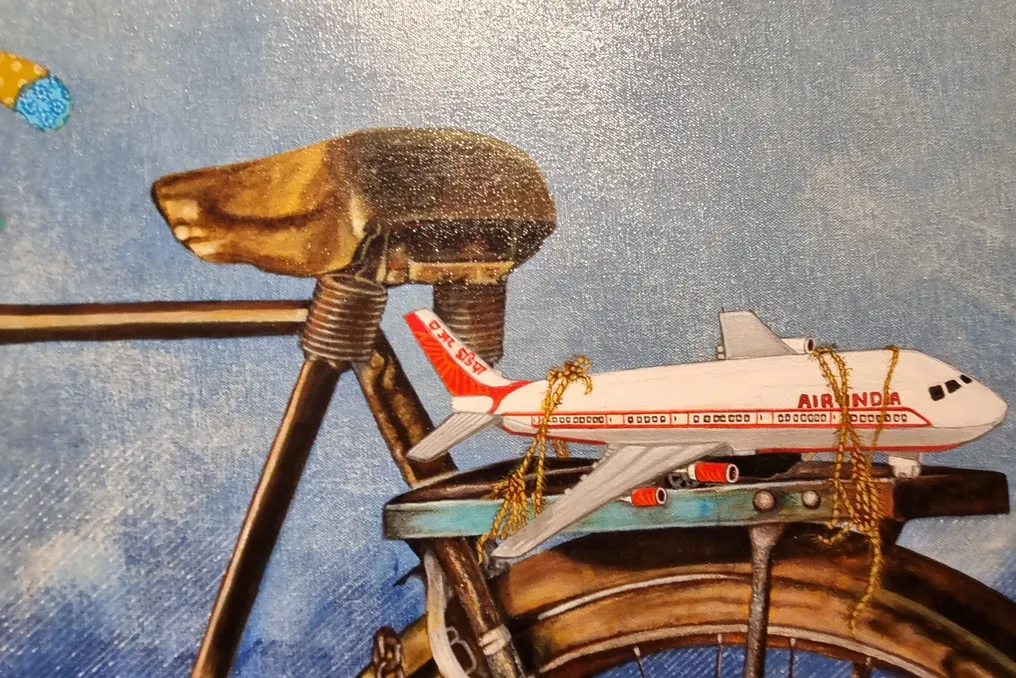
Familiarity with such artists helps visitors appreciate diverse cultural traditions, identities, and perspectives. The variety of works in genres such as painting, sculpture, engraving, drawing, and mixed media shows viewers how similar themes can be expressed in multiple ways, which is highlighted in this photo essay.

Contemplating original works of art encourages the audience toward creative thinking and the development of their own imagination. By engaging with topics such as environmental protection and urban life, they connect aesthetics and activism.

The combination of traditional and modern demonstrates that India's artistic heritage is a source of inspiration and motivation. This applies to artists, art lovers, collectors, historians, students, and the general public.

Observing the perfection of professional work stimulates emerging creators in their own artistic journey. While books and digital media are popular sources of art knowledge, art exhibitions provide unique opportunities for direct engagement with art.

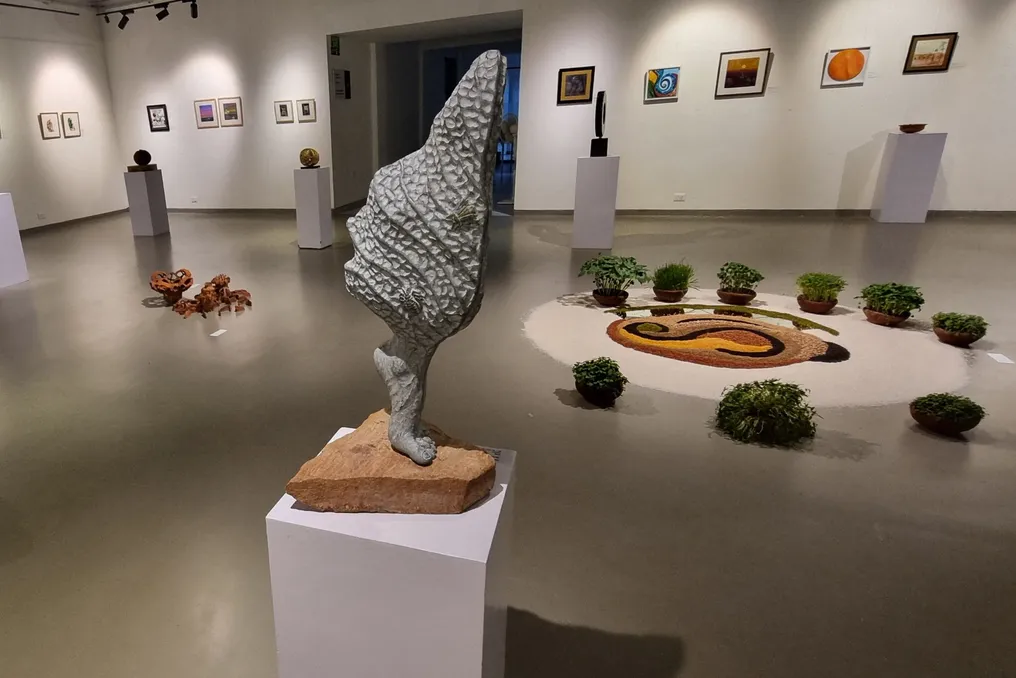
Exhibitions allow viewers to experience the actual size, dimensions, and physical impact of artworks, especially large paintings and installations. This prompts them to consider ideas and viewpoints they might not have encountered before.

Furthermore, exhibitions offer the chance to meet artists whose works may not be available in books or online platforms. This contributes to the discovery of new talents and creative approaches for the public.

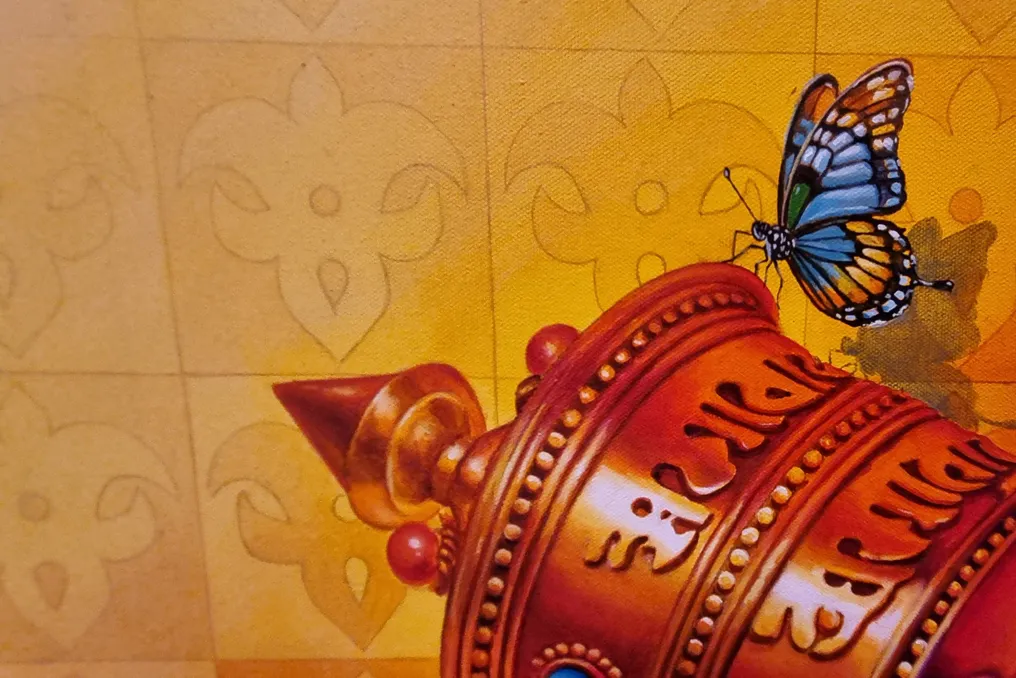
By viewing pieces up close and from different angles, visitors can study brushstrokes, layers, textures, materials, and techniques. This helps in gaining a deeper understanding of the creation process and appreciating the perseverance and discipline required of artists.

Viewing an exhibition alongside other visitors, artists, curators, and art critics transforms art into a shared cultural experience. The composition, lighting, and environment of the exhibition create an immersive impression that digital images cannot fully replicate.

Art exhibitions offer the audience a direct, interactive, and sensory experience that goes beyond simply viewing images. This leads to a deeper understanding and appreciation of art.

In the case of a pan-Indian art exhibition, viewing original works from different regions promotes a deeper understanding of the country's diverse cultural identities. This extends to regional traditions, religious influences, and artistic heritage.

In conclusion, the 65th National Art Exhibition by LKA represents a national snapshot of contemporary Indian visual art. The exhibited works were selected from 6175 applications by 2495 artists from 27 states and union territories.

Thus, it is significant not only as an exhibition in the capital but also as one of the Academy's main mechanisms for identifying, recognizing, and ensuring national recognition among emerging and established visual artists in India.
Similar stories

Artist Bhagya Ajaikumar explains the balance between individual self-expression and collective vision in curatorship
Read more
yourstory.com

Artist Bhagya Ajaikumar explains the balance between individual self-expression and collective vision in curatorship

PhotoSparks, a weekly section from YourStory launched in 2014, showcases photographs that celebrate the spirit of creativity and innovation. Across more than 1030 publications, various events have been featured, including art festivals, comic book galleries, global music festivals, telecommunication exhibitions, grain fairs, climate change expositions, wildlife conferences, startup festivals, Diwali rangolis, and jazz festivals.

Recently, a group exhibition titled Bhoomi was held at the Venkatappa and Swasti galleries in Bengaluru. The exhibition was curated by Bhagya Ajaikumar alongside Pradip Kumar DM, and it featured around 40 artists.

The Swasti Gallery opened in Bengaluru in 2007 with the aim of promoting art and raising funds for the HCG Foundation to support cancer patients. Since 2018, Swasti has also been conducting art therapy sessions for cancer patients and their relatives.

Creating a dedicated artistic space in a hospital setting provides positive energy to patients and their families. With this goal in mind, Swasti actively organizes art shows, camps, and workshops, attracting artists from different parts of the country and abroad.

Ajaikumar told YourStory that she is currently working on several exciting projects as both an artist and a curator. These include a personal presentation called THANDAV, which displays her artworks inspired by classical Indian dance.

This exhibition will take place at the RASA cultural festival in the Prestige Auditorium in Bengaluru from January 8 to 10, 2027. Additionally, she is curating the upcoming third International KALA Symposium in Mysuru.

Regarding the symposium, she added that it is conceived as a creative platform connecting visual arts, healthcare philanthropy, and local community development, based on the idea of art as a catalyst for healing and development. It will be organized at the Bharath Cancer Hospital.

Her gallery also plans art activities for pediatric oncology patients in observance of Children's Day this month. Ajaikumar mentioned another current initiative—placing artworks in consultation rooms within their hospitals.

Commenting on trends in contemporary Indian art, she points to the revival of traditional Indian art forms through modern interpretations. She notes that styles such as Madhubani, Gond, Pichwai, and Mysore are being explored using acrylic on canvas, square compositions, minimalist presentations, and unconventional materials.

Ajaikumar emphasized that due to increasing competition and pressure related to the need to create work under tight deadlines, many traditional processes are gradually disappearing, making it essential to respect traditional knowledge and techniques.

Another significant development is the transformation of traditional Indian crafts into large-scale contemporary installations. She states that some traditional art forms are moving beyond small paper works to large canvases, frescoes, and public installations.

Contemporary Indian art is also responding to changes in social, political, and environmental realities. Many artists explore themes of identity, migration, displacement, urbanization, globalization, and ecology, prompting viewers to question and reflect upon the world around them, as noted by Ajaikumar.

She considers this shift important because art should not merely be decorative; it has the capacity to convey ideas, challenge perceptions, and raise awareness about societal issues.

Collectors are increasingly showing interest in thematic series rather than isolated, standalone pieces. Greater attention is being paid to conceptual works, installations, eco-conscious practices, and works addressing social and women's issues.

In terms of technological trends, AI offers digital artists new tools and opportunities for experimentation. However, she cautions that the use of AI raises important questions about originality, authorship, authenticity, and the value of the human hand and imagination in art.

Another encouraging development, in her view, is the growing presence of art in public spaces, particularly airports. Major airports in cities like Delhi, Mumbai, and Bengaluru provide venues for displaying large-scale artworks and installations.

Thanks to their expansive spaces, airports can bring art closer to people who may not visit galleries or museums. These installations often combine art, architecture, unconventional materials, and multimedia practices, transforming functional spaces into engaging cultural environments.

The Bhoomi exhibition features works by Meenakshi Chinna Rathod, Meghana Gante Ravish, Nagappa Pradhani, Nikhil R Sharma, Nirmala Kumari CS, Premkumar K, Ranganath Amrad, Revanasiddayya SH, Renuka Markande, SG Vasudev, and Santosh Pattar.

Akshay Bhat is an emerging contemporary artist from Karnataka whose practice reflects an interest in expressive visual language and modern aesthetics. Alka Chavda is a contemporary visual artist whose practice focuses on painting and mixed media.

Renuka Markande is an experienced artist, educator, and researcher whose creative practice merges academic inquiry with contemporary visual expression. Bhagya Ajaikumar engages in expressive painting and the emotional potential of color and form.

Hanumanta T often draws inspiration from local traditions, landscapes, and everyday human interactions, transforming familiar images into evocative narratives. Ishwaraiya OM explores themes of identity, environment, and human resilience. Manushya investigates universal themes of humanity, coexistence, and personal identity through painting and interdisciplinary practice. Marishamachar draws inspiration from regional narratives and life experiences, creating works that resonate with both cultural specificity and universal human concerns.

As a curator of such a diverse exhibition, Ajaikumar especially values the opportunity to place emerging artists alongside established professionals. She explains that this allows them to learn from each other and gain greater recognition.

In her opinion, an exhibition should offer more than just a collection of individual artworks; it should create a meaningful visual and intellectual experience for the viewer.

Namma Art Festival in Bangalore Showcases Diversity of Indian Creativity
Read more
yourstory.com

Namma Art Festival in Bangalore Showcases Diversity of Indian Creativity

The Namma Art Bengaluru Festival, a national event, was held for the second time this year at the Karnataka Chitrakala Parishath (KCP).

KCP hosts the annual Chitra Santhe, considered one of India's largest street art fairs.

The Indian art landscape is characterized by immense diversity, encompassing complex visual languages from styles such as Madhubani, Warli, Gond, and Pattachitra. Sculptural traditions from Channapatna, Dhokra, and Thanjavur are also featured, alongside miniature painting and textile arts.

Contemporary art forms, including photography, installations, and new media, bring fresh perspectives to the art world. The beauty of this artistic panorama is most fully realized when these diverse creative forms are presented together.

Shashidhara Rao, General Secretary of KCP, notes that art has always served as a powerful means of self-expression, capable of transcending boundaries, uniting communities, and reflecting the spirit of society. Hosting a nationwide exhibition that brings together traditional and contemporary art in one space fosters a deep visual and cultural dialogue.

Such exhibitions reveal the interconnectedness between regional art traditions rather than presenting them as isolated categories. Photo essays show that recurring themes include nature, spirituality, community, identity, mythology, and daily life. Differences are also important, as they demonstrate the exceptional multiplicity of the Indian experience.

The integration of traditional and modern practices allows one to move beyond viewing heritage as something exclusively from the past. Traditional art forms are living practices that continuously evolve through artists, artisans, and new generations.

In turn, contemporary artists often utilize inherited visual languages and narratives while simultaneously questioning, reinterpreting, and transforming them for a modern context. Juxtaposing these works makes this continuity evident.

Rao from KCP adds that in an increasingly dynamic world, the role of art in preserving heritage, encouraging dialogue, and inspiring new perspectives becomes critically important. The Namma Art Festival, therefore, goes beyond merely displaying beautiful objects; it functions as a map of India's cultural imagination.

Within the festival, folk painting from one region can resonate with a contemporary installation from another, allowing regional identities to coexist within a single national narrative. The experience of jointly perceiving various art forms is also democratic, inviting the audience to discover unfamiliar traditions and appreciate the knowledge embedded in craftsmanship.

It creates opportunities for interaction among artists, artisans, designers, collectors, students, and the general public. KCP President BL Shankar emphasizes that the festival showcases a wide range of artistic approaches, mediums, and regional characteristics, whose works reflect the dynamism of contemporary practice in India.

This national exhibition affirms an idea central to India itself: unity does not require uniformity. Its strength lies in the coexistence of multiple languages, stories, materials, communities, and ways of seeing. By bringing together traditional and contemporary art, the exhibition offers viewers not just a look at Indian art, but the experience of India itself—diverse, multilayered, evolving, and connected.

Among the festival participants from KCP were artists such as Vivek Wadkar, A.G. Nellagi, Ashok Mansur, Sunil Barman, Diraj Balchandra Patil, and Sudha Sridhar. Vivek Wadkar is known as a contemporary Indian artist who creates emotional oil paintings of running horses; his compositions 'Seven Horses' draw upon traditions where running horses symbolize success and energy.

A.G. Nellagi is famous for his expressive depictions of bulls. His works are deeply connected to the personal experience of a farmer and the cultural symbolism of the bull, which represents strength, determination, fertility, and confidence. He has received recognition from the Lalit Kala Karnataka Academy and other cultural institutions.

Ashok Mansur is a visual artist and photographer interested in history and cultural imagery. As a farmer by profession, he is also known for his beautiful landscapes and portraits of people.

Sunil Barman is a self-taught artist whose paintings focus on the quiet beauty of rural life in Bengal. He primarily uses fine pen-and-ink drawing overlaid with delicate watercolor tones, evoking nostalgia for rural life where people and nature exist in a measured rhythm.

The festival convenor, SA Vimalanathan, reported that this edition featured 150 invited artists from across India, demonstrating diverse ideas, mediums, and voices that reflect the spirit of traditional and contemporary art today.

Art festival shows that the creative economy depends on both creators and audience
Read more
yourstory.com

Art festival shows that the creative economy depends on both creators and audience

The art festival recently held in Chennai demonstrated that the creative economy is largely determined not only by creators but also by viewers. The 'Contemporary Now' festival held its third session in Chennai, gathering collaborations with art galleries from cities such as Calcutta, Ahmedabad, New Delhi, and Mumbai.

During the event, a diverse collection of artworks was presented in ten different locations across the city. Among the exhibition participants were artists such as Ashwini Bhat, Pradjakta Potnis, Hageshwar Raut, Amitesh Srivastava, Sandip Mukerji, Sadju Kunhan, Pratap Mori, and Benita Persial, as well as many others.

Mixed-media artist Benita Persial noted that now is a favorable time to immerse oneself in art, as social media has significantly strengthened the connection between both emerging artists and the audience.

Previously, access to art was limited to catalogs and visits to a few galleries, which required either waiting for access and exhibitions or expensive trips to other cities. However, according to Persial, online access is now instant and global. Nevertheless, she warns that excessive online presence can be confusing or exert pressure.

Digital platforms and artificial intelligence have simplified and accelerated the process in the art sector, but Persial believes this also reduces the satisfaction derived from the process of searching for or creating something after significant effort.

Festival directors Ashwin Rajagopalan and Priyanjoli Basu expressed satisfaction with the results of the event for the art community in Chennai and beyond. Rajagopalan reported that collectors who usually rarely leave home attended the festival, as well as many art enthusiasts and students who were able to see events happening in other parts of the country thanks to institutional partners in other cities.

There are intentions to hold more sessions of this festival. Rajagopalan added that they might organize two or three editions of 'Contemporary Now', which could take place in Ahmedabad, Baroda, or Santiniketan, in addition to Chennai.

Basu observed that the level of contemporary art presented at the festival may not have previously been showcased in Chennai. She noted that she received many reports about major art events taking place in Delhi and Mumbai, but fewer in Chennai.

The art community expressed the opinion that this event should happen more frequently in Chennai to sustain the discussion, and that the exhibited works should be shown in other places, not just once a year.

Basu pointed to current trends in the Indian art market, noting the growing value of art addressing themes of politics, gender, and climate change. She emphasized that people seek to engage with new narratives and trends, and there is a growing demand for works by young female artists.

Rajagopalan added that many contemporary artists respond to world events, and collectors also respond to such art because it evokes strong emotions in them. He noted that informed collectors are capable of finding more artists working in this direction.

Both directors see the increasing significance of art's role in the modern world, as well as the need to raise the level of art recognition in society. Rajagopalan stated that artists voice the uncertainties and conflicts of the world, and engaging with such art reflects a person's concern for these issues.

Basu urged the audience to discuss art with the people they meet, attend art events, and visit art galleries. She also advised visiting galleries in cities during vacations and viewing museums when traveling abroad, which will help improve understanding and appreciation of art right here in India.

Popular