DeepSeek provides access to search, file handling, OCR, and voice input tools via API for developers
Read more
Pandaily
pandaily.com

DeepSeek provides access to search, file handling, OCR, and voice input tools via API for developers

DeepSeek has announced the provision of a complete set of APIs for its application, allowing developers to integrate core DeepSeek App functionalities into their own products. The update was presented in the company's API changelog on November 13th.

Developers can activate functionality by using parameters in existing APIs, while DeepSeek servers handle the processing of tool calls and context gathering.

Model and API Capabilities

According to the changelog, the deepseek-flash model, currently used in DeepSeek-V4.1-Flash-1017, supports five functions in API Messages, Responses, and Chat Completions. Additionally, basic capabilities are available as separate APIs: Search and Fetch, OCR, ASR for speech recognition, and TTS for speech synthesis.

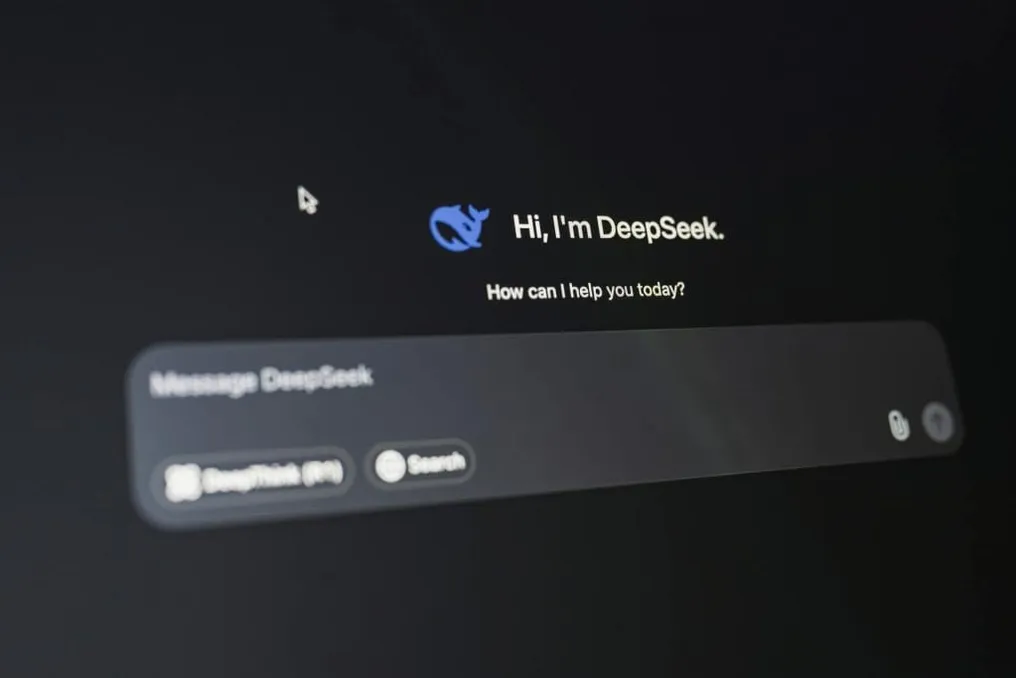
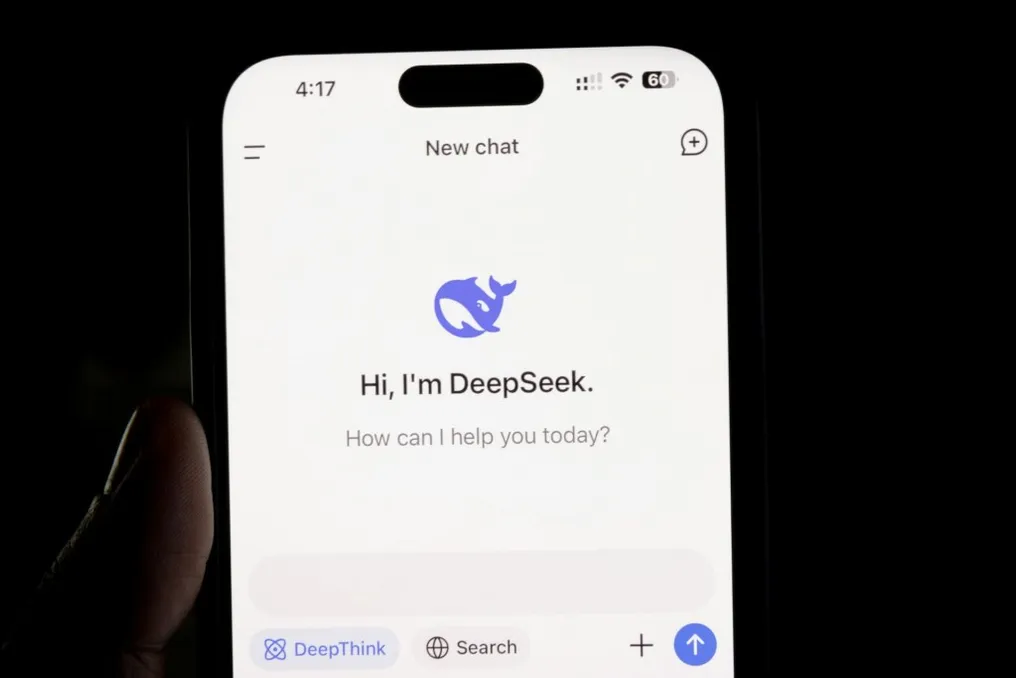
To demonstrate these capabilities, DeepSeek has opened the source code for a chat demo, a static web client that connects directly to the API from the browser. This client supports deep thinking, search, link reading, attachment uploads, and voice input, and can also import the user's DeepSeek chat history.

Tariffs and Pricing

Tool usage is charged on top of token costs. DeepSeek's pricing page lists the following rates: search (for text or images) and web data fetching cost $0.75 per 1000 requests, or 5 yuan on the Chinese site. File parsing and OCR cost $0.225 per 1000 pages. Speech synthesis (Text-to-speech) is priced at $0.45 per 10,000 characters, and speech recognition at $0.116 per hour of audio; both services are currently offered with a double discount.

Fees for search and data fetching apply regardless of whether developers call these APIs directly or if the model uses them through its tools. These new APIs expand upon the Search and Fetch APIs opened on October 17th, which operate on DeepSeek's internal search engine. Token prices for deepseek-flash remain unchanged: $0.30 per million input tokens when cache misses and $1.20 per million output tokens during peak hours, with rates halved outside of peak hours.
Similar stories

DeepSeek Harness Platform Reaches 1.54 Million Daily Users with 545% Growth
Read more
olhardigital.com.br

DeepSeek Harness Platform Reaches 1.54 Million Daily Users with 545% Growth

The DeepSeek Harness platform, focused on the creation and operation of artificial intelligence agents, has reached the milestone of 1.54 million daily users. Furthermore, it processes an impressive 92.1 trillion tokens every 24 hours, according to official data released by the Chinese startup via the X network.

This notable advancement was significantly driven by the recent launch of the platform's desktop version. Currently, DeepSeek Harness boasts 5.48 million monthly active users and registers an average of 261 daily requests per individual.

In a short period, the number of daily active users experienced a 545% increase. Concurrently, token consumption soared to 92.1 trillion per day, representing a 306% growth. Tokens are defined as the fundamental units used by AI models to process and generate information. Among the models that contributed to this expansion, V4.5-Flash stands out.

The developer community also plays a crucial role in this growth. Harness already offers nearly 35 thousand third-party plugins, about 30 thousand of which are hosted on GitHub. Approximately 59% of active users use or develop at least one extension to automate work tasks.

Known by the acronym DSH, DeepSeek Harness functions as an open-source framework designed to manage autonomous agents. Such systems have the capability to execute functions on a computer without requiring human intervention at each stage of the process.

With the motto 'everything is a plugin,' the platform allows external developers to integrate tools and functionalities into their environment. The ambition is to transform Harness into something similar to an operating system dedicated to artificial intelligence agents, where various extensions enhance the assistant's capabilities.

It is important to note that the presented indicators refer exclusively to the Harness ecosystem and do not include users of DeepSeek's traditional chat. Moreover, these data should not be directly compared with metrics from other assistants, as they use different measurement periods. For example, ChatGPT reports over 1.2 billion weekly users, and Claude also remains among the industry's leading services.

To further foster the ecosystem, the startup announced the creation of an exclusive marketplace for discovering and installing plugins. This initiative also plans to offer incentives for both independent developers and companies interested in creating tools for the platform.

The incentive program will include granting free computing credits, called token grants, along with technical support. Through these actions, DeepSeek seeks to stimulate the production of new extensions and increase third-party participation in the development of Harness.

DeepSeek Team Unveils Prototype Research Agent for Proactive Coding
Read more
technode.com

DeepSeek Team Unveils Prototype Research Agent for Proactive Coding

The DeepSeek Harness team has made dsh-superagent publicly available—a research prototype that accepts development requests via GitHub and, optionally, via Feishu. The agent performs work in separate sessions and returns results, such as pull requests, back to the original conversation.

This prototype is configured around a single GitHub repository and functions as a package for DeepSeek Harness. It transforms authorized requests into working tasks, allocates a dedicated working directory and agent session for each task, and provides a web dashboard to display issues requiring human attention.

The project explores the capabilities of coding agents to complete long-running tasks with reduced need for human coordination. The implementation, which originated from the team's daily workflow, has been published and is available under the MIT license.

DeepSeek Harness Team Unveils Prototype of Super Agent Capable of Self-Finding and Fixing Errors
Read more
pandaily.com

DeepSeek Harness Team Unveils Prototype of Super Agent Capable of Self-Finding and Fixing Errors

The DeepSeek Harness team has published a description of their project, which they named the Super Agent. This agent is designed as a continuously operating system that simultaneously advances multiple tasks, independently seeks work, and recovers from failures. The corresponding research prototype was released on GitHub under the MIT license, according to Chinese tech media.

The dsh-superagent-prototype repository is a package of a proactive coding agent intended to work with a single GitHub repository within the DeepSeek Harness ecosystem. The agent monitors activity on GitHub, and optionally on Feishu. When an authorized user requests a task execution, the agent creates a work item, processes it in its session and catalog, and then responds in the original dialogue, for example, by creating a pull request.

The accompanying documentation emphasizes that this code is for research purposes and is not an official DeepSeek product, and some concepts described in the document have not yet been implemented.

System Architecture

The core concept is built upon a two-layer architecture. The Router session receives all human activity from different channels but does not perform the work and may not even have a Bash tool. Tasks are delegated to isolated Worker agent sessions, which execute work in parallel using a full set of tools, and send reports back to the Router, bypassing communication with users.

Each Worker agent subscribes to branches of interest, such as chat discussions or pull requests, allowing subsequent events to go directly to it without passing through the Router. The system functions based on events: triggers include messages in chats, emails, review comments, and Continuous Integration (CI) results, which are first filtered by deterministic code and then by the model.

The team also separated the agent's state and the execution environment so that the agent can remain active in the cloud while interacting with the user's local machines. An external Watchdog session is also used to monitor whether the Worker agents are making real progress. Within the internal user group, the team established a rule: the instance must silently reproduce reported errors and only report them after finding a simple solution, sometimes opening a pull request before anyone flags the issue.

During preliminary tests on synthetic loads, including about 300 messages and approximately 20 work requests, the Super Agent completed half of the tasks in 12.4 minutes and 95% in 15.7 minutes. These figures surpassed the results achieved by a single session with a sub-agent tool, although they required more cached tokens. Without direct routing of subsequent events to the Worker agents, the Router's solutions increased by approximately 30%, and batch processing under high load reduced the time to output one Router solution from 6.4 seconds to 1.6 seconds. The team called these results a preliminary benchmark.

Among the unresolved issues listed by the team are scaling the Router, long-term memory, inter-agent communication, and the risk of prompt injection if the cloud agent gains access to credentials on local devices.

Popular