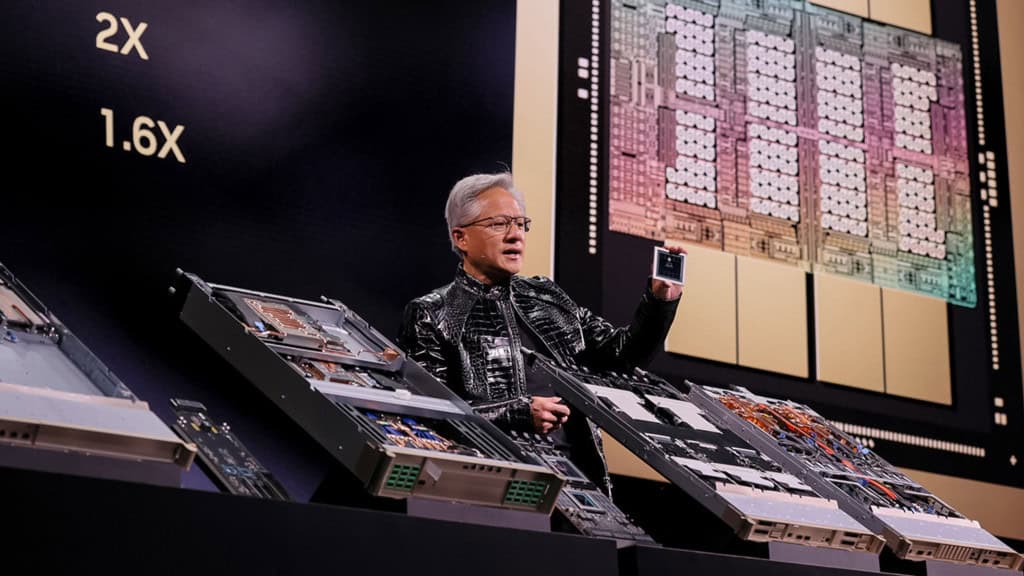
Nvidia informed CNBC on Friday, the 13th, that it has not yet started a formal search for a definitive replacement for Jensen Huang. The company's board of directors clarified that it is in the process of selecting a specialized consultancy to assist in identifying the future CEO of the semiconductor manufacturer.
In a statement, the board declared: 'We are in the process of selecting a recruitment firm for the CEO position at Nvidia. We have not formally hired any potential candidate yet.' This statement comes amid intense speculation about who might take over the company's leadership after Huang's departure, which was announced on Thursday, the 12th.
Huang's decision to leave the role was motivated by reports of involvement in extramarital relationships, including an affair with a woman reportedly pointed out by several outlets as suspected of working for Chinese intelligence.
To ensure management continuity, Nvidia appointed its chief financial officer, Colette Kress, as interim CEO. The company also mentioned that it will consider both candidates already within the internal staff and external profiles to fill the succession vacancy.
According to a source close to the matter, interviewed by CNBC, Colette Kress held her first meeting in the capacity of interim CEO on Thursday afternoon at the company's facilities in Santa Clara, California, USA, meeting with senior executives.
Additionally, the Financial Times reported that Nvidia's board had contacted Rene Haas, current CEO of Arm, to gauge his interest in taking over the direction of the manufacturer. Haas has experience at Nvidia, having worked there for seven years before joining Arm in 2013, where he held various positions, including vice president of the computing products division.
When questioned about rumors regarding potential successors, the Nvidia board reiterated that any discussion about specific names, whether internal or external, is still considered premature. Thus, the company did not confirm formal negotiations with any possible replacement for Huang.
In addition to the leadership change, Huang's departure maintained political pressure on the corporation. Three committees of the United States House of Representatives requested informational hearings with the executive and maintained these requests even after his resignation. The Senate Banking Committee also requested that Huang and Commerce Secretary Howard Lutnick appear to testify on national security issues and allegations that Nvidia's main artificial intelligence (AI) chips had been sent to China.