Meta tests prediction betting app using virtual points among employees
Read more
Olhar Digital
olhardigital.com.br

Meta tests prediction betting app using virtual points among employees

Meta is conducting internal tests of a prediction market application intended for its own employees. This service, provisionally named Takes, allows participants to bet on various events and their outcomes, but the system operates using virtual points instead of real money.

According to information obtained by The Wall Street Journal from people familiar with the project, this initiative follows the company's standard procedure, which involves validating new features and products internally before any possible public launch.

Within Takes, employees use a virtual currency called 'cred,' an abbreviation for credibility. Participants who correctly predict an outcome receive points, while those who are wrong lose a portion of their balance.

It is important to note that, unlike other existing platforms such as Kalshi and Polymarket, Meta's application does not accept bets with real monetary values. Currently, there is no confirmation regarding the date of a potential public launch of the service, nor even whether such a launch will occur.

This move is not unprecedented at Meta. In June, The New York Times reported that Mark Zuckerberg had instructed a company team to develop a prediction market application, a project known internally at the time as Arena.

Zuckerberg has previously shown interest in expanding the company's application portfolio. During an internal meeting held in the Northern Hemisphere spring, he and product director Chris Cox discussed the feasibility of creating up to fifty new applications.

This move also reflects the growing popularity of prediction markets, particularly among Generation Z members. Meta aims to keep this audience engaged with its products and services.

The growth of this market segment has, however, generated regulatory challenges. Platforms like Kalshi and Polymarket are facing lawsuits filed by American states, accusing them of operating illegal betting services.

The companies involved contest these allegations, claiming that their operations comply with the federal regulations of the U.S. Commodity Futures Trading Commission (CFTC).

In response to the lawsuit filed by the State of New York, a Kalshi spokesperson characterized the legal dispute as 'political theater.' Meanwhile, Polymarket's legal representative declared the company's intention to defend its users.

Meta's foray into this sector, even adopting a model based on virtual credits, signals the corporation's interest in exploring modalities that combine event prediction, competition, and user interaction.

Similar stories

OpenAI tests official business profiles of companies on the ChatGPT platform
Read more
olhardigital.com.br

OpenAI tests official business profiles of companies on the ChatGPT platform

OpenAI has begun testing a feature called Businesses in ChatGPT, a set of functionalities that allows companies to claim official profiles and directly serve consumers through its artificial intelligence assistant interface.

This new feature also provides means for businesses to display their product catalogs and develop virtual support agents capable of interacting with customers within the platform itself.

Qualified companies will be able to promote their own virtual assistants to answer consumer questions, allow comparison between different product models, and provide personalized suggestions.

It is important to note that commercial interactions will be kept separate from usual conversations with ChatGPT. To identify the service provided by the brands, the system uses specific badges and stores these dialogues in separate tabs from the AI's standard responses.

The dashboard known as Business Hub centralizes all management tools for these commercial profiles. After completing the identity verification process, merchants have the ability to update corporate data, link their inventory, and monitor their brand performance on the platform.

Among the offered features, the possibility of integrating inventories stands out, which ensures the availability of current product information, in addition to metrics that provide companies with detailed data on their visibility on ChatGPT.

Currently, the beta phase of Businesses in ChatGPT is limited to the North American market. Implementation is occurring progressively, being released to selected e-commerce companies and online service providers located in the United States. No date has been set for this feature's arrival in other countries.

Nvidia's AI Investment Strategy: Prudent Approach or Bubble Risk?
Read more
iol.co.za

Nvidia's AI Investment Strategy: Prudent Approach or Bubble Risk?

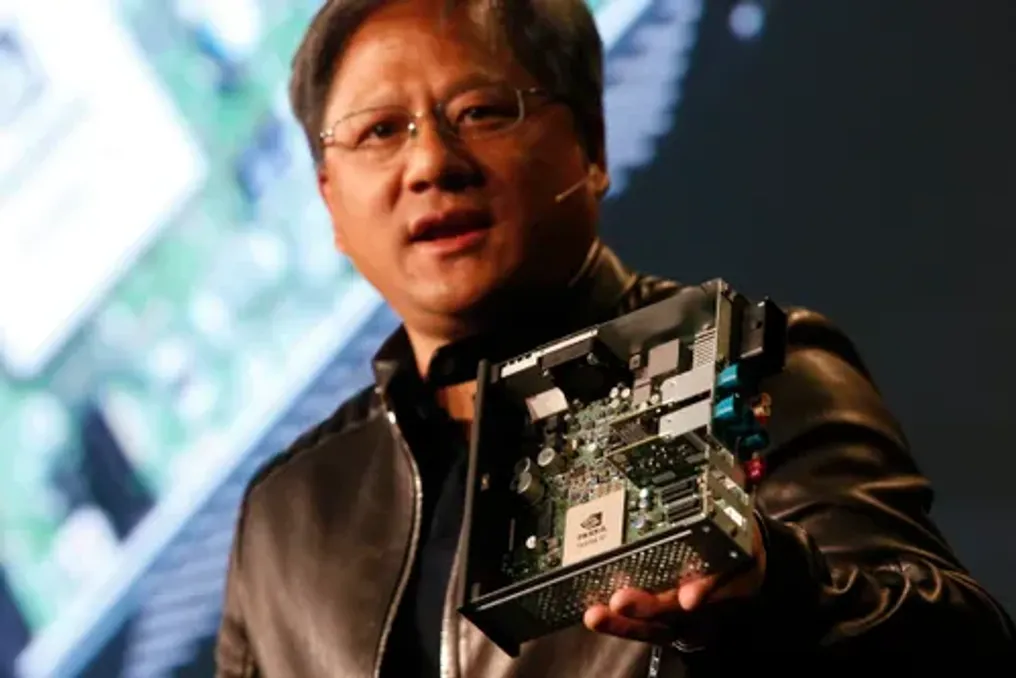
Nvidia, having invested $3 billion in Meta stock sales, continued to expand its portfolio, which includes equity stakes, loans, and guarantees. Through these actions, the semiconductor giant has acquired a status that some analysts call the central bank of artificial intelligence stocks.

This complex set of deals helped maintain high demand for Nvidia processors, which are a key component of the AI revolution and power vast data centers worldwide. This high demand has made Nvidia the most valuable company in the world by market capitalization, and CEO Jensen Huang—a major player in the AI sector.

However, these investments have raised concerns among some Wall Street skeptics regarding whether Nvidia is contributing to an AI bubble.

In What Projects Is Nvidia Investing?

Nvidia has acquired stakes in leading AI developers such as OpenAI, Anthropic, and Elon Musk's xAI, which is now part of SpaceX. The company has also invested in so-called 'neo-cloud' companies, including CoreWeave and Nebius, which provide computing power built on Nvidia chips.

Nvidia's investments extend beyond the United States. In Europe, the company supported the French AI developer Mistral and the British autonomous driving startup Wayve. In Asia, Nvidia is collaborating with the South Korean group SK Group to build data centers.

Beyond equity investments, the company has provided financial guarantees, acting as a backstop buyer. In the case of CoreWeave, Nvidia committed to purchasing up to $6.3 billion of unused computing power if another client did not take it. Furthermore, according to US media, Nvidia holds about $36 billion in cloud service guarantees and a guarantee of up to $105 billion related to the OpenAI data center.

Why Is Nvidia Taking These Steps?

Experts suggest that Nvidia's massive profits leave it with no other attractive options. Michael Kusuman, a professor at MIT Sloan School of Management, noted that the company is 'essentially becoming a bank,' and directing these funds toward infrastructure investments tied to purchasing Nvidia hardware is a sensible decision because alternatives are less appealing.

Kusuman added that building its own data centers would put Nvidia in competition with its largest customers, which could trigger numerous antitrust complaints. Gil Luria, head of technology research at D.A. Davidson, believes that Nvidia is identifying underserved segments of the AI ecosystem and channeling funds there to fill gaps. He stated that this is 'unprecedented, but it seems to be working.'

Huang defended this approach, arguing that cutting-edge AI labs represent a first generation of startups that require not millions, but tens of billions of dollars to get started. Nvidia's investments effectively give these companies more time to succeed.

Is This 'Circular' Financing?

Critics compare these deals to the dot-com era, when companies artificially inflated growth by investing in startups that subsequently purchased their products. Paulo Carvalho, a senior fellow at Harvard Kennedy School, noted that 'there is nothing inherently wrong with Nvidia helping its customers,' but he stressed that the closer these relationships, the harder it is to assess true sustainable demand.

Luria countered that not all demand is equal. He explained that 'if Nvidia gives CoreWeave money so it can turn around and buy Nvidia chips, it is not as good as if Microsoft buys Nvidia chips, because they have a customer in OpenAI who has a customer in enterprise technology ready to pay for it.'

What Are the Risks?

The main issue is concentration. According to the company's annual report, two direct customers accounted for 22% and 14% of Nvidia's revenue in its 2026 fiscal year. Carvalho warned that a network of overlapping investments increases contagion risk if a weak company, such as CoreWeave, encounters difficulties.

He suggested: 'If AI demand disappoints, cost reductions could simultaneously affect chip manufacturers, data center builders, and their financiers.'

These concerns intensified this month when shares of several Nvidia-related neo-cloud companies, including CoreWeave, Nebius, and IREN, dropped by at least 30% in October amid fears of tightening credit for AI projects.

Carvalho noted that the AI chip market remains supply-constrained. He predicted that demand will continue to grow for another 12–18 months before stabilizing. Kusuman expects high demand for Nvidia chips to persist for three to five years.

Artificial Intelligence Costs Generate Financial Alerts for Meta and Anthropic
Read more
olhardigital.com.br

Artificial Intelligence Costs Generate Financial Alerts for Meta and Anthropic

The intense competition to expand artificial intelligence (AI) infrastructure has begun to impact the risk assessment of major industry players. Meta's credit outlook was downgraded by S&P Global Ratings, while Anthropic faces the risk of receiving a speculative rating following a potential IPO.

Both cases share a central concern: the ability of these companies to convert their massive AI investments into sufficient revenue to cover ever-increasing costs.

In Meta's case, S&P maintained the credit rating at AA-, but changed the outlook from stable to negative. The agency pointed to uncertainties related to the large volume of infrastructure investments and the company's negative free cash flow.

Regarding financing, Meta announced on the 26th its intention to raise US$95 billion (equivalent to about R$522.5 billion) to sustain its AI initiatives. This strategy includes an initial fundraising of US$35 billion (approximately R$192.5 billion) through subscribed public stock offerings, followed by the intention to raise another US$60 billion (about R$330 billion) through a secondary market share sale program.

Investors reacted negatively to the quarterly results; even with revenue exceeding expectations, Meta's shares plummeted 7% after the earnings report. October saw a 15% decline in the stock, marking the company's worst monthly performance in four years. S&P projects that the increase in capital expenditures will begin to decrease starting in 2028, but expressed less conviction that the company will reduce spending at the previously established pace.

Anthropic's situation presents a distinct evaluation. The company, responsible for developing the Claude model family, could receive a BB-rated note if it conducts an initial public offering. This projection, attributed to Blackstone and reported by the Financial Times, is less favorable than the previous estimate, which predicted the company would reach investment grade before 2027.

According to the credit rating scale, ratings below BBB- are considered speculative. Companies in this category may face higher costs to raise funds, as investors perceive a greater risk of default. A rating at this level could complicate Anthropic's financing plans for expansion, especially considering the need to increase its computational capacity to develop and operate AI models. However, this forecast does not constitute an official rating already granted to the company, nor does it imply that Anthropic is in default, but rather that its credit profile may be viewed as riskier by creditors and investors.

Popular