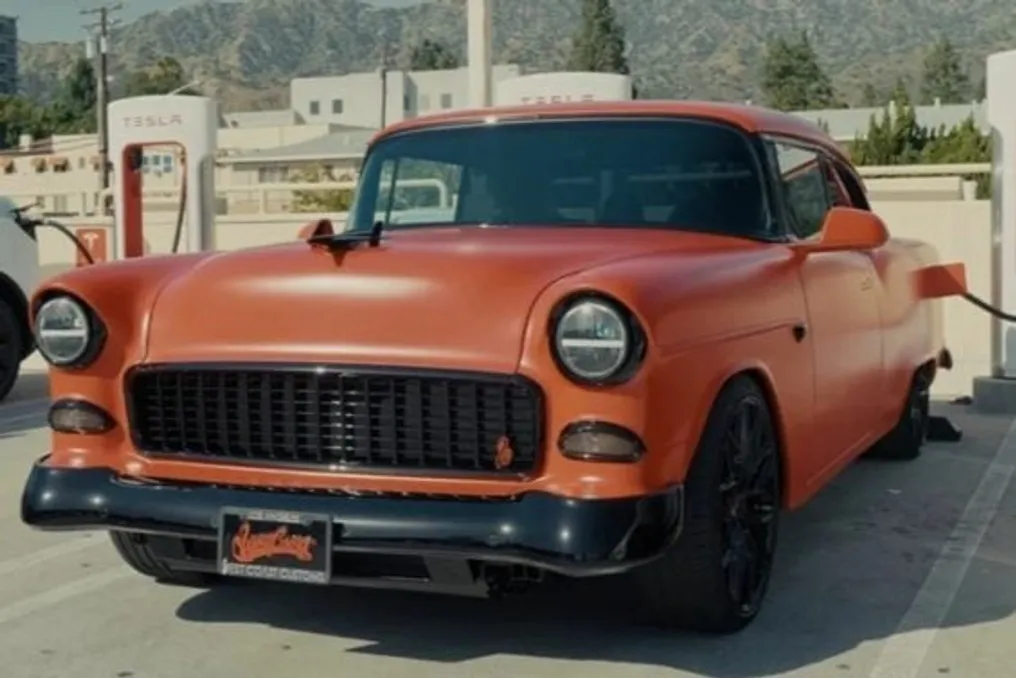
West Coast Customs created Project B-Zero, combining a 1955 Chevrolet Bel Air body with a Tesla Model 3 platform
Read more
AutoPapo
autopapo.com.br

West Coast Customs created Project B-Zero, combining a 1955 Chevrolet Bel Air body with a Tesla Model 3 platform

There is a vehicle known as Project B-Zero, which presents the external appearance of a 1955 Chevrolet Bel Air but internally uses the structure and mechanics of a Tesla Model 3.

This car was developed by West Coast Customs, a shop located in California, USA, that became known for participating in the MTV's Pimp My Ride program. The customizer replaced the iconic 1950s body with the electric platform, battery, and technology of the Model 3 sedan.

The request for this project came from a long-time customer of the shop, who is interested in converting his entire vehicle collection, including muscle cars, to electric models. To achieve this, the customer provided West Coast Customs with his Bel Air and a gray Model 3 that served as a donor part.

The process began with the team cutting the Model 3 body, keeping only the flat, skateboard-like structure where the mechanical components and battery are located. Then, the Chevrolet body was mounted onto this base. Due to differences in dimensions and wheelbase between the two cars, it was necessary to extend the rear wheel wells of the Bel Air.

The original Tesla suspension was replaced with a custom air suspension system, allowing the car to sit very close to the ground and hiding the 20-inch wheels inside the fenders. Inside, the classic retained elements such as the steering wheel and seats but incorporated the Model 3's central screen, and the dashboard was redesigned to accommodate the new controls.

The seats were customized with hexagonal stitching, inspired by current Lamborghini models. According to the shop, functionalities such as Autopilot (Tesla's driving assistance system) and automatic parking remain operational.

In terms of aesthetics, the original two-tone paint was replaced with a matte red tone, the chrome details were converted to black finishes, and the headlights were updated to LED technology. A subtle cover hides the charging port, allowing the Bel Air to connect to the Tesla Supercharger network.

It is worth noting that this is not the first 1955 Bel Air to undergo modifications by West Coast Customs; in 2005, an example from the same year was modified by the shop for an episode of Pimp My Ride.

Similar stories

Volkswagen launches electric SUV ID. Era 5X in China with a significantly lower price than the ID.4
Read more
autopapo.com.br

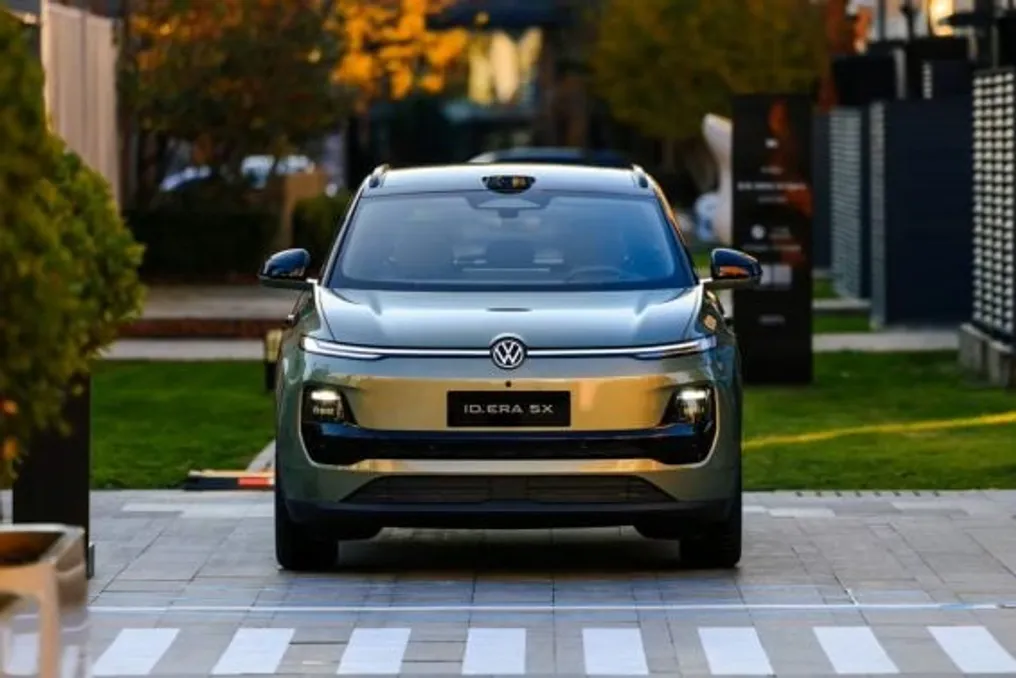
Volkswagen launches electric SUV ID. Era 5X in China with a significantly lower price than the ID.4

Volkswagen has introduced a fully electric SUV named ID. Era 5X in China, whose cost is less than a third of the value of the ID.4 sold in Brazil. This new model was presented on Thursday, the 12th, by SAIC Volkswagen, a joint venture between the German automaker and SAIC China.

With a promotional offer, the ID. Era 5X starts sales at approximately R$ 82 thousand (equivalent to 99,900 yuan), while the ID.4 costs R$ 299,990 in the Brazilian market.

The 5X represents the first completely electric vehicle in the ID. Era line, which previously offered only the 9X and 8X SUVs (equipped with range extenders, using an internal combustion engine to generate electricity) and the 5S sedan, which was a plug-in hybrid.

The different configurations, named Pro, Pro+, Max, and Ultra, have list prices ranging from R$ 98.3 thousand to R$ 131.2 thousand (corresponding to 119,900 to 159,900 yuan). For a limited time, Volkswagen applied a discount of 20,000 yuan (approximately R$ 16.4 thousand) to each version, reducing the price range to between R$ 82 thousand and R$ 114.8 thousand.

The ID. Era 5X is also the first series vehicle from Volkswagen to integrate the CMP platform, designed specifically for the Chinese market, with the CEA electronic architecture, which was developed in collaboration with Xpeng, a Chinese electric vehicle manufacturer in which VW holds a stake.

With dimensions of 4.56 meters in length, 1.90 meters in width, 1.63 meters in height, and 2.82 meters wheelbase, the 5X has the size of a mid-size SUV according to the Brazilian standard, presenting a length very similar to that of the ID.4.

Its single electric motor delivers 211 horsepower. The battery packs use lithium iron phosphate, with cells supplied by CATL, available in capacities of 45.8 kWh or 58.5 kWh. This provides ranges of 415 km and 520 km, respectively, calculated in the Chinese cycle, which is considered more favorable than the one established by Inmetro.

The manufacturer highlights technology as its biggest differentiator. The most expensive versions are equipped with a 192-channel lidar sensor (a laser radar used for environmental mapping) and the Journey 6H chip, produced by Horizon Robotics. This system allows the vehicle to travel autonomous GPS routes, always under the driver's supervision, both in urban and highway settings.

Internally, the SUV features a 10.25-inch digital dashboard, a 15.6-inch multimedia center, and seven standard airbags.

BYD unveils electric sedan Yangwang Altior, mimicking Rolls-Royce
Read more
www.aajtak.in

BYD unveils electric sedan Yangwang Altior, mimicking Rolls-Royce

Amid the dominance of luxury brands such as Rolls-Royce and Bentley, the Chinese automotive giant BYD is preparing to intensify competition. The company has introduced its new flagship electric sedan, the Yangwang Altior, which directly competes with ultra-luxury models like the Rolls-Royce Phantom.

This vehicle features magnificent design, a four-passenger configuration, advanced high-tech functions, and a claimed range exceeding 1000 kilometers. BYD showcased the Yangwang Altior during a global event in Abu Dhabi.

The Altior's design is inspired by the traditional Chinese bronze vessel 'Ding', which symbolizes strength, respect, and heritage in Chinese culture. The name Altior itself derives from the Latin word meaning 'high', and in China, it was named Dingyao.

The dimensions of the Yangwang Altior are 5600 mm in length, 2030 mm in width, and 1590 mm in height, with a wheelbase reaching 3500 mm. The car is presented in a two-tone scheme, where the hood and roof are painted in a dark color, and its long and majestic silhouette gives it a unique appearance reminiscent of Rolls-Royce.

The front end of the Altior has a stately design, and its large grille is inspired by jewelry design. It incorporates numerous small, shiny elements polished differently, with the company's signature Oracle script emblem placed in the center. The lighting system is also noteworthy: the headlights feature 12 elements that rotate and illuminate in a special way when approaching the car.

The side of the car is adorned with two unique design lines, 4.8 meters long, extending from the front fenders to the rear lights. Special attention has been paid to the doors: the rear doors open outwards, similar to Rolls-Royce, while the front doors can open up to 80 degrees and the rear doors up to 90 degrees, providing passengers with maximum space for entry and exit.

Both doors feature umbrella storage functionality, which also evokes associations with Rolls-Royce. The Altior is equipped with 21-inch alloy wheels available in three different designs, fitted with 275/45 tires. The thin rear LED lights are connected by a chrome strip.

The interior of the Yangwang Altior is compared to a room in a luxury hotel. The interior is finished in a two-tone beige and taupe color scheme. A large display panel occupies most of the dashboard. Expensive and exclusive materials have been used for the cabin's decoration, including full-grain semi-aniline leather, pure wool carpets, and natural wood trim. Furthermore, the car is equipped with switches made of real metal, whose durability was tested by developers using small hammers.

The car is designed for four passengers. The front passenger seat can be folded down to increase space for rear passengers. All doors operate via actuators. The rear seats are designed with a special Zero Gravity concept and are equipped with a mechanical massage system featuring four spherical heads. A one-click relaxation mode is also available: upon activation, the seat reclines, armrests rise, sunshades close, and the cabin's lighting, sound, and aroma are automatically adjusted to create a comfortable atmosphere.

Functionally, the Altior is equipped with multi-zone automatic climate control and two sunroofs. The music accompaniment is provided by a 39-speaker Dynaudio audio system. When the car starts, the tweeters rise upwards. Two wireless chargers are provided for rear passengers, a 21.4-inch controllable overhead screen, and a special central console with an screen-sharing function for conference calls.

The car also features refrigerators both in the front and rear; the rear refrigerator has a capacity of 5.5 liters and can both cool and keep warm. The total trunk volume is 532 liters. The Yangwang Altior is built on BYD's dedicated e4 platform, which includes four independent electric motors controlling each wheel. According to the company, this system can regulate the power delivered to each wheel over 100 times per second. This allows the car to maintain balance even if a tire suddenly bursts at high speed, although information on full power and torque has not yet been disclosed.

Used Audi A3 Sedan: 10 Facts About the Model Produced in Brazil
Read more
autopapo.com.br

Used Audi A3 Sedan: 10 Facts About the Model Produced in Brazil

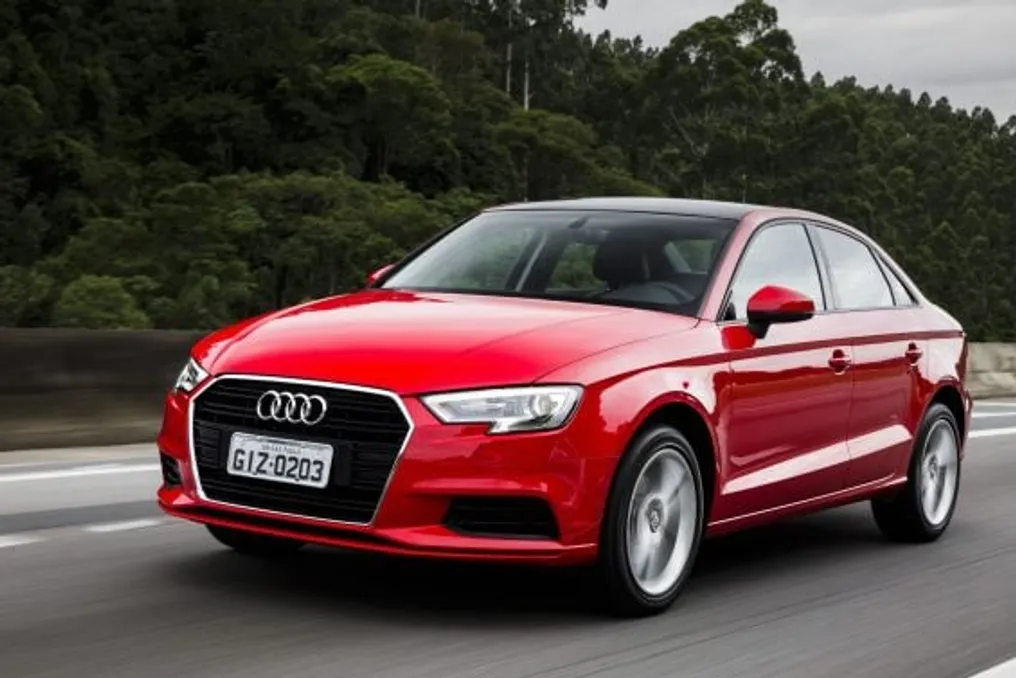
Inovar-Auto, a governmental sectoral program launched in the early 2010s, introduced specific features to the Brazilian market, allowing luxury brands like Audi to begin local vehicle assembly, including the A3 Sedan.

The German manufacturer resumed its activities at the plant shared with Volkswagen in Paraná after an operational period between 1999 and 2006. This time, Audi focused on producing the A3 Sedan. Although the model received adaptations for national manufacturing, it preserved the refined dynamics, robust performance, and luxury characteristic of the German brand.

Model History and Evolution

The third generation of the Audi A3 was responsible for introducing the Sedan version. This model was presented globally at the New York Auto Show in 2013 and arrived in Brazil in January 2014, initially imported from Hungary. Initially, the car used the 1.8 TFSi engine with 180 hp. Later, an entry-level version appeared with a 122 hp gasoline TFSI 1.4 engine, which became flex with the national assembly line in 2015.

The Audi A3 Sedan also offered a more powerful option, the 2.0 with 220 hp, and underwent an aesthetic redesign in 2017. In 2019, a special 25th Anniversary edition was launched, limited to 600 units, celebrating the brand's anniversary in Latin America. This first generation of the sedan ended its production in 2020.

The relaunch of the A3 Sedan marked the reopening of the Audi assembly line in São José dos Pinhais, Paraná, all under the umbrella of Inovar-Auto, which offered tax incentives for local production. Other manufacturers benefited from this program included BMW in Araquari (SC), Mercedes-Benz in Iracemápolis (SP), and Jaguar Land Rover in Itatiaia (RJ).

It is worth noting that the factory used by Audi had been inaugurated in 1998 to produce the Volkswagen Golf IV, and from 1999 to 2005, it manufactured the first generation of the A3 Sportback. At this Paraná unit, besides the A3 Sedan, the Q3 was also produced. The unit's operations were suspended in December 2020 because the manufacturer alleged a lack of definition regarding accumulated IPI credits that were not fully returned.

Currently, the unit operates under the SKD regime for the assembly of the Q3, a process where the vehicle arrives almost complete, and only the joining of the body with the chassis occurs at the plant.

Brazilian Adaptations and Mechanical Changes

Upon receiving the Brazilian passport in 2015, the Audi A3 Sedan underwent several adaptations, some mechanical aspects being simplified to reduce production costs. A notable change occurred in the rear suspension: Audi replaced the independent multi-link system with a torsion beam, a configuration common in mid-size sedans from generalist brands of that era.

Another significant change was in the transmission system. The S tronic automated gearbox, known for its seven-speed dual-clutch system, was replaced by a six-speed Tiptronic automatic gearbox with a torque converter. In compensation, the Audi A3 Sedan gained a considerable increase in power. The 1.4 TFSI engine, which originally delivered 122 hp, was adapted to be flex, received variable exhaust valve control, and began generating 150 hp.

An important difference in the A3 Sedan manufactured in Paraná is the vehicle height. To suit the local asphalt standard, the suspension was raised by 1.5 cm compared to the imported model.

Performance and Finish

Analyzing specifically the 1.4 flex model, despite the transmission changes, the 150 hp from the EA211 family turbocharged direct injection engine provide a satisfactory level of driving pleasure. Accelerations are agile, and the Tiptronic gearbox, although less sophisticated than the S tronic, delivers a 0 to 100 km/h time of 8.8 seconds, according to the manufacturer.

On highways, the Audi A3 Sedan demonstrates good evolution, quickly reaching the permitted 100 km/h. For overtaking, 25.5 kgfm are available between 1,500 and 4,000 rpm, and the turbo acts quickly to overtake other vehicles.

German engineering is evident in the solid construction of the sedan, which maintains firmness in sharp curves and high-speed sections. The steering is described as precise and firm, giving the sensation that the car is firmly planted on the ground. The torsion beam suspension in the Brazilian model has a softer calibration, without compromising the stability or dynamics of the vehicle.

Inside, the A3 Sedan manufactured in Brazil maintains the brand's identity. The dashboard features injected foam with a pleasant touch surface, and the door and column coverings with fabrics also stand out, as does the smooth finish of the glove box. The front seats offer good density and quality material, although they are not extremely enveloping. The analog instrument cluster is considered classic and easy to view, with the steering wheel being the only element that could have a smaller diameter.

The rear space comfortably accommodates two adults and one child. The softer suspension compared to the Hungarian example reflects internal imperfections more, but without being a serious problem. The acoustic insulation is efficient, and the trunk offers 425 liters, a suitable volume for mid-size sedans.

2016 Ambiente Version and Equipment

Considering the 2016 Audi A3 Ambiente 1.4 TFSi, already adapted to the Brazilian market, it includes six airbags, stability control systems, traction and hill start control, reverse sensor, xenon headlights, daytime running lights, and Isofix. Additionally, the sedan has air conditioning, electric window controls, electronic parking brake, rain and dusk sensors, start-stop system, steering wheel with height and depth adjustments, and multimedia center with CD and memory card reader.

However, this transition to the Ambiente model simplified some features. The air conditioning was no longer automatic, the seats changed from leather to fabric upholstery, and the multimedia center does not have Bluetooth. Higher packages, however, included ADAS technologies, such as adaptive cruise control, frontal collision warnings, and lane departure warnings, as well as emergency automatic braking. Other optional extras available were a rearview camera, front parking sensors, semi-automatic parking assistant, leather trim, keyless entry, panoramic roof, native GPS, and DVD player.

When checking average prices for the 2016 Audi A3 Sedan Ambiente on KBB Brazil, it is important to remember that it is a luxury vehicle requiring specialized maintenance, and the trim and body parts tend to be more expensive. It is positive that the 1.4 flex engine is well-known and that the Tiptronic gearbox generally presents fewer problems than the S tronic. It is recommended to check the prices of specific components and the problems reported in discussion forums and on Reclame Aqui.
Popular