Geely President warns that worn batteries could make maintenance of used electric vehicles unviable
Read more
AutoPapo
autopapo.com.br

Geely President warns that worn batteries could make maintenance of used electric vehicles unviable

The president of Geely warned that although an electric car can have a lifespan of up to 15 years, the battery rarely lasts that long. This warning was given by Li Shufu, founder and president of Geely Holding Group, the Chinese conglomerate that owns brands such as Volvo, Lotus, and Zeekr.

According to the executive, if the battery deteriorates before the rest of the vehicle, repair or replacement costs can become so high that it is no longer worthwhile to keep the car. The businessman made these statements on November 5th during the World Internet Conference in China, alongside William Li, founder of Nio, the Chinese electric vehicle manufacturer known for its battery swap stations.

William Li illustrated the issue with a scenario: what to do with a car that reaches 10 years or 200,000 kilometers but still has five or six years of projected use? At this stage, the battery has already suffered capacity loss, which can hinder use and significantly decrease resale value.

There is a Chinese regulation, effective since July, stipulating that the battery must retain at least 70% of its capacity after 10 years or 200,000 km. In practice, this means a vehicle that traveled 400 km on a full charge would only reach approximately 280 km.

For Li Shufu, the problem has not yet manifested on a large scale due to the youth of the Chinese electric fleet. However, when it does occur, current solutions are insufficient: replacing the entire battery is excessively expensive, as is repairing the old one.

According to the International Energy Agency (IEA), about four in five traders interviewed in China refuse 100% electric cars older than five years, mainly motivated by concerns about the battery's condition.

Reports indicate that a three-year-old Chinese EV is currently worth about 45% of its original price, a drop compared to the nearly 55% recorded in 2023, according to the country's dealer association.

In Brazil, depreciation is also sharp: 2022 models of electric cars registered a depreciation of 50.46% by October, surpassing the 15.64% depreciation of equivalent combustion engine cars, according to the BV Auto Index from BV bank.

An alternative option to complete replacement is repair, which involves replacing only the damaged cells—the smaller units that make up the battery. An engineer from CATL, the world's largest battery manufacturer, estimated that completely replacing a battery costs about 100,000 yuan (approximately R$ 84.5 thousand), while repair ranges between 10,000 and 20,000 yuan (equivalent to R$ 8.5 thousand to R$ 17 thousand), according to the Chinese newspaper Yicai.

However, not all batteries are repairable. In Cell-to-Pack (CTP) designs, the cells are integrated directly into the casing, which complicates the disassembly process.

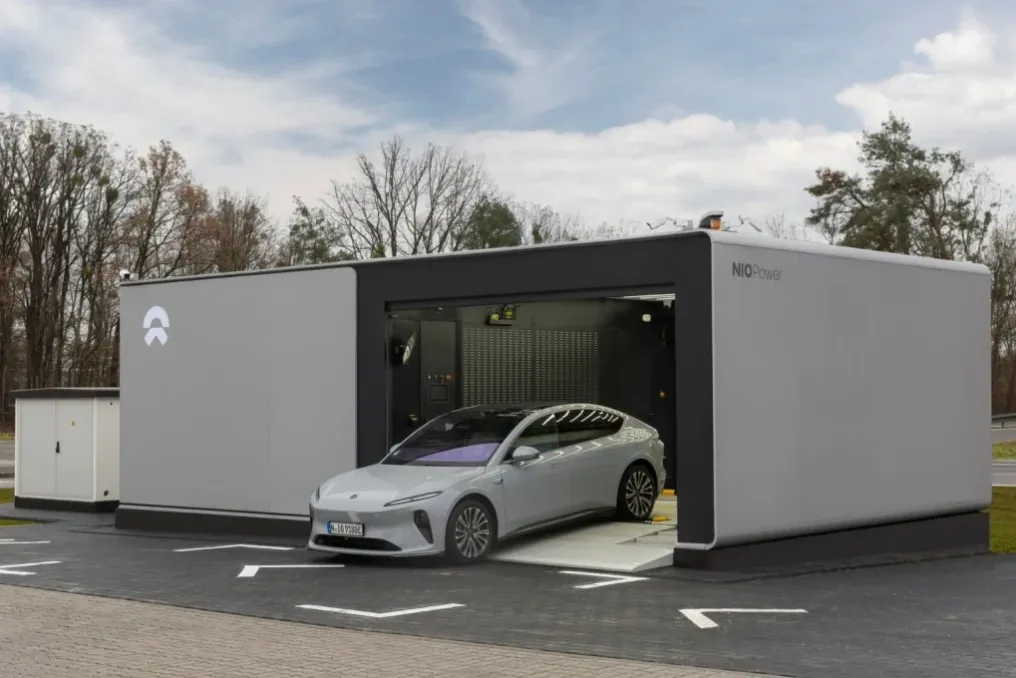
Li Shufu advocates for battery swapping as the ideal solution: the driver stops at a station and receives a charged battery in place of the discharged one. He argues that since batteries circulate through the network and can be swapped for units in good condition, the vehicle could operate for up to 20 years.

This approach has strategic backing, as Geely signed an agreement in September to acquire 30% of Nio Power, Nio's battery swapping division, in exchange for its own operation in the sector and a payment of 640 million yuan (about R$ 540 million).

At the end of September, Nio's network had 4,126 swap stations in China and plans to expand to 10,000 by 2030. However, for the system to work across different brands, the batteries need standardization in terms of size, connections, and cooling.

Similar stories

Chinese energy storage technologies presented at solar energy exhibition in Mexico
Read more
cgtn.com

Chinese energy storage technologies presented at solar energy exhibition in Mexico

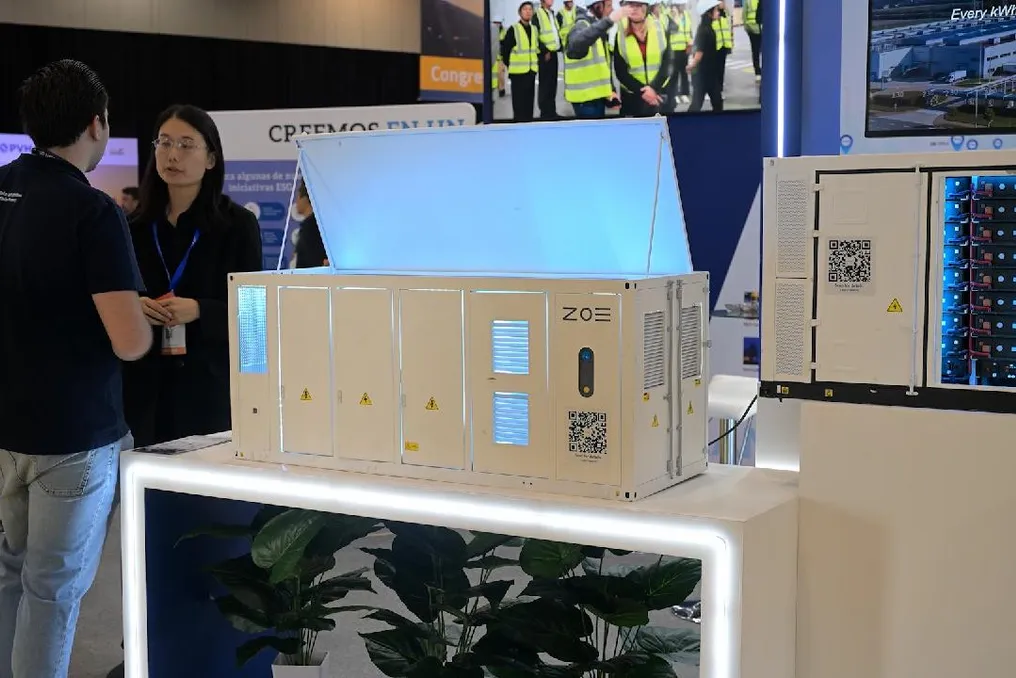
Chinese energy storage technologies appeared in Mexico at the time the country made it mandatory to have storage systems for all new projects related to solar and wind energy. However, at the international solar energy exhibition held in Mexico City, industry specialists expressed concerns that the political situation might slow down the adoption of these technologies.

Xiaomi Poco X8 Analysis: Highlights in Durability and Large Capacity Battery
Read more
tecnoblog.net

Xiaomi Poco X8 Analysis: Highlights in Durability and Large Capacity Battery

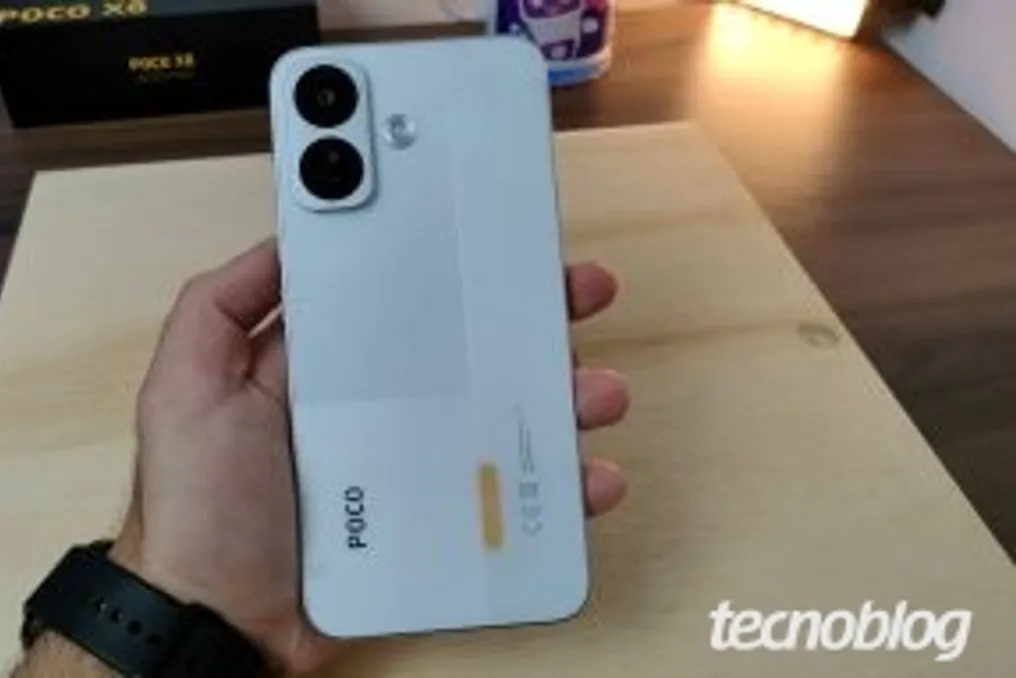
The Poco X8 is an intermediate category smartphone that stands out for its enhanced resistance to dust, water, and drops, in addition to having a voluminous 8,340 mAh battery and a large AMOLED screen.

This model presents distinct characteristics compared to the Poco X8 Pro, which achieved excellent performance in analyses focused on the gaming audience. The initial verdict indicates that the device is ideal for users who prioritize long battery life and a robust device capable of withstanding rain or accidental drops.

After testing the Poco X8 for fifteen days, all its functionalities were detailed. The device came with the smartphone, SIM tray key, protective case, manuals, a USB-C to USB-A cable, and a 67W HyperCharge charger.

It is important to note that DL Eletrônicos, the official Xiaomi distributor in Brazil, will not officially market the Poco X8 in the national market; therefore, the purchase must be made through marketplaces or importers. It is recommended to confirm with the seller whether the version includes a charger compatible with the Brazilian standard wall sockets.

Handling the Poco X8 revealed a significant difference compared to the Poco X7, presenting a design more aligned with the Poco X8 Pro. While the previous model had curved screen and sides, the Poco X8 opted for a flat display, using straight frames made of fiberglass plastic and cast aluminum, complemented by wide radius corners that give a more refined finish.

The back also received notable changes. The camera module was reduced, positioned vertically, and shifted to the left of the device, representing a drastic change from the square module of the Poco X7. The back, made of reinforced plastic, displays geometric details inspired by robots by Xiaomi, although the surface remains completely smooth.

It is undeniable that the Poco X8 is a considerable-sized phone, being larger and heavier than the Poco X8 Pro. Due to this robustness, it was difficult to use with one hand, especially when swiping the screen or toggling buttons on opposite ends. Despite this, the weight did not cause discomfort during prolonged sessions, but users accustomed to lighter devices may need a period of adaptation.

Durability is a prominent attribute of the Poco X8 and a point where it surpasses the Poco X8 Pro. According to Xiaomi, the phone has protection against internal and external impacts, supporting drops of up to three meters. During 1.5-meter drop simulations on vinyl flooring, the device remained intact, and the screen, protected by Corning Gorilla Glass Victus 2, sustained no scratches.

Furthermore, the Poco X8 guarantees robust protection against water and dust, boasting IP66, IP68, IP69, and IP69K certifications. The device supports immersion in fresh water up to 2 meters for up to 72 hours. In the tests conducted, the phone was submerged at 15 cm for approximately 10 minutes and continued operating normally.

In comparison, the Pro version does not specify drop structures or certifications, and its water resistance is lower, limited to 1.5 meters for 30 minutes.

The Poco X8 features a large 6.83-inch screen, providing greater immersion in streaming and gaming activities. With a 1.5K resolution (2772 × 1280 pixels), the panel achieves a density of 447 PPI, ensuring sharpness in text and images. The AMOLED construction is a differential in this category, offering more vibrant colors and deeper contrasts compared to LCD screens.

However, the panel is not compatible with HDR content, limiting the experience of contrast, color, and brightness. Conversely, the refresh rate of up to 120 Hz ensures fluidity in both daily browsing and gaming. With a peak brightness of up to 3,500 nits, reading text and watching videos is comfortable even under direct sunlight.

The biometric reader on the bottom of the screen functioned adequately, even with wet fingers, thanks to Wet Touch 2.0 technology, which enhances touch sensitivity in humid or oily conditions. The screen comes with a pre-applied film for protection against scratches and impacts, in addition to certifications against blue light emission and flickering to reduce eye strain.

The stereo audio system of the Poco X8 uses speakers located on the bottom and top edges, promoting greater musical balance and allowing the playback of tracks with sound distribution between channels. The Dolby Atmos seal adds sonic immersion. Nevertheless, the auditory experience was not ideal, as the bass is discreet and the treble is shrill, resulting in muffled and dry sound. Comparatively, the Poco F3 at 100% volume sounded 300% louder than the Poco X8.

Xiaomi equipped the Poco X8 with a modest camera set. On the rear, there is a 50-megapixel wide-angle lens (f/1.8) and a 2 MP depth sensor (f/2.4), which assists the main lens. The front camera has 16 MP (f/2.4). The absence of ultra-wide or telephoto lenses implies that proximity to the object is necessary to obtain good image quality.

In well-lit environments, photos maintain textures with good exposure control. However, HDR acts aggressively when photographing skies, making colors dull and 'washed out'. Night shots revealed noise and texture degradation, and the 10x digital zoom does not compensate for the lack of a telephoto lens.

Video recordings are reasonable and relatively stable due to Optical Image Stabilization (OIS). A negative point is the limitation to Full HD (1080p) at 30 fps, whereas the Poco X7 records in 4K at 30 fps. The device offers various modes, such as dual capture and slow motion, in addition to an underwater recording function, absent in the Poco X8 Pro.

The Poco X8 is powered by the Snapdragon 6s Gen 4 (4 nm) processor, which reaches frequencies of up to 2.4 GHz. It supports 6, 8, or 12 GB of LPDDR4X RAM, and internal memories of 128 GB (UFS 2.2) or 256 GB (UFS 3.1). The analysis was based on the global version with 12 GB of RAM and 256 GB of storage.

With this configuration, the phone performed well in multitasking and in games like Genshin Impact and Call of Duty: Mobile with maximum graphics, without freezing. However, the processor has limitations and is aimed at more basic tasks. Geekbench 7 tests show that the Poco X8 scores are equivalent to the results of the Poco X3 Pro (CPU) and Samsung M51 (GPU), launched about five years ago, falling significantly below the 1,429 (single-core) and 5,482 (multi-core) of the Poco X8 Pro.

The operating system is HyperOS 3, based on Android 16. This system is intuitive and fluid, although it contains ads in native tools and comes with several pre-installed applications. The system allows customization through various themes and lock screen options. The HyperIsland feature, similar to the iPhone's Dynamic Island, facilitates the management of active apps with expandable widgets.

HyperOS 3 also incorporates artificial intelligence tools for image editing, such as object removal and image expansion. Although broader features, such as automatic transcription and writing assistant, seen in the Poco X8 Pro, were missing, the results obtained were satisfactory. Xiaomi promises six years of security update support, guaranteeing protection until 2032.

The battery is the biggest strength of the Poco X8. With a capacity of 8,340 mAh and silicon-carbon composition, it fulfills Xiaomi's promise of offering over two days of autonomy. In tests, the smartphone lasted a total of 59 hours, with nine hours of screen-on time dedicated to gaming, social media, and football streaming. It was considered one of the devices with the longest autonomy tested.

The time required to charge from 1% to 100% was 1 hour and 16 minutes, using the 67W HyperCharge source, which is considered satisfactory given the battery capacity. As an intermediate model, the Poco X8 does not support wireless charging, but it supports wired reverse charging up to 2.
Chinese cars evolve from cheap options to leaders in automotive technology
Read more
autopapo.com.br

Chinese cars evolve from cheap options to leaders in automotive technology

Those who have followed the Brazilian automotive market for several decades remember the first wave of Chinese cars that arrived in the country. Initially, these vehicles were characterized by attractive prices, but often presented deficiencies in terms of finishing, manufacturing quality, and longevity. At that time, it was unlikely to predict that the Chinese industry would achieve such rapid advancement, challenging global automotive manufacturing giants in less than two decades.

The Chinese presence in Brazil gained traction in 2006, with the start of operations of Chana Motors, which later adopted the name Changan. The brand was known both for its compact utilities and for the jokes its name generated among Brazilians. Its portfolio was modest, consisting of a passenger van, a truck, and a small pickup, without offering significant sophistication or technological innovations.

In the following year, Hafei emerged, introducing the Towner Junior model. The participation of Chinese manufacturers remained discreet, focused mainly on low-cost commercial vehicles. The landscape began to change in 2009 with the arrival of Chery, which launched models such as the Tiggo SUV and the QQ compact, in addition to the later Face and Cielo. These products aimed to attract consumers willing to invest less in a new car.

Another company that sparked great interest was JAC Motors, which started its activities in Brazil in 2011. The brand invested heavily in advertising, even using the 'Domingão do Faustão' program to promote its vehicles, betting on the J3 and J3 Turin compacts. The JAC emblem itself also generated discussion due to its similarity to the symbol of Chrysler, the American manufacturer.

However, the offer of low prices and advertising campaigns was not enough, as the first Chinese cars faced a greater barrier: public distrust. At that time, the Chinese automotive industry had little experience compared to traditional European, American, and Japanese manufacturers. Many of its products displayed simple finishes, questionable quality materials, and durability issues, resulting in a poor image, especially in the used car market.

The Brazilian consumer observed these automobiles cautiously, as acquiring an affordable vehicle could imply high maintenance costs, rapid depreciation, and mechanical failures years later, making the cost-benefit ratio uncertain. Despite this, the Chinese industry demonstrated a remarkable capacity for learning, a phenomenon that had already occurred on the global stage. It is relevant to mention the trajectory of Japanese cars, which began gaining international space in the 1960s and took about two decades to consolidate the reputation for reliability and quality they possess today. South Korean manufacturers followed a similar path, rapidly evolving to compete with established European and Japanese players.

The Chinese followed this same path, but at an even faster pace. In just over ten years, they transitioned from producers of simple and cheap cars to manufacturers of vehicles with excellent build quality, refined finish, and advanced technology. The disparity between the initial models and the current ones is considerable.

If the improvement in quality was already noticeable, it was with electric and hybrid vehicles that the Chinese industry redefined its global position. While many traditional automakers were still debating electrification routes, Chinese companies dedicated massive investments to the development of batteries, electric motors, electronic systems, and new charging technologies. This effort bore fruit in just a few years.

Currently, China holds a prominent position in the development of electrified vehicles. Its manufacturers offer cars with high performance, good autonomy, sophisticated finishing, and technological features that, in some cases, directly rival products from much older brands. A curious situation has occurred: European and American automakers, once references for the Chinese industry, are now seeking partnerships and technologies developed in China itself to boost their electrification projects.

This reversal of roles was unimaginable when the first Chery QQ, JAC J3, and small Chinese utilities circulated on Brazilian streets. The consumer witnessed this metamorphosis, and Chinese cars ceased to be sought solely for their low price, beginning to generate interest in performance, integrated technology, and the variety of equipment offered.

The evolution of products paved the way for a new wave of expansion in the Brazilian market. Companies such as BYD, GWM, Caoa Chery, and JAC Motors assumed relevant positions in this movement, implementing distinct commercial and industrial strategies. BYD and GWM, for example, advanced to local production, signaling that their plans for Brazil go beyond mere vehicle importation. Other companies, including Omoda, Jaecoo, GAC, Leapmotor, Geely, and Zeekr, have also begun to compete for buyers' attention.

However, not all managed to keep up with this expansion. Neta, which entered the Brazilian market with ambitious goals, suffered losses due to financial problems faced by its Chinese parent company, serving as a warning that Chinese origin and high-tech offerings do not automatically guarantee a manufacturer's commercial success.

The range of Chinese brands operating in Brazil increased even further with the arrival of Jetour, MG, Denza, and Changan, which have already debuted in the national territory. Jetour, associated with the Chery group, focuses on hybrid SUVs, while Denza, BYD's luxury line, targets the premium car consumer. MG, a traditional British brand under the control of the Chinese group SAIC, also began sales in the country, as did Changan, which returned to the Brazilian market in collaboration with the Caoa group. Each adopts distinct tactics to compete in practically all price segments.

This intense movement is already having repercussions on traditional automakers. To deal with the new competitors, many are being forced to revise price lists, increase equipment packages, and accelerate the development of electrified vehicles. This occurs because the Chinese have identified a highly effective commercial formula: delivering a lot of technology, equipment, and performance for competitive prices, a combination that demands an immediate response from established brands.

Those who saw the first Chinese cars sold in Brazil recognize the vast distance between those initial models and the current ones. In about twenty years, an industry initially viewed with skepticism has come to compete with century-old manufacturers and, in certain technological areas, taken the lead. Chinese cars have stopped being mere economic alternatives; they have become competitors that traditional brands can no longer ignore.

Popular