According to the presidential press service, Uzbekistan intends to keep the main tax rates unchanged in 2027. At the same time, growth in state budget revenues is planned to be achieved by expanding the tax base, reducing the share of the shadow economy, and improving the tax administration system.
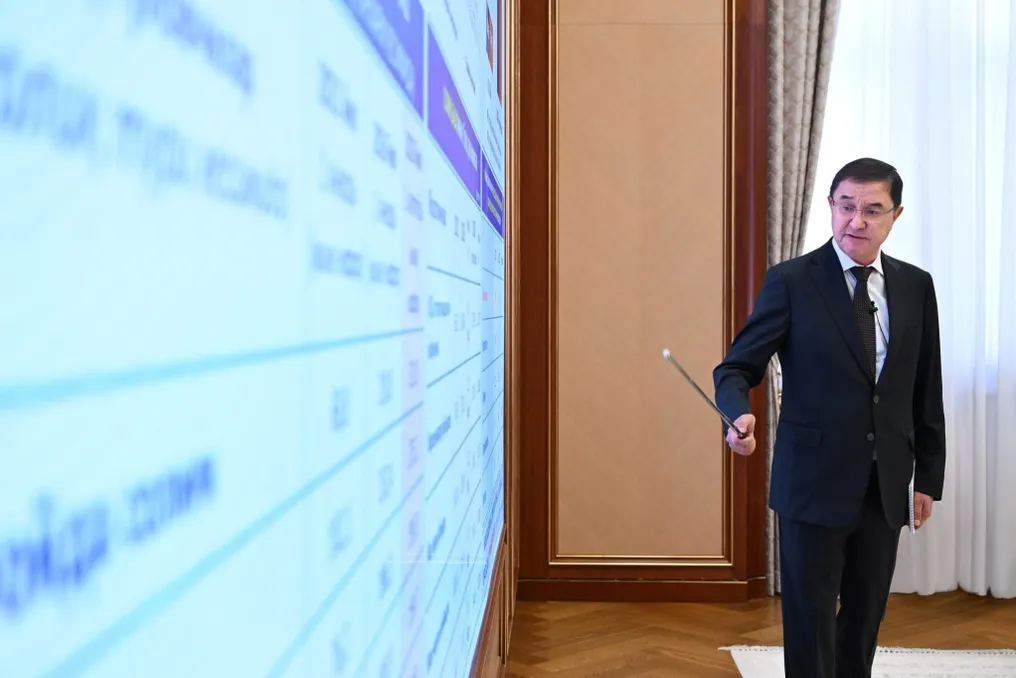
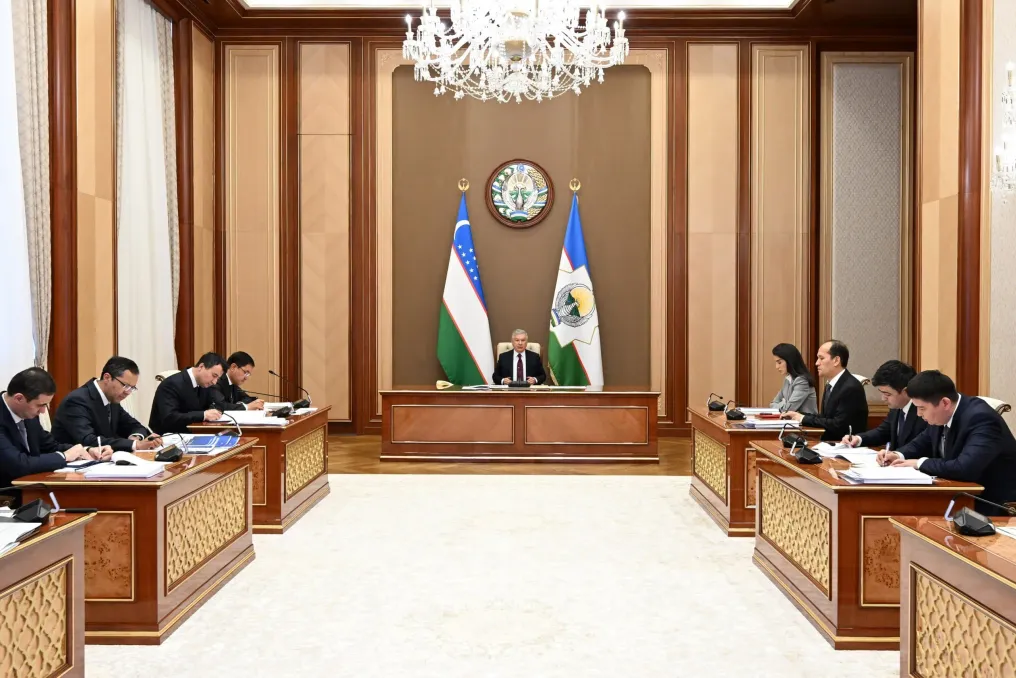
President Shavkat Mirziyoyev discussed these plans at a meeting on November 13 dedicated to state budget targets, macroeconomic forecasts, and fiscal policy priorities for 2027. Officials noted that maintaining current rates will require attracting additional sources of budget revenue.
To achieve this, steps will be taken to stimulate economic activity, increase the tax base, and reduce the informal sector. Furthermore, the government plans to increase revenues by improving the work of customs and tax authorities, including broader implementation of digital solutions and artificial intelligence.
The meeting also emphasized the need to create transparent and favorable conditions for doing business. Mirziyoyev stressed the importance of more effective use of budget funds and reducing inefficient expenditures.
According to the forecasts presented at the meeting, state budget revenues in 2027 are expected to reach 416 trillion sums, while expenditures are projected at 464 trillion sums. The budget draft is based on an economic growth forecast of 7%. The government aims to keep inflation below 6% in 2027 and limit the overall fiscal deficit to 3% of GDP.
It is expected that the economy will grow by at least 8% in 2026, with GDP exceeding 200 billion US dollars, and per capita income reaching 5,200 US dollars. For 2027, GDP growth is forecasted to reach 232 billion US dollars, and exports, excluding gold, should almost reach 40 billion US dollars.
In the long term, the government has set the goal of increasing GDP to 300 billion US dollars by 2030 and raising per capita income to 10,000 US dollars over the next decade. Mirziyoyev stated that annual economic growth of at least 7% is necessary to ensure sustainable financing of social obligations, which should be achieved by utilizing existing reserves and implementing new technological drivers.
Priorities for 2027 include transitioning to a new model of economic growth, increasing added value in various industries, improving labor productivity, and expanding export potential. The new model is expected to be based on modern industrial policy, including high value-added production, the introduction of advanced technologies, and the integration of domestic companies into international production chains.
The government is preparing accelerated development strategies for the chemical and petrochemical industries, mechanical engineering, electrical engineering, textile, and pharmaceutical sectors. It is expected that at least two or three major international investors will be attracted to each promising sector in 2027. Plans also include creating modern industrial zones, increasing local production, and strengthening the technological capabilities of companies.
Additional areas for development have been identified as semiconductor technologies, robotics, biotechnology, high-tech components, and electric vehicle batteries. Attracting foreign investment remains a key direction; officials were instructed to prepare industry and regional plans to ensure $65 billion in foreign investment in 2027.
Structural reforms will continue, including the transformation of state enterprises and banks, accelerating privatization, modernizing energy and transport infrastructure, developing human capital, and completing the process of Uzbekistan's accession to the World Trade Organization.
At the meeting, special attention was paid to the efficiency of public spending. Mirziyoyev stressed that every sum of budget funding must yield tangible results. The government intends to reduce inefficient spending, increase the effectiveness of state investments and subsidies, and strengthen budgetary discipline.
A digital system will be introduced on a pilot basis to monitor the expenditure of budget funds on construction projects under the investment program. Approximately 176 trillion sums have been allocated for education and healthcare in 2027. Of this amount, 114.3 trillion sums are planned for education, which is 14 trillion sums more than in the previous year. Healthcare expenditures are projected at 61.4 trillion sums, representing an increase of 12 trillion sums compared to last year.
Another 70 trillion sums is allocated for infrastructure development in regions and mahallas, as well as for increasing employment and household incomes, human capital development, and strengthening social protection. To support economic growth, the government also plans to activate the participation of the private sector in the banking system, expand credit resources, and actively use public-private partnership mechanisms. Expansion of cooperation with international financial institutions is also expected.
The draft state budget for 2027 and measures for its implementation will be discussed by local councils before being submitted to the Oliy Majlis Legislative Chamber for consideration.