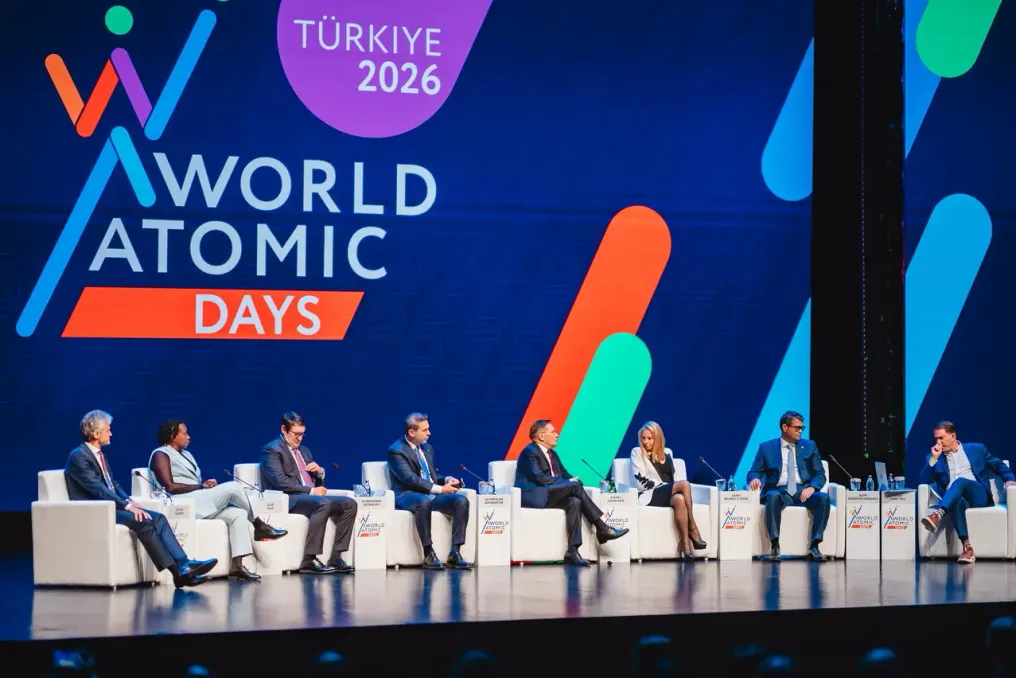
At the international forum 'World Atomic Days,' held in Antalya, Turkey, on November 12–13, Uzbekistan demonstrated its experience in developing national nuclear energy and also presented youth initiatives.
The event gathered representatives from government bodies, major nuclear industry companies, international organizations, and young people. Uzbekistan participated in the forum through senior officials from its nuclear sector and members of the international youth initiative Impact Team 2050.
The forum was organized by the Russian state corporation Rosatom with the support of the BRICS Nuclear Energy Platform, the International Atomic Energy Agency (IAEA), and the World Association of Nuclear Energy. Discussions focused on the future of global nuclear energy, its importance for energy security, achieving climate goals, and sustainable development. Participants also addressed topics such as international cooperation, technological innovations, and training the next generation of specialists.
During the plenary session on November 13 titled 'Nuclear Energy for People and the Planet,' participants included Alexey Likhachev, CEO of Rosatom; Azim Ahmedkhadzhayev, Director of Uzatom; Sama Bilbao y León, CEO of the World Association of Nuclear Energy; Almasadam Satkaliyev, Chairman of the Kazakhstan Atomic Energy Agency; Elzi Pule, Chief Coordinator of the BRICS Nuclear Energy Platform; and Attila Shagodi, CEO and Chairman of the Board of Directors of Paks II Ltd.
Discussions covered the prospects of nuclear energy, its role in meeting growing electricity demand, and contributing to energy security. This agenda is particularly relevant for Uzbekistan, as the country is implementing a project to build its first integrated nuclear power plant. Uzbekistan views the development of nuclear energy as an integral part of its long-term strategy for energy security, industrial growth, and strengthening the economy's technological potential.
Youth involvement was also one of the central themes of the forum. Uzbekistan was represented by Mukhidden Umidov, a member of the Impact Team 2050 Council, under the leadership of the CEO of Rosatom, and a graduate of the Tashkent Branch of the National Research Nuclear University MEPhI.
He took part in a meeting of the Impact Team 2050 Council, which included Likhachev, Tatiana Terentyeva, Deputy CEO of Rosatom for Personnel; Egor Kvyatkovsky, CEO of the Rosatom International Network; Yulia Uzhakina, CEO of the Rosatom Corporate Academy, as well as 16 council members and mentors. At this meeting, the results of national youth nuclear dialogues organized by members of the Impact Team 2050 Council were presented. These initiatives were conducted in 15 countries and brought together over 15,000 young people across different continents.
The dialogues provided future nuclear industry specialists with the opportunity to meet with officials from relevant government agencies and energy companies, discuss the prospects of peaceful nuclear energy, and exchange views on career opportunities in the sector. Furthermore, a large-scale survey was conducted among university students, schoolchildren, and young professionals to identify the main obstacles preventing young people from entering the nuclear industry.
After presenting the dialogue results to the CEO of Rosatom, members of the Impact Team 2050 Council proposed several measures to develop the international youth ecosystem. These measures included establishing national Impact Team 2050 groups in individual countries, followed by the development of regional youth nuclear platforms. A global youth nuclear platform could coordinate the network and support initiatives at national and regional levels.
The proposed structure aims to expand international exchange, strengthen professional ties among young people in the nuclear sector, and create more opportunities for their participation in international projects. Previously, Uzbekistan itself held a national youth nuclear dialogue where representatives of the nuclear industry, students, and young specialists discussed career prospects, international cooperation, and the role of the younger generation in shaping the future of the energy sector.
Uzbekistan's participation in 'World Atomic Days' marked another step in international cooperation on the peaceful use of nuclear energy. The forum allowed for discussions on strategic industry issues, establishing professional contacts, exchanging experiences, and strengthening youth interaction.