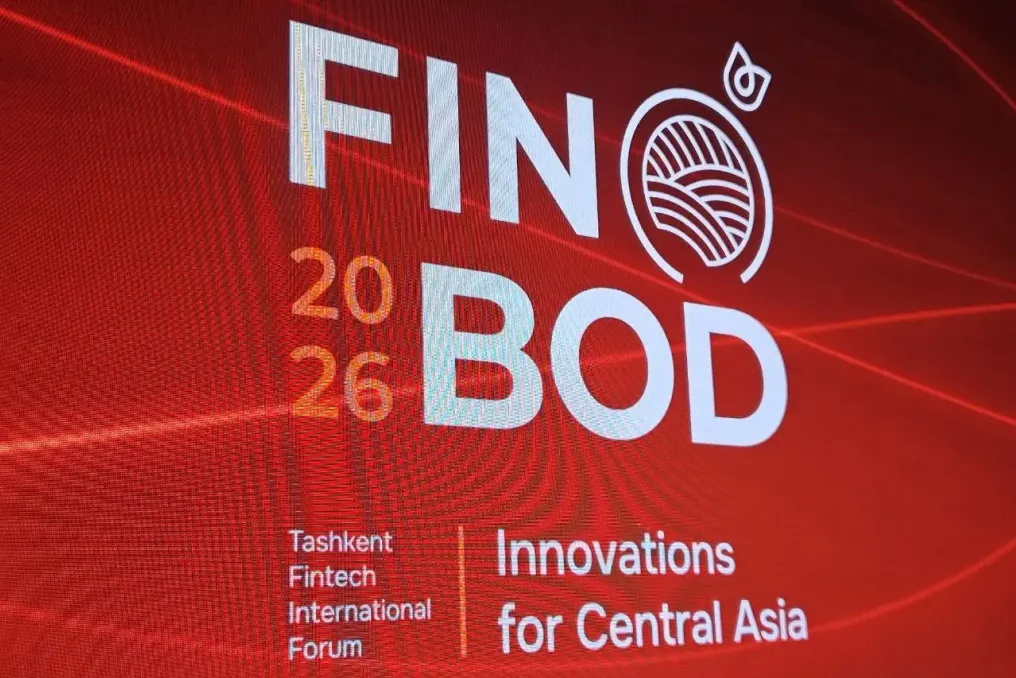
Representatives from the banking and payment sectors discussed the application of artificial intelligence in financial services, the costs of QR payments, and the integration of national payment systems for international operations at the FINOBOD forum held in Tashkent.
During a session titled 'Banks and Payment Platforms,' Anna Savina, president of Right Outdoor Media group and session moderator, presented data from the Central Bank indicating that Uzbekistan received $15.9 billion in international payments during the first nine months of 2026, while outgoing payments amounted to $2 billion.
Roman Tretyakov, Deputy Chairman of the Board of Octobank, noted that AI agents capable of making payments independently are already used abroad. He cited Stripe as an example of a payment system that allows an agent to select tickets, book hotels, and pay for services on behalf of a client. According to Tretyakov, Visa and Mastercard lag in this area due to extensive internal regulations.
Octobank is developing a 'banking as a service' model, through which partners connect to the bank's platform and create their own products. Key functions, such as anti-money laundering (AML), fraud protection, and interaction with government systems, remain under the control of the bank itself.
Sergey Kozlov, Advisor to the Chairman of the Board and Chief AI Officer of Uzpromstroybank, stated that artificial intelligence should remain a tool for scaling the bank's activities, not an end in itself. He reported that the bank uses the unified Nova platform, reusing common components across various services. These components include speech recognition, used in call centers, debt collection, branches, and quality control, as well as image and document processing.
Kozlov emphasized that the bank can delegate some functions to external solutions, but it cannot delegate the responsibility for decision-making. He added that credit decisions must be explainable, and the impact of new scoring models must be assessed through A/B testing. Instead of a simple refusal, banks should offer alternatives to applicants, such as flexible repayment schedules or installment loans.
He also noted that for seasonal businesses, including restaurants, repayment schedules can be adjusted based on income fluctuations: higher payments during peak seasons and lower ones during downturns.
Naima Mirzaeva, a member of the supervisory board of Click, reported that the platform has 24 million users. Click uses AI to personalize services and is developing an AI-based assistant that already has over 60,000 users. Meanwhile, she noted that fraud schemes are becoming increasingly sophisticated, and the platform informs clients about potential risks while constantly improving fraud prevention systems. Click is also certified according to PCI DSS 4.0 Level 1 standard.
Islam Diyarov, Director of Acquisition and Issuance at HUMO, stated that the company has integrated with Apple Pay and the Indian payment system UPI, and is working on a project with Kazakhstan. He identified the main challenges in cross-border integration as aligning KYC and AML requirements, as well as customer data exchange standards. However, the responsibility for verifying sellers and customers remains at the national level.
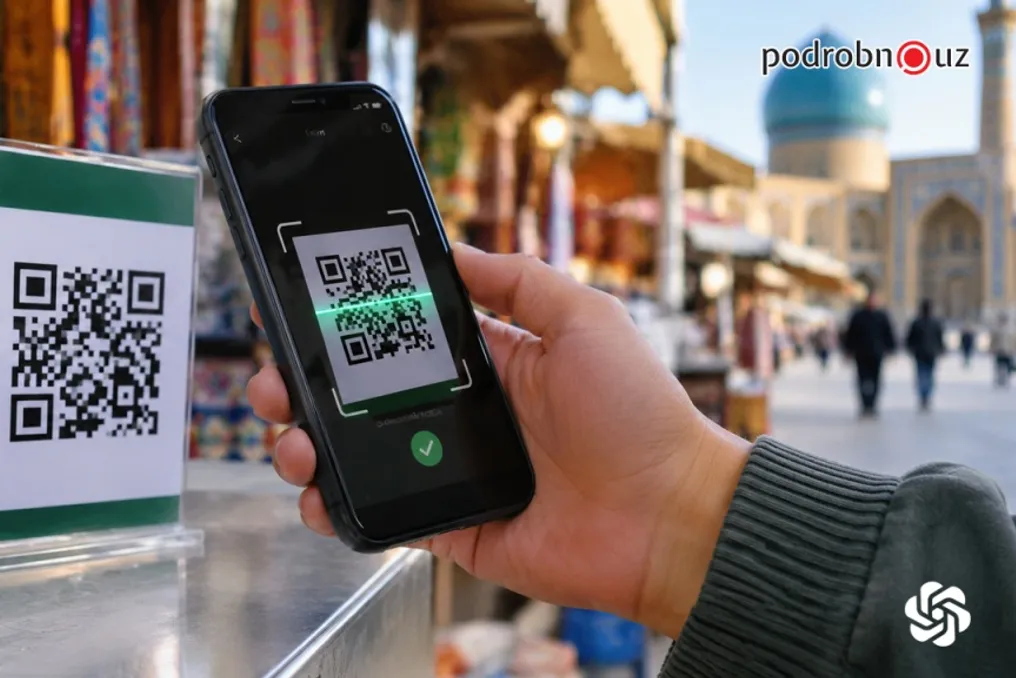
Diyarov also mentioned that QR payments in Uzbekistan are about five times more expensive than acquiring POS, whereas internationally, the opposite is usually true. The final commission for the seller is calculated through a series of fees set by the payment system, the issuing bank, and the acquiring bank.
Tretyakov added that seven Uzbek banks launched Apple Pay about a month ago, but this has not reduced the popularity of QR payments. He also quoted data showing that the turnover of stablecoins in US dollars increased by 1.5 times compared to the previous year.
Ekaterina Zemskova, COO and Head of Digital Assets at PAY10, reported that the company holds central bank licenses in the UAE, Bahrain, India, Morocco, and Hungary. According to her, national QR payment systems can be linked via Application Programming Interfaces (APIs), allowing travelers to use familiar payment services abroad. In her opinion, stablecoins are necessary not for end consumers but for the broader financial ecosystem, as they can speed up and reduce the cost of cross-border transfers in jurisdictions where they are permitted. Zemskova noted that regulation in the UAE is developing rapidly, while Morocco still lacks a regulatory framework in this area.