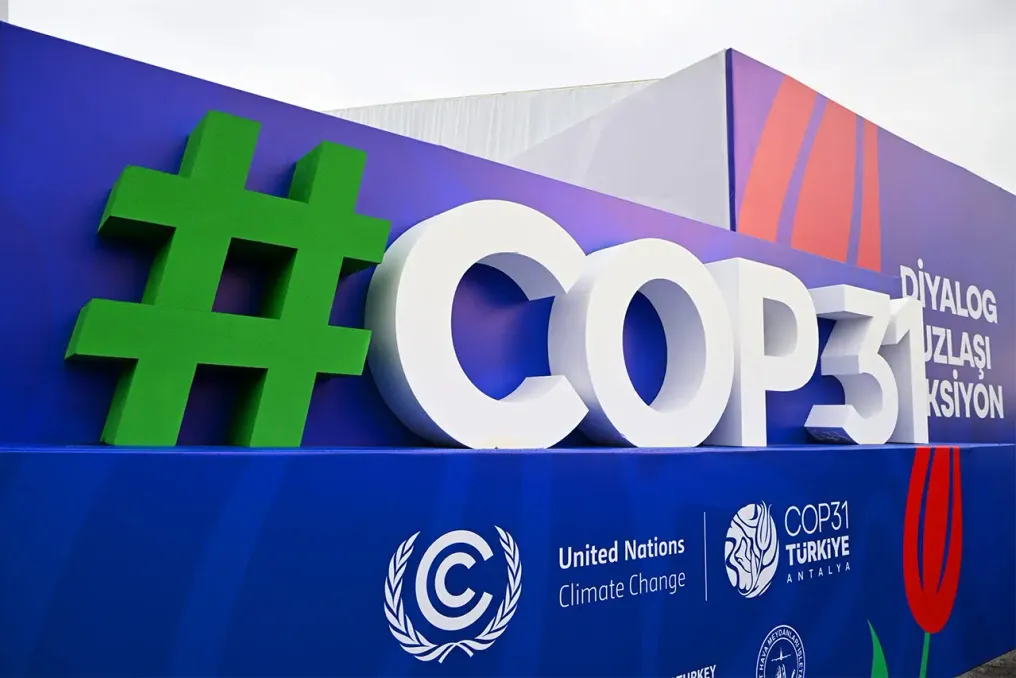
Uzbekistan agrees on green economy projects totaling $8.3 million
Read more
UzDaily
uzdaily.uz

Uzbekistan agrees on green economy projects totaling $8.3 million

The Ministry of Economy and Finance reported that Uzbekistan discussed projects related to the green economy and climate finance, totaling $8.3 million and €5.5 million, with international organizations and financial institutions during COP31.

These negotiations took place within the framework of the 31st Conference of the Parties to the UNFCCC, which was held in Antalya, Turkey, from November 9 to 20. The ministry's delegation met with representatives of international organizations and financial institutions.

A project worth $1.4 million was discussed with the United Nations Development Programme (UNDP) and the National Agency for Energy Efficiency. It involves redirecting subsidies that negatively impact the environment, improving the energy efficiency of public buildings, and developing mechanisms for green investment and financing. The parties also reviewed the implementation of integrated budgeting and exchanged a tripartite cooperation document in these areas after the talks.

Projects totaling €5.5 million were discussed with the German Agency for International Cooperation (GIZ). These initiatives include creating master plans for territories, implementing environmentally friendly business methods, and carrying out pilot projects to improve energy and resource efficiency. After the meeting, the parties exchanged cooperation documents.

Another project valued at $1 million was considered jointly with the Global Green Growth Institute (GGGI), the Korea Green New Deal Fund (KGNDTF), and the National Agency for Energy Efficiency. The goal of this project is to assess the potential for energy savings in Uzbekistan's industrial sector and prepare economically viable regional projects to reduce climate impact.

The Ministry also discussed a project titled 'Comfortable and Efficient Cities for Living,' worth $400,000, with the French Development Agency (AFD) and Expertise France. This project focuses on the sustainable development of urban infrastructure, after which the parties exchanged tripartite documents supporting this program.

A separate meeting was held with representatives from Singapore. Cooperation under Article 6.2 of the Paris Agreement, the introduction of international carbon market mechanisms, and the improvement of Uzbekistan's legal and institutional framework in this area were discussed. Furthermore, the parties examined opportunities for participation in international carbon credit trading, experience exchange, and expanding practical interaction.
Similar stories

Uzbekistan to launch 164 industrial projects worth $11.6 billion over three years
Read more
podrobno.uz

Uzbekistan to launch 164 industrial projects worth $11.6 billion over three years

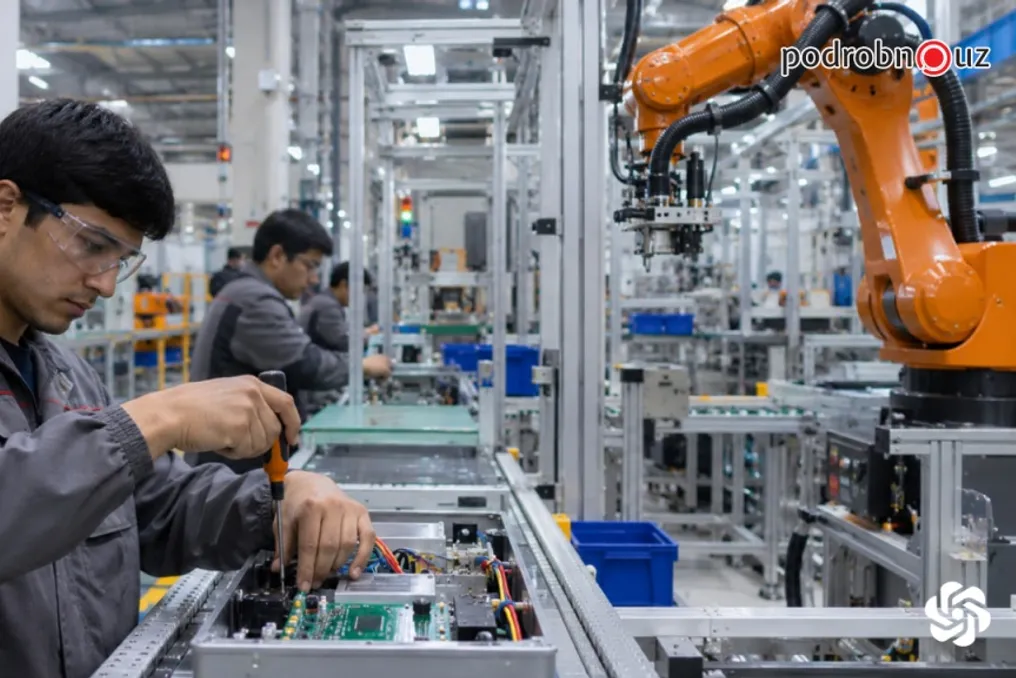
Uzbekistan plans to implement 164 industrial projects over the next three years. The total value of these projects, which cover electrical engineering and related sectors, amounts to $11.6 billion. The main focus of development will be placed on six key areas, including robotics, microelectronics, production of electric vehicle and home appliance equipment.

These plans were presented at a meeting held on November 9th, attended by President Shavkat Mirziyoyev, as well as representatives of the business community and investors. The projects are distributed across various industries:

  • Cable industry — 41 projects worth $2.5 billion.
  • Production of transformers and pumps — 29 projects worth $1.4 billion.
  • Industrial robotics and equipment manufacturing — 45 projects worth $3 billion.
  • Electrical products for transport and electric vehicles — 9 projects worth $650 million.
  • Electronic components and microelectronics — 21 projects worth $3.5 billion.
  • Home appliances — 19 projects worth $600 million.

Responsible managers and main clients have been appointed to ensure the implementation of these directions. Their task is to attract major investors and establish cooperation with technical universities and scientific centers to accelerate the market introduction of new developments.

Focus on Robotics and Infrastructure Development

Special attention is being paid to the development of robotics. Microprocessor module production is already underway in the Akhangaran Technopark, and a project to produce robots is starting in Tashkent in collaboration with South Korean partners. Furthermore, many enterprises have appeared in the country that deal with the production of technological equipment for the textile, metalworking, construction, and other sectors.

To further promote these industries, a Center for Future Technologies will be established in Nurafshan. Residents of this center will be granted benefits similar to those enjoyed by participants of the IT Park. Raw materials and components necessary for the production of electronics, robots, and technological equipment will be exempt from import duties, and income from scientific discoveries in these fields will be tax-exempt.

A national platform called "Yangi sanoat" ("New Industry") will also be launched in Uzbekistan. This platform will serve as a link between researchers, developers, and industrial enterprises, promoting faster innovation adoption in production.

The President instructed that a testing site for new products be organized in every region by May 1st, utilizing the base of research centers or technoparks. These sites should help strengthen ties between small producers, large companies, and scientific institutions.

Responsible agencies have been ordered to prepare a draft resolution regarding robotics development within two weeks, and to develop a comprehensive program to support electronics and technological equipment production by March 1st.

Example of Successful Cooperation

During the meeting, an example of the work of the enterprise "NURA Electric," which focuses on engineering design and dual education systems, was reviewed. At this enterprise, about one hundred design engineers and technologists use their own developments in the production process. Additionally, another 50 students combine studies with paid work, gaining practical experience directly in production.

The President emphasized the critical importance of having qualified engineers, designers, and researchers for creating high-tech products. Currently, 20 students from technical universities and scientific staff are undergoing internships at electronics enterprises in South Korea, and this figure is planned to be increased to one hundred people soon.

It should be noted that joint productions with South Korea have previously been launched in Uzbekistan, including a factory for producing robots and their components.

Uzbekistan attracted $44.3 billion in investments over nine months
Read more
uzdaily.uz

Uzbekistan attracted $44.3 billion in investments over nine months

From January to September 2026, Uzbekistan attracted foreign investments and loans totaling $44.3 billion. During this period, 106 major projects worth $3.8 billion were launched, creating 13,800 jobs.

This data was presented by the Minister of Investment, Industry, and Trade, Laziz Kudratov, in response to an inquiry from a parliamentary investigation by the Oliy Majlis legislative body. This investigation concerned monitoring the implementation of projects with foreign investment in various regions, assessing their effectiveness, and improving interaction with investors.

According to the submitted response, a digital system is used to monitor investment projects and promptly identify emerging issues. Steps are also being taken to improve the management of special economic zones and enhance the efficiency of foreign loans guaranteed by the state.

As part of efforts to improve the legal framework regulating special economic zones, a revised draft law titled 'On Special Economic Zones' has been prepared. Furthermore, support measures for exporters are gradually being brought into compliance with Uzbekistan's international trade obligations.

During the review of the response, deputies emphasized that the effectiveness of investment activity should be assessed not only by the volume of funds attracted but also by the creation of added value, ensuring sustainable employment, developing cooperation with local enterprises, and impacting public welfare. They proposed selecting projects with high economic returns based on the potential and specialization of individual regions, strengthening production ties with local businesses, and ensuring that investment initiatives yield concrete results.

The deputies noted that parliamentary oversight in this area will help assess compliance with legislation, identify existing problems, and increase the efficiency of responsible state bodies. Following the review of the response to the parliamentary request, the Legislative Chamber adopted a corresponding decision.

Popular