Expert explains whether one needs to wear a mask at home during high air pollution levels (AQI)
Read more
Aaj Tak
www.aajtak.in

Expert explains whether one needs to wear a mask at home during high air pollution levels (AQI)

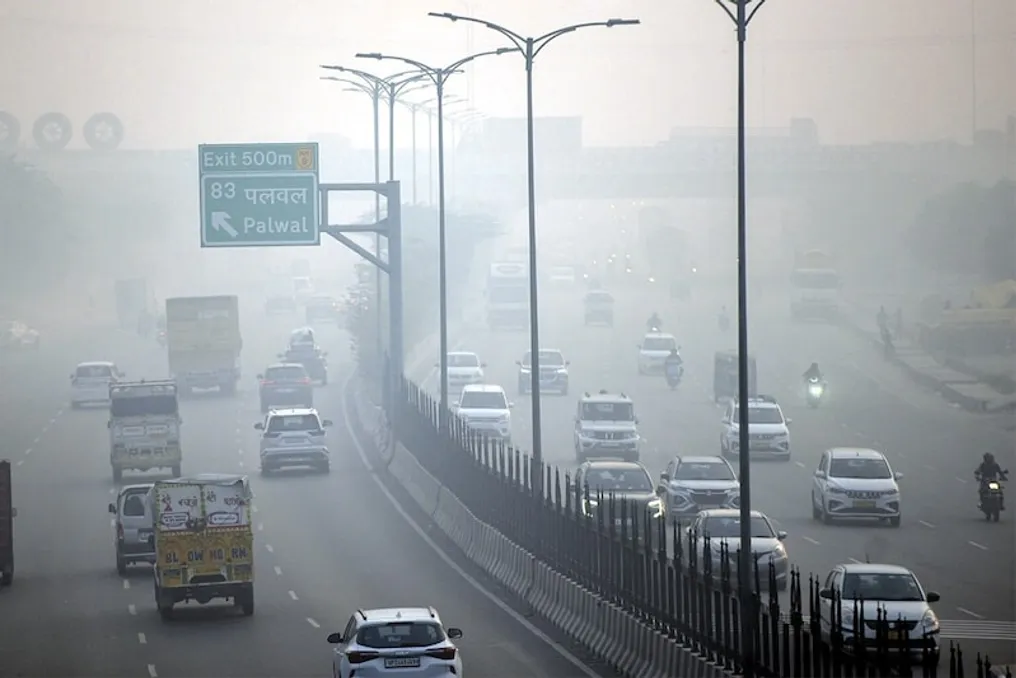
In several areas of Delhi, the air pollution level has significantly increased, reaching an AQI of about 500. Consequently, people are using masks, including in offices, but the question has arisen regarding the necessity of wearing masks indoors. The doctor provided clarification on this matter.

Dr. Ankit Bhatia from the Pulmonology Department of Yashoda Hospital noted that being inside the house does not guarantee complete protection from pollution. Since polluted air from outside can penetrate indoors through windows and doors, there is a constant risk.

Furthermore, indoor air quality can deteriorate due to smoke from cooking, incense (agarbatti), frankincense, and mosquito coils. Nevertheless, not everyone needs to wear a mask constantly at home; it depends on the indoor air quality and the person's overall health condition.

Extra caution should be exercised in homes where external smog easily penetrates and where there are insufficient measures for air purification. Such individuals may consider wearing a mask at home.

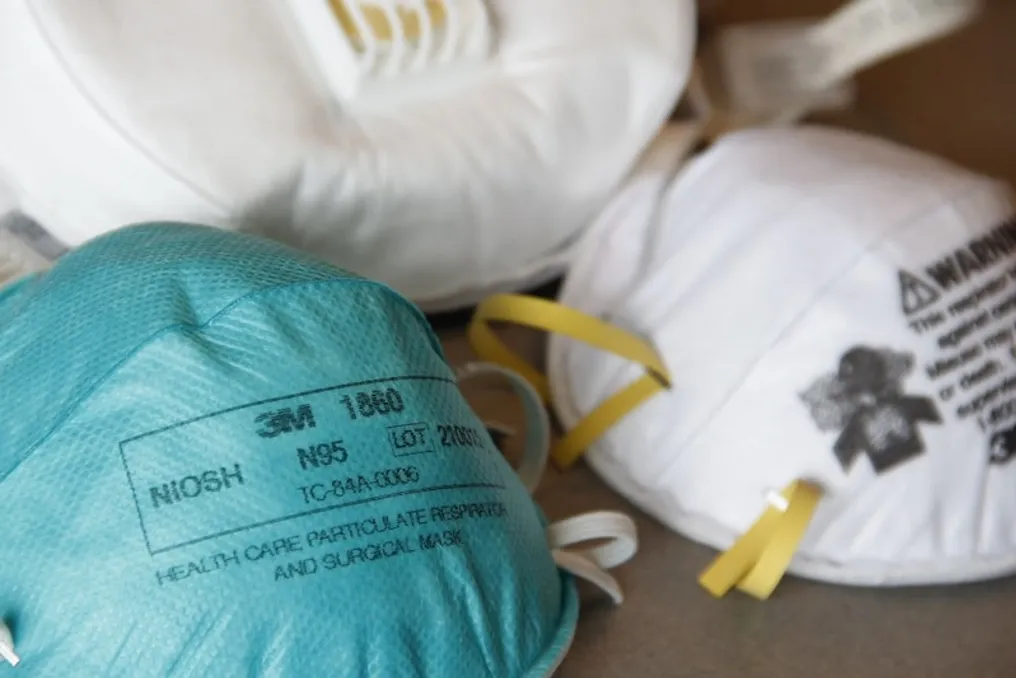
People suffering from asthma, COPD, and other respiratory diseases, as well as the elderly, children, and pregnant women, need to pay extra attention during periods of high pollution. If the indoor pollution level is high and going outside is unavoidable, using a well-fitting N95 mask may be beneficial.

However, instead of relying on masks at home, reducing pollution sources and improving air quality is more important. Dr. Ankit advised using an air purifier with a HEPA filter to reduce exposure to pollution. It is also recommended to keep windows and doors closed during severe pollution, avoid smoking, burning incense and coils indoors, and clean with a damp cloth.

Similar stories

Doctor warns: Walks for young children in areas with high air pollution can harm health; wearing masks is recommended
Read more
www.aajtak.in

Doctor warns: Walks for young children in areas with high air pollution can harm health; wearing masks is recommended

Following Diwali, air pollution levels have increased in many regions of the country, including Delhi and NCR. In Delhi, the average AQI reached 368. Amid the worsening situation, there has been a decline in children's health, many of whom suffer from persistent coughing and breathing problems. Due to this, doctors strongly advise paying special attention to children's health.

Pediatric specialist Dr. Gargi Mathur explained that rising pollution levels cause respiratory illnesses in children, ranging from coughs to chest infections. AQI levels in several areas have exceeded 300 and 400. Under such conditions, special precautions are necessary for children. When the AQI is high, children should not be taken outside to play, as fine pollutant particles can enter the lungs through the respiratory tract and cause serious harm.

Even when the AQI is rising outdoors, the indoor air quality can also be heavily polluted. Therefore, it is important to try to maintain clean air in the home. To do this, air purifiers suitable for the room size should be used. Dr. Mathur advised that efforts should be made to purify the air in the room where the child spends the most time. Furthermore, there should be no smoke from cigarettes, incense, or aromatics inside the house, as these also harm children.

Dr. Mathur emphasized that if a child needs to go to school or leave the house for other reasons, they should be accustomed to wearing a mask. Using high-quality masks, such as N95 or N99, can help prevent pollutant particles from entering the lungs through the respiratory tract.

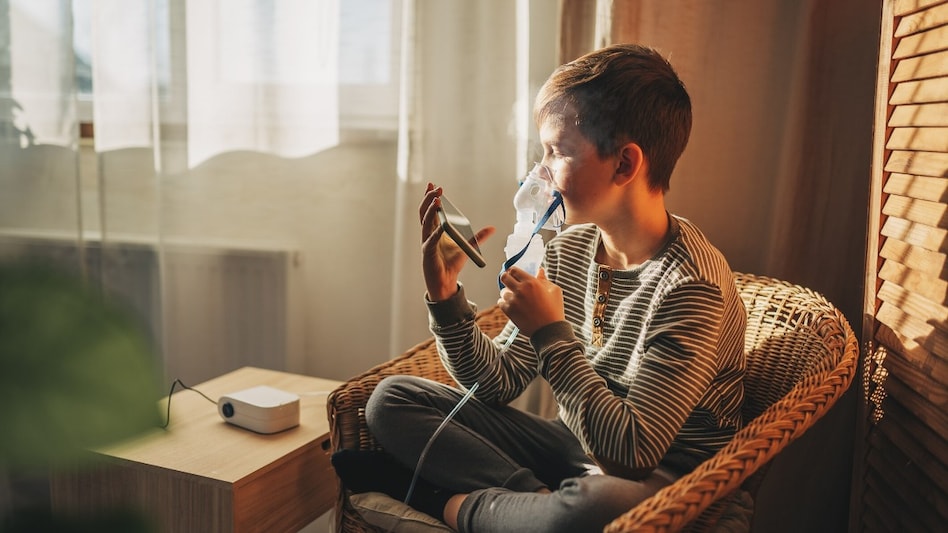
If a child already has any issues related to allergies, asthma, sensitivity, sinusitis, or other respiratory diseases, increased caution is required. For such children, a supply of all necessary medications and inhalers must always be kept at home.

Delhi air polluted ahead of Diwali: AQI reaches critical levels
Read more
www.aajtak.in

Delhi air polluted ahead of Diwali: AQI reaches critical levels

In Delhi on the eve of the Diwali festival, Saturday, the average Air Quality Index (AQI) was 369, corresponding to the 'very poor' category. The city was covered in a layer of smog, which significantly reduced visibility. In several areas, the AQI exceeded the 400 mark. Out of 59 monitoring stations, 16 were in the 'hazardous' category, and 29 were in the 'very poor' category.

The worst situation was recorded near IIT Delhi, where the AQI reached 452. On Friday, the average AQI was 382, and although it slightly improved to 369 on Saturday, it remained close to the hazardous level, around 400. These data clearly show that the pollution level in the capital remains alarming, and there is a risk of further deterioration during the holidays.

According to the Early Warning System for Air Quality (EWS), the air in Delhi is expected to be in the 'hazardous' category on Sunday and Monday, November 8 and 9. Over the next six days, air quality will fluctuate between the hazardous and very poor categories.

According to the Central Pollution Control Board (CPCB) classification, values from 0 to 50 are considered good, 51 to 100 satisfactory, 101 to 200 moderate, 201 to 300 poor, 301 to 400 very poor, and 401 to 500 hazardous. Weather and air quality experts note that the combination of adverse weather conditions, Diwali-related celebrations, vehicle emissions, and the peak season for stubble burning in neighboring states increases the pollution load.

On Saturday, the main pollutant in Delhi was PM10. According to the Decision Support System (DSS), the transport sector contributed the most, accounting for 21.4 percent. Stubble burning contributed only 1.7 percent, but this is projected to rise to 5.4 percent on Sunday.

Satellite data showed 589 instances of stubble burning across six states on Friday. Of these, 357 were in Punjab, 9 in Haryana, 23 in Uttar Pradesh, 58 in Rajasthan, 3 in Uttarakhand, and 139 in Madhya Pradesh. Between September 15 and November 6, a total of 6226 field fires were recorded in these six states. This data is presented in a bulletin released by the Creams laboratory of the Indian Agricultural Research Institute. Although the contribution of stubble currently appears small, local sources also contribute to increased pollution due to seasonal conditions.

Adverse weather conditions exacerbate the situation. According to EWS, the ventilation index is below 6000 square meters per second, and the average wind speed is less than 10 kilometers per hour. Both these factors hinder the effective dispersion of pollutants. Due to cold and stable winds, pollutants accumulate near the ground, forming a layer of smog and haze.

If fireworks are used during Diwali, the situation could worsen. Increased traffic and construction work also raise pollution levels. Specialists believe that stubble cannot be blamed alone, as internal city sources such as traffic, dust, and industrial emissions play an important role.

Air in the 'very poor' and 'hazardous' categories increases the risk of respiratory diseases, eye irritation, throat problems, and cardiovascular risks. Children, the elderly, and people with pre-existing conditions are the most vulnerable. Reduced visibility due to smog also increases the risk of road accidents. Consequences for schools and disruptions to outdoor events are possible.

People are advised to wear masks, stay indoors, and use air purifiers. The government and local administration are conducting awareness campaigns, but pollution control measures often take a backseat due to festive excitement.

This air quality crisis in Delhi repeats every year around Diwali. The combination of stubble burning, transport emissions, weather stability, and festive events worsens the situation. Short-term measures, such as fireworks bans, traffic control, and spraying, can help, but long-term solutions require clean fuels, public transport development, an effective stubble management system, and regional cooperation.

It is necessary to improve the management of field residues by coordinating with Punjab, Haryana, and other states. It is also important to control urban dust, enforce rules at construction sites, and monitor industrial emissions. Citizens must also contribute at a personal level, for example, by reducing unnecessary transport use and avoiding fireworks.

Unless comprehensive and permanent efforts are made, the air in Delhi will deteriorate in the same way every year. Current data and forecasts demand vigilance and collective responsibility to protect both health and the environment.
Delhi air pollution compared to smoking 30 cigarettes due to harmful PM2.5 particles
Read more
www.aajtak.in

Delhi air pollution compared to smoking 30 cigarettes due to harmful PM2.5 particles

Air pollution in Delhi and other parts of North India is once again posing a serious health threat. Due to toxic particles in the air, people experience difficulty breathing, persistent coughing, throat irritation, and hoarseness.

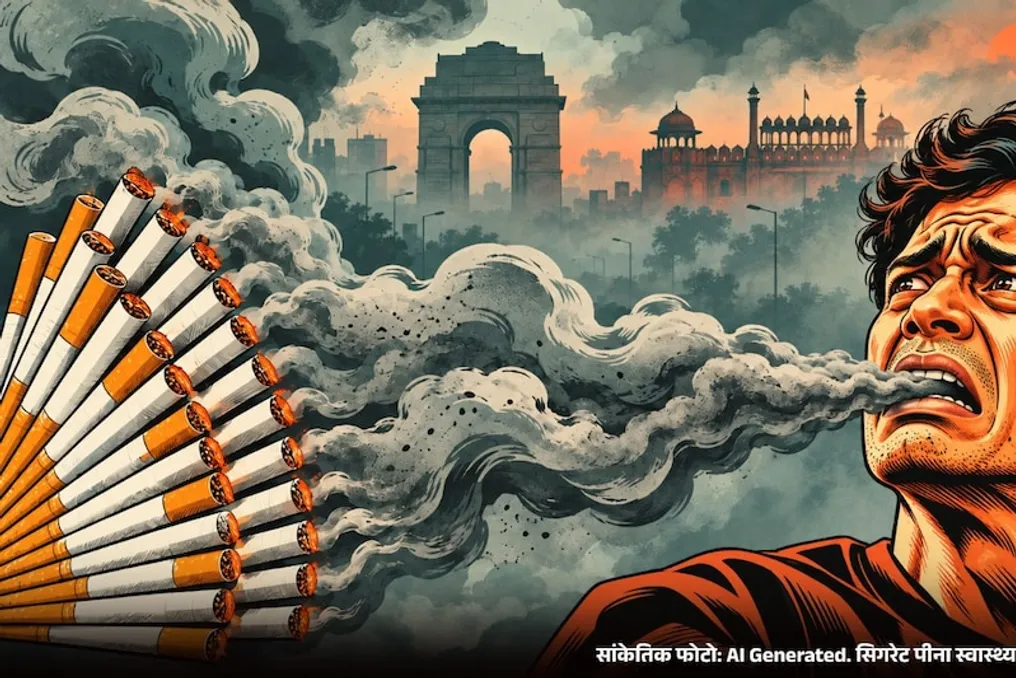
To illustrate the seriousness of the problem, a comparison is often used: inhaling toxic air is equivalent to smoking 30 cigarettes a day. Although this comparison is alarming, it has a scientific basis, even though the chemical impact of polluted air and tobacco smoke is not identical.

On November 5th, the average Air Quality Index (AQI) in Delhi for 24 hours was 369, which falls into the 'Very Poor' category. At some monitoring stations, the AQI exceeded 400, and at night, the air in 22 centers was classified as 'Severe.'

The basis for this comparison is the pollutant PM2.5. These are extremely fine particles measuring 2.5 micrometers or less. They are so small that they can bypass the natural protective barriers of the nose and throat and penetrate deep into the lungs. Some of these particles can reach the pulmonary blood vessels, causing inflammation and other biological reactions in the body.

Scientists from Berkeley Earth conducted a comparison of health risks from exposure to PM2.5 and smoking. According to their calculations, exposure to PM2.5 at a level of 22 micrograms per cubic meter over 24 hours is equivalent to about one cigarette per day. At a PM2.5 level of 660 micrograms per cubic meter, this comparison increases to approximately 30 cigarettes per day.

It is important to note that an AQI level between 401–500 in India does not necessarily mean that a person is inhaling pollution equivalent to 30 cigarettes. The 'Severe' category in India can occur at a PM2.5 level of 250 micrograms per cubic meter or higher. AQI is determined by eight pollutants, and the worst indicator determines the final AQI. Therefore, for an accurate comparison with cigarettes, the actual PM2.5 level and duration of exposure must be known.

The key point is that there is no direct or official conversion between AQI and cigarettes. The aforementioned comparison is a rough scientific estimate based solely on the amount of PM2.5 and 24-hour exposure. Since India's AQI is calculated based on multiple pollutants, one cannot conclude the number of equivalent cigarettes inhaled based only on the AQI.

PM2.5 in polluted air is not just dust; it includes smoke from transport and industry, particles formed during the burning of coal and diesel fuel, as well as pollutants from the burning of straw and waste, and chemically formed microparticles.

When a person inhales air, these particles reach the lungs through the respiratory tract. The body's immune system recognizes them as an external threat and reacts. This can lead to inflammation in the lungs and airways, causing symptoms such as coughing, chest tightness, shortness of breath, and wheezing.

According to data from the U.S. Environmental Protection Agency (EPA), these particles can reduce lung function, increase airway inflammation, and exacerbate asthma and other respiratory diseases. With prolonged exposure, the risk of irreversible lung damage increases.

The medical condition of hoarseness or voice loss is called Hoarseness or Dysphonia. It occurs due to the vibration of the two vocal cords in the larynx. When we speak, air from the lungs helps these cords vibrate. Pollutants and gases, such as nitrogen dioxide, ozone, and sulfur dioxide, can irritate the sensitive surfaces of the throat and larynx. This causes irritation, dryness, and inflammation. Laryngeal inflammation disrupts the normal vibration of the vocal cords, resulting in a low, raspy, or weak voice. Sometimes a person feels pain when speaking and the need to constantly cough.

Thus, hoarseness on polluted days is not always a sign of a common cold. One cannot state that pollution is always the cause; other possible causes may include viral infections, allergies, acid reflux, and smoking.

Both cigarettes and polluted air can contain PM2.5 microparticles. Both substances are capable of enhancing oxidative stress and inflammation in the body. Oxidative stress is a condition where the balance between harmful free radicals and antioxidants that control them is disrupted.

However, there are differences between them. Tobacco smoke contains nicotine, carbon monoxide, and numerous carcinogenic substances. Whereas polluted air includes dust, industrial emissions, transport smoke, and particles formed during combustion.

Popular