The first agricultural census conducted in Uzbekistan discovered nearly one million hectares of land that were not previously included in official statistics. It was established that the area of greenhouses significantly exceeds previous estimates, while the cattle population turned out to be smaller than anticipated.
The National Committee on Statistics presented the final results of the census on November 13. This study allowed for a detailed analysis of information on sown areas, orchards, vineyards, greenhouses, the number of animals, poultry, and fish farming bodies, revealing significant discrepancies with previously published data.
Nearly 1 million previously unaccounted-for hectares identified
During the census, 985.4 thousand hectares of land that were not accounted for in previous statistical reports were added. The majority of this new land belongs to sown areas—789.6 thousand hectares.
A representative of the National Statistical Committee specified that geospatial information systems and satellite imagery obtained jointly with the 'Uzbekcosmos' agency were used to process the data. Specialists studied vegetation images over two years, compared them with cadastral records, and then conducted field inspections to record users of the plots and include them in the statistics.
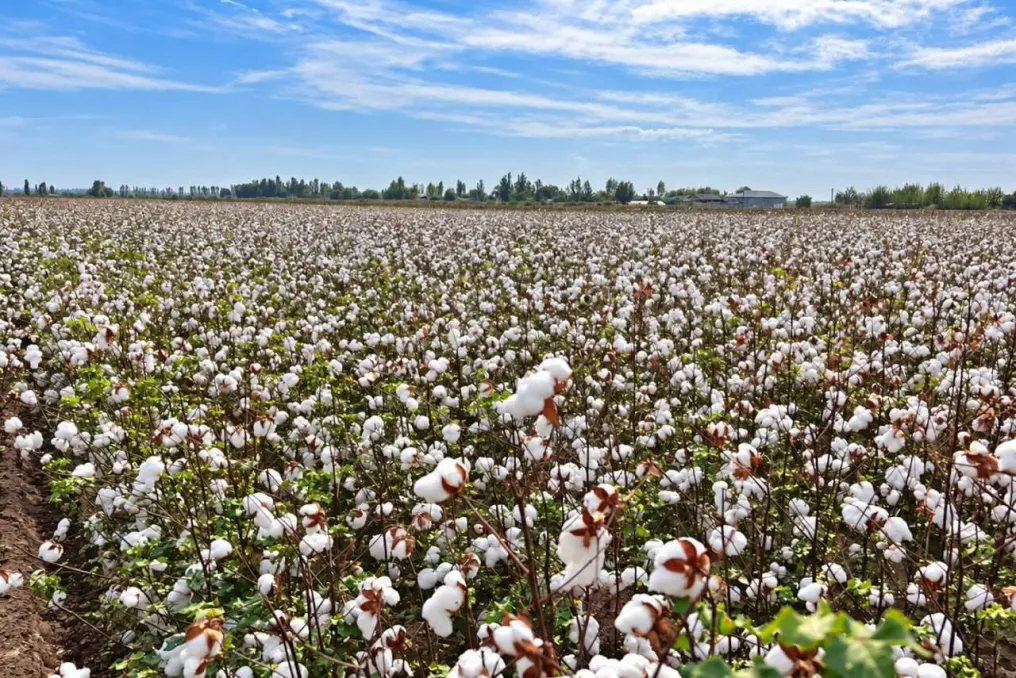
According to the census results, the total area of land designated for open-field annual crops amounted to 4.21 million hectares. Natural hay meadows and pastures cover 21.17 million hectares, perennial plantings account for almost 3.5 million hectares, and forests and other forested areas amount to 3.57 million hectares. Additionally, 560.1 thousand hectares are classified as temporarily unseeded land, and 652.8 thousand hectares are used for aquaculture.
Of the total area under annual crops, 2.32 million hectares, or 55.1%, belong to farms. Farmers and household subsistence farms use another 788.7 thousand hectares (18.7%). Meanwhile, 89% of natural hay meadows and pastures are owned by agricultural organizations.
Greenhouse area turned out to be almost three times larger than previous data
One of the most noticeable differences was the increase in greenhouse area. Before the census, this area was estimated at 8 thousand hectares, but after clarification, the figure rose to 22.1 thousand hectares, which is approximately 2.8 times larger. Of this area, 15.3 thousand hectares (69.2%) are located in dehqan and household subsistence farms, and the remaining 6.8 thousand hectares belong to legal entities.
The area of orchards and vineyards also increased: it reached 613 thousand hectares compared to the previous 516.3 thousand, an increase of 96.7 thousand hectares or 18.7%. Specifically, the area of fruit plantings was 456.7 thousand hectares, and vineyards were 156.3 thousand.
Fruit plantings account for 194.7 thousand hectares in farm enterprises (42.6%) and 78 thousand hectares of vineyards (49.9%). Dehqan and household subsistence farms occupy 140.7 thousand hectares of fruit orchards (30.8%) and 54.6 thousand hectares of vineyards (34.9%).
Cereals and technical crops occupy more than 70% of sown land
Almost half of all land under annual crops—1.997 million hectares (47.4%)—is designated for cereals and legumes. Technical crops account for another 1.013 million hectares, which is 24%. Thus, these two groups together cover 71.4% of the sown area.
The structure of land use heavily depends on the type of enterprise. Legal entities use 81.3% of the area under open-field annual crops. In contrast, household farms mainly engage in vegetables and potatoes: they account for 243.6 thousand out of 340.5 thousand hectares of vegetable crops (about 72%) and 110.8 thousand out of 133.1 thousand hectares of potatoes (about 83%).
A significant share of technical crops (708.5 thousand out of 1.013 million hectares) is used by farm enterprises.
Raspberry areas turned out to be 27 times larger, cauliflower—11 times larger
The census revealed significant changes in the area of cultivation of individual crops. For example, the area of raspberries was revised from 119 to 3281 hectares, which is 27.6 times larger. The area of cauliflower increased from 471 to 5189 hectares (11 times), and medicinal plants—from 5096 to 24,802 hectares (4.9 times), strawberries—from 1778 to 5436 hectares (3.1 times).
Furthermore, the areas of several crops that were not previously included in observations were recorded in the statistics for the first time, including ferula (12,675 hectares), broccoli (6,060 hectares), sorrel (5,289 hectares), lavender (2,994 hectares), blueberries (490 hectares). Areas for vegetable and berry seedlings (2,096 hectares), lilac (1,530 hectares), and citrus fruits (lime, oranges, and mandarins—201 hectares) were also recorded.
The National Statistical Committee emphasizes that these changes reflect the refinement of statistical coverage, not a sudden actual increase in sowing within one year.
Production of grain, vegetables, and fruits revised upwards
The refinement of sown areas led to a revision of agricultural production volumes for 2025. According to updated data, 11 million tons of grain were produced in Uzbekistan, which is 8.6% higher than the previous indicator. Vegetable production was adjusted to 14.4 million tons (+5.2%), berry crops—to 4.2 million tons (+28.2%), and the volume of fruit and berry production reached 4.1 million tons (+18.5%), and grapes—2.3 million tons (+14.5%).
As a result, the estimated value of crop production for 2025 increased from 243 trillion to 290.6 trillion soums, which is 47.6 trillion soums, or 19.6% more. The committee explained that these adjustments do not indicate additional production during the census period, but merely include volumes that were not previously fully reflected in the calculations.
Cattle population turned out to be 2.3 million heads lower
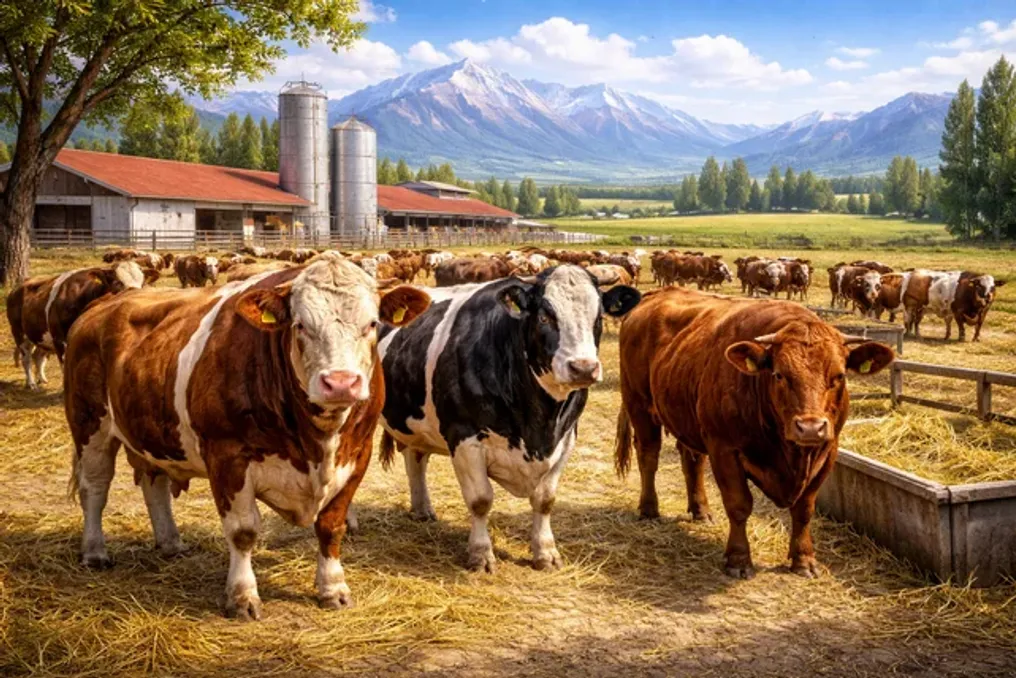
Livestock showed opposite results. As of January 15, 2026, the cattle population in Uzbekistan was 12.24 million heads, which is almost 2.3 million less than indicated in old statistical estimates. Furthermore, 87.1% of this population, or 10.65 million heads, is in dehqan and household subsistence farms, while legal entities hold only 12.9%.
Of the total cattle, about 4.22 million heads are cows, of which 3.6 million are kept by private individuals, and 622.3 thousand by legal entities. The total sheep and goat population reached 23.09 million heads, with 16.47 million sheep and goats (71.3%) in household farms. The remaining 28.7% belong to legal entities.
The census also accounted for 251.1 thousand horses, 35.5 thousand camels, 45.7 thousand pigs, and 573.8 thousand fur animals. The total number of poultry was 120.9 million heads; unlike cattle, most poultry (61.7%) is kept by legal entities, while 38.3% is in dehqan and household subsistence farms. The country has 917.1 thousand beehives, about 78% of which (711.9 thousand) are in household farms.
Beef and milk production estimates reduced
The adjustment of livestock population data led to a revision of animal husbandry indicators. According to the National Statistical Committee, the estimated volume of beef production for 2025 was 13.1% lower, and milk production—almost 19.2% lower—than in previous reports. These changes relate to the revision of old statistical data, not to an actual reduction in production in 2025 compared to the previous year.
The census also provided information on animal keeping methods in agricultural organizations. Preliminary data shows that legal entities have registered 24.5 thousand units of stationary animal keeping, 15.3 thousand of pasture keeping, 14.2 thousand of cage keeping for poultry and rabbits, and 1.1 thousand of industrial (factory) keeping.
Fish catch estimate increased more than twofold
A significant revision also occurred in fisheries. The area of water bodies used for aquaculture was estimated at 652.8 thousand hectares, which is 15% more than previous data. Of these, 647.6 thousand hectares belong to legal entities, and 5.2 thousand hectares belong to dehqan and household subsistence farms. Based on the updated information on aquaculture bodies and produced products, the estimated volume of fish catch increased 2.2 times—from 205.5 thousand to 446.5 thousand tons.
In a separate infographic from the National Statistical Committee with preliminary census results, it is noted that 7.3 thousand legal entity farms are engaged in aquaculture. Furthermore, 5.6 thousand units with artificial water bodies and 2.7 thousand with natural ones were accounted for. The sum of these categories exceeds the total number of farms, which may be due to one farm using multiple types of water bodies, although the methodology for such accounting is not specified.
The census also allowed for the collection of data on water sources and irrigation methods for agricultural lands.