Riot Games uses music, K-pop, and skins to expand League of Legends consumption beyond the game
Read more
Olhar Digital
olhardigital.com.br

Riot Games uses music, K-pop, and skins to expand League of Legends consumption beyond the game

It is not necessary to play League of Legends to consume the game's universe; one only needs to listen to a playlist, watch a music video, or see a cosplay of characters like Ahri, Akali, or Kai’Sa at pop culture events. This approach reflects a strategy developed by Riot Games in recent years: transforming its game characters into recognizable figures outside the gaming environment.

On Thursday, November 12, the company advanced in this direction with the global release of the compilation «League of Legends: Music Video Collection – K-pop & More» on Netflix. This collection includes existing music videos from the virtual groups K/DA, True Damage, and HEARTSTEEL, covering productions such as «POP/STARS», «MORE», «GIANTS», and «PARANOIA». Even if the tracks are not new, their inclusion in the platform's catalog offers a new chance to reach audiences who would never have played League of Legends.

In addition to promoting music, Riot is expanding the places where its characters can be discovered, followed, and consumed. K/DA, launched in 2018, is a notable example of this union between League of Legends and the music industry. This virtual group consists of four champions from the game: Ahri, Akali, Evelynn, and Kai’Sa, each receiving a visual identity inspired by the aesthetics of K-pop groups, including costumes, personalities, and a unique style.

The debut came with «POP/STARS», a song that integrated real artists, digital characters, and sophisticated audiovisual production. The music video showed the champions in different versions of those players used to seeing in matches. The intention was twofold: to allow those already familiar with League of Legends to see a new interpretation of their idols, while simultaneously presenting Riot's universe to pop music fans without the need to play.

The connection to K-pop is not accidental. This genre has a fan culture closely tied to the visual identity of the artists, choreography, costumes, and collective participation. By incorporating these linguistic elements, K/DA provided experiences similar to those of a traditional music group, even though its members are fictional.

Choreography also gained prominence. The movements displayed in videos and dance performances allow the audience to actively participate in this universe, even without understanding League of Legends mechanics. The result is a relationship with the characters that transcends the game itself.

A crucial aspect of this strategy is the longevity of the music in fans' routines. Unlike a common advertising campaign, which loses relevance after a product launch, a song can be listened to for years. «POP/STARS», for example, was released in 2018 but may still be in the playlists of those who followed K/DA's debut at that time. Platforms like Spotify and YouTube allow these songs to be consumed independently of the game.

Fans can listen to K/DA while working, studying, or commuting around the city, without needing to open the League of Legends client to stay connected to the Riot universe. The addition of music videos on Netflix introduces another avenue for this behavior. By grouping previously released productions in an audiovisual streaming service, the developer increases the touchpoints between its intellectual properties and the public.

This cross-platform circulation also exposes characters to people who appreciate K-pop but have no immediate interest in competitive games. Thus, League of Legends no longer relies solely on matches to remain relevant in its consumers' daily lives.

There is also a commercial interest behind this proximity between music and video games. League of Legends is a free game, but it offers optional digital items, such as skins, that change the appearance of the champions. By presenting Ahri, Akali, Evelynn, and Kai’Sa as members of a musical group, Riot is not just creating entertainment; it is generating new visual identities for characters already in its catalog.

The themed skins allow players to use these versions within the game, connecting the musical experience with the competitive one. It is at this point that the emotional bond with the characters can influence consumption. A player might admire a champion for their skills or playstyle, but they might also identify with their personality, costume, music, or participation in a music video. In this second scenario, the skin ceases to be just an aesthetic change and begins to carry a meaning linked to the fan's identity. The purchase can serve as a way to express affinity for a character or signal belonging to a community.

This does not imply that listening to K/DA necessarily leads someone to buy skins. To confirm this relationship quantitatively, sales and consumer behavior data would be needed. However, the strategy creates the conditions for digital products to be presented in cultural experiences that the public already values. Instead of promoting a skin only within the game, Riot builds a musical universe that gives meaning to that product.

The relationship between K-pop and League of Legends is also manifested outside digital platforms. Cosplayers recreate the characters' costumes, while dance groups perform choreographies inspired by the music videos. Such manifestations are important because they do not depend exclusively on content produced by Riot; the fans themselves take on the reinterpretation and promotion of the characters.

A cosplay can attract the attention of someone who has never played League of Legends. A dance performance can reach people interested in K-pop but unfamiliar with K/DA. In this way, the community helps expand the cultural circulation of the brand. One example of this was the participation of a Brazilian cosplay group in the League of Legends World Championship final in New York on November 14. Coordinated by cosmaker Leon Martins, the quartet consisting of Farah, Yoshi, Mari Fujino, and Larah was selected to represent the K/DA members.

The visual representation of the group was inspired by «FIRESTARTER», a song released in October, reinforcing the link between the music release and community participation. This initiative demonstrates how a universe created for a competitive game can transform into an artistic experience, encompassing costume, performance, and cultural identity.

The tactic of expanding beyond screens is not limited to streaming services. In Brazil, Riot Games organized an in-person event at the Meruru Store, in the Liberdade neighborhood of São Paulo, on November 2. The location was transformed into a themed pop-up store dedicated to the groups K/DA, True Damage, and HEARTSTEEL. The event included pop culture activities, such as photo areas with cosplayers, interactive experiences, themed products, and fan meetups, also featuring illustrators Colour Alex and Ryumen Concept.

The choice of Liberdade is related to the presence of Asian culture in the neighborhood and the public's interest in cultural manifestations like K-pop. In this context, visiting did not require an interest in competing in League of Legends; one could participate through music, characters, art, or simply an appreciation for pop culture. For Riot, this type of action strengthens the bond between consumers and their intellectual properties, causing contact with the game to occur in physical spaces, generating opportunities for fan interaction.

Although K/DA is one of the best-known examples, it is not Riot Games' only musical initiative. The True Damage group explores hip-hop references, while HEARTSTEEL proposes something inspired by male pop groups. Each project uses League of Legends characters but works with distinct musical styles, visual identities, and potential audiences. This variety allows the company to reach consumers whose interests go beyond the MOBA genre to which League of Legends belongs.

The release of the compilation on Netflix consolidates these initiatives into a single catalog, allowing observers to see how Riot has built diverse musical identities from the same fictional universe. The strategy also connects to other audiovisual projects by the developer. The animated series Arcane, created by Riot Games and animated by the Fortiche studio, distributed by Netflix, proved how League of Legends characters and narratives can reach viewers who do not know the game. Fortiche also collaborated on the production of K/DA music videos, such as «POP/STARS» and «FIRESTARTER», reinforcing the aesthetic connection between animation, music, and video games. Despite being different formats, these productions share the goal of making the Runeterra universe accessible through other entry points.

The release of the collection on Netflix signals a significant transformation in how gaming companies can build their brands. The relationship with the consumer does not have to begin or end when they start or stop playing a game. It can endure through music, series, music videos, events, products, and manifestations created by the community itself. In the case of Riot Games, this expansion also helps solidify the identity of characters that have commercially marketed digital products within League of Legends. It is a tactic that unites entertainment, brand building, and monetization opportunities.

However, there is a distinction between increasing public interest and proving growth in sales. Without specific data, it is impossible to determine the financial impact of K/DA's musical success for the developer. What is perceived is the creation of an ecosystem where different modes of consumption complement each other. A fan might discover a character through a music video, become interested in the cosplay, start playing, and eventually buy a skin. Another might remain only a listener of the music. In both scenarios, Riot has managed to create a bond with that consumer outside the traditional gaming environment.

The greatest achievement of this strategy lies precisely in this: transforming League of Legends into a universe that the public can continue consuming even when they are not playing.
Similar stories

Video games become a source of intellectual property for cinema and streaming
Read more
olhardigital.com.br

Video games become a source of intellectual property for cinema and streaming

Historically, the relationship between video games and cinema was marked by adaptations that did not always please enthusiasts. In the past, films were adapted into games to boost releases, and game characters appeared in cinema productions that often failed to capture their special essence.

This landscape has undergone a significant change. Titles such as Super Mario Bros. Movie, The Last of Us, Arcane, Fallout, and Minecraft Movie prove that video games have established themselves as one of the primary sources of intellectual property (IP) for cinema and streaming platforms. The focus has shifted from merely adaptation to exploring universes capable of attracting audiences across various formats.

Commercial success reinforces this interest. Super Mario Bros. Movie surpassed the $1.3 billion global box office mark, and Minecraft Movie earned around $960 million, placing these works among the biggest recent Hollywood successes.

However, there is a deeper question: why do some IPs manage to transition across different media, while others do not achieve the expected success?

One of the central reasons for this transformation lies in generational change. People who grew up playing video games are now also consumers of cinema and streaming, work in the audiovisual industry, and often participate in decisions about which projects receive investment. Video games have stopped being perceived solely as children's entertainment, assuming a prominent role in popular culture.

For film studios and streaming platforms, this represents a clear market opportunity. An established game franchise brings with it recognizable characters, defined universes, and, crucially, an engaged fan base. While this does not guarantee success, it reduces the uncertainty inherent in presenting a completely new story to the public.

Another relevant aspect is the advancement of production technologies. Digital tools, animation, and visual effects have made it possible to represent worlds that would previously have been excessively costly or complex to replicate.

However, it is vital to distinguish between adapting a game and merely using its brand for promotional purposes. When a game IP migrates to audiovisual media, it carries with it a community, a visual identity, and a pre-existing universe for the audience. Conversely, cinema and streaming offer something of great value to games: the chance to reach individuals who have never handled a controller.

It is possible that someone discovers The Last of Us through the HBO series before knowing the Naughty Dog games. Similarly, a child might watch the Mario movie without having played any Nintendo titles. This movement establishes a virtuous cycle of intellectual property appreciation: the game strengthens the audiovisual production, and this, in turn, expands brand recognition, potentially generating interest in the games.

This phenomenon is known as transmedia, where an IP develops across multiple media, leveraging the specificities of each one.

There is a frequently neglected challenge: each medium has its own language. Based on its trajectory in the gaming industry, the author described two contrasting projects. In Swan Princess Hidden Tales, based on The Fairytale Princess franchise, the challenge was converting a cinema-created IP into an interactive experience. It was not enough to replicate scenarios and characters; one had to understand the franchise's audience, respect its identity, and create mechanics coherent with that universe.

Years later, the inverse process was experienced with Starlit Toons, an animated series inspired by the Starlit game universe. In the games, the characters already possessed visual identity, personality, and functions linked to game mechanics. However, an animated series demands distinct elements: narrative, conflicts, interpersonal relationships, and plot development.

A character might be effective in a game simply by possessing a fun ability, but this is insufficient on television. They must be capable of sustaining a story and captivating the viewer. These experiences reinforced the notion that adapting an IP does not mean copying the original product, but rather preserving its essence while building an experience appropriate for the new medium.

In the industry, there is the concept of 'deck appeal,' which refers to an IP's ability to spark interest in potential partners, investors, or producers. Although there is no single formula, certain components help identify a brand's potential in different formats.

The first is the presence of easily recognizable characters or symbols, such as Mario's silhouette or Pikachu, recognizable even by those who have never played Pokémon. The second is the presentation of a world with its own rules, like the visual and functional logic of the Minecraft universe. The third is the central action, the IP's 'verb': jumping in Mario, catching and training in Pokémon, or building and exploring in Minecraft. The fourth element is emotional identity, as the IP must evoke something recognizable, whether humor, adventure, nostalgia, or suspense. Finally, there is the capacity for expansion, meaning whether the universe allows for new stories, products, or experiences without losing its identity.

Minecraft serves as a notable example. Its universe, composed essentially of blocks, does not require a mandatory linear narrative, and its protagonist does not have a rigidly defined personality. Despite this, Minecraft has become a highly recognized brand in entertainment. The secret lies in the combination of a distinct visual identity, a world with its own rules, and a powerful central action: building.

LEGO follows a similar path. Its initial product is a building toy, but its versatility has allowed for the creation of games, movies, and series representing almost any universe. Transformers and Cars illustrate another path: objects that acquire personality, emotions, and conflicts, transforming into characters capable of sustaining narratives.

Tetris presents a unique case. Being essentially a pure mechanic, without traditional characters or narrative universe, its 2023 Apple TV film focused on the history behind the game's commercialization, rather than turning falling blocks into adventures. This proves that an IP does not need to start with a grand story to reach audiovisual media, but to do so, a character is essential for telling a narrative.

Despite the sector's enthusiasm, IP adaptation remains a risky endeavor. A common mistake is assuming that mere brand recognition guarantees success. Using famous characters without understanding what made them popular can lead to productions unpleasant for both original fans and the new audience.

Ignoring the fan community is another problem. Followers have expectations regarding characters, worlds, and behaviors. Although an adaptation does not need to be faithful to every detail, any changes must be logically consistent with the proposal.

There are also commercial obstacles, such as licensing rights, exclusivity, platforms, and timelines, which require a well-defined structure. A poorly planned strategy can prevent an IP from capitalizing on crucial expansion opportunities.

For independent developers, especially in Brazil, this discussion is relevant. Not every studio should turn its game into a TV series, but considering the IP's identity, characters, and universe from the beginning can increase its future commercial chances. A game can be the starting point for a much larger brand.

For a long time, developers focused primarily on mechanics, platforms, and business models. However, the growing convergence between games, cinema, and streaming introduces a new dimension: a game's value can transcend the game itself. This does not imply that every project must be a transmedia franchise; many of the best games thrive by exploring unique characteristics that other media cannot replicate.

The essential thing is to understand that a robust IP can open doors in various markets, provided there is a cohesive expansion strategy. Perhaps the most important question for anyone developing a game today is not just about sales potential, but whether, removing the gameplay, there remains a universe, a character, or an idea that people would want to follow. This answer defines whether one is creating just a game or the next great entertainment intellectual property.

Comparison between VALORANT and League of Legends: analysis of the growth of competitive scenes
Read more
olhardigital.com.br

Comparison between VALORANT and League of Legends: analysis of the growth of competitive scenes

League of Legends and VALORANT are prominent titles in the Riot Games competitive scene, although they possess distinct characteristics, fan bases, and competition structures despite sharing the same developer.

League of Legends has a competitive trajectory spanning over a decade, featuring well-established regional leagues and a world championship that attracts millions of viewers. In contrast, VALORANT, launched in 2020, has developed its own international circuit and has undergone modifications in how new teams can ascend to the elite level.

One of the recent changes in VALORANT was the opening of qualifiers for the VCT Americas Kickoff 2027. This change provides opportunities for organizations not part of the partner group to compete for a spot in the main Americas circuit.

This expansion raises the question of whether VALORANT is showing superior growth compared to League of Legends, depending on how this advancement is measured. The first distinction lies in the nature of the games. League of Legends is an MOBA, where two teams of five players must destroy the opponent's base, using champions with specific abilities to manage resources, control territory, and make strategic decisions.

VALORANT, on the other hand, is classified as a tactical first-person shooter game, also played by five-member teams. Players employ agents with varied abilities and must fulfill objectives such as defusing or planting the Spike, in addition to eliminating opponents.

Although communication and strategy are crucial in both modes, the pace of the game differs. In VALORANT, a round can be resolved in mere seconds due to precise positioning or shooting; whereas in League of Legends, advantages are built gradually through the choices made during the confrontation.

In terms of global audience, League of Legends maintains a notable advantage. According to Esports Charts data, LoL competitive accumulated approximately 714.4 million hours watched in 2025, while VALORANT registered about 319.9 million. This positioned League of Legends as the most-watched esport that year, while VALORANT ranked fifth.

The disparity was also observed in peak viewership: LoL surpassed 6.7 million simultaneous viewers, compared to approximately 1.47 million recorded by VALORANT. These numbers highlight the magnitude of the League of Legends scene but do not imply that the growth of the two games occurs at the same pace. After all, cumulative audience reflects the size of the public in a specific period, and not necessarily the speed of expansion of a mode.

Factors such as schedule, tournament duration, and broadcast hour volume influence these results. A key innovation in the competitive scene is the introduction of open qualifiers for the VCT Americas Kickoff 2027. This tournament will include eight partner teams and reserve four spots for non-partner organizations.

In the Brazilian context, Brazil will have one direct spot via its regional qualifier, in addition to the chance to obtain a second spot in the continental playoff, called the Last Chance Qualifier (LCQ). The first Brazilian qualifying phase began on November 5th, and the second is scheduled to start on the 12th. The best teams from these phases advance to the regional playoffs, which will determine the Brazilian representative in the Kickoff.

This new format is significant because it allows organizations outside the partner group to compete for an opportunity to face teams already established in the international circuit. Although this does not guarantee a permanent place in the league, it expands access to a competition that previously had a more closed structure.

For ambitious players, the clarity of competitive paths serves as an additional incentive to invest in their own development. The opening of opportunities in the official circuit also elevates the importance of preparatory competitions. In Brazil, initiatives like Liga GG provide competitive spaces in various modes.

Within League of Legends, CELOL brings together teams focused on player development and gaining experience in organized tournaments. In VALORANT, VPLA performs a similar function, offering competitive matches and opportunities for teams outside the main circuit.

These championships allow participants to confront structured opponents, improve collective communication, and gain experience in situations different from ranked matches. It is important to note that VPLA, by itself, does not grant a spot in the VCT; its contribution lies in the competitive experience it offers participants.

Both games have talent development systems, but the connection of these paths to the top varies according to each season's regulations. League of Legends has possessed a consolidated professional ecosystem for longer, with organizations, technical committees, and competitions that have accumulated vast experience over the years. In Brazil, CBLOL is the main competitive reference for the mode, complemented by grassroots championships.

VALORANT also has an organized circuit, encompassing Challenger leagues and international competitions. The most recent change is the opening of new qualification routes for non-partner organizations, allowing teams to compete for access to crucial VCT stages. Additionally, in 2026, Riot Games implemented the Path to Champions, a mechanism that brought teams from the Challenger leagues closer to international competitions.

Such evolutions signal a focus on creating competitive pathways across different levels of the scene. However, qualification opportunities and audience growth are distinct indicators. One mode may increase the number of eligible teams without necessarily registering a proportional growth in viewers or investments. If the comparison is made from the perspective of global audience, League of Legends remains ahead, according to 2025 data. On the other hand, VALORANT is undergoing important structural transformations, expanding access for non-partner teams to high-level tournaments.

This represents greater accessibility, but it does not allow us to conclude in isolation that the game is growing faster than LoL in Brazil. For a complete evaluation of this difference, it would be necessary to monitor the evolution of the number of participants, teams, championships, investments, and viewers over multiple seasons. The common challenge for both games is converting player interest into concrete opportunities for professional development, with competitions like CELOL and VPLA being vital in this process.

Streaming devices on sale on Amazon to modernize your television
Read more
olhardigital.com.br

Streaming devices on sale on Amazon to modernize your television

It is possible to renew the viewing experience of your television using a selection of streaming devices currently on sale on Amazon. These devices have the potential to convert any TV into a complete entertainment center, offering options ranging from basic HD to advanced 4K, and all feature voice control to simplify use.

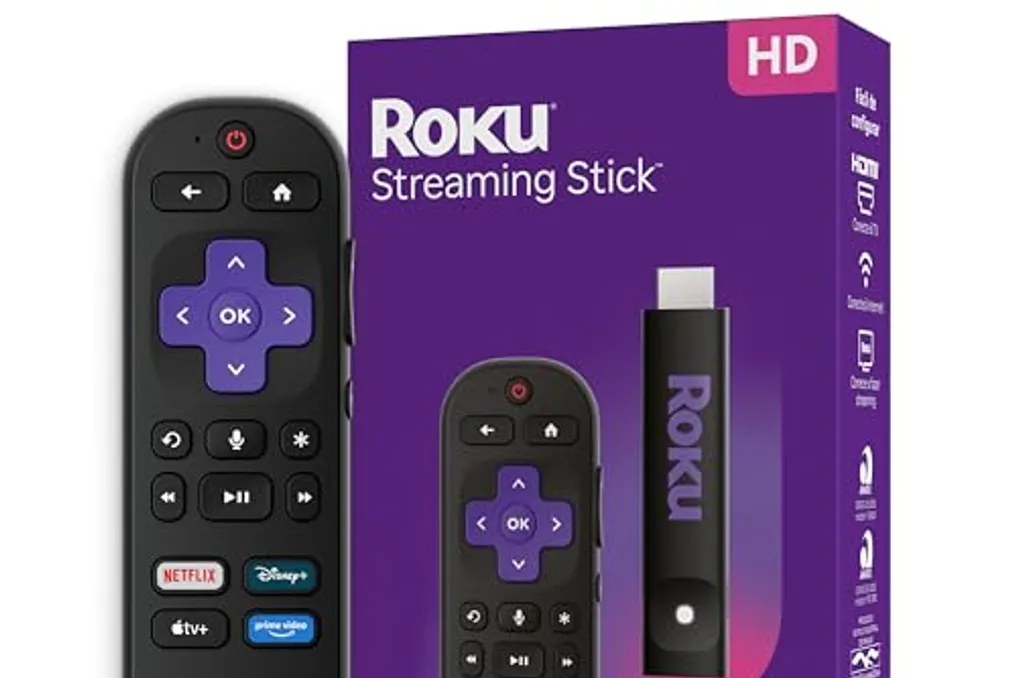
Roku Streaming Stick HD 2025

The Roku Streaming Stick HD 2025 was launched with the ability to work with the main voice assistants available on the market, including Alexa, Siri, and Google Assistant. The remote control with voice function speeds up content searching and navigation between applications without the need for typing. This device is ideal for HD and Full HD televisions, presenting an agile and uncomplicated interface, in addition to providing access to numerous streaming services in one place.

Additionally, Amazon's latest Fire TV Stick HD introduced a notable feature: it can be powered directly by the television, eliminating the need for an external power outlet. Its setup is quick and simple, and the remote control integrated with Alexa allows users to find movies, music, and series solely by voice command. This model also includes Early Access to Alexa+, the enhanced version of the Amazon assistant, which gives greater intelligence and personalization to the user experience.

For those seeking the highest quality streaming at home, the latest Fire TV Stick 4K is recommended. This device supports 4K resolution, ensuring detailed and sharp images on compatible services. The new Fire TV remote makes navigation easier, and integration with Alexa+ allows for quick finding of movies and series, concentrating all favorite applications on a single platform.

Sales on Amazon tend to change frequently, and stocks can run out at any time. If any of these devices spark your interest, it is recommended to secure the purchase before the price increases or the item becomes unavailable. It is suggested to click the button corresponding to the desired profile to take advantage of the offers.

Popular