Nvidia evaluates successors to Jensen Huang, considering competitor's CEO
Read more
Olhar Digital
olhardigital.com.br

Nvidia evaluates successors to Jensen Huang, considering competitor's CEO

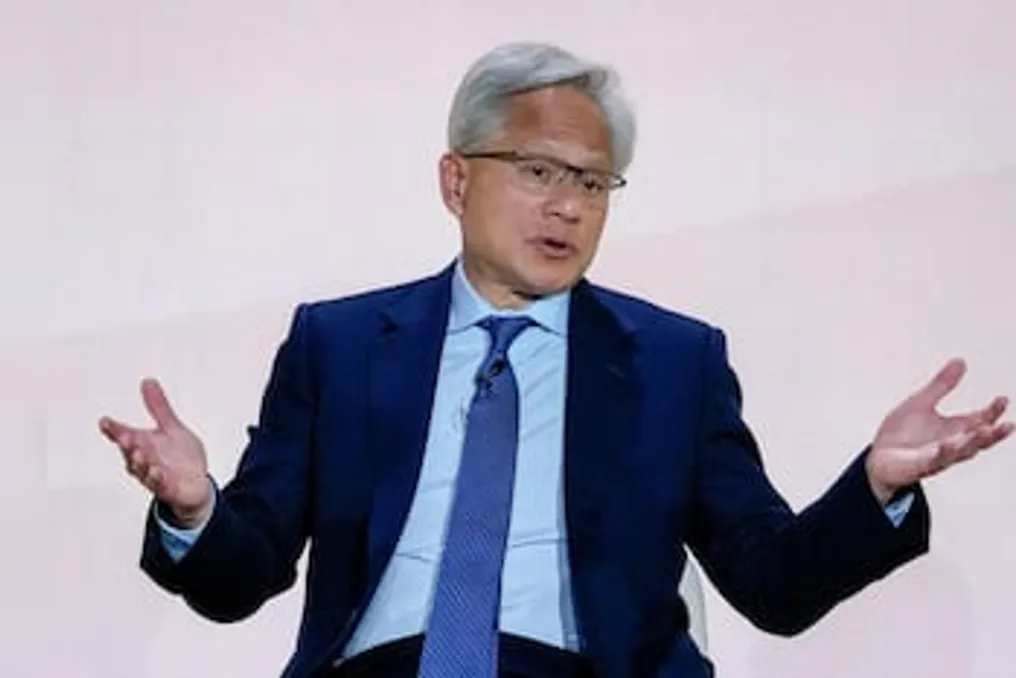
Nvidia has begun evaluating potential successors to Jensen Huang and has already identified Rene Haas, the current CEO of Arm, as a relevant name in the semiconductor industry. According to reports from the Financial Times and Reuters, the executive is among the candidates analyzed by the AI giant's board after the co-founder's decision to step down.

Huang announced his resignation on Thursday, the 12th, after dedicating 33 years to the company. His departure occurred amid repercussions from a scandal related to extramarital affairs and a client who, according to suspicions from U.S. intelligence agencies, could be a Chinese spy.

Rene Haas, who has led Arm since 2022, has a history of collaboration with Nvidia. He worked for the company for about seven years more than a decade ago and maintains close ties with both Huang and board members.

Although approached, there is no confirmation that Haas will receive a formal offer or that he will accept leading Nvidia. He is also among the few external names considered capable of filling the vacancy.

The possible selection of Haas carries an additional dimension due to the interconnection between Arm and Nvidia in the semiconductor market. Arm's technology is used in most global smartphone chips and is also utilized in Nvidia's AI devices. However, this year, the British manufacturer launched its own complete AI chip, entering direct competition with companies that are even Arm customers.

Furthermore, Haas established a close relationship with Masayoshi Son, CEO of SoftBank, a Japanese conglomerate that owns Arm and seeks to create an AI ecosystem capable of competing with Nvidia's. In April, Haas also took responsibility for SoftBank's international operations.

During his time at Nvidia, Haas had already received guidance from Huang. After leaving the company in 2013, he moved to Arm. It should be noted that Nvidia attempted to acquire the British manufacturer in 2020 in a deal valued at US$40 billion (approximately R$213 billion at the exchange rate at the time), but the deal was discontinued due to regulatory issues.

Parallel to the succession analysis, the Nvidia board is overseeing an independent investigation into Huang's conduct, conducted by a former federal prosecutor. This process has intensified the focus on governance and company management.

Similar stories

Nvidia faces challenge in search for successor to Jensen Huang
Read more
olhardigital.com.br

Nvidia faces challenge in search for successor to Jensen Huang

The potential departure of Jensen Huang from Nvidia's leadership has raised questions about who will take over the chip manufacturer's command. The founder has dozens of direct subordinates, and the board of directors has already held meetings to discuss his future.

This situation of instability is also worrying investors, given that the company has lost about $600 billion in market value since the start of an investigation involving the executive.

Jensen Huang, who is 63 years old, established Nvidia more than three decades ago and owns approximately 3.6% of the company's shares. His eventual departure would create a succession dilemma, as there is no obvious replacement to fill this position.

According to Reuters reports, Colette Kress, the company's CFO, is considered a natural option to temporarily assume the duties. Ian Buck, an executive focused on data centers, is also among the names considered as potential successors.

Bloomberg information, cited by Reuters, indicates that Nvidia is collaborating with an external consultancy to identify possible candidates for succession. Huang's central position in the management structure is evidenced by the fact that he maintains dozens of direct subordinates.

Nvidia's board of directors met on Wednesday, the 11th, to discuss Huang's future, according to a source close to the matter contacted by Reuters. This meeting took place just a few days after the directors expressed confidence in the executive and his leadership team on Sunday, the 8th.

The corporation's internal rules allow the CEO to be removed with or without justification, provided the decision achieves a majority of dissenting votes among the 11 board members.

On Thursday, the 12th, Nvidia's shares fell by approximately 7% in initial trading in Frankfurt. Since the beginning of the investigation, the company has lost about $600 billion in market value.

Ratings from Bernstein and Oppenheimer resulted in downgrades of their recommendations for the manufacturer's securities, while Citi lowered its price target. Analysts interviewed by Reuters expressed apprehension about the company's strong dependence on Huang's leadership, particularly regarding strategy formulation, business ties, and overall direction.

The effects of this uncertainty have extended to other companies in the artificial intelligence sector. During after-hours trading, CoreWeave shares fell 6%, and Micron's plummeted almost 2%. In contrast, AMD and Broadcom showed increases of 4% and 3%, respectively.

Nvidia has scheduled the release of its quarterly results for November 17, amid a scenario marked by doubts about its founder remaining at the helm of the company.

Nvidia hires consultancy to find successor to Jensen Huang amid crisis
Read more
olhardigital.com.br

Nvidia hires consultancy to find successor to Jensen Huang amid crisis

Nvidia's board of directors hired an external firm with the goal of identifying potential replacements for Jensen Huang, who is both the company's founder and CEO. This action comes amidst a crisis triggered by revelations about the executive's extramarital relationships, including involvement with a businesswoman suspected of working for Chinese intelligence.

The news was reported by Bloomberg, based on information from a source close to the matter. According to the journalistic account, board members are also considering the option of appointing an interim CEO while searching for a permanent successor. A board meeting took place this Wednesday (11) to discuss Huang's future.

The possibility of a leadership change gained more momentum after The Wall Street Journal published that the board was preparing to remove the executive. The new information suggests that the company has already begun considering alternatives should the founder leave the company.

The crisis also highlighted the absence of an established succession plan for Huang. At 63 years old, he is seen as an essential figure to Nvidia's identity and performance, which has solidified its position as a primary chip supplier for artificial intelligence (AI) development.

In addition to managing the company, Huang actively participates in negotiations and investments within the AI supply chain and in industry startups. He is also one of the industry's main spokespersons, advocating for the benefits of AI and mitigating concerns related to its risks. The founder's great influence explains the complexity in finding a replacement, as his departure could generate impacts beyond Nvidia's operations, affecting the technology market as a whole.

Following the publication of reports regarding Huang's relationships, Nvidia's shares fell by 8% during Wednesday's extended trading session, as reported by Bloomberg.

Succession Questions at Nvidia After Jensen Huang Scandal
Read more
business-standard.com

Succession Questions at Nvidia After Jensen Huang Scandal

Nvidia co-founder and CEO Jensen Huang has repeatedly stated his intention to lead the company for as long as possible. However, an investigation into whether he was the target of foreign intelligence operations following reports of his romance has once again drawn attention to a question Nvidia rarely discusses: who could take over if Huang steps down or is forced out?

On Sunday, Huang acknowledged having a romantic relationship in a message to employees. Following this, Nvidia's board of directors announced an independent investigation to determine if he was subjected to a targeted attack by foreign intelligence. The board expressed confidence in Huang and stated that there were no grounds to believe that national security or the company's trade secrets had been compromised.

In a statement to Business Insider, Nvidia also emphasized that 'Jensen intends to continue leading Nvidia as CEO without interruption.' Nevertheless, this incident has once again raised the topic of succession planning at Nvidia. Huang, who founded the company over thirty years ago, remains closely involved in its operations, with about 60 executives reporting directly to him.

Who could replace Jensen Huang?

Nevertheless, analysts do not expect Huang to leave his post. Bob O'Donnell, president, founder, and chief analyst at TECHnalysis Research, noted that Nvidia hires over 40,000 people worldwide and has 'many other great leaders' within the company, but he does not predict Huang's departure.

Analyst Bernstein Stacy Rasgon gave a similar assessment to CNBC, stating: 'Jensen is Nvidia. Nvidia is Jensen.' He described Huang as someone who manages the company from the top and effectively pulls the strings.

However, Huang owns only about 3.6 percent of Nvidia shares and does not hold controlling voting rights. If Huang were to leave or be removed by the board of directors, speculation has focused on several executives, including CFO Colette Kress and Nvidia co-founder Chris Malachowsky, according to the Associated Press.

According to analysts quoted by Business Insider, Kress is one of the most prominent senior executives at the company and could be considered for the role of interim CEO. She has worked at Nvidia for 13 years, overseeing its finances during a period of rapid growth, and previously held financial positions at Cisco and Microsoft.

Another name being discussed is Ian Buck, a long-time Nvidia executive who helped develop CUDA, the software platform that has become central to Nvidia's AI computing business. Buck, who has worked at Nvidia for 22 years, leads the data center and computing divisions, which constitute the bulk of the company's revenue. Analysts and former employees mentioned by Business Insider consider him a potential long-term successor due to his technical expertise and understanding of Nvidia's core business.

Malachowsky, in turn, could play an important role in any leadership transition. As one of the co-founders of Nvidia alongside Huang and Curtis Priem, he remains a senior technology leader at the company.

Could Huang's children take on leadership roles?

There is also speculation that Nvidia's leadership could ultimately remain in the Huang family. Both of Huang's children, Madison and Spencer, work in the company in management positions. Madison holds the position of Senior Director of Product Marketing, whose responsibilities relate to Nvidia's physical business in AI, while Spencer works as a product line manager in its robotics division.

Business Insider, citing a former employee, reported that Madison is taking on increasing authority in various areas of Nvidia's operations, which could potentially prepare her for a larger leadership role. Although Huang has reportedly expressed a desire for one of his children to eventually run the company, Nvidia has not disclosed a family succession plan, nor has any child been publicly named as a potential CEO successor.

Popular