Analysis of Horror Films and Reflections on Codes and Complexity in Science Fiction Series
Read more
Olhar Digital
olhardigital.com.br

Analysis of Horror Films and Reflections on Codes and Complexity in Science Fiction Series

This Cinema and Streaming newsletter from Olhar Digital, intended for subscribers of the Olhar Digital Club, addresses various topics, including suggestions for horror films for 'Friday the 13th' of 2026, in addition to analyses of recent productions.

In this edition, less conventional horror film options were presented, covering different eras and styles, with themes such as creatures, possession, epidemics, and extreme situations. One selection was developed in collaboration with a film-loving friend.

Among the suggested titles is a film directed by Neil Marshall, where a group of friends gets trapped in a dark cave full of creatures, creating an atmosphere of claustrophobia and survival horror, available on MUBI and Prime Video.

Another production involves a team of researchers in Antarctica who find an extraterrestrial creature capable of imitating living beings, forcing the isolated individuals to question each other's humanity. This classic, directed by John Carpenter and starring Kurt Russell, mixes science fiction, horror, and paranoia, and can be seen on MUBI or rented/purchased digitally.

A film by Sam Raimi was also mentioned, where a bank employee receives a curse after refusing a debt deferral request, being tormented by a supernatural presence, and is accessible on Claro TV+.

A third film, directed by Danny Boyle and featuring Cillian Murphy, portrays London devastated by a highly contagious virus that turns the population into violent individuals, requiring the few survivors to fight for their lives, and is available on HBO Max.

A fourth film, directed by brothers Danny and Michael Philippou, explores supernatural horror when a group of young people invokes spirits using a preserved hand, and the game gets out of control, available on Prime Video and HBO Max.

The newsletter also dedicated space to the Marvel series VisionQuest, highlighting its season finale. The series was praised for exploring themes such as love and grief within the Marvel Cinematic Universe (MCU), going beyond clichés and focusing on an unconventional family.

The evolution of the Vision White character (Paul Bettany) was analyzed, who was initially a complex and truncated being but gradually becomes more human and emotional throughout the series, finding his purpose.

This journey led to a reflection on the distinction made by Professor Arthur Brooks of Harvard between what is 'complicated' and what is 'complex.' Brooks explains that the 'engineer' part of the brain deals with solvable problems, while the 'philosopher' part focuses on mysteries without simple answers, encouraging reflection.

The series VisionQuest illustrates this by showing how AIs learn to deal with complex issues, while Ultron (James Spader) is presented as an inherently complex agent of chaos, whose relationship with Vision is difficult to define.

The text concludes that, just like advanced syntozoids, humans need time, sitting down, and direct conversations to resolve themselves. The idea of heredity applied to the development of Artificial General Intelligence (AGI) was mentioned, suggesting that someone's 'code' does not define them completely, allowing for personal updates.

Other notable films were presented: a dark version of 'Frozen' (directed by Ti West), where Ebenezer Scrooge must change his avarice, and 'Pinocchio,' where a puppet becomes obsessed and violent. A film about a medical team in the Colombian Amazon facing the threat of the Anaconda was also mentioned.

Finally, the section invited readers to share which films traumatized them, citing examples such as 'Saw,' and provided contact information for sending suggestions.

Similar stories

Psychological explanation for people's interest in horror and crime content
Read more
nplus1.ru

Psychological explanation for people's interest in horror and crime content

There is a group of people who are attracted to dark and repulsive themes. Some prefer watching horror movies, while others actively seek out images, videos, and descriptions of real tragedies, acts of violence, and accidents.

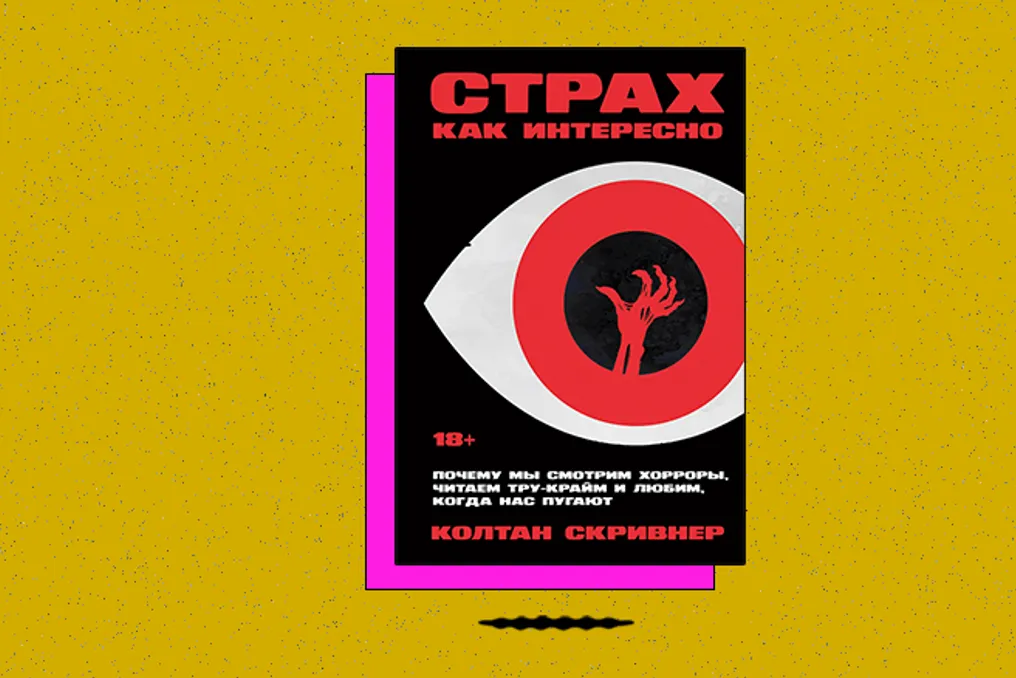
Behaviorist Colton Scribner defines this phenomenon as 'painful curiosity.' In his book 'Fear as Interesting: Why We Watch Horror, Read True Crime, and Love Being Scared' (published by Alpina Non-Fiction), which was translated into Russian by Natalia Kolpakova, the author explores the origins of human attraction to materials related to suffering. He also explains why such interest is not a sign of any mental disorder.

The book includes a section dedicated to the differences in human reaction to infected injuries.

Tenebris Somnia: Case study on visual hybridism uniting pixel art and FMV aesthetics in horror narrative
Read more
olhardigital.com.br

Tenebris Somnia: Case study on visual hybridism uniting pixel art and FMV aesthetics in horror narrative

Tenebris Somnia is presented as a notable case study on visual hybridism, combining two aesthetically distant registers into a single, cohesive horror narrative.

The author first encountered New Blood Interactive and Airdorf through the game Faith: The Unholy Trinity, which impressed with its use of pixels and rotoscoping effects. Although these effects might seem rudimentary to some players, the author associates them with a primitive and ancestral fear.

During gamescom 2026, the author had the opportunity to meet Airdorf and their team in person, strengthening their emotional ties with the publisher.

The development of Tenebris Somnia took place in Argentina, produced by Saibot Studios in collaboration with creative director and filmmaker Andrés Borghi. The publication was handled by New Blood Interactive, and the live-action sequences feature renowned actors such as Clara Kovacic, Pedro Merlo, and Maria Eugenia Rigon.

The game functions as a cinematic tale that merges two visual techniques rarely seen in modern titles: pixel art and FMV (Full Motion Video). The author recalls growing up in the 90s, seeing Full Motion Video, present in games like Phantasmagoria, Mad Dog McCree, and Night Trap, as the technological peak of that era.

The studio's decision to unite these two audiovisual languages was fundamental to the story of Tenebris Somnia. The transition between pixels and 4K resolution FMV is described as extremely smooth and organic, allowing the player to often ignore the distinction between the opposing languages.

The plot follows a separated couple: Julia (played by Clara Kovacic) and Iván (played by Pedro Merlo), both involved in horror film productions. For reasons revealed throughout the game, their paths diverged. Iván is a promising and recognized horror director in the niche, while Julia supported his career, participating and offering ideas for his most ambitious project, the short film Devora, working on the script and doing everything she could. However, the result did not meet expectations.

After a period without news from Iván, Julia begins experiencing nightmares with her ex-partner and decides to look for him. Upon arriving at the couple's old apartment, she notices clear signs of abnormality and Iván's absence. From this point, Julia's journey unfolds into a search for answers to deep questions, culminating in the central question: Where is Iván?

Tenebris Somnia has a well-structured script, covering various horror genres, from gore and suspense to noir and psychological drama, including themes such as cults and secret societies, along with very well-constructed symbolism for the game. The narrative universe is believable and seems to emerge directly into the player's mind, just like the monsters and the excellent performances of Clara Kovacic and Pedro Merlo.

Regarding the Brazilian Portuguese localization, the work was done by puppywombo, who had previously localized Faith: The Unholy Trinity. As a translator and official representative of Puppet Combo, Puppy is a game developer and horror enthusiast, which ensured that Tenebris Somnia possessed rare idiomatic nuances in such a complex cultural transition.

The soundtrack complements the pixel aesthetic, being architected in MIDI, but supplemented by precise soundscaping, such as footsteps varying between carpet, cold tiles, and shards of glass, along with a diversity of effects applied at the exact moment. In the FMV scenes, the practical effects are frighteningly realistic, and the makeup is so remarkable it could easily win an Oscar if it were a film.

Tenebris Somnia represents a milestone in the genre, paving the way for a bold language that connects 8-bit visuals with cinematic cameras.

The author finished the game in just over six hours, which is considered considerably long for an indie title, but without dragging on. The element of backtracking, characteristic of survival horror, is prominent, requiring the player to keep notes. The game presents challenging puzzles, memorable bosses, and, repeating, a very well-tied plot that offers four distinct endings (the author experienced three of them), each more impactful than the previous one.

The author was already a fan of New Blood Interactive because of Faith, even getting a tattoo of the game. After Tenebris Somnia, he plans to honor the title with another tattoo, as the drawing ideas are abundant.

Astronomical images resembling horror movie scenes presented for Halloween
Read more
olhardigital.com.br

Astronomical images resembling horror movie scenes presented for Halloween

This Saturday (the 31st) is Halloween—a holiday characteristic of Anglo-Saxon countries, especially the USA, Canada, Ireland, and Great Britain. While celebrations on Earth inspire themed decorations, recordings show dark images of the Universe collected over decades, demonstrating that cosmic reality can often be more frightening than fiction.

In honor of this date, impressive pictures have been gathered, ranging from a monstrous zombie hand sculpted by the winds of a dying star to a skull-shaped asteroid that passed near Earth. These images offer a visual journey through ghostly nebulae and cosmic structures worthy of a true night of horrors.

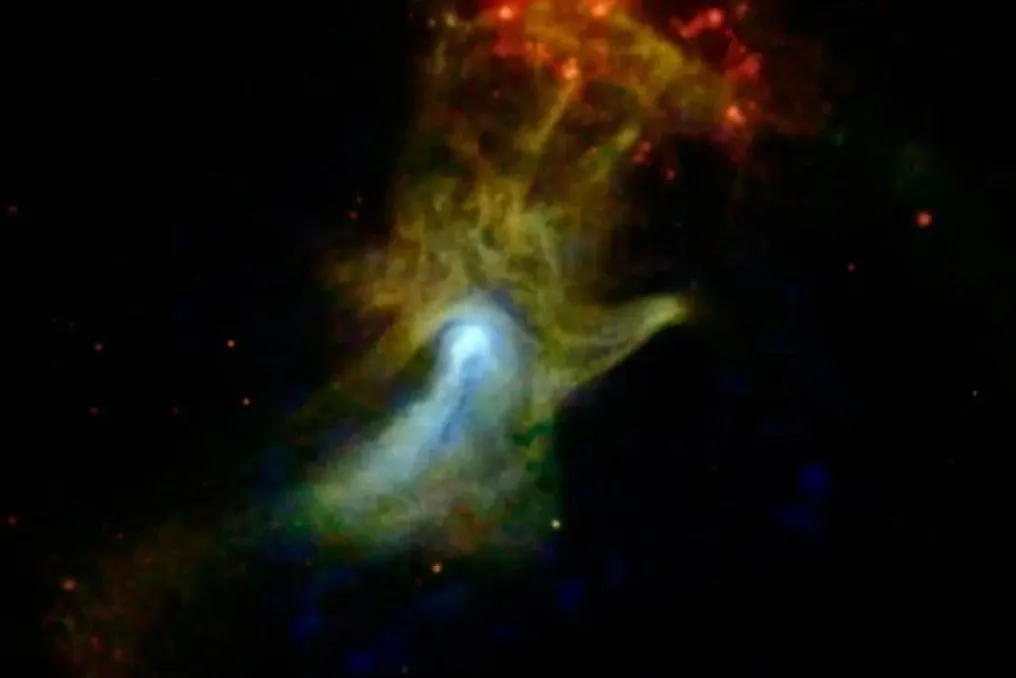
The area shown in an X-ray image, called the 'Hand of God,' looks too terrifying to bear that name; it more closely resembles a monstrous zombie hand ready to grab prey in space. However, it is actually a pulsating stellar wind nebula formed by dense remnants of a supernova. A supernova is a transient astronomical event occurring at the final stages of massive star evolution or when a white dwarf begins uncontrolled nuclear fusion, signifying the death of a star.

What about this horrifying face that seems to be screaming during a painful and fiery death? This is a scene very suitable for Halloween. Despite its frightening appearance, this scene does not include a real skull. It is an X-ray image of a galaxy cluster known as the Perseus Cluster, taken by NASA's Chandra Observatory.

This image, obtained by the Kitt Peak National Observatory in Arizona, USA, could look like a scene from a horror film where evil spirits try to escape the crucible of darkness. Nevertheless, it actually shows an interstellar cloud of gas and dust called SH2-136, located approximately 1200 light-years from Earth in the constellation Cepheus.

In this ominous picture, taken by NASA's Wide-field Infrared Survey Explorer (WISE), a green witch gazes into space. In reality, it is the IC 2118 nebula, which received the nickname 'Witch' due to its appearance. Fomalhaut is the brightest star in the constellation Pisces Australis. Located approximately 25 light-years from Earth, it is about 440 million years old, during which a dust belt has accumulated around it.

In this image, the Fomalhaut star system bears a strange resemblance to the terrifying Eye of Sauron from J.R.R. Tolkien's 'Lord of the Rings.' Tolkien described the eye as 'adorned with watchful and deliberate fire, and the black slit of its pupil opened into a pit, a window into nothingness.'

Eight years ago, a human skull-shaped asteroid passed near Earth. At its closest approach, the celestial body was about 480 thousand kilometers from the planet, or 1.3 times farther than the average distance between the Earth and the Moon, posing no threat to our planet. Approximately three weeks before reaching this distance, the asteroid was discovered by astronomers from the Pan-STARRS observatory in Hawaii and was officially designated '2015 TB145.' On October 30, 2015, the 400-meter wide object was photographed by the Arecibo Observatory in Puerto Rico, and to everyone's surprise, it looked like a skull face, earning the nickname 'Halloween Asteroid.'

Popular