China–Kyrgyzstan–Uzbekistan Railway Could Transform Central Asian Economy
Read more
UzDaily
uzdaily.uz

China–Kyrgyzstan–Uzbekistan Railway Could Transform Central Asian Economy

Central Asia is undergoing a period of gradual changes in its role on the international trade stage. For a long time, the region's economic development was determined by geographical features, limited access to seaports, and dependence on transport routes inherited from the Soviet era. However, expanding trade with China, growing Trans-Caspian traffic, and interest in alternative land corridors are creating prerequisites for revising the existing transport architecture.

One of the most significant projects in this process is the China–Kyrgyzstan–Uzbekistan (CKU) railway. This project aims to provide additional rail connectivity between western China and the central part of the region. Unlike many existing routes passing through Kazakhstan, the new line will allow Chinese goods to reach Kyrgyzstan and Uzbekistan directly, and then move towards Turkmenistan, Iran, Turkey, and other markets.

The economic significance of the project extends far beyond the three participating countries. The additional corridor can change the distribution of transit flows, increase the investment attractiveness of certain territories, and strengthen competition between national logistics systems. Kyrgyzstan can overcome long-standing infrastructure limitations; Uzbekistan can strengthen its position as a regional trade hub; and Kazakhstan will have to adapt to a new route connecting China with Central Asian markets. Tajikistan and Turkmenistan may also benefit from improved regional connectivity, despite not being directly involved in the construction.

This project is particularly relevant ahead of the Bishkek Investment Forum, scheduled for November 25, 2026. Discussing the prospects of Central Asia until 2030 allows for viewing the CKU not just as infrastructure, but as a factor of long-term regional economic transformation. Nevertheless, the key question is whether the railway will lead to an expansion of regional trade and industrial cooperation or merely redistribute existing transit flows among Central Asian states.

Discussions about the railway line connecting China and Uzbekistan via Kyrgyzstan have continued for more than two decades. The main obstacles were the mountainous terrain, high construction costs, disagreements over the route, and finding an acceptable financing model. A breakthrough occurred after the signing of an intergovernmental agreement on June 6, 2024, followed by an official groundbreaking ceremony on December 27 of the same year.

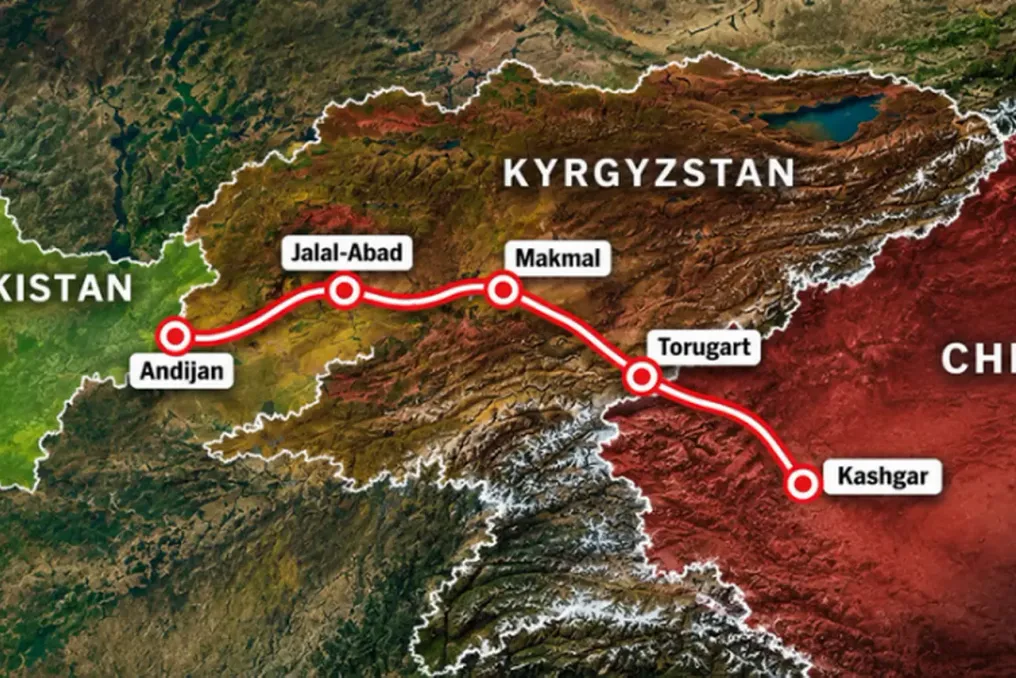
The project involves connecting Kashgar in China through Torugart, Makmal, and Jalal-Abad in Kyrgyzstan to Andijan in Uzbekistan. The total length of the route is estimated at approximately 530 kilometers, of which about 305 kilometers fall within Kyrgyzstan. The Kyrgyz section presents the greatest engineering complexity, as numerous tunnels, bridges, and other structures must be built in the mountainous area.

According to the International Monetary Fund, the project cost is approximately 4.7 billion US dollars. A joint project company is planned, in which China will hold 51%, Kyrgyzstan 24.5%, and Uzbekistan 24.5%. The financing model assumes that half the cost will be covered by equity capital, and the remainder by loans from Chinese financial institutions. Although this structure distributes financial participation, it also creates long-term obligations whose economic justification will depend on the actual utilization of the railway.

By autumn 2026, construction entered an active phase. According to information published by Eurasianet on November 3, citing Kyrgyz Railways, work was underway on 28 out of 29 planned tunnels and 47 out of 50 bridges. It was expected that about 22% of the total work would be completed by the end of 2026. The official commissioning target is 2031, although contractors hope to finish earlier, making a 2030 assertion premature as a guaranteed opening date.

Even during construction, the railway stimulates investment activity. The demand for construction materials, transport services, engineering specialists, and energy infrastructure is invigorating the Kyrgyz economy. However, much more significant changes are expected after the line begins operation, when freight companies can choose between existing and new routes.

The main advantage of the CKU is the creation of an additional rail outlet from China into Central Asia. Today, a significant share of China's rail transport to Western markets passes through Kazakhstan, including the Dostyk–Alashanku and Altynkol–Khorgos border crossings. These corridors have developed infrastructure and established international services, but they do not provide the shortest path for every shipment.

The new railway may be especially important for cargo traveling from Western China to Uzbekistan, Turkmenistan, and Iran. Transit through Kyrgyzstan can reduce the geographical distance to some destinations, although the actual saving in time and cost will depend on tariffs, cargo handling speed, and border procedures.

A shorter distance does not necessarily mean lower transport costs. The mountainous section in Kyrgyzstan entails relatively high construction and maintenance costs. Furthermore, transloading from the Chinese railway gauge of 1435 mm to the 1520 mm gauge common in Central Asia requires additional technical operations. Thus, the competitiveness of the CKU will be determined by overall transport costs, not just distance.

From an economic perspective, the railway can perform two interconnected functions. The first is the redistribution of existing cargo flows between corridors. The second is the generation of additional transport demand due to reduced logistical barriers and expanded trade opportunities.

The second function is particularly important for the long-term development of Central Asia. If the CKU only diverts some Chinese exports from Kazakh routes towards Kyrgyzstan–Uzbekistan, its overall regional economic impact may be limited. However, if it supports production, export industries, and cross-border trade, its significance will go far beyond mere transit.

The CKU also contributes to strengthening China's economic presence in Central Asia. The Times of Central Asia reported on November 3, 2026, that China's trade and investment cooperation with Uzbekistan covers industry, energy, and infrastructure, while the United States is also striving for greater participation in technology and raw material projects. Thus, railway infrastructure becomes both a means of transporting goods and an element of investment competition.

The CKU is likely to cause the most noticeable structural changes in Kyrgyzstan and Uzbekistan. Nevertheless, their interests differ despite their joint participation in the project.

For Kyrgyzstan, the railway offers a chance to overcome a serious infrastructure weakness: the lack of comprehensive rail connection between the northern and southern regions of the country, as well as its limited integration into international transport networks. Geography, which traditionally increased external trade costs, could become a source of transit revenue.

However, the financing model requires careful study. Investments of $4.7 billion represent a significant portion of Kyrgyzstan's annual GDP. Consequently, the economic efficiency of the railway is a question not only for the transport sector but also for fiscal policy. The IMF has already considered Kyrgyzstan's participation in the project among factors affecting its medium-term financing needs.

Bishkek, therefore, must strive for maximum involvement of domestic firms in construction and subsequent operation. Logistics terminals, warehouses, repair bases, and production sites along the route can increase the value added generated locally. Otherwise, Kyrgyzstan risks receiving expensive transit infrastructure, the main economic benefits of which will go to others.

Uzbekistan, conversely, possesses a more developed industrial base and an existing railway network, which opens up additional opportunities for utilizing this line. Direct access to China via Kyrgyzstan can strengthen the role of the Fergana Valley as an industrial and logistics hub connecting East Central Asia with external markets.

The project is particularly important for Uzbekistan's textile, chemical, food processing, and machine-building industries. Under favorable conditions, reduced transport costs can make exports more competitive and simplify the import of machinery and industrial components. At the same time, improved transport links can increase Chinese imports and intensify competition for local producers. Therefore, Tashkent must use the line not only to expand trade turnover but also to attract investment in processing industries and joint production enterprises.

Further possibilities include connecting the CKU with southern corridors through Turkmenistan and Iran, and in the long term—proposed rail connections through Afghanistan. However, such initiatives require separate investments and international agreements, so their economic impact remains potential, not guaranteed.

Thus, Kyrgyzstan and Uzbekistan may be direct beneficiaries, but in different ways: Bishkek's priority will be monetizing its transit position, while Tashkent's priority will be integrating the new route into its industrial and foreign trade system.

For other Central Asian countries, the impact of the CKU will be largely indirect, but it should not be underestimated. Kazakhstan, possessing the most developed international railway infrastructure in the region, may face increased competition for cargo from China. This is especially relevant for freight destined for Uzbekistan and further south, where the new route may offer a geographically shorter alternative.

However, Kazakhstan's competitive advantages are not limited to distance. Existing railway crossings, large logistics centers, and access to the Russian transport network and Caspian ports allow the country to serve several different directions of international trade. Moreover, the development of the Trans-Caspian International Transport Route gives Kazakhstan access to the South Caucasus, Turkey, and European markets via the Caspian Sea. Thus, the CKU and the Middle Corridor will compete only for a portion of potential cargo flows, while performing different transport functions.

Cooperation is also possible, as shown by Kazakhstan's logistics projects in Uzbekistan. Eurasianet reported in early November 2026 that PTC Holding of Kazakhstan signed an agreement with China's International Freight Trains to expand cross-border freight services, with the Chinese company showing interest in the Silkway Central Asia logistics center in Uzbekistan. Such initiatives demonstrate that increased competition between corridors does not preclude joint participation in new logistics chains.

A rational economic strategy for Kazakhstan, therefore, lies not in opposing alternative corridors, but in improving its own infrastructure and expanding its participation in regional logistics networks.

Tajikistan may benefit from improved accessibility in neighboring countries. Although it is not directly involved in the CKU, it can utilize new logistics hubs in Kyrgyzstan and Uzbekistan to expand trade with China. The scale of this benefit will depend on road, border infrastructure, and transport links with the Fergana Valley. Without appropriate investments, Tajikistan risks remaining on the periphery of the emerging transport system. Meanwhile, the growth of regional trade can create export opportunities for Tajik agricultural products, textiles, and certain types of industrial raw materials. Dushanbe's main task is not to build parallel railway infrastructure at any cost, but to improve access to existing corridors.

Turkmenistan occupies a different position. Its railway connections with Uzbekistan and Iran could make it an important link for...

[ ]

Similar stories

Kazakhstan and Uzbekistan begin test cargo shipments along new railway line
Read more
podrobno.uz

Kazakhstan and Uzbekistan begin test cargo shipments along new railway line

Trial cargo transportation has commenced between Kazakhstan and Uzbekistan along the newly constructed railway line connecting Darbaza and Maktaaral. The first train carrying Kazakh coal was sent along this route in October. Full launch of this direction is planned for December.

This was reported by the Prime Minister of Kazakhstan, Olzhas Bektenov, during a meeting of the board of directors of the Samruk-Kazyna fund. He emphasized that the opening of this new railway branch is a significant step towards strengthening transport links between the two states.

The new line is intended to reduce the load on the existing 'Saryagash – Tashkent' section, which currently handles most of the cargo transported between Kazakhstan and Uzbekistan. This route will provide access to the Uzbek station 'Syrdarya' and allow for a substantial increase in transport volumes.

Construction work on this branch began in November 2023. The main section of the line will be almost 130 kilometers long, and the total length of the entire line will reach 152 kilometers. Although work is still ongoing, the official launch of the new route for regular traffic is scheduled for December 2026.

For Uzbekistan, the launch of this line is important not only in the context of trade with Kazakhstan. This additional railway branch can expand transport opportunities to countries such as China, Russia, and Belarus, as well as integrate into international transport corridors.

Furthermore, the new line is being considered as a potential route within the international 'North-South' transport corridor, which connects the region's countries with Iran and Middle Eastern states. Previously, the parties also agreed on a significant increase in air traffic, increasing the number of flights between Almaty, Astana, and Tashkent to 60 weekly in each direction.

Trade between Iran and Tajikistan: Transition from Growth in Exchanges to Verification of Agreement Fulfillment
Read more
www.tehrantimes.com

Trade between Iran and Tajikistan: Transition from Growth in Exchanges to Verification of Agreement Fulfillment

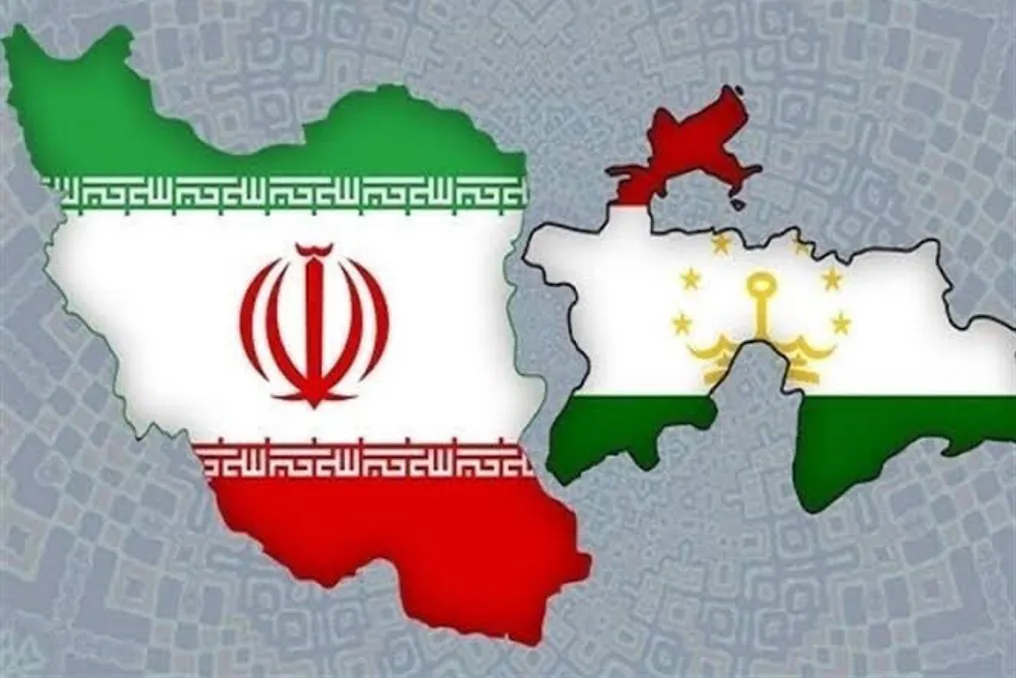
Trade between Iran and Tajikistan entered a new phase in 2026, marked by an increase in trade turnover, the conclusion of new agreements, and the abolition of visa regimes. Nevertheless, achieving the target of one billion US dollars in trade still depends on eliminating obstacles in the banking sector and transport barriers.

According to a reporter from Mehr News Agency, economic ties between Iran and Tajikistan have developed in recent years due to the intensification of political interaction, the signing of trade agreements, and efforts to develop cooperation in the fields of transport and energy. Trade statistics also indicate a growth in exchanges between the two states; however, Iran's share in the Tajik market and the total volume of bilateral trade remain significantly below the existing potential.

In recent months, consultations between the countries have focused on facilitating trade, developing transit routes, inter-provincial cooperation, and increasing exports. The implementation of new agreements and the elimination of banking and transport problems could form the basis for achieving the one billion dollar goal, the success of which depends on practical and continuous actions by both sides.

According to data published by Tajik institutions, the volume of the country's foreign trade with Iran increased from approximately $377.7 million in 2024 to about $483.9 million in 2025, representing a growth of almost 28 percent. Based on the same data, Tajikistan's exports to Iran in 2025 amounted to about $112.8 million, while imports from Iran were about $371.2 million. Thus, the structure of bilateral trade still favors Iranian exports, and Iranian products account for the majority of exchanges.

Statistics for 2026 also show an upward trend. The trade volume of the two countries reached $119.6 million in the first quarter of the year, which is 8 percent more than in the same period last year. In the first half of the year, this figure rose to $254.3 million, exceeding the sum for the first six months of 2025 by $32.8 million and 14.8 percent.

Iran's export portfolio to Tajikistan mainly includes industrial and petrochemical products, polymer raw materials, building materials, and food products. According to customs data of Tajikistan, reflected by the country's International Road Transport Association, in 2025, goods such as petrochemical products, polyethylene, polypropylene, Portland cement, clinker, and food products were imported into Tajikistan from Iran.

Conversely, Tajikistan's exports to Iran are largely based on raw materials and basic goods, including cotton fiber and yarn, as well as primary aluminum. This picture shows that trade between the two countries is still insufficiently diversified, and there is significant potential for expanding exchanges in mechanical engineering, industrial equipment, agricultural products and processing industry, medicine and medical equipment, as well as technical and engineering services.

According to Amir Fahrian, Iran's commercial advisor in Tajikistan, the country's foreign trade volume reached approximately $7.94 billion in the first seven months of 2026. During this period, Tajikistan's exports amounted to about $1.78 billion, while imports exceeded $6.16 billion. In the same period, Iran's exports to Tajikistan were reported at about $249.97 million, corresponding to approximately 4.1 percent of Tajikistan's total imports.

This share, along with the growth in bilateral trade, indicates that Iran has not yet been able to secure a larger position in the Tajik market proportionally to its industrial and export capabilities. Food and agricultural sectors, building materials, mechanical engineering and industrial equipment, mineral products, medicine, and technical and engineering services are areas where there is potential for increasing the presence of Iranian companies. However, developing exports in these sectors requires deep knowledge of standards, distribution networks, import regulations, and payment mechanisms in the target market.

Cooperation in the energy sector has become one of the key axes of economic negotiations between Tehran and Dushanbe. Within the framework of consultations between the two countries, the issue of oil product supplies and the expansion of energy partnership was discussed, as well as the possibility of increasing Iranian exports in this area.

According to published statistics, from January to September 2026, Tajikistan imported about 15,600 tons of oil and petroleum products from Iran worth $14.7 million. This data indicates the start of imports in this sector, although the current volume of exchanges remains limited.

Meanwhile, the figures cited regarding the possibility of supplying 2.55 million tons of petroleum products annually should not be considered final exports or executive contracts; rather, this figure is within the declared capacity and requests made during negotiations. Turning this capacity into real trade depends on executive agreements, transport infrastructure, and financial mechanisms.

Thanks to access to open waters and its location on regional communication routes, Iran can play an important role in meeting Tajikistan's trade needs. Among the options considered to facilitate the transportation of goods between the two countries are the use of Chabahar Port and Bandar Abbas Port, as well as the potential of infrastructure such as Aprin dry port.

Developing transit routes from Iran to Afghanistan and Tajikistan, connecting these routes to regional transport networks, can reduce the cost and time of transporting goods. This is especially important for Tajikistan, which is a landlocked country.

However, issues related to transport costs, coordination of customs procedures, infrastructure limitations, and difficulties in financial operations remain obstacles to the development of cooperation. Resolving these issues could turn Iran's geographical advantage into a larger share of the Tajik market.

In recent years, both countries have sought to move economic cooperation from the level of negotiations to the level of implementation by increasing the number of formal agreements. In January 2025, 23 cooperation documents were signed between the parties, and 13 trade agreements worth $456 million were put on the agenda.

In April 2026, the 18th Joint Committee on Economic Cooperation between Iran and Tajikistan was held. The main areas of this meeting were the development of trade, transport, energy, and industrial cooperation.

In recent events, on October 23, following the visit of the Governor of Khorasan Razavi to Tajikistan, three documents on cooperation in the fields of free zone trade, common standards, and transportation guarantees were signed. Additionally, during meetings of officials from Khorasan Razavi and Khatlon provinces, ways to strengthen economic and trade interaction were studied.

The development of provincial cooperation can open a new path for a more active participation of the private sector in the Tajik market. The geographical proximity and production and export capacities of Iran's eastern provinces, especially Razavi-Khorasan, provided a suitable opportunity to expand these relations.

The full implementation of the visa waiver for holders of ordinary passports from Iran and Tajikistan starting from October 5, 2026, is one of the important steps to promote communication between the two countries. Under this agreement, citizens of both countries can stay in the other country without a visa for up to 30 days within every 90 days.

This measure can promote the movement of economic actors, traders, tourists, and investors, and increase the basis for direct communication between companies and private sector representatives.

Furthermore, the visit of Mohammad Reza Aref, First Vice President of Iran, to Dushanbe to participate in the Shanghai Cooperation Organisation meeting and meet with Tajik President Emomali Rahmon provided an opportunity to study economic cooperation between the two countries. During these meetings, topics such as trade, energy, transport, industry, agriculture, and joint production were discussed.

Following up on these consultations, the Ambassador of Tajikistan in Tehran also met with the Director General for Central Asia of the Iranian Ministry of Foreign Affairs. At this meeting, the expansion of political, economic, trade, and cultural ties between the two countries was discussed.

Achieving the goal of increasing Iran-Tajikistan trade volume to one billion dollars is a task that has been raised in the negotiations and economic plans of both countries in recent years. Realizing this goal, in addition to increasing the number of formal agreements, requires eliminating existing obstacles to the activities of Iranian and Tajik traders and companies.

Problems with money transfers, banking restrictions, transport costs, customs procedures, and the lack of direct and continuous communication between economic entities are some of the challenges that may slow down the process of trade development. On the other hand, insufficient awareness of market potential and difficulties for small and medium-sized enterprises in accessing trading partners also hinder the full utilization of existing opportunities.

Under these conditions, supporting cooperation between chambers of commerce, creating reliable financial mechanisms, developing transport, and monitoring the fulfillment of signed agreements are particularly important. Ultimately, sustainable growth in Iran-Tajikistan trade will be achieved not by increasing the number of cooperation documents, but by turning agreements into executive contracts, increasing actual exchanges, and ensuring the constant presence of the private sector.

Popular